
The JournalismPakistan Global Media Brief | Edition 21 | May 22, 2026
JournalismPakistan.com | Published: 22 May 2026 | JP News Desk
Join our WhatsApp channel
Edition 21 of the JournalismPakistan Global Media Brief surveys major developments reshaping journalism worldwide. Highlights include Hungary's undoing of Orbán-era media consolidation, India-Norway press access tensions, and Khyber Pakhtunkhwa journalists' protests over unpaid wages.Summary
Editor’s note
Welcome to the 21st edition of the JournalismPakistan Global Media Brief. This edition tracks significant developments shaping journalism globally, from political shifts in media systems and newsroom restructuring to escalating legal pressures, platform regulation debates, and ongoing risks to journalist safety. Across regions, the stories reflect a common thread: the intensifying struggle over media independence, sustainability, and trust in a rapidly changing information environment.
Global media power shifts
Hungary dismantles Orbán-era media network — Hungary’s new government has begun removing executives linked to the KESMA media conglomerate, canceling flagship pro-government programs, and responding to growing calls for editorial independence inside state media in a closely watched European test of rebuilding media pluralism after years of political consolidation. (Reuters, May 15, 2026)
Asia media watch
KP journalists protest unpaid salaries and layoffs — Journalists and media workers in Khyber Pakhtunkhwa staged province-wide protests demanding payment of delayed wages, an end to forced dismissals, and stronger enforcement of labor protections, while warning of expanded demonstrations if conditions do not improve. (JournalismPakistan, May 15, 2026)
India-Norway press exchange sparks debate — A Norwegian journalist’s question during Indian Prime Minister Narendra Modi’s visit to Norway triggered renewed international discussion about media access and press freedom in India. The exchange gained significant traction across social media and journalism circles amid continued scrutiny from global press freedom groups. (Reuters commentary and international media reporting, May 19, 2026)
N3Con 2026 in Bangkok focuses on AI and journalism challenges — The upcoming N3Con 2026 conference in Bangkok will bring together Asian media professionals to discuss artificial intelligence, misinformation risks, declining public trust, and financial pressures facing newsrooms as the industry undergoes rapid transformation. (Conference organizers, May 2026)
Women journalists launch Razia Bhatti Award — Pakistan’s second Women Journalists Convention in Islamabad announced the establishment of the Razia Bhatti Award to honor women journalists demonstrating courage, ethical reporting, and commitment to democratic values. The convention declaration also highlighted workplace discrimination, online harassment, unequal representation, and challenges linked to AI-driven media transformation. (JournalismPakistan, Women Journalists Convention Declaration, May 21, 2026)
Middle East media
No major media freedom or journalism industry developments were reported in this edition period.
Africa media update
No major media freedom or journalism industry developments were reported in this edition period.
Media business and sustainability
AP layoffs spark outsourcing criticism — The Associated Press cut 20 union-covered newsroom employees across reporting, photography, investigations, business, sports, and video teams in 12 U.S. states, prompting criticism from the AP Guild over outsourcing of video production work to India and broader concerns about newsroom restructuring. (Associated Press, May 15, 2026; AP Guild statement, May 15, 2026)
Dawn raises cover price amid cost surge — Dawn newspaper has increased its cover price by Rs10 per issue, citing inflation and rising operational expenses. The move highlights continued financial strain on print media and growing reliance on reader revenue amid declining advertising support in Pakistan’s press sector. (Dawn, May 2026)
BBC newsroom strike over staffing changes — Journalists working on BBC World Service’s “Newshour” and BBC Radio 4’s “The World Tonight” staged a one-day strike over workload and shift-pattern changes, as the broadcaster pursues cost-cutting measures and potential job reductions under new Director-General Matt Brittin. (The Guardian, May 18, 2026)
NPR restructuring amid funding pressure — U.S. public broadcaster NPR is undergoing restructuring following reductions in public broadcasting support, introducing voluntary buyouts and potential layoffs as it consolidates editorial operations and regional coverage units. The changes reflect broader sustainability challenges in public media and accelerating digital transition pressures. (U.S. media reports, May 2026)
Media law and regulation
Pakistan cybercrime cases expose low conviction rate — Pakistan’s National Assembly was informed that the NCCIA received 77,023 cybercrime complaints in the first five months of 2026, leading to 457 registered cases, 520 arrests, and only eight convictions. The figures highlight challenges in digital law enforcement and growing concerns over online regulation under amended PECA laws. (National Assembly proceedings, May 18, 2026)
New York Times sues Pentagon over press access limits — The New York Times has filed a second lawsuit against the U.S. Department of Defense, challenging new escort and restricted-access rules for journalists inside Pentagon facilities. The newspaper argues the policy undermines press freedom and independent defense reporting. (The New York Times, May 2026)
PPF pushes journalist safety framework in rights plan — Pakistan Press Foundation has urged the inclusion of enforceable protections for journalists and media freedom in the draft National Action Plan for Human Rights 2026, warning that current provisions lack monitoring and accountability mechanisms despite constitutional and ICCPR obligations. (Pakistan Press Foundation statement, May 21, 2026)
Platforms and technology
Australia pushes platform payments for news — The Albanese government has advanced a proposed 'News Bargaining Incentive' to require major technology platforms, including Google and Facebook, to financially support journalism organizations, as policymakers respond to newsroom cuts, declining ad revenue, and AI-related disruption in the news industry. (Reuters, May 21, 2026)
Press freedom and journalist safety
Afghanistan journalists detained amid UN concern — UN missions and press freedom groups report that Taliban authorities detained at least three journalists, including TOLOnews staff, prompting warnings over escalating intimidation, equipment confiscation, and shrinking media space in Afghanistan. (UN mission statements and press freedom groups, May 2026)
IWMF announces 2026 Courage in Journalism Awards winners — The International Women’s Media Foundation has recognized journalists from Iran, Myanmar, the United States, and the Philippines for reporting under legal threats, detention, exile, and censorship pressures, highlighting worsening global risks for women journalists. (Tempo.co, May 14, 2026)
Maldives journalists’ jailing escalates UN complaint — Two Adhadhu Online journalists imprisoned on contempt charges after documentary-related reporting have had their case submitted to the UN human rights office, raising concerns over fair trial standards, newsroom raids, and gag orders restricting discussion of the case. (Viraasee, May 16, 2026)
Maldives blackout protest — Maldives Independent suspended publication for 12 hours in solidarity with Adhadhu after two of its journalists were jailed in closed contempt proceedings, raising concerns over legal pressure, newsroom raids, and restrictions on independent journalism in the Maldives. (Maldives Independent, May 19, 2026)
Press freedom incidents are reported in detail in the JP Press Freedom Tracker, published every Sunday. Read our latest Tracker (published on May 24, 2026).
WHY THIS MATTERS: This edition underscores how media freedom, economic sustainability, and technological disruption are increasingly interconnected pressures shaping global journalism. From legal battles over press access and tightening regulatory frameworks to newsroom layoffs and platform compensation debates, media systems are being reshaped at multiple levels simultaneously. At the same time, persistent risks to journalists in conflict and authoritarian environments highlight that press safety remains a central unresolved challenge. Together, these developments reflect a global media landscape in transition, where control, funding, and credibility are being actively contested.
ATTRIBUTION: Compiled by JournalismPakistan
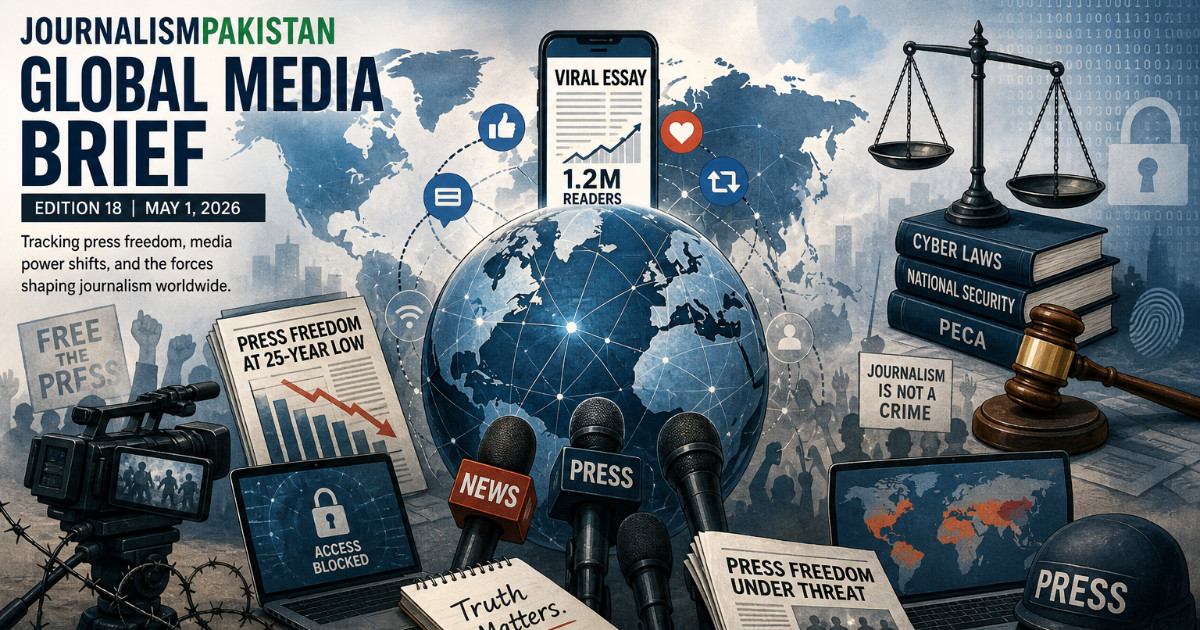
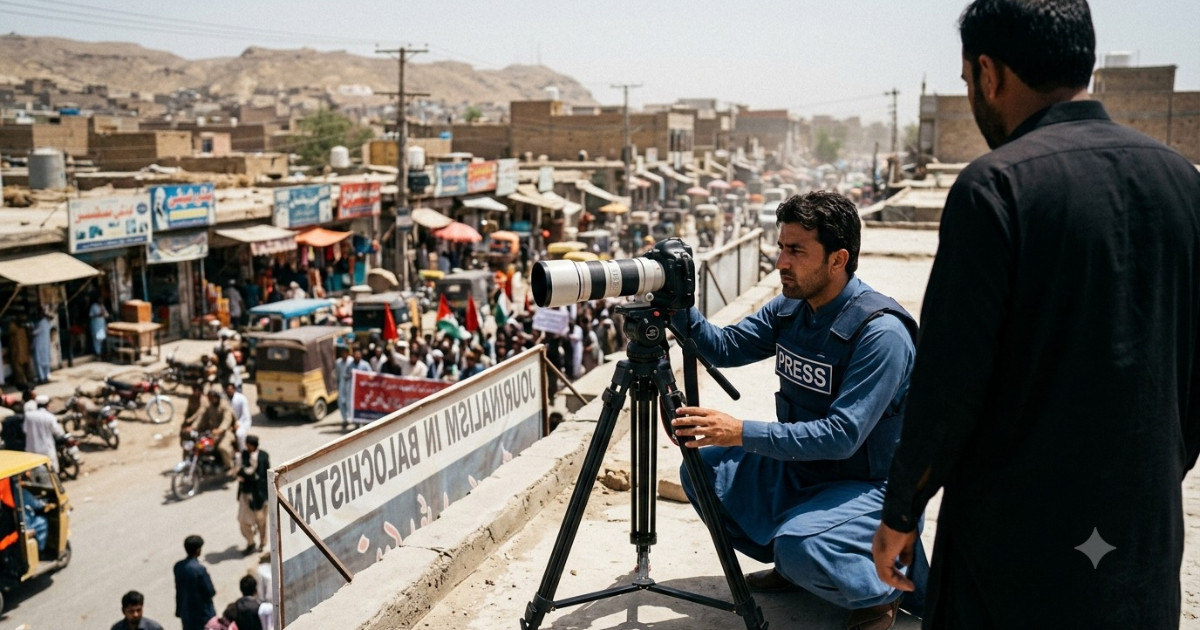
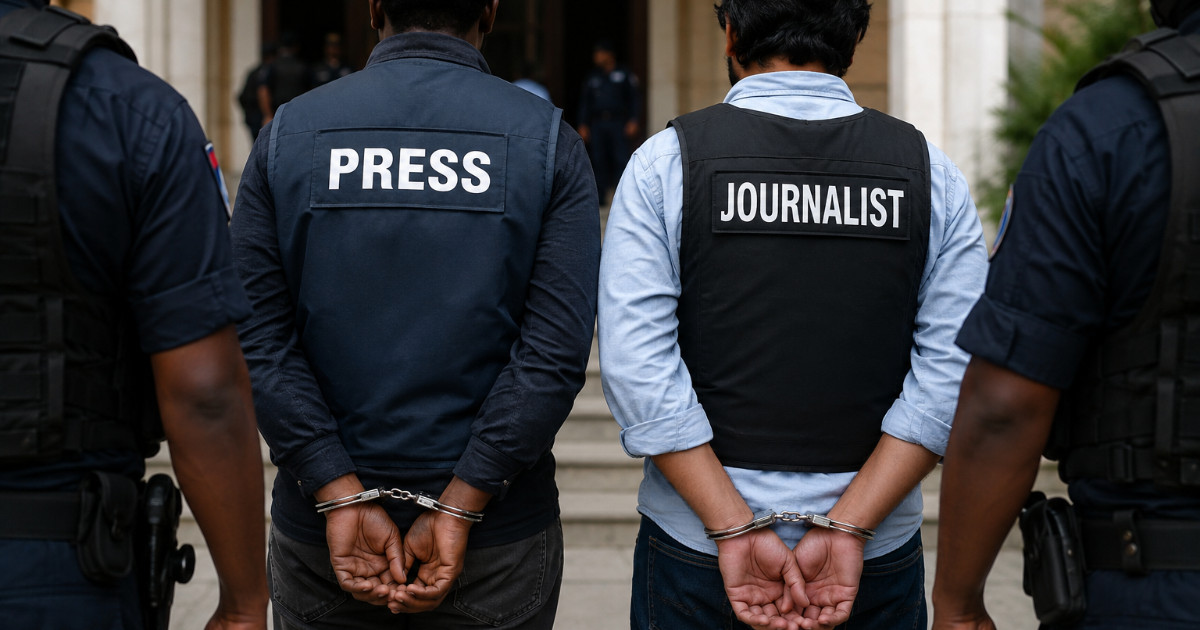
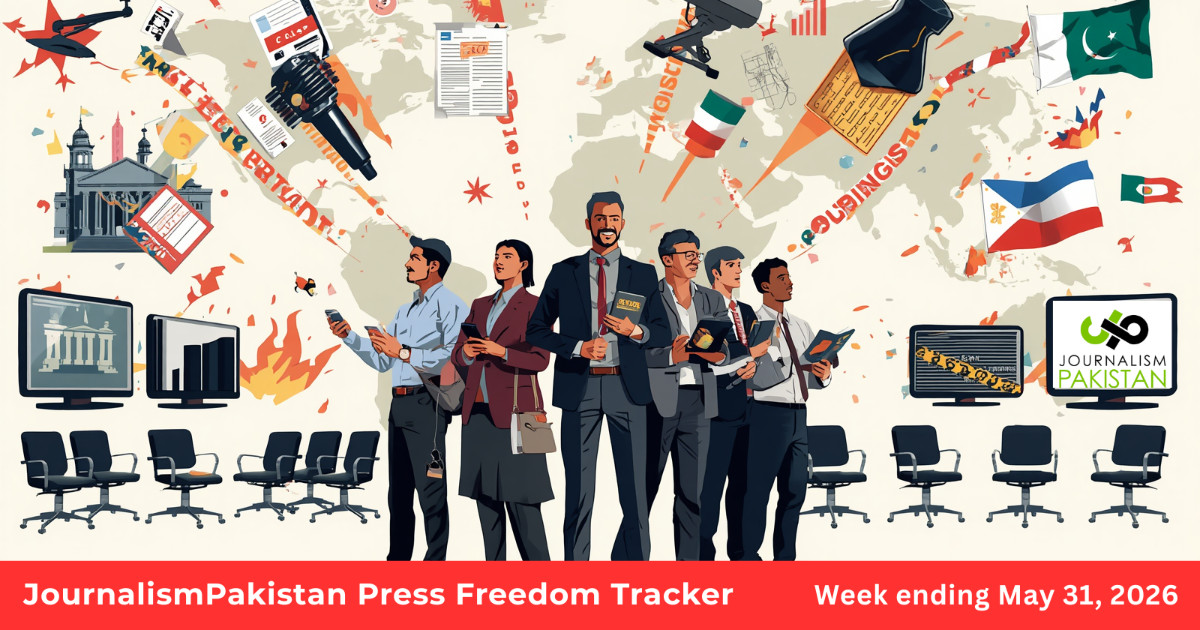
PHOTO: AI-generated; for illustrative purposes.
Key Points
- Hungary's new government is removing Orbán-era media executives and reversing state media consolidation.
- Journalists in Khyber Pakhtunkhwa staged province-wide protests over unpaid salaries and forced layoffs.
- An India-Norway press exchange renewed debate about international access and press freedom in India.
- The edition tracks rising legal pressures and debates over platform regulation affecting newsroom independence.
- Ongoing threats to journalist safety and concerns about media sustainability feature across regions.
Key Questions & Answers
What does this edition focus on?
It highlights global trends reshaping journalism, including media power shifts, newsroom changes, legal pressure, platform regulation debates, and risks to journalists.
Why is Hungary mentioned?
Hungary is a key case where the new government is dismantling Orbán-era media consolidation and replacing executives tied to state-aligned networks.
What are the protests in Khyber Pakhtunkhwa about?
Journalists and media workers are protesting delayed wages, forced dismissals and demanding stronger labor protections.
How can readers follow further updates?
Readers can follow JournalismPakistan's regular briefs and on-site reports for ongoing coverage of these stories and related developments.
Relevant Topics
Ask AI: Understand this story your way
AI EnabledDig deeper, ask anything — get instant context, background, and clarity.
Disclaimer: This feature is powered by AI and is intended to help readers explore and understand news stories more easily. While we strive for accuracy, AI-generated responses may occasionally be incomplete or reflect limitations in the underlying model. This feature does not represent the editorial views of JournalismPakistan. For our full, verified reporting, please refer to the original article.