
Press freedom review: The many faces of pressure on the press
JournalismPakistan.com | Published: 31 May 2026 | JP News Desk
Join our WhatsApp channel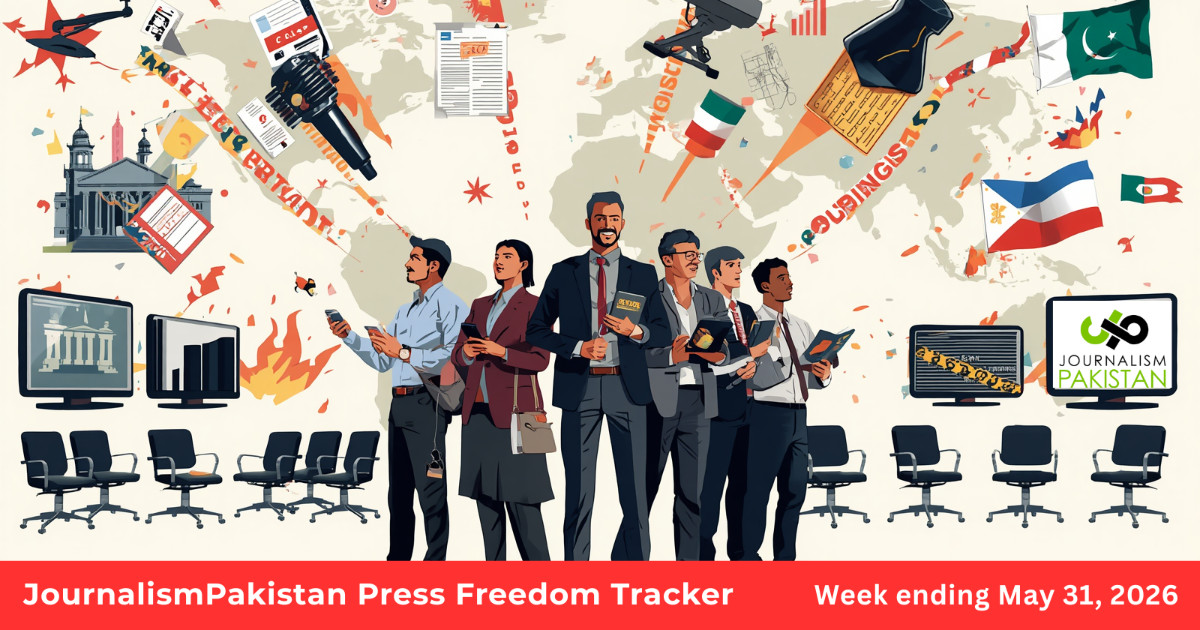
The Press Freedom Tracker highlights significant pressures on journalism worldwide: a Filipino radio journalist was killed, a former Hong Kong journalists' association chair received a short jail term, Pakistani media face layoffs and pay delays, and Iran imposed new limits on foreign reporting.Summary
Editor's note
This week's Press Freedom Tracker contains fewer confirmed incidents than some recent editions, but the developments recorded here remain significant. A journalist in the Philippines was killed, a Hong Kong journalist was ordered to serve a prison sentence, concerns persisted over media layoffs and salary delays in Pakistan, and Iran introduced new restrictions affecting the flow of information to foreign media outlets. The relatively low number of documented cases should not be interpreted as a sign that pressures on journalism are easing. Rather, it underscores the need for continued monitoring of threats to press freedom in all its forms.
Legal and regulatory pressure
HONG KONG — A court dismissed journalist and former Hong Kong Journalists Association chairperson Ronson Chan's appeal and ordered him to serve a five-day prison sentence for obstructing a police officer during a 2022 reporting assignment. Press freedom organizations said the ruling raises concerns about conditions for independent journalism in Hong Kong. (International Federation of Journalists, May 29, 2026)
Tags: Legal pressure, Journalist safety
Attacks, threats, harassment, and killings
PHILIPPINES — Radio journalist Nestor Micator was shot dead by unidentified gunmen in Cotabato province, prompting renewed calls from the Committee to Protect Journalists for authorities to investigate the killing and address longstanding impunity in attacks on media workers. (CPJ, May 27, 2026)
Tags: Journalist safety, Physical attacks, Impunity
UNITED KINGDOM — A Greek national appeared in a London court charged with allegedly conducting surveillance on a journalist working for Iran International. Prosecutors said the suspect allegedly gathered information and used covert recording equipment, raising concerns about cross-border threats targeting exiled journalists. (Reuters, May 29, 2026)
Tags: Surveillance, Journalist safety, Cross-border threats
Access to information and reporting restrictions
PAKISTAN — Journalists staged a protest walkout from Parliament's press gallery following claims that reporter Haider Shah Sherazi was prevented from covering Parliament by his organization after a question directed at PPP Chairman Bilawal Bhutto Zardari. The allegation was made by journalist Sanaullah Khan in a YouTube vlog and had not been independently verified at the time of publication. (YouTube statement by Sanaullah Khan, May 23, 2026)
Tags: Access restriction, Journalist safety, Industry disruption
IRAN — Iran introduced new restrictions requiring content providers to limit the redistribution of material to foreign Persian-language broadcasters, including BBC Persian and Iran International. The move raised concerns about tighter controls on independent reporting and cross-border journalism. (The Associated Press, May 28, 2026)
Tags: Access restriction, Digital censorship, Policy change
Media operations and industry pressures
PAKISTAN — The Parliamentary Reporters Association raised concerns about delayed salaries, unpaid Eid advances, and ongoing layoffs across several Pakistani television channels. The association said dismissed media workers had not been reinstated despite earlier protests and government intervention. (PRA statement, May 26, 2026)
Tags: Economic pressure, Media labor, Industry disruption
Press freedom review
The week's incidents demonstrate that threats to journalism continue to emerge through multiple channels. In Hong Kong, the imprisonment of journalist Ronson Chan highlighted concerns about the legal pressures facing reporters covering public events. In the Philippines, the killing of Nestor Micator served as a reminder that violence against journalists remains a persistent danger in parts of Asia. Meanwhile, Pakistan's media sector continued to face economic strain and disputes over access to reporting, while Iran introduced measures that critics say could further restrict information flows and cross-border journalism. Although the number of recorded incidents was relatively low this week, the developments reflect enduring challenges confronting journalists worldwide.
Global context
The cases documented this week mirror broader trends identified by international press freedom organizations. Around the world, journalists continue to face legal action, surveillance, economic uncertainty, physical threats, and restrictions on access to information. Press freedom conditions often fluctuate from week to week, but the underlying pressures affecting independent journalism remain persistent. The entries also illustrate the increasingly international nature of media threats, with surveillance, transnational intimidation, and restrictions on foreign media continuing to affect journalists beyond their home countries.
For additional context, readers can review last week's Tracker.
ATTRIBUTION: Compiled by JournalismPakistan
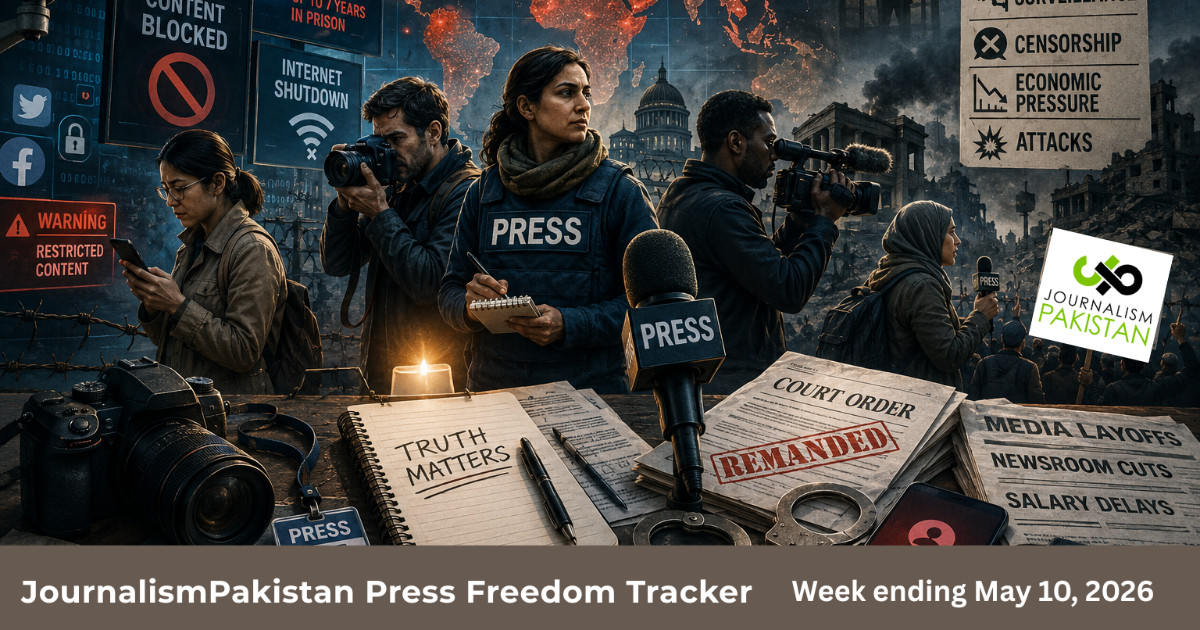
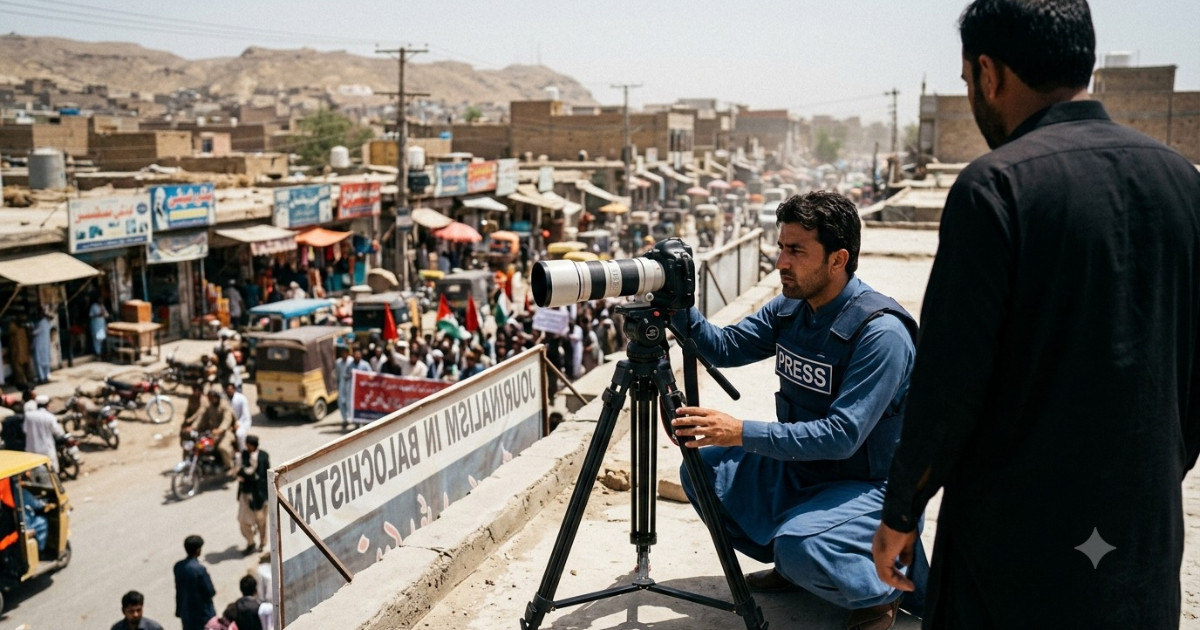
PHOTO: AI-generated; for illustrative purposes
Key Points
- A Philippine radio journalist was fatally shot, underlining ongoing threats and impunity for attacks on media workers.
- Ronson Chan, former Hong Kong Journalists Association chair, lost an appeal and was ordered to serve a short jail sentence.
- Pakistani media outlets continue to face layoffs and salary delays, raising concerns about journalists' livelihoods and news capacity.
- Iran introduced new restrictions that limit the flow of information to foreign media and complicate international reporting.
- Even with fewer documented incidents this week, the Tracker warns that pressures on independent journalism remain widespread and evolving.
Key Questions & Answers
What incidents does this roundup highlight?
It records a fatal attack on a Filipino radio journalist, a Hong Kong reporter sentenced to a short jail term, media layoffs and salary delays in Pakistan, and new Iranian restrictions on foreign reporting.
Why do these developments matter for press freedom?
Such incidents — violence, legal penalties, economic pressure, and restrictive regulations — limit journalists' ability to report freely and endanger independent news coverage.
Are these isolated events or part of a wider trend?
They reflect broader, ongoing pressures on journalism globally, where legal, economic, and physical threats converge to weaken independent reporting over time.
What can authorities and media organizations do?
Authorities should investigate attacks and uphold legal protections; media organizations and policymakers should address job security, timely pay, and safeguards for independent reporting.
Relevant Topics
Ask AI: Understand this story your way
AI EnabledDig deeper, ask anything — get instant context, background, and clarity.
Disclaimer: This feature is powered by AI and is intended to help readers explore and understand news stories more easily. While we strive for accuracy, AI-generated responses may occasionally be incomplete or reflect limitations in the underlying model. This feature does not represent the editorial views of JournalismPakistan. For our full, verified reporting, please refer to the original article.