
How Uruguay's 3.5 million people defied world football for a century
JournalismPakistan.com | Published: 26 June 2026 | Dr. Nauman Niaz (TI)
Join our WhatsApp channel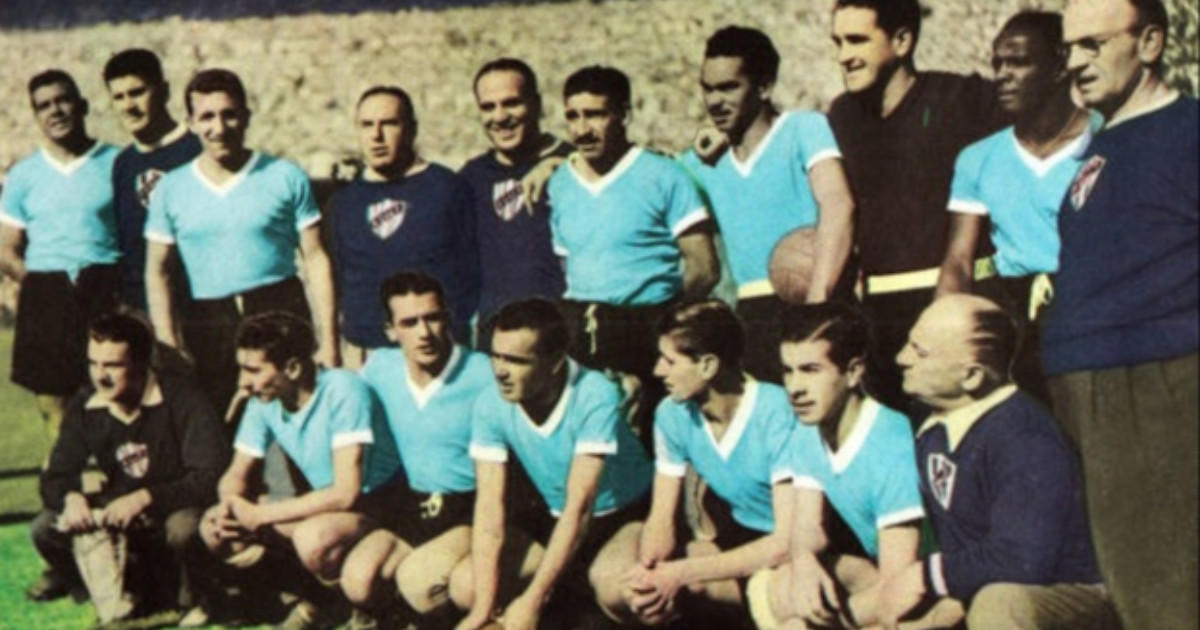
With a population of roughly 3.5 million, Uruguay has defied demographic odds to win the World Cup twice and reach multiple late-stage tournaments across a century. Its sustained success challenges assumptions that size determines footballing achievement.Summary
There is a country on the eastern bank of a great brown river, wedged between two giants as a pebble is wedged between two boulders, and it has won the football championship of the world twice. Say that sentence slowly and let its absurdity bloom. Uruguay holds, at the last reckoning, a population of some three and a half million souls, fewer than live in a middling European city, fewer than throng a single afternoon's worth of Asian megalopolis. It is by a distance the smallest nation ever to have lifted the World Cup, and it has lifted it not once, in a freak of fortune, but twice, and stood among the last four on four separate occasions across the long century. No accounting of mere probability can explain this. Uruguay is the standing rebuke to the idea that football is a numbers game, the living proof that a nation may be small in body and enormous in soul.
Consider, for a moment, what this means against the run of footballing history. The roll of World Cup winners is a roll of giants: Brazil with its continental immensity, Germany with its ruthless machinery, Italy and Argentina and Spain and France and England, every one of them a nation of tens of millions, every one possessed of resources that Uruguay could only dream of. Eight nations in the long history of the tournament have lifted the trophy, and seven of them are exactly the powers one would expect. The eighth is a sliver of land smaller than many a forgotten province, and it was the first of them all, the one that showed the rest it could be done. There is no parallel to this anywhere in the major team sports of the world. It is as though a village had produced, twice over, the heavyweight champion of the earth, and then gone on producing contenders, generation upon generation, long after every law of probability had declared the well must surely run dry.
The River, the Cattle, and the Making of a Football Nation
To understand the Uruguayan, you must first understand the river, the cattle, and the port. This was a country built by immigrants pouring off ships from Italy and Spain into Montevideo, by gauchos who worked the endless grasslands of the interior, by stevedores and butchers and the children of the slaughter yards. It is a hard, secular, literate, faintly melancholy little republic, and it poured into football all the fierce self-regard of a people who knew themselves to be few and were determined to be feared. They had no empire, no vast hinterland, no inexhaustible reserve of bodies to throw at the game.
What they had instead was an idea about themselves, and the idea was this: that a Uruguayan, properly raised and properly enraged, was worth two of anybody else. It helped, of course, that they were there at the very beginning, before the giants had woken. Uruguay won the Olympic football tournaments of 1924 and 1928, in Paris and Amsterdam, and dazzled a Europe that had never seen the game played with such fluency and poise, by men who passed the ball as though it were an extension of thought. So when the inaugural World Cup was to be staged in 1930, there was only one plausible host.
Uruguay built a stadium and called it the Centenario, for the tournament coincided with the hundredth year of the nation's independence, and into that arena they marched and won the first World Cup ever contested, defeating Argentina, the neighbour and the rival and the mirror, four goals to two. The match was so charged that the two sides could not agree upon a ball, and a compromise was struck whereby one half was played with an Argentine ball and the second with a Uruguayan one, a detail so perfectly absurd it might have been invented by a satirist. Uruguay, having trailed at the interval with the visitors' ball, triumphed with their own. There is a parable in that, if you care to find one.
The Maracanazo: The Day Silence Swallowed the World's Largest Stadium
And then there is the afternoon that outgrew football altogether and became myth, the afternoon that a whole other nation has spent three quarters of a century failing to recover from. To tell the story of Uruguay is, in the end, to tell the story of the sixteenth of July, 1950, and of a silence so total and so terrible that it has its own name in two languages. Brazil had built the Maracana to be the cathedral of their coronation. The 1950 World Cup was decided not by a knockout final but by a final pool, and Brazil came to the last match needing only a draw against Uruguay to be crowned champions of the world before their own people. They had thrashed Sweden seven to one and Spain six to one.
The newspapers had printed the victory in advance. A song had been composed for the celebration. A crowd recorded at nearly two hundred thousand, the largest ever to watch a football match, packed itself into the great bowl, certain it had come to witness a coronation rather than a contest. Almost nobody in that vast congregation, and almost nobody in the world beyond it, gave Uruguay a prayer.
Uruguay had a captain named Obdulio Varela, a son of the working districts whom they called the Black Chief, a man of such granite composure that he seemed carved from the very idea of defiance. In the dressing room, with his teammates trembling at the scale of what faced them, Varela is said to have told them that the match began at nothing each, that there were eleven of them and eleven of the enemy, and that they should go out and show the world who they were. When Brazil scored early in the second half, and the Maracana erupted into a roar that might have been heard across the continent, Varela did something that belongs now to the scripture of the game. He picked the ball out of the net, tucked it under his arm, and walked, slowly, with insolent unhurried calm, the length of the pitch to the centre circle, arguing with the referee in a language the official could not understand, doing nothing but spending time, draining the venom from the crowd, letting the roar die in the throats of two hundred thousand. By the time he set the ball down, the spell was broken. Uruguay was no longer playing the occasion. They were simply playing eleven men.
Juan Alberto Schiaffino, an inside forward of such elegance that the great clubs of Italy would soon empty their vaults to acquire him, struck the equalizer. And then, with eleven minutes remaining, a winger named Alcides Ghiggia, who would score only five goals in his entire international career and four of them in that single tournament, slid past his marker and drove the ball low past the goalkeeper Barbosa at his near post. The Maracana did not roar. The Maracana fell utterly, suffocatingly silent, and the silence is the thing that the witnesses never forgot, a silence so vast it seemed to have weight. Ghiggia would say, many years afterward, that only three people had ever managed to silence the Maracana: the Pope, Frank Sinatra, and himself. He died, with the strange and fated music that attends this story, on the very anniversary of the goal, sixty-five years to the day.
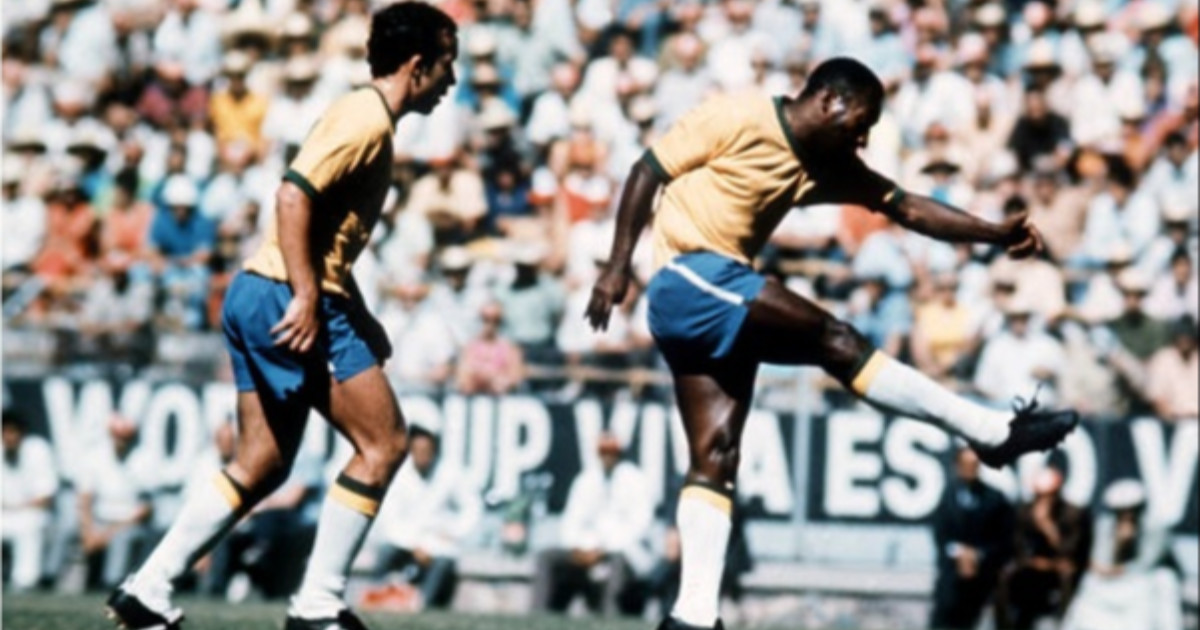
They call it the Maracanazo, the Maracana blow, and it is impossible to overstate what it did to the two nations on either side of it. For Brazil, it was a national trauma, a wound in the collective psyche that drove them, in their grief, to reinvent themselves as the most beautiful footballing culture the earth has produced, as though seeking to outrun the memory through sheer joy. For Uruguay, it was confirmation, written in the largest possible letters before the largest possible audience, of the thing they had always privately believed: that they were small only in the ways that did not matter, and that on the field, where eleven faced eleven and the heart counted for more than the headcount, they would bow to no one on the planet.
Garra Charrua: The Untranslatable Soul of Uruguayan Football
Every footballing nation possesses a word, spoken or unspoken, that contains its idea of itself. The Brazilians have jogo bonito, the beautiful game. The Dutch built a cathedral of thought they called Total Football. The Italians have catenaccio, the bolt drawn across the door. And the Uruguayans have garra charrua, a phrase that does not translate cleanly into any other tongue and is the truer for its untranslatability.
Garra means, literally, the claw, the talon, the grip of a beast that will not let go. Charrua refers to the Charrua, the indigenous people of the land who fought the colonisers with a ferocity that passed into legend even as the people themselves were all but extinguished. Garra charrua, then, is something like the tenacity of the cornered, the courage that is not the absence of fear but the refusal to be governed by it, the quality of a small thing that fights as though it were large because it has understood that to fight any other way is to be devoured. It is not a tactic. It is a temperament, a moral posture, a way of being on a football field, the Uruguayans would insist, of being in the world.
It is tempting, and lazy, to reduce garra charrua to mere thuggery, to the cynical foul and the dark art, and, indeed, the Uruguayan has never been sentimental about the means by which a match is won. There is in their football a streak of the implacable, a willingness to do the necessary ugly thing that more decorous cultures find distasteful precisely because they have the luxury of finding it distasteful. But to stop there is to miss the nobility that sits at the centre of the idea. Garra charrua is, at its highest, a kind of love, a fidelity to the shirt and the river and the three and a half million who are watching from across the water, a refusal to give them anything less than the whole of oneself. It is Varela walking the length of the Maracana with the ball under his arm. It is a defender throwing his body in front of a shot as though his body were the only thing that stood between his nation and annihilation, which, in the theatre of his own mind, it is.
A Republic Unlike Any Other: Uruguay's Culture of Sober, Unsentimental Fortitude
There is a deeper cultural soil from which all of this grows, and it would be a poverty to speak of the football without speaking of the country that produced it. Uruguay is a republic of unusual character: among the most secular and literate societies in the Americas, a place that abolished the death penalty before almost anyone, that built one of the first welfare states on the continent, that produced essayists and chess players and a tradition of melancholy, clear-eyed self-examination quite unlike the exuberance of its neighbours.
The Uruguayan is, by temperament, undeceived. He does not expect the universe to do him favours. He has learned, from a national history of being small beside the large and poor beside the rich, that whatever he is to have he must take with his own hands, and that nothing is owed and nothing is guaranteed. This sober, unsentimental fortitude is the bedrock beneath garra charrua, and it explains why the Uruguayan plays football not as a celebration, in the Brazilian manner, but as a kind of solemn, total exertion of the will, a moral act performed before the watching nation. To play for Uruguay is not only to represent the country. It is to enact, in the space of ninety minutes, the country's whole idea of how a small and proud people must conduct themselves in a world built for the big.
This philosophy has a cost, and the Uruguayans have paid it. Their reputation in the wider world has often been that of the spoiler, the dark and difficult opponent who subtracts beauty from the game rather than adding it. There have been moments, indelible and unlovely, when garra charrua tipped over into something harder to defend, a handball upon the goal line in the dying seconds of a World Cup quarter-final, a set of teeth sunk into an opponent's shoulder upon the grandest stage. The Uruguayan carries these episodes the way a proud man carries a scar, neither quite disowning them nor quite celebrating them, aware that the same furnace that forges the courage also, on its worst days, forges the transgression. You cannot have the one without risking the other. The clenched fist that will not let go is also sometimes the fist that strikes.
The Nursery of the World: Uruguay's Exported Genius
Here we arrive at the deepest paradox of the Uruguayan story, and at the place where it most instructively diverges from the great nations against whom it measures itself. For Uruguay's genius has always been an export. A country of three and a half million cannot sustain a domestic league capable of holding its own talent, and so for a hundred years it has functioned as a kind of nursery to the world, raising its sons upon the dust of Montevideo and then watching them sail away to the wealthy leagues of Europe, to Italy and Spain and England, there to make their fortunes and their names. The Uruguayan footballer is, almost by definition, a wanderer, an expatriate, a man who carries his small nation in his chest across a vast diaspora of stadiums.
Schiaffino went to Milan after 1950. The pattern he set has never broken. Look at the side that Marcelo Bielsa took to the World Cup of 2026 and you will find a roster scattered across the football capitals of two continents: the captain Jose Maria Gimenez and the defender Ronald Araujo grown to greatness in Spain, the midfielders Manuel Ugarte and Rodrigo Bentancur plying their trade in the Premier League of England, Federico Valverde, the talisman, a fixture in the engine room of Real Madrid, the most decorated club on earth. A full third of Bielsa's selection earned their living in the leagues of Brazil and Mexico. The Uruguayan national team is, in a literal sense, assembled by summoning its scattered children home from the far corners of the footballing world for a few weeks at a time, a gathering of exiles who left as boys and return as masters.
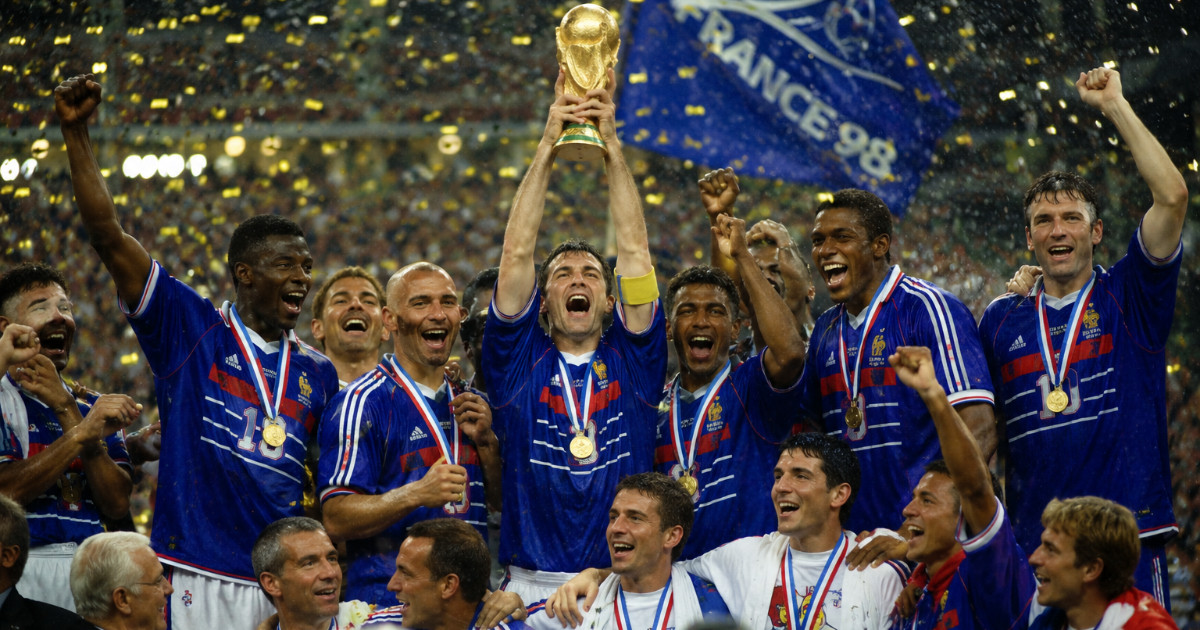
It is worth pausing here upon the instructive counter-example of France, for the contrast illuminates what Uruguay is by showing us what it is not. France built its modern greatness, its World Cup triumphs of 1998 and 2018, upon the opposite principle: upon immigration inward rather than emigration outward, upon gathering to itself the talented sons of its former empire, the children of Algeria and Cameroon and Senegal and the Caribbean, and weaving them into a single national purpose. Zinedine Zidane was the son of Algerian immigrants to Marseille; Kylian Mbappe is the son of a Cameroonian father and an Algerian mother, raised in the suburbs north of Paris; the great majority of the French squad that won in Russia were immigrants or the children of immigrants. France grew strong by being a destination, a place to which talent flowed.
Uruguay is the mirror image, a place from which talent flows. It does not import its greatness; it manufactures it and exports it and then, miraculously, reassembles it. And there is something in this that deepens rather than diminishes the achievement. The French model, for all its glory, is in a sense the natural reward of a large and wealthy nation that opens its doors. The Uruguayan model is stranger and, to my eye, more moving: a tiny country that cannot keep its own sons, that gives them away to the world out of economic necessity, and that nevertheless binds them so tightly to the idea of the nation that they return, again and again, to bleed for a shirt that pays them a fraction of what their clubs pay them. The expatriate Uruguayan does not forget the river. That, perhaps, is the truest expression of garra charrua of all: a loyalty that distance cannot dilute, a belonging that survives the diaspora.
Heroes of the National Gallery: From Varela to the Modern Triumvirate
A nation tells itself through its heroes, and the Uruguayan gallery is a portrait of the national temperament rendered in flesh. At its head stands Varela, the Black Chief, the captain of the Maracanazo, who, after the triumph, is said to have spent the night drinking quietly in the bars of Rio with the very Brazilians whose hearts he had broken, consoling them, a victor too dignified to gloat. There is Jose Leandro Andrade, the elegant black midfielder of the 1930 triumph, called the Black Marvel, who dazzled the Europe of the 1920s and is remembered as the first great black star of world football. There is Schiaffino, all grace and intelligence, the artist among the warriors.
The modern age produced a triumvirate that carried the small nation back to the summit after decades in the wilderness, for it must be said that the second half of the twentieth century was, for Uruguay, a long and often barren road. They finished fourth in 1954 and fourth again in 1970, the side of the cultured Pedro Rocha, but thereafter came the lean years, the failures to qualify, the sense of a glory receding into sepia.
The Wilderness Years: Four Decades of Waiting
It was not until 2010, in South Africa, that the old fire blazed up again, and it blazed through three men whose names belong now to the permanent memory of the game.
It is worth dwelling for a moment upon those barren decades, for they are the necessary shadow against which the resurgences shine. After the fourth-place finish of 1970 in Mexico, where a side built around the languid brilliance of Pedro Rocha fell to Brazil in the semi-final, Uruguay entered a wilderness that lasted, with cruel interruptions, the better part of forty years. They failed to qualify for the finals altogether in 1978, 1982, 1994, and 1998, watching from across the water as the game they had fathered marched on without them.
The domestic crisis deepened, the talent drained away younger and faster to Europe, and there were voices, even within Uruguay, that wondered aloud whether the glory had been a thing of a vanished age, whether the small nation had simply been overtaken at last by the cold counting of heads it had so long defied. The Uruguayan endured these years the way he endures everything, with a stubborn refusal to concede that the story was finished, and he was rewarded, eventually, as the stubborn sometimes are.
Forlan, Suarez, Cavani: The Golden Generation That Lit Up South Africa and Beyond
Diego Forlan was the first, a forward of golden hair and golden touch who had been discarded by the English game as a failure and who reinvented himself in Spain into one of the finest strikers in the world, and who at that 2010 World Cup played with such sustained brilliance that he was named the outstanding player of the entire tournament, carrying Uruguay to a fourth-place finish that felt, to a nation that had waited forty years, like a resurrection.
Beside him and after him came Luis Suarez, the most gifted and the most controversial Uruguayan of all, a striker of feral genius and feral appetite, capable in a single tournament of the most exquisite finishing and the most indefensible transgression, a man who embodied garra charrua in both its glory and its shadow more completely than any player before him. And there was Edinson Cavani, the hunter, all selfless running and ferocious commitment, the honest labourer to Suarez's dark magician, who gave his body to the cause across a decade and a half as though every match might be his last.
That these three should have come, all at once, from a nation of three and a half million is a statistical impossibility that the Uruguayan simply shrugs at, for the Uruguayan has long since ceased to be surprised by his own improbability. Suarez and Cavani, between them, scored goals for the national team in numbers that the giants of football would envy, and they did it while carrying the whole weight of the small nation's expectation upon shoulders that never seemed to bend. They are gone now from the international stage, Cavani retired, and Suarez, in the spring of 2026, left out of the World Cup squad for the first time since 2010, the end of an era marked not with a parade but with the quiet, painful calculus of a manager's selection. A golden generation does not announce its ending. It has been over one day, is over.
Marcelo Bielsa and the New Wager: El Loco Takes Charge of La Celeste
And so we come to the present, and to the strange and compelling figure who now holds the destiny of La Celeste in his restless hands. Marcelo Bielsa is an Argentine, which is itself a provocation, for no rivalry in football runs deeper or older than that across the River Plate, and for Uruguay to entrust its national soul to a son of the ancient enemy tells you something of the desperation and the ambition that coexist in the Uruguayan breast. They call him El Loco, the Madman, and the name is affectionate and accurate in equal measure. He is an obsessive, a monk of the training ground, a man who has influenced the philosophy of half the great managers of the modern game while winning, himself, almost nothing, a prophet honoured everywhere but in the trophy cabinet.
Bielsa has taken the old Uruguayan furnace and fed it a new kind of fuel. Where the Uruguay of old defended deep and struck on the counter, content to absorb and to wound, Bielsa demands the opposite: a relentless, suffocating, high press, a team that hunts the ball high up the field in packs, that attacks vertically and at speed the instant possession is won, that runs and runs until the legs give out. It is garra charrua reimagined for the modern age, the old tenacity turned from a defensive crouch into an aggressive lunge. The early returns were intoxicating; Bielsa's Uruguay beat both Brazil and Argentina by two goals to nil in the space of a few days, statements of such force that a continent took notice.
To grasp the magnitude of what Uruguay has wagered upon this man, one must understand the peculiar place Bielsa occupies in the imagination of the game. He is the manager's manager, the figure whom the most celebrated coaches of the modern era name, almost to a man, as their deepest influence. The high pressing and positional intricacy that have come to define the elite European game can be traced, by a hundred winding paths, back to his obsessive theorising on the training grounds of Argentina and Chile and Spain and England. And yet for all this influence, he has remained curiously starved of the silverware that lesser imitators have hoarded, a thinker whose ideas conquered the world while their author won, himself, almost nothing of note. There is a tragic grandeur to him, a sense of a prophet forever pointing toward a promised land he is not permitted to enter.
For Uruguay to hand him their national team in this transitional hour is to gamble that the prophet might, at the last and upon the grandest stage, finally cross over, and to gamble equally that his uncompromising intensity will galvanize rather than exhaust a squad caught between a departed golden generation and one not yet fully arrived. It is a wager entirely in keeping with the national character: high-risk, romantic, and utterly without sentimentality about the cost of failure.
The road has been rougher since, as the roads of prophets tend to be. Qualification for the 2026 World Cup was secured but turned fractious, the manager's uncompromising treatment of the revered veterans opening wounds that did not fully heal, the omission of Suarez a decision that split the nation's affections. Bielsa, never a man to soothe, described himself after one heavy defeat as toxic and offered to leave if the players wished it. This is not a manager who manages the mood. This is a manager who pursues an idea to its conclusion and lets the human cost fall where it falls. Whether that idea, pushed to its limit in the summer heat of North America after a long European season, will carry Uruguay deep into the tournament or break its tiring legs before the latter stages, is the question upon which the whole adventure turns.
The Case for Uruguay at the 2026 World Cup: Not the Strongest Squad, but the Most Dangerous
It would be a flattery, and you do not come to a serious essay for flattery, to call Uruguay the strongest team of the contemporary age in the plain sense of the phrase. The honest accounting does not support it. They arrived at the 2026 World Cup ranked sixteenth in the world, having finished fourth in the South American qualifying campaign. Their golden generation departed, their goalscoring uncertain, their gifted defenders carrying injuries, their brilliant manager at war with parts of his own dressing room. Spain, France, Argentina, Brazil, England: each commands, on paper, a deeper and more luminous squad. To claim otherwise would be to insult the reader's intelligence and to betray the Uruguayan virtue of looking the hard truth in the eye without flinching.
And yet. And yet there is a case to be made, and it is not the case for the strongest squad but for something subtler and, to the Uruguayan way of thinking, more important: the strongest temperament, the team you would least wish to draw in a single match upon which everything depended. For there is a quality that does not appear in the rankings and cannot be bought in the transfer market, and Uruguay possesses it in greater concentration than any nation on earth: the knack of the knockout, the capacity to be precisely as good as the occasion demands and not one degree less, the refusal to be intimidated by reputation or crowd or history. A tournament is not a league. It is not won by the side that is best across the long grey months but by the side that can summon, on the single decisive afternoon, the will to refuse defeat. And no one in the history of the game has refused defeat more stubbornly, more often, against longer odds, than the small blue nation from the eastern bank of the river.
This is the case for Uruguay, then: not that they are the most gifted, but that they are the most dangerous, the most likely to take a giant by the throat on the one day the giant cannot afford to be taken. Under Bielsa they carry a midfield, marshalled by Valverde, capable of overwhelming finer teams through sheer intensity; they carry defenders schooled in the elite academies of Europe; and they carry, intertwined into the essence of every man who pulls on the shirt, the inheritance of 1930 and 1950, the memory of the Centenario and the silence of the Maracana, the certain knowledge passed from generation to generation that a Uruguayan does not lose just because the world expects him to.
That inheritance is worth a goal of a start before a ball is kicked. Whatever befalls them upon the fields of North America, the impact of this impossible little country upon the game it helped to make is already secured for as long as football is played. Uruguay hosted and won the first World Cup; without that act of audacity, the tournament might never have taken root at all. Uruguay authored, at the Maracana, the single most consequential result the game has known, the upset that remade the self-image of the largest footballing nation on earth. Uruguay gave the language of football one of its essential and untranslatable words. And Uruguay stands, permanently and irrefutably, as the answer to anyone who claims that the future of the game belongs only to the populous and the rich, that size and wealth are destiny. A nation of three and a half million has four stars upon its shirt, counting the Olympic golds it considers its due, and it wears them not as a relic of a vanished past but as a standing promise about the present: that the heart, properly enraged, can still outweigh the headcount.
That is the unending impact, and it is the one that matters. Long after the particular fortunes of any single tournament have faded into the statistical record, Uruguay will remain what it has always been, the courage of the small made manifest, the living argument that a country can be tiny in every measure the world respects and gigantic in the one measure the world remembers. They taught the game that the contest does not always go to the strong. They are teaching it still. And somewhere across the wide brown river, three and a half million people will gather again before their screens, as their grandparents gathered before their wirelesses on a July afternoon in 1950, and they will believe, with the whole stubborn force of the national heart, that their few are worth the world's many. More often than reason allows, they have been proved right. That, in the end, is the only philosophy Uruguay has ever needed, and the only one it has ever required the world to understand.
ABOUT THE WRITER: Dr. Nauman Niaz, a Post Doctorate (Oxford), PhD (UWA), FRCP (London), FRCP (Edinburgh), FRCP (Ireland), FRCP (Glasgow), CST (Endo, UK), MSc Biomechanics and Kinesiology (UWA), MRCP (UK), MBBS (Pb), is a civil award winner (Tamgha-e-Imtiaz) in Sports Broadcasting and Journalism. He is a regular cricket correspondent, having covered 54 tours and three ICC World Cups, and has written over 3,700 articles. He has authored 19 books and is the official historian of Pakistan Cricket (Fluctuating Fortunes, IV Volumes, 2005). His signature show Game On Hai has been the highest-rated in both ratings and acclaim.
Key Points
- Uruguay has a population of about 3.5 million yet won the World Cup twice.
- It was the first nation to lift the World Cup and remained competitive across a century.
- Its achievements contrast with larger, better-resourced football powers.
- Success spans early 20th century triumphs and sustained national culture of football.
- The country's record challenges the belief that size alone predicts football success.
Key Questions & Answers
How many times has Uruguay won the World Cup?
Uruguay has won the FIFA World Cup twice, including the inaugural 1930 tournament and again in 1950.
How does such a small country compete with football giants?
Uruguay's success stems from a deep footballing culture, strong domestic coaching traditions and historic momentum from early international wins rather than sheer population size.
When did Uruguay first win major international football honours?
Uruguay claimed early international prominence by winning Olympic football tournaments in the 1920s and then the first World Cup in 1930.
Does Uruguay still perform well in modern international football?
Yes; despite demographic limits, Uruguay has regularly reached late stages of major tournaments and remains influential in South American and global football.
Relevant Topics
Ask AI: Understand this story your way
AI EnabledDig deeper, ask anything — get instant context, background, and clarity.
Disclaimer: This feature is powered by AI and is intended to help readers explore and understand news stories more easily. While we strive for accuracy, AI-generated responses may occasionally be incomplete or reflect limitations in the underlying model. This feature does not represent the editorial views of JournalismPakistan. For our full, verified reporting, please refer to the original article.