
Ben Stokes is leaving and cricket has no one to replace him
JournalismPakistan.com | Published: 28 June 2026 | Dr. Nauman Niaz (TI)
Join our WhatsApp channel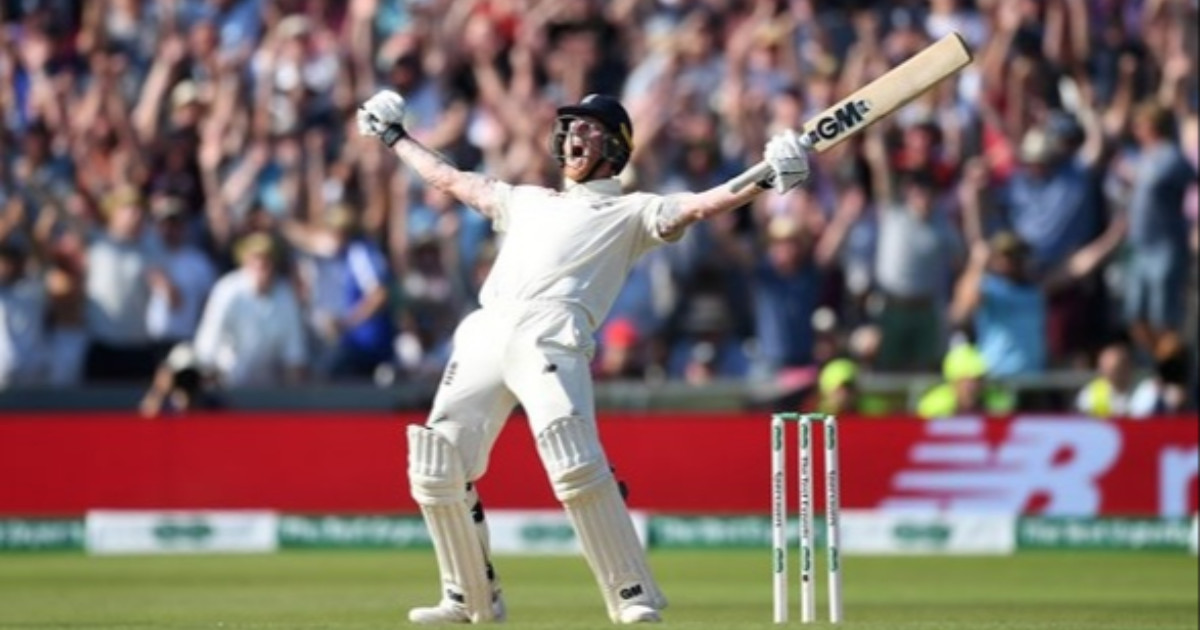
Ben Stokes's eventual exit will leave a void in England's cricket across formats; his blend of batting power, bowling utility and emotional leadership created match‑defining moments and a team identity that will be difficult to replicate. The game must prepare for that loss.Summary
There comes, to every man who has lived loudly in the eye of the world, a quiet hour in which the noise withdraws, the floodlights cool, and the field that once roared its devotion lies empty under a grey and ordinary sky. It is the hour of leaving. For Benjamin Andrew Stokes, born of a New Zealand winter and forged into an English summer, that hour has been a long time gathering on the horizon, the way weather gathers over the Pennines before it breaks. Whether it arrives this season or the next, whether announced from a podium or confided in a single unadorned sentence, the leaving will come, as it must, and when it does, the game of cricket will set down something it cannot easily lift again.
It is a curious truth about the great ones that we begin to mourn them while they yet stand among us, bat in hand, still capable of the impossible. We watch them now with a tenderness once reserved for the dusk, knowing the brightness will not last, treasuring its fading. So let this be written not as the cold notice of a departure already filed and forgotten, but as a portrait drawn in the warm and failing light, of the man, the warrior, the stylist, the complete and improbable all-rounder, and of the poise with which such a figure must one day lay his arms down.
A Philosophy of Refusal: How Stokes Redefined England's Approach
Every cricketer carries a creed, though most carry it unspoken, buried beneath the averages and the accumulated caution of a professional life. Stokes carried his aloft, like a banner in a high wind, and it could be read by anyone with eyes to see. It was a philosophy of refusal. He refused the draw when the draw was sensible. He refused the safe single when the boundary was there to be plundered. He refused, above all, the great English temptation toward apology, the instinct to play not to lose, to survive the day rather than to seize it.
When he took the captaincy of England's Test side in the spring of 2022, with the team becalmed, dispirited, and unsure of its own purpose, he did not preach patience. He preached jeopardy. He told men to chase totals that prudence said were beyond chasing, to declare when the reckoning said hold, to bowl for wickets when the scoreboard begged for containment. The style that grew from this, half-mocked and half-adored, came to bear a name not of his choosing, and the name has since been worn smooth by overuse. But strip the label away and what remains is something older and finer than a marketing word. It is the conviction that a game is a thing to be won, gloriously if possible, and that the fear of losing is the only opponent truly worth defeating.
There was a generosity in this creed that ran deeper than tactics. Stokes played as though entertainment were a duty owed to the people in the stands, those who had paid their coin and given up their day, who had brought their children to learn what courage looked like. He believed, one suspects, that a cricketer holds the afternoon in trust, and that to bore the faithful was a small betrayal. So he gambled with the afternoon. He spent it lavishly. And the crowds, sensing they were watching a man who would rather fail spectacularly than succeed by stealth, loved him with the fierce and forgiving love a people reserve for those who dare on their behalf.
The Man Behind the Warrior: From Christchurch to Cockermouth
Behind the warrior was always the man, and the man was made of more fragile, more human stuff than the legend allowed. He was born in Christchurch in June of 1991, the son of a rugby league footballer whose own body had been a kind of currency, spent hard in the service of a brutal game. The boy crossed the world at twelve, settling in the damp green folds of West Cumbria, in the town of Cockermouth, where the rivers meet, and the rain is patient. He left school with a single qualification and a talent that no certificate could measure. From the beginning, then, he was a man of the margins, neither wholly of one country nor entirely of another, belonging most truly to the twenty-two yards in the middle, the one piece of ground that asks no questions of a man's accent or his schooling.
Those who imagine the great athlete as a creature of unbroken confidence have never looked closely at Stokes. In the winter of 2020, his father died of cancer in the brain, and the grief sat upon him with a weight that no innings could lift. There followed a season in which the bravest cricketer of his generation could not bring himself to walk onto a field at all, who stepped away from the game to tend to a mind that had begun to fracture under the accumulated load of sorrow and scrutiny and the merciless tally of expectation. He spoke of panic, of anxiety, of the medication that steadied him. He spoke of these things plainly, in an age and a trade that still mistook such honesty for weakness, and in doing so, he performed an act of courage that no boundary could rival. The man who feared nothing on the field confessed, off it, to fearing a great deal. That confession may yet outlast every six he ever struck.
He was no plaster saint. There was a night in Bristol, years before, that the courts examined and the newspapers feasted upon, a night that nearly ended everything before the legend had properly begun. And there have been later nights, later lapses, the missteps of a man who has never learned to live quietly and perhaps never will. To pretend otherwise would be to insult him with a halo he never sought. The truth of Stokes is that his fire warmed and scorched in equal measure, that the same furnace which forged the heroics also, now and then, burned the hand that tended it. He was a man, entire and unedited, and it is as a man that he should be remembered, not as a statue scrubbed clean of its weather.
The Headingley Miracle and the Lord's Final: Defining a Legend
And yet, when the cause was lost and the situation hopeless and every reasonable observer had begun to fold away his notes, it was then that Stokes became something more than a man. It was then that he became the warrior, and the warrior of Stokes belongs in the small and shining company of cricket's truly unkillable spirits.
Consider the headland of his legend, the ground at Headingley in August of 2019, where England, pursuing a total that bordered on the absurd, had subsided to the edge of humiliation. The match was gone. Everyone knew the match was gone. And there Stokes stood, with the last man for company and the whole improbable burden upon his shoulders, and he did not so much play an innings as wage a campaign, striking the ball into the Leeds evening with a violence that seemed to rearrange the laws of what was possible. Each stroke was an argument against surrender. Each refused dismissal was a small resurrection. When the winning runs came at last, the ground did not cheer so much as exhale, the collective breath of thousands who had watched a man drag a result out of the abyss by the sheer refusal of his will. It was not cricket as a game. It was cricket as defiance, as testimony, as proof that the human spirit, properly enraged, will not always consent to lose.
Six weeks before, on a July evening at Lord's, he had stood at the centre of the maddest final the one-day game has ever produced, dragging England through a World Cup that hung, in the end, upon a margin so thin it could scarcely be measured. He did not flinch then either. He has never, in the moments that defined him, been seen to flinch. There is a particular quality to his courage, and it is this: it intensifies precisely as the situation worsens. Where lesser men contract under pressure, drawing inward, Stokes expands, filling the available space with the force of his refusal. He is at his largest when the cause is smallest. He is most himself at the brink.
The Stylist and the Craftsman: More Than Brawn and Bravado
It would be a disservice, and a common one, to remember Stokes only as a blunt instrument, a bludgeoner of bowling, a man of brawn and bravado and little besides. For there was always, beneath the muscularity, a genuine stylist at work, an artist whose violence was the more devastating for being governed by an exact and discriminating eye.
Watch him drive through the covers when the mood was on him, and the ball was full, and you saw not a slugger but a craftsman, the front foot reaching, the head still and level, the bat coming down in a clean and unhurried arc that sent the ball skating across the turf with an almost contemptuous ease. There was a time in his best batting, that rarest of gifts, the sense that the bowler's fastest delivery arrived to him slowly, as though the world had agreed to give him an extra fraction of a second denied to ordinary men. He could pull with savagery, and he could leave with discipline, and the discipline was the harder thing and the truer measure. For any fool may swing. It takes a batsman of real understanding to know which balls to spare, to build the patience that makes the eventual assault so total.
With the ball in his hand, he was a different artist but an artist still, hustling in off a gathering run, hitting the seam at a heavy pace, finding reverse swing in the old and battered ball when the pitch had died and the other bowlers had given up hope. He bowled the spells nobody wanted in the heat nobody could bear, the long uphill labour against the wind, and he bowled them because the team required it and because he could not abide the thought of a job left undone. His was a beauty of function as much as of form, the beauty of a thing perfectly suited to its purpose, like a well-made tool worn smooth by honest use.
One in a Generation: The Complete All-Rounder Defined
The word all-rounder is among the most abused in cricket's vocabulary, applied with cheerful imprecision to any man who can both hold a bat and roll an arm. The true all-rounder, the genuine and complete article, is a far rarer creature, and the game produces perhaps one in a generation. Stokes was that one. He was a man who could have earned his place as a batsman alone, who could have earned it as a bowler alone, and who, refusing to choose, insisted upon doing both at a standard that left the specialists looking faintly underemployed.
To this twin mastery, he added a third discipline that the record books too often forget. In the field, he was a marvel, a man who took catches that defied both gravity and belief, flinging himself across the boundary's edge, plucking the ball from the air with a hand that seemed to know where it would be before the batsman did. And to these three crafts, he added a fourth and least quantifiable, the craft of leadership, the art of bending eleven separate wills toward a single purpose. He led not by oratory but by example, by being always the first into the fire and the last out of it, by asking of others nothing he had not already demanded twice over of himself. A complete all-rounder, then, in the fullest and most honest sense: bat, ball, field, and the harder country of command. The game has known few who carried so much, and fewer still who carried it so lightly.
The Price of Greatness: Injury, Sacrifice, and Off-Field Storms
But greatness exacts its tariff, and Stokes has paid it in the currency that athletes most dread, the slow attrition of the body. The knee that ached, the hamstrings that tore, the long and dispiriting convalescences in clinics and gymnasiums, far from the noise and the glory, where a man learns the loneliness that waits behind every cheering crowd. He drove himself, year upon year, across formats and continents and an unforgiving calendar that seemed designed to break exactly the men most willing to be broken. He gave his body to the cause until the body began, quietly and then insistently, to send back its objections.
There was the surrender of the one-day game, given up not from any want of appetite but from the plain calculus of survival, the recognition that no single frame, however valiant, could withstand the demands of three formats and a captaincy besides. There were the operations, the rehabilitations, the seasons interrupted, and the returns delayed. And there were the troubles of temperament too, the off-field storms that gathered around him with a dreary regularity, the incidents that tested the patience of the governing men and strained the bonds of trust upon which a captaincy must rest. To lead England is to live without a private hour, to have every stumble photographed and every weakness weighed. Stokes lived that life for years, and it cost him, in ways the scorecards will never show, a portion of the peace that ordinary men take for granted.
Here was the central predicament of the man: that the very intensity which made him magnificent also made him combustible, that the fire could not be lit selectively, warming only the parts of his life that wanted warming. The cricketer who would not protect his wicket could not quite learn, either, to protect himself. And so he arrives at the threshold of his leaving as he lived his whole career, scarred and luminous, diminished in the flesh and undimmed in the spirit, a man who spent everything he had and kept nothing in reserve, which is, in the end, the only honest way that such a man could ever have played.
The Hardest Art: How a Champion Chooses to Leave
And so to the leaving, which is the hardest art of all, and the one for which no amount of talent can prepare a man. The athlete is the only artist condemned to outlive his instrument. The painter keeps his hand, the writer keeps his words, but the cricketer must one day discover that the body which made him is no longer equal to the demands of his own genius, and must decide, in that bitter knowledge, how to step away.
There is a graceless way to leave, clinging on past the proper hour, diminishing by slow degrees before a public that remembers what once was and pities what remains. And there is the other way, the rarer and more dignified path, in which a man reads the failing of the light correctly and chooses his own moment, departing while the memory is still bright, while the crowd still rises, while the going is still his to command rather than the selectors' to enforce. One trusts, knowing the man, that Stokes will choose the second path. He has never in his life waited to be told what he already knew. He has never asked permission to act. When the hour comes, he will recognise it, and he will go as he came, on his own terms, owing nothing and explaining little.
And perhaps that is the final lesson of his, the one that has nothing to do with cricket and everything to do with the manner of a life. He taught a watching nation that strength and softness are not opposites but companions, that the same heart capable of the fiercest defiance was capable also of the gentlest admission of its own hurt. He carried both in the one breast and never thought to apologise for either. When the day of his leaving is set down in the records, the figures beside his name will tell a partial truth, the runs and the wickets and the catches and the matches won from the jaws of certain defeat. But the fuller truth lies beyond the reach of any register of achievement, in the example of a man who lived without a safety net, who risked himself entirely and repeatedly, and who, in an age grown cautious and calculating, reminded us what it looks like when a person commits the whole of himself to a cause and holds nothing back against the rainy day.
The Numbers Behind the Man: A Record That Defies the Ordinary
There are innings, and then there are the innings a man's whole life seems to have been quietly rehearsing, and Benjamin Stokes has played more of the second kind than any cricketer of his generation has the right to claim. Cast the mind back to that August evening at Headingley in 2019, when England, chasing a total that prudence had already pronounced beyond them, stood at the very lip of ruin, and Stokes, with the last and least of his companions for company, did not so much bat as wage a private war against the inevitable, dragging an unbeaten 135 out of the gathering Leeds dark and a victory out of the jaws of certain defeat. Six weeks earlier, at Lord's, he had stood at the storm-centre of the maddest World Cup final the one-day game has ever conjured, his unconquered 84 hauling England to a tie and then through the Super Over to a first such title. And long before either, on a Cape Town afternoon in 2016, he had taken the South African attack and reduced it to rubble, plundering 258 from a single morning's violence, the fastest 250 the long history of Test cricket has ever recorded, the highest score any man has made batting at number six. These were not performances. They were eruptions, each one a refutation of the possible.
Yet to dwell only upon the summits is to misread the mountain, for the truer wonder of Stokes lies in the breadth of the ground he commanded rather than the height of any single peak. With the bat he stands among the very few, 7,228 runs with innings still to spare runs across 122 Tests, fourteen hundreds struck not to pad an average but to turn a contest, and a tally of sixes that long ago surpassed every Englishman who came before him. With the ball, taken up in the heat that broke other men, he gathered better than 250 (still incomplete last innings) Test wickets in the labour nobody volunteered for, the long uphill spells against the wind, the reverse swing coaxed from a dead and battered ball. And in the field he was a marvel besides, a taker of catches that defied both gravity and belief. He sits today in a company of three across the whole span of the game's recorded history, with Garry Sobers and Jacques Kallis alone for fellowship, the only men to have made seven thousand Test runs and taken two hundred Test wickets. It is a sentence that requires no embellishment, and gets none.
The fuller record reaches beyond the red ball into the white, into the more than eleven thousand runs and the better part of three hundred and forty wickets he amassed across the three formats of the international game, into the 2019 World Cup he won with his hands and the 2022 short-format title he helped to lift, into the captaincy under which a dispirited England was taught once more to play without the fear of losing. The numbers, taken coldly, describe a batting average near thirty-five and a bowling average that no statistician would call ornamental, and the unwary might mistake such numbers for the measure of an ordinary man. They would be wrong, and wrong in the most instructive way, for Stokes was never a creature of the aggregate. He was a creature of the occasion, a man whose worth was always concentrated, like lightning, into the few electric instants that decided everything, and who answered the largest questions the game could ask precisely when the asking was loudest. That is the record, and that is the man, and the two are at last indistinguishable.
What He Leaves Behind: A Legacy Beyond the Scorecards
What he leaves behind cannot be packed into a trophy cabinet or summarised in a column of figures, though the figures are formidable enough. He leaves behind a manner of playing, a proof of concept, a demonstration that the bold road and the winning road are more often the same road than the cautious have ever been willing to admit. He leaves behind a generation of young cricketers who watched him refuse to lose and learned that refusal was a thing a person could choose. And he leaves behind, for those of us who only watched, the memory of certain evenings when a single man stood against the gathering dark and would not let it fall, and made us believe, for the length of an innings, that the impossible was simply the possible that nobody else had been brave enough to attempt.
The light is leaving the field now. The shadows reach across the square. Somewhere, a groundsman gathers the stumps, and the great stands empty of their thousands, and the silence comes down over the grass where, not long ago, a man waged his beautiful and unreasonable war against surrender. He gave us more than we had any right to ask. He played as though every match might be his last, and now the last has come, or comes, and we find we are not ready, and we never would have been, however long the warning. Go gently, then, Benjamin Stokes, out of the floodlight and into the quiet. The game will not see your like again in a hurry, and it knows it, and it is the better and the braver for having held you, however briefly, in the centre of its long and forgiving summer.
ABOUT THE WRITER: Dr. Nauman Niaz, a Post Doctorate (Oxford), PhD (UWA), FRCP (London), FRCP (Edinburgh), FRCP (Ireland), FRCP (Glasgow), CST (Endo, UK), MSc Biomechanics and Kinesiology (UWA), MRCP (UK), MBBS (Pb), is a civil award winner (Tamagha-i-Imtiaz) in Sports Broadcasting and Journalism, a regular cricket correspondent having covered 54 tours and three ICC World Cups, having written over 3,700 articles. He has authored 19 books and is the official historian of Pakistan Cricket (Fluctuating Fortunes IV Volumes - 2005). His signature show Game On Hai has been the highest rated in terms of ratings and acclaim.Key Points
- Stokes combines batting aggression with useful bowling, making him a rare true all‑rounder.
- His temperament and leadership have produced pivotal, match‑defining performances.
- Many of his contributions redefined England's approach across formats.
- Replacing his skill set and influence will be a long‑term challenge for selectors.
- His departure would mark the end of a distinctive era in English cricket.
Key Questions & Answers
Is Ben Stokes retiring now?
There is no formal announcement; discussion centres on the certainty that his retirement will come at some point, though timing remains uncertain.
Why is Stokes considered irreplaceable?
His rare mix of powerful batting, useful seam bowling and on‑field leadership produced moments and a team identity that are hard to replicate in one player.
Who could fill his role in the England side?
No single player currently matches Stokes's full skill set; selectors would likely need several players and tactical changes to cover his loss.
What would his departure mean for England cricket?
It would create a strategic and emotional void, prompting a period of adjustment as England redistribute responsibilities and seek new leaders.
Relevant Topics
Ask AI: Understand this story your way
AI EnabledDig deeper, ask anything — get instant context, background, and clarity.
Disclaimer: This feature is powered by AI and is intended to help readers explore and understand news stories more easily. While we strive for accuracy, AI-generated responses may occasionally be incomplete or reflect limitations in the underlying model. This feature does not represent the editorial views of JournalismPakistan. For our full, verified reporting, please refer to the original article.