
Press freedom review: Journalists face rising threats worldwide
JournalismPakistan.com | Published: 8 March 2026 | JP News Desk
Join our WhatsApp channel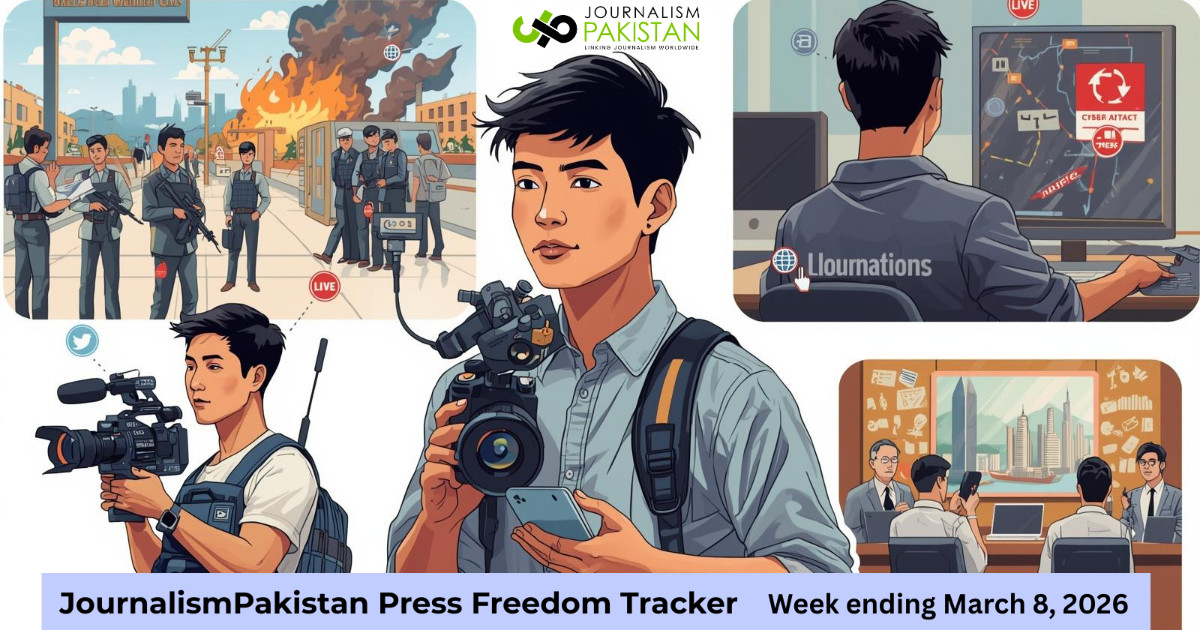
This week's Press Freedom Tracker documents detentions, legal measures, assaults and digital restrictions affecting reporters worldwide; it highlights rising threats to journalists in conflict zones and authoritarian states.Summary
Editor's note
This week’s Press Freedom Tracker highlights a mix of detentions, legal crackdowns, attacks on journalists, and digital restrictions affecting media worldwide. Several cases underscore the increasing challenges reporters face in conflict zones, authoritarian states, and high-risk environments. We have included updates from Israel, Pakistan, Myanmar, Belarus, and other countries, reflecting both acute incidents and broader systemic threats to press freedom.
Arrests and detentions
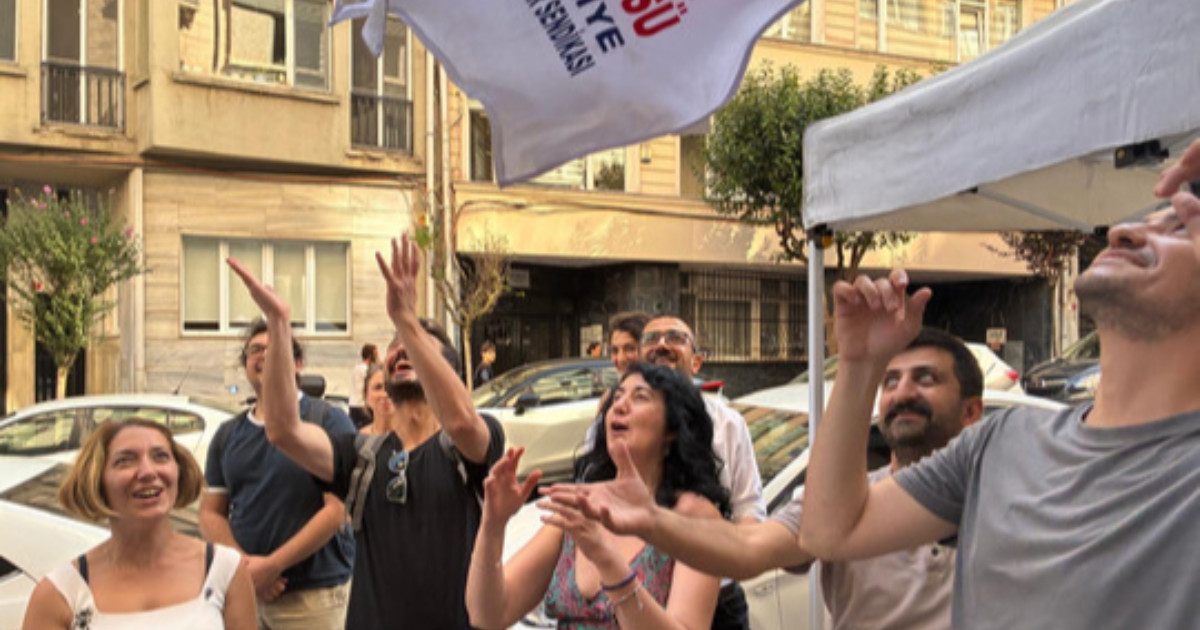
Israel — Two Turkish journalists, Emrah Çakmak and Halil Kahraman, were detained during a live broadcast in Tel Aviv on March 3 for several hours before being released. Authorities cited expired press credentials and security concerns near a sensitive site. The detention drew condemnation from Turkish government officials, journalists’ unions, and press freedom advocates as an infringement on media rights in conflict zones.
Myanmar — Military authorities released journalists Hmu Yadanar Khet Moh Moh Tun, Myat Kalay (Naing Win Tun), Than Htike Myint, and Yan Naing Soe as part of a mass amnesty freeing more than 7,000 prisoners convicted under counterterrorism laws. Press freedom groups note that dozens of journalists remain imprisoned following the 2021 coup. (Sources: Reuters, March 4, 2026; Committee to Protect Journalists statement, March 4, 2026)
Russia/Ukraine — A side event at the UN Commission on the Status of Women highlighted arbitrary detentions and enforced disappearances of Ukrainian women journalists by Russian authorities in occupied territories, including Iryna Danylovych, Iryna Levchenko, Anastasiia Hlukhovska, and Yana Suvorova, who lack adequate legal or medical support in custody. (UN/EEAS report, March 5, 2026)
United States — U.S. immigration authorities in Tennessee arrested Spanish‑language news reporter Estefany Rodriguez Florez during a traffic stop, citing alleged visa expiration despite her valid work permit and pending asylum case. Her newsroom and journalist unions condemned the arrest as interference with journalistic work. (Associated Press, March 7, 2026)
Legal and regulatory pressure
Belarus — Independent journalists Uladzimir Yanukevich and Andrei Pakalenka were sentenced to 14 and 12 years in prison on treason charges after a closed trial. Press freedom organizations say the convictions are part of a broader crackdown that has left more than 28 journalists jailed nationwide. (Associated Press)
Attacks, threats, and harassment
Pakistan — The Geo News satellite feed and that of at least two other major channels were reportedly hacked, resulting in unauthorized content being aired. Authorities have been urged to investigate, though no official probe or suspects have been confirmed. (Geo News official statements, X posts by MD Azhar Abbas, verified social media accounts)
Lebanon — Israeli airstrikes on March 2 targeted media facilities in Beirut and Tyre, damaging offices of Al-Manar TV, Al-Nour Radio, and Sawt Al-Farah Radio. Journalists were forced to evacuate, and live broadcasts were temporarily suspended. The International Federation of Journalists condemned the attacks as violations of press freedom and international law. (IFJ, March 5, 2026)
Kosovo — Journalist Burim Pacolli of the news site Nacionale was physically attacked in a street ambush and continues to face threats following a music review he published. The Committee to Protect Journalists urged authorities to ensure full accountability for those responsible and to protect Pacolli and his family. (CPJ)
Pakistan — Islamabad police received a complaint from Aqsa Khalid, a journalist at 92 News, alleging workplace harassment and intimidation by a colleague following the termination of their engagement. The FIR reports that the accused continued to harass her and physically confronted her at the office on February 26, causing mental distress and fear for personal safety. (FIR circulated on social media)
Censorship and digital restrictions
Qatar — Authorities in Bahrain, Kuwait, and Qatar warned on March 1 that sharing live footage of missile strikes or military engagements on social media could lead to legal action under national security and cybercrime laws, citing operational risks. Media advocates say the advisory may deter frontline documentation. (Government communications office statement, March 1, 2026)
Iran — A near-total internet blackout has left journalists largely cut off from reporting amid escalating U.S. and Israeli air strikes. Limited connectivity and government restrictions obstruct independent reporting, verification, and communication, and increase legal risks under recent Iranian laws. (NetBlocks, CPJ)
Israel — Journalist Braj Mohan Singh, covering the Israel-Iran conflict, reported significant restrictions on press freedom in Israeli-controlled areas, including prohibitions on filming casualties, denial of hospital access, and incomplete information on civilian deaths. Restrictions limited independent reporting even in locations officially considered safe. (Press TV)
Policy and court developments
Pakistan — Islamabad High Court restored bail to journalist Sohrab Barkat in PECA FIR No. 330/2025 after over three months of detention, ending repeated court hearings over alleged dissemination of anti-state content. (Lawyer’s X statement)
Indonesia — Constitutional Court clarified that obstruction of justice provisions cannot be applied to routine journalism or public commentary, striking down vague wording in Article 21 of the Anti-Corruption Law. The ruling strengthens constitutional safeguards for press freedom. (ANTARA News, Liputan6, JPNN)
Georgia — Georgia’s Supreme Court declined to consider an appeal by imprisoned journalist Mzia Amaglobeli against her two-year prison sentence. CPJ renewed calls for her release, warning that the case is being used to intimidate independent media. (CPJ, March 4, 2026)
United States — A federal judge expressed skepticism on March 6 over a Pentagon policy that restricts journalists’ access to Defense Department briefings and could label reporters as security risks for asking tough questions. (Reuters, March 6, 2026; CPJ statement, March 6, 2026)
Media labor and union activity
No major developments reported this week.
Press freedom and journalist safety
Somalia — Journalist Abshir Khalif Shide Omar was shot dead in Kismayo on March 2 after a brief altercation with a Jubbaland police officer. Authorities arrested the suspect and opened an investigation. (National Union of Somali Journalists statement, March 3, 2026)
Hong Kong/China — Former pro‑democracy media executive Jimmy Lai confirmed he will not appeal his 20‑year national security conviction related to seditious publishing, a case emblematic of shrinking press freedoms under Hong Kong’s national security law enacted in 2020. (Associated Press, March 6, 2026)
Global context
This week’s tracker reflects continuing risks for journalists in conflict zones and under authoritarian regimes. Recent developments highlight the intersection of physical danger, legal persecution, digital surveillance, and censorship, with reporters in Israel, Iran, Myanmar, Belarus, Pakistan, Hong Kong, Ukraine, Russia, and the United States facing heightened restrictions. Press freedom groups emphasize the need for accountability, protective measures, and adherence to international law to safeguard media independence worldwide. Readers can review last week’s Press Freedom Tracker for additional context.
Key Points
- Tracker records detentions, legal crackdowns, attacks and online restrictions impacting journalists globally.
- Israel: Two Turkish journalists were briefly detained during a live broadcast in Tel Aviv over credentials and security concerns.
- Myanmar: Several journalists were freed in a mass amnesty, but press freedom groups say dozens remain jailed since the 2021 coup.
- Russia/Ukraine: A UN side event highlighted arbitrary detentions and enforced disappearances of Ukrainian women journalists in occupied areas.
- Incidents in Pakistan, Belarus and other countries reflect broader, systemic threats to independent reporting.
Key Questions & Answers
What does the Press Freedom Tracker report this week?
It documents detentions, legal measures, assaults and digital restrictions affecting journalists in multiple countries.
Which notable incidents are highlighted?
Cases include the detention of two Turkish journalists in Israel, Myanmar's partial amnesty of some reporters, and reports of detentions of Ukrainian women journalists in occupied areas.
Are journalists still imprisoned after Myanmar's 2021 coup?
Yes; while some journalists were released in a mass amnesty, rights groups report that dozens remain imprisoned following the coup.
How do digital restrictions affect reporting?
Digital controls limit access to information and hinder journalists' ability to gather and transmit news; they increase risks for reporting in conflict and authoritarian settings.
Relevant Topics
Ask AI: Understand this story your way
AI EnabledDig deeper, ask anything — get instant context, background, and clarity.
Disclaimer: This feature is powered by AI and is intended to help readers explore and understand news stories more easily. While we strive for accuracy, AI-generated responses may occasionally be incomplete or reflect limitations in the underlying model. This feature does not represent the editorial views of JournalismPakistan. For our full, verified reporting, please refer to the original article.