.jpg)
Israeli airstrikes destroy multiple media offices in Lebanon
JournalismPakistan.com | Published: 5 March 2026 | JP Middle East Desk
Join our WhatsApp channel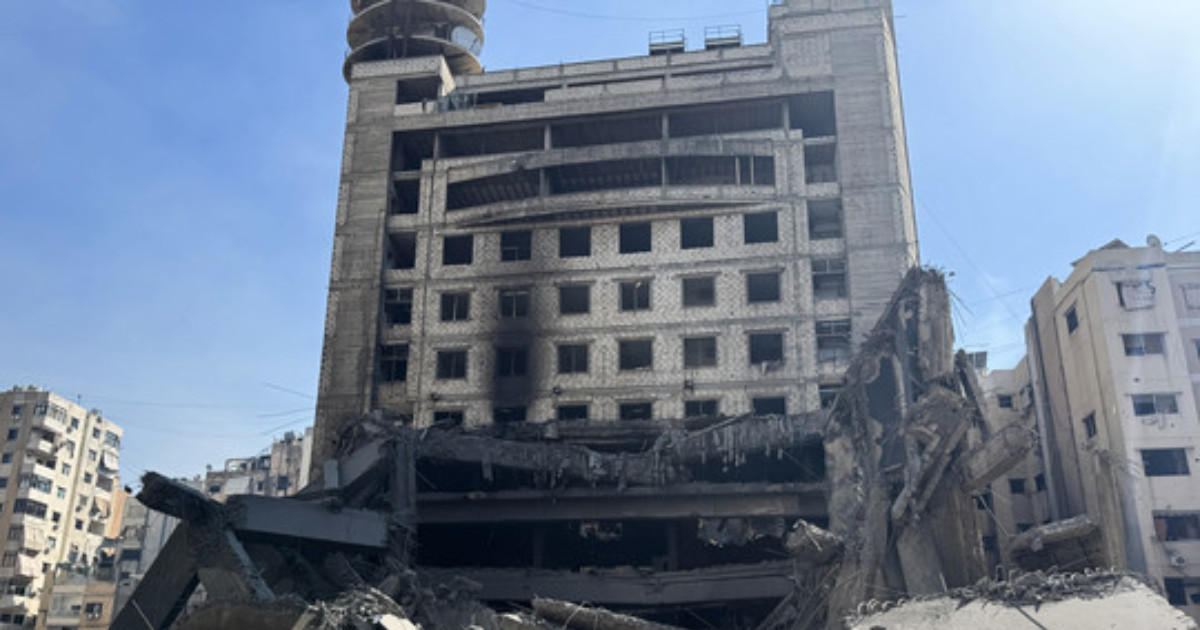
Israeli airstrikes on March 2 damaged media facilities in Beirut and Tyre, including Al-Manar TV, Al-Nour Radio and Sawt Al-Farah, halting broadcasts and prompting evacuations. IFJ and Lebanese unions called the strikes violations of international law.Summary
BEIRUT, LEBANON — Israeli airstrikes on March 2 targeted media facilities in Lebanon, hitting Al-Manar TV and Al-Nour Radio offices in Beirut, and Sawt Al-Farah Radio in Tyre. The International Federation of Journalists (IFJ) condemned the attacks, calling the targeting of journalists and media infrastructure a violation of international and humanitarian law.
Escalation follows regional tensions
The strikes came after Hezbollah fired missiles towards Israel, a response linked to the recent killing of Iran’s supreme leader, Ali Khamenei. The attacks caused significant structural damage to media offices, disrupting broadcasting and threatening journalists’ safety.
Impact on press freedom and operations
IFJ and the Union of Journalists of Lebanon emphasized that deliberate attacks on media facilities undermine press freedom and the public’s right to information. Local journalists reported evacuations and the temporary suspension of live transmissions while assessing the damage.
Regional and international reactions
International bodies and press freedom organizations have called for restraint and protection of media personnel, highlighting that targeting journalists contravenes established norms of conflict engagement. The incident adds to mounting concerns over journalist safety amid escalating regional hostilities.
WHY THIS MATTERS: The strikes underline the risks journalists face in conflict zones and the operational vulnerabilities of media organizations during regional escalations. Pakistani media outlets can learn the importance of disaster preparedness, secure transmission channels, and rapid safety protocols for journalists in volatile environments.
ATTRIBUTION: Based on a March 5, 2026, media release by the International Federation of Journalists and a March 3, 2026, AFP photo report.
PHOTO: The heavily damaged building of the Lebanese Shiite movement Hezbollah’s television station al-Manar, which was hit by overnight Israeli strikes, is pictured in the southern suburbs of Beirut on 3 March 2026. AFP./Circulated by IFJ
Key Points
- Israeli airstrikes on March 2 struck Al-Manar TV and Al-Nour Radio in Beirut and Sawt Al-Farah in Tyre.
- Strikes caused structural damage, disrupted broadcasts and forced evacuations of media staff.
- The International Federation of Journalists and the Union of Journalists of Lebanon condemned the attacks as violations of international law.
- International bodies urged protection of journalists and media infrastructure amid regional escalation.
- The incident highlights risks to press freedom and the need for media disaster preparedness.
Key Questions & Answers
Which media offices were hit?
Al-Manar TV and Al-Nour Radio offices in Beirut and Sawt Al-Farah Radio in Tyre were reported struck by the March 2 airstrikes.
Were journalists injured in the attacks?
Local reports described evacuations and threats to safety; the excerpt notes disruption and damage but does not provide confirmed casualty figures.
Why did the strikes occur?
The strikes followed missile fire by Hezbollah; reports linked that exchange to the recent killing of Iran's supreme leader, according to the excerpt.
What are the implications for media outlets?
The attacks underscore operational vulnerabilities and the need for disaster preparedness and protections to safeguard journalists and public access to information.
Relevant Topics
Ask AI: Understand this story your way
AI EnabledDig deeper, ask anything — get instant context, background, and clarity.
Disclaimer: This feature is powered by AI and is intended to help readers explore and understand news stories more easily. While we strive for accuracy, AI-generated responses may occasionally be incomplete or reflect limitations in the underlying model. This feature does not represent the editorial views of JournalismPakistan. For our full, verified reporting, please refer to the original article.