.png)
Press freedom review: New pressures emerge as old challenges persist
JournalismPakistan.com | Published: 21 June 2026 | JP News Desk
Join our WhatsApp channel
The Press Freedom Tracker finds arrests, cybercrime prosecutions, internet shutdowns and reporting restrictions undermining journalism, while newsroom closures, job cuts and acquisitions are eroding media sustainability and narrowing access to independent news.Summary
Editor’s note
This week’s JournalismPakistan Press Freedom Tracker documents a wide range of challenges facing journalists and media organizations worldwide, from arrests and detentions to digital restrictions, legal pressure, and economic strain. Authorities in Ethiopia and Mali faced criticism over the detention and imprisonment of journalists, while cybercrime laws and regulatory mechanisms continued to raise concerns in Pakistan and elsewhere. At the same time, internet shutdowns, reporting restrictions, and growing barriers to information access underscored the pressures confronting journalists in their daily work.
Beyond direct restrictions on media freedom, economic realities continued to reshape the journalism landscape. Newsroom closures, job cuts, funding disputes, and major media acquisitions highlighted the financial pressures affecting media sustainability and diversity. Together, these developments demonstrate that threats to press freedom increasingly come not only from censorship and repression but also from structural and economic forces that can limit the public’s access to independent journalism.
Arrests, detentions, and kidnappings
MALI — Journalists Abdrahamane Keïta and Chahana Takiou were imprisoned after criticizing the military government's press freedom record and losses to insurgents. The Committee to Protect Journalists called for their immediate release, as well as that of journalist Youssouf Sissoko, and condemned the use of cybercrime laws against media workers. (Committee to Protect Journalists, June 16, 2026)
ETHIOPIA — Journalist Salsawit Baynesagn was arrested at her home in Addis Ababa and remains in detention without being brought before a court or formally charged, according to the Committee to Protect Journalists. Family members believe her detention is connected to videos posted on TikTok, Facebook, and YouTube criticizing the government's response to violence against Ethiopian Orthodox Christians in Oromia's Arsi Zone. CPJ has urged authorities to release Baynesagn immediately or disclose any charges and present her before a court, describing the detention as a serious violation of her rights. (Committee to Protect Journalists, June 19, 2026)
Legal and regulatory pressure
CHINA — Authorities confirmed the detention of U Min Zin, a Myanmar-born former journalist, researcher, democracy advocate, and U.S. citizen. Chinese officials allege he engaged in activities endangering national security and have linked the case to espionage accusations. Press freedom advocates warn that the detention highlights growing legal risks for media professionals, researchers, and commentators engaged in cross-border reporting and analysis on politically sensitive issues. (Reuters, AP)
PAKISTAN — The Punjab chapter of the Pakistan Administrative Service Association filed a complaint with the National Cyber Crime Investigation Agency (NCCIA) against columnist Taufiq Butt over language used in a June 11 opinion column, seeking action and a retraction. Following the complaint, the NCCIA summoned Butt to appear on June 19. The case concerns alleged reputational harm arising from commentary directed at the bureaucracy and comes amid continuing debate over the use of cybercrime laws in matters involving journalism and public commentary. (Complaint details; JournalismPakistan, June 17 2026)
PAKISTAN — Journalist Razi Tahir was granted pre-arrest bail until June 23 in a case linked to the National Cyber Crime Investigation Agency. Tahir said authorities sought information about the source of a news report, while the Human Rights Council of Pakistan raised concerns about due process and transparency in the handling of the case. (JournalismPakistan, X statements, and Human Rights Council of Pakistan statement, June 2026)
PAKISTAN — Journalist Sohrab Barkat, arrested on June 5 over a YouTube video covering protests in Pakistan-administered Kashmir, was granted bail on June 15. Authorities alleged the video contained false and misleading information under the Prevention of Electronic Crimes Act (PECA). The arrest occurred months after Barkat's release from an earlier detention involving separate PECA-related cases. (Publicly available case information, June 15, 2026)
Digital rights and online censorship
PAKISTAN — Amnesty International South Asia urged authorities to restore internet and mobile services in Pakistan-administered Jammu and Kashmir, where communication restrictions imposed on June 5 have entered their 12th consecutive day. The organization said the shutdown has disrupted access to information and hindered the documentation of human rights concerns, raising press freedom and transparency issues. Amnesty also expressed concern over reported movement restrictions affecting access to essential goods and services. (Amnesty International South Asia (X), June 16, 2026)
UNITED ARAB EMIRATES — Authorities introduced a minimum age of 15 for social media access, alongside mandatory age-verification requirements and new platform obligations designed to protect minors online. (Public announcement, June 18, 2026)
Attacks, threats, harassment, and killings
No confirmed entries were recorded in this category during the reporting period.
Economic pressure and media viability
CZECH REPUBLIC — Employees of Czech Television and Czech Radio announced a symbolic strike for June 22 to oppose government plans to replace license-fee funding with direct state-budget allocations. Journalists and press freedom groups argue the move could increase political influence over public broadcasters by altering their funding structure and reducing safeguards for editorial independence. (Reuters, June 17, 2026)
UNITED KINGDOM — The BBC announced plans to cut 550 jobs across news, nations, and TV and radio content as part of a corporation-wide cost-saving program targeting £500 million over two years. Media unions warned the reductions could increase workload pressures on journalists and reduce news services, while the BBC said the changes reflect financial pressures and changing audience habits. (BBC News, June 18, 2026)
PAKISTAN — ATV ceased broadcasting on June 19 following the liquidation of its parent company, Shalimar Recording and Broadcasting Company (SRBC), ending 52 years of operations. The closure has left hundreds of media workers facing unemployment and represents another contraction of Pakistan's media landscape. While the shutdown was driven primarily by financial and legal factors rather than direct censorship, press freedom advocates note that newsroom closures reduce media plurality, limit employment opportunities for journalists, and weaken the diversity of voices available to the public. (JournalismPakistan, June 20, 2026)
Access to information and reporting restrictions
PAKISTAN — The Supreme Court had its press room, used by court reporters and journalists, vacated amid new restrictions on access to the court premises. Reporters said they were required to exchange media credentials and mobile phones for visitor passes, while the Press Association of the Supreme Court appealed to Chief Justice Yahya Afridi to review the measures. (JournalismPakistan, June 15, 2026)
PAKISTAN — Supreme Court reporters established an open-air press room outside the apex court after being evicted from their longtime media workspace and subjected to new access restrictions. Journalist organizations criticized the measures and called for the restoration of media facilities and access. (JournalismPakistan, RIUJ statement, June 17, 2026)
AFGHANISTAN — The Taliban began enforcing a ban on smartphone use by government employees in multiple provinces, a measure the Afghanistan Journalists Center says is disrupting official communication channels and further restricting journalists' access to information. (AFJC via 8AM Media, June 17, 2026)
AUSTRALIA — One Nation leader Pauline Hanson faced criticism from the IFJ and the MEAA after verbally attacking Guardian Australia senior political correspondent Sarah Martin during a National Press Club event on June 17 and declaring she would be barred from future press conferences. Hanson has also moved to exclude journalists from Guardian Australia and the ABC from her media events. Press freedom advocates warned that blacklisting journalists and publicly targeting reporters threatens media access, workplace safety, and the public's right to information. (IFJ, June 19, 2026)
Policy and court developments
No confirmed entries were recorded in this category during the reporting period.
Media labor and union activity
No confirmed entries were recorded in this category during the reporting period.
Media operations and industry pressures
UNITED STATES — Fox Corporation announced a proposed $22 billion acquisition of streaming platform Roku, gaining access to more than 100 million users and expanding its streaming and advertising reach. One of the largest media deals in recent years, the move reflects a growing industry shift toward owning distribution platforms rather than relying solely on content production. (Reuters, June 15, 2026)
UNITED STATES — U.S. regulators approved the merger of music companies BMG and Concord. The combined company is expected to become the world's fourth-largest music company, highlighting the continuing trend of consolidation across media and entertainment sectors as companies seek greater scale and market influence. (Reuters, June 17, 2026)
Press freedom and journalist safety
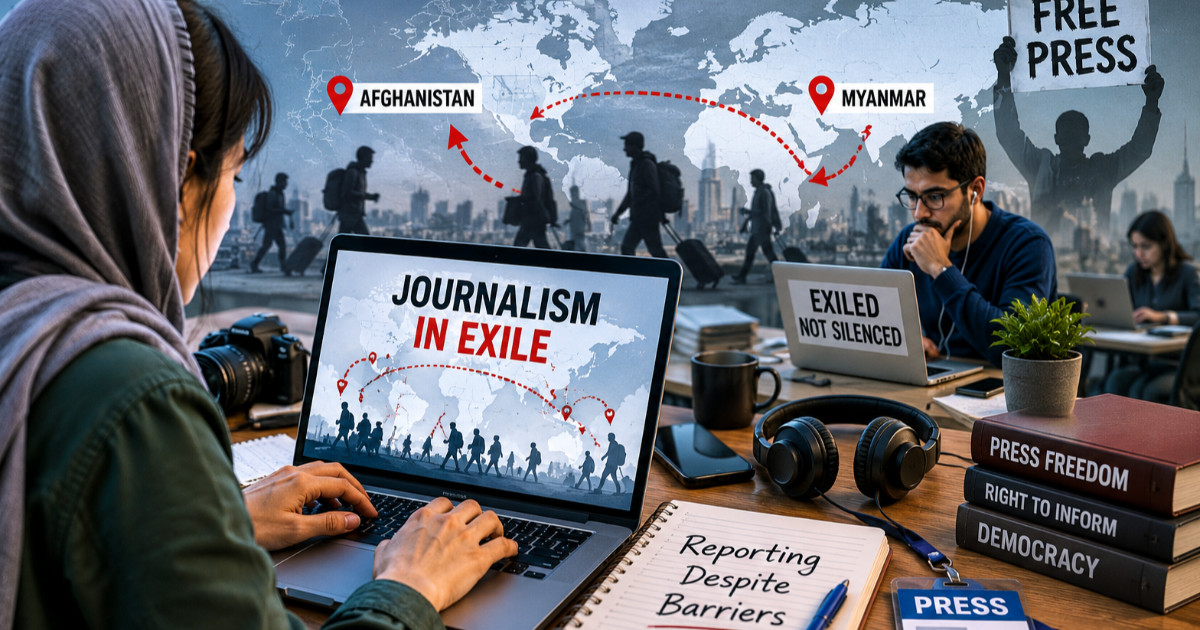
GLOBAL — Reporters Without Borders (RSF) reported that the number of countries from which journalists have been forced to flee has doubled over the past five years, highlighting worsening conditions for media workers in multiple regions. The organization pointed to continued pressures on journalists in countries including Afghanistan and Myanmar, where exile has become an increasingly common consequence of repression. (RSF, June 2026)
Press freedom review
The reporting period was marked by the continued use of legal, regulatory, and administrative measures that can affect journalists’ ability to work freely. Arrests and detentions in Ethiopia and Mali drew international concern, while several cases in Pakistan renewed debate about the application of cybercrime laws to journalists, commentators, and media-related content.
Access to information also emerged as a significant issue. Restrictions affecting court reporters in Pakistan, limitations on official communication channels in Afghanistan, and ongoing internet disruptions in Pakistan-administered Jammu and Kashmir raised concerns about transparency and the public’s right to information. Meanwhile, efforts by political figures to exclude journalists from media events in Australia highlighted the importance of protecting equal access to public officials and institutions.
Economic pressures remained a recurring theme. The closure of ATV in Pakistan, planned job reductions at the BBC, and funding concerns surrounding Czech public broadcasters illustrated the financial challenges facing media organizations. These developments reinforce the growing recognition that media sustainability and press freedom are increasingly interconnected.
Global context
Press freedom advocates continue to warn that the global environment for journalism is becoming more restrictive. Recent findings from Reporters Without Borders indicate that journalist exile is rising, with media workers increasingly forced to flee their countries because of repression, conflict, legal threats, and political persecution. In parallel, governments around the world are expanding the use of cybercrime legislation, national security laws, and digital regulations that can affect media freedom and access to information.
At the same time, economic pressures, newsroom downsizing, and industry consolidation are reshaping the media landscape. These trends pose challenges not only to journalists but also to the diversity, sustainability, and independence of news ecosystems worldwide. As traditional and digital media continue to evolve, safeguarding press freedom remains essential to ensuring public access to reliable information and democratic accountability.
For additional context, readers can review last week’s Tracker.
Tags: Press Freedom Tracker, Press Freedom, Journalism, Journalists Under Attack, Media Freedom, Digital Rights, Internet Shutdowns, Cybercrime Laws, Censorship, Access to Information, Media Sustainability, Media Business, Media Regulation, Journalist Safety, Pakistan Media, Global Media, CPJ, RSF, BBC, ATV
ATTRIBUTION: Compiled by JournalismPakistan
PHOTO: AI-generated; for illustrative purposes
Key Points
- Tracker records arrests, detentions and legal actions against journalists in multiple countries.
- Cybercrime laws and regulatory mechanisms raise concerns about digital press freedom.
- Internet shutdowns and reporting restrictions impede journalists' daily work.
- Economic strains-newsroom closures, job cuts and acquisitions-threaten media sustainability.
- Threats to press freedom now include both direct repression and structural economic pressures.
Key Questions & Answers
What does the Press Freedom Tracker report this week?
It documents arrests, detentions, digital restrictions, legal pressure and economic challenges affecting journalists and media outlets worldwide.
Which countries are specifically highlighted?
The update notes high-profile cases in Mali and Ethiopia and flags cybercrime and regulatory concerns in Pakistan, among other places.
How are economic factors affecting press freedom?
Newsroom closures, job cuts, funding disputes and media acquisitions are weakening media diversity and public access to independent reporting.
What digital and legal measures are causing concern?
Use of cybercrime laws against journalists, internet shutdowns, reporting restrictions and expanding regulatory mechanisms are major digital and legal threats.
Relevant Topics
Ask AI: Understand this story your way
AI EnabledDig deeper, ask anything — get instant context, background, and clarity.
Disclaimer: This feature is powered by AI and is intended to help readers explore and understand news stories more easily. While we strive for accuracy, AI-generated responses may occasionally be incomplete or reflect limitations in the underlying model. This feature does not represent the editorial views of JournalismPakistan. For our full, verified reporting, please refer to the original article.