.png)
Press freedom review: A week of rulings, raids, and regulatory action
JournalismPakistan.com | Published: 5 July 2026 | JP News Desk
Join our WhatsApp channel
This week's JournalismPakistan Press Freedom Tracker documents global arrests, detentions, raids and court rulings, alongside rising legal and regulatory pressure on media. It highlights cases in Belarus, India and Pakistan and growing risks for journalists.Summary
Editor's note
This week's JournalismPakistan Press Freedom Tracker reflects the many ways press freedom continues to be challenged around the world. Governments remain willing to use courts, regulators, and administrative measures to pressure independent journalism, while reporters continue to face intimidation, threats, and economic uncertainty. Alongside these pressures, several significant court rulings and policy decisions have shaped the media landscape, highlighting the continuing struggle to balance security, accountability, and the public's right to know.
Arrests, detentions, and kidnappings
BELARUS — Journalist Kiryl Pazniak, founder of the independent Platform 375 channel, has been sentenced to three-and-a-half years in prison on extremism-related charges. His daughter, Yanina Pazniak, also received a prison sentence over her role in creating the outlet's TikTok account. Reporters Without Borders (RSF) condemned the convictions and called for their immediate release, describing the case as another example of Belarus' systematic repression of independent journalism. (Committee to Protect Journalists, June 26, 2026)
Legal and regulatory pressure
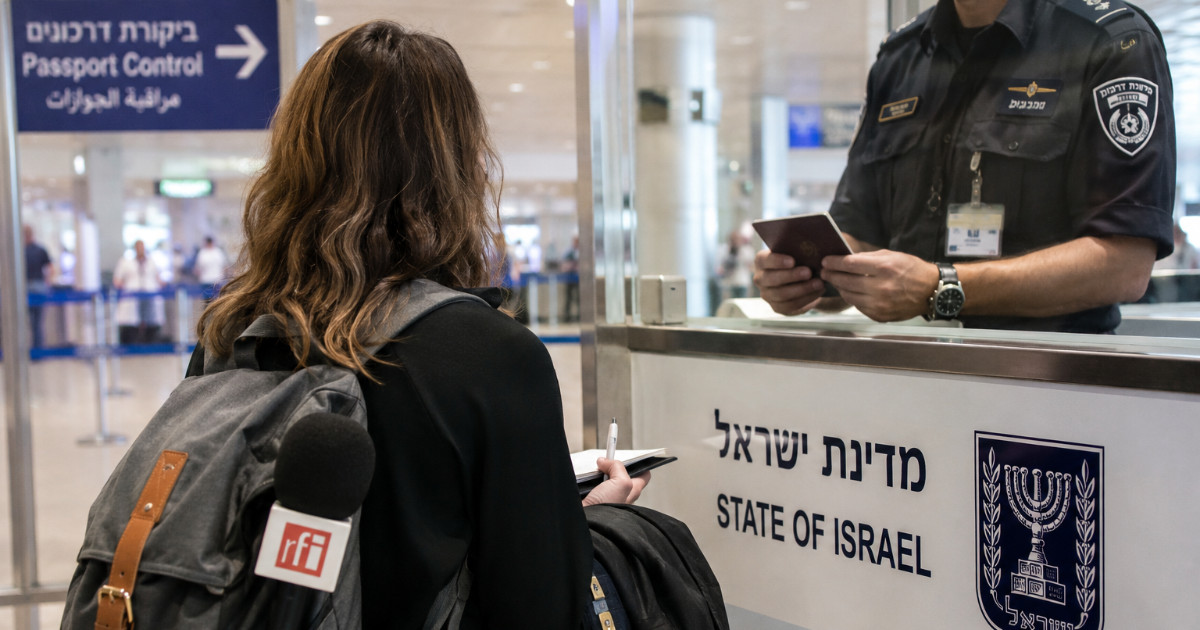
INDIA — The Indian Women's Press Corps and the Press Association have criticized what they described as the administrative victimization of veteran journalist R. Rajagopal, saying passport renewal difficulties and other bureaucratic hurdles raise concerns about increasing pressure on independent journalists. (NewsClick, June 2026)
PAKISTAN — The Committee to Protect Journalists has called on PEMRA to immediately revoke its 15-day suspension of Geo News, warning that the move represents a serious escalation in official interference with independent media. The suspension followed a June 26 Muharram broadcast that the regulator said violated religious broadcasting rules. Geo News apologized, dismissed staff involved in the program, and said the footage had been aired inadvertently. (Committee to Protect Journalists, July 3, 2026)
Attacks, threats, harassment, and killings
PAKISTAN — A special JournalismPakistan report has documented how journalists in Balochistan routinely face threats from armed groups, influential tribal figures, political actors, and state institutions, resulting in widespread self-censorship. Reporters and editors interviewed said safety concerns frequently force them to withhold or modify stories, particularly those involving conflict, enforced disappearances, land disputes, and powerful local actors. Legal experts argue that such pressure undermines constitutional guarantees of freedom of expression and reflects a failure to protect journalists. (JournalismPakistan, June 29, 2026)
UGANDA — Ugandan security forces raided the premises of Nation Media Group Uganda on June 28, blocking access to its headquarters and broadcast facilities and halting newspaper printing as well as television and radio broadcasts. Managing Director Susan Nsibirwa went into hiding after online threats attributed to military chief Gen. Muhoozi Kainerugaba. The Committee to Protect Journalists urged authorities to end the siege, protect journalists, and restore the media group's operations, calling the incident another major escalation in Uganda's crackdown on independent media. (Committee to Protect Journalists, June 30, 2026)
Policy and court developments
PAKISTAN — Information Minister Ataullah Tarar criticized TRT World over its use of the word "militants" instead of "terrorists" in reporting on the Karachi Rangers attack, renewing debate over editorial language in conflict coverage. (Dawn, June 30, 2026)
KENYA — Kenya's Supreme Court ruled that the killing of Pakistani journalist Arshad Sharif was an unlawful violation of his right to life. However, according to his widow, Javeria Siddique, the court did not order prosecutions, issue an official apology, or classify the killing as torture. Siddique said no arrests have been made and the case has returned to the Court of Appeal. (JournalismPakistan/X statement by Javeria Siddique, July 3, 2026)
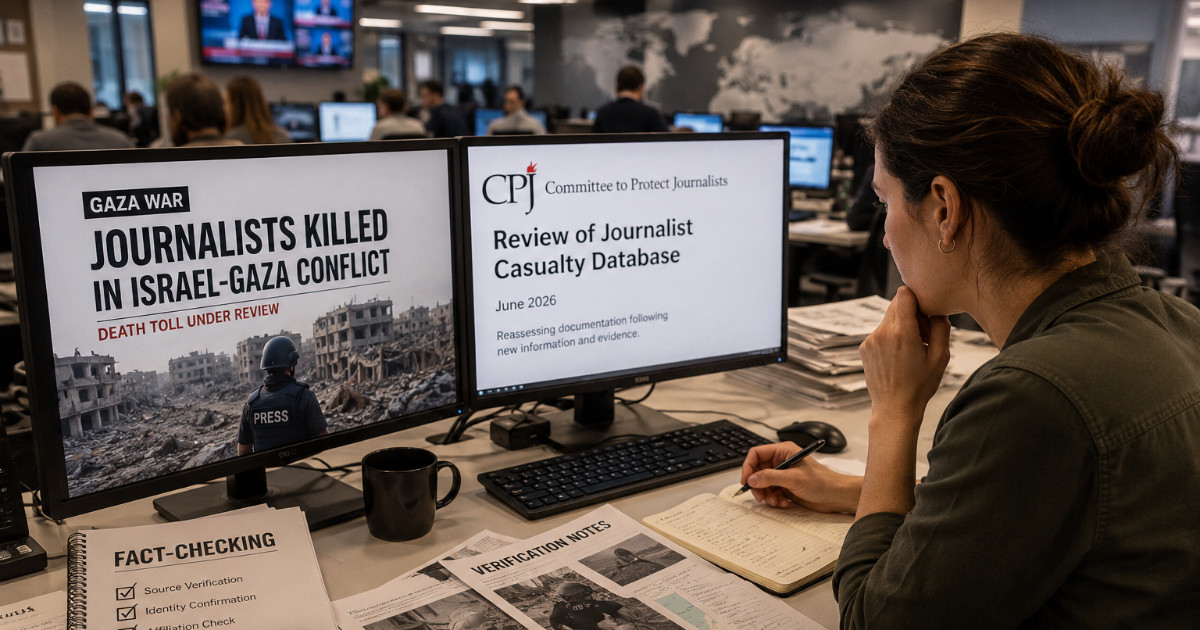
INTERNATIONAL — The Committee to Protect Journalists is reviewing its documentation of journalists killed during the Israel-Gaza war after new evidence indicated that some individuals previously listed as journalists were affiliated with Hamas or Palestinian Islamic Jihad. Following the announcement, media watchdog CAMERA called on international news organizations to reassess reporting that relied on CPJ's casualty database. (Committee to Protect Journalists, June 25, 2026; CAMERA, July 2, 2026)
UNITED STATES — A federal judge has temporarily barred the U.S. Defense Department from enforcing its journalist escort requirement at the Pentagon after finding the policy likely violates First Amendment protections. The ruling came in a lawsuit filed by The New York Times and represents the latest court challenge to the Trump administration's restrictions on media access to government institutions. (Associated Press, July 1, 2026)
UNITED KINGDOM — Three men charged with the 2019 murder of Northern Irish journalist Lyra McKee have been acquitted of joint enterprise murder after a court found insufficient evidence that they assisted the gunman. McKee was shot dead while reporting on unrest in Londonderry, and the New IRA claimed responsibility for the killing. The verdict means no one has yet been held criminally responsible for her death. (BBC News, July 4, 2026)
Media operations and industry pressures
PAKISTAN — The Khyber Pakhtunkhwa government has announced a package of welfare measures for journalists, including interest-free loans, funding for press clubs, the creation of a journalists' welfare endowment fund, and directives to ensure the timely payment of government advertising dues. The measures were summarized by Freedom Network. (Freedom Network, July 1, 2026)
PAKISTAN — Employees of Aaj News staged a strike over the alleged non-payment of salaries for April, May, and June 2026, disrupting the broadcaster's scheduled 3 p.m. news bulletin. Staff also demanded payment of outstanding dues and gratuity for current and former employees. (Material circulated by protesting employees, July 1, 2026)
Press freedom review
This week's developments illustrate the broad spectrum of pressures confronting journalism. Belarus continued its systematic imprisonment of independent journalists, while Pakistan saw renewed concerns over regulatory intervention, newsroom economics, and the safety of reporters working in conflict-prone regions. Uganda's raid on Nation Media Group demonstrated how security forces can disrupt news organizations through direct intimidation, while court rulings in Kenya, the United States, and the United Kingdom underscored the increasingly important role of the judiciary in shaping press freedom and accountability. Meanwhile, debates over casualty reporting in the Israel-Gaza war highlighted the importance of accuracy and transparency in documenting journalists killed in conflict.
Global context
The week's developments reinforce a continuing global pattern in which press freedom is challenged through multiple, often overlapping mechanisms. Criminal prosecutions, administrative restrictions, regulatory action, economic pressures, physical intimidation, and legal disputes remain common tools affecting independent journalism. At the same time, court decisions continue to define the boundaries of media rights, while newsroom transparency and credibility remain under close public scrutiny during periods of conflict and political polarization.
For additional context, readers can review last week's Press Freedom Tracker.
SUGGESTED TAGS: Press Freedom Tracker, Press Freedom, Journalists, Journalism, Media Freedom, Media Regulation, Censorship, CPJ, RSF, Belarus, Pakistan, India, Uganda, Kenya, United States, United Kingdom, Geo News, Aaj News, Nation Media Group, TRT World, Arshad Sharif, Lyra McKee, Media Safety, JournalismPakistan
ATTRIBUTION: Compiled by JournalismPakistan
PHOTO: AI-generated; for illustrative purposes.
Key Points
- Tracker records arrests, detentions and kidnappings of journalists worldwide.
- Legal and regulatory measures are increasingly used to pressure independent media.
- Notable cases from Belarus, India and Pakistan illustrate diverse tactics against press freedom.
- Reporters face intimidation, economic uncertainty and administrative hurdles.
- Court rulings and policy decisions continue to shape the media landscape and public access to information.
Key Questions & Answers
What does the Press Freedom Tracker cover?
The Tracker records arrests, detentions, raids, legal and regulatory actions, court rulings, and other measures that affect press freedom worldwide.
Why are Belarus, India, and Pakistan highlighted?
These countries feature recent, notable cases showing different tactics, criminal charges, administrative hurdles, and regulatory pressure that restrict independent journalism.
How is the information sourced?
Data comes from verified reports by news organisations, press freedom groups, and international monitors; the Tracker aggregates and summarises these verified accounts.
What practical steps can readers take?
Readers can support independent media by following reputable outlets, sharing verified reporting, backing press freedom organisations, and calling for accountability from authorities.
Relevant Topics
Ask AI: Understand this story your way
AI EnabledDig deeper, ask anything — get instant context, background, and clarity.
Disclaimer: This feature is powered by AI and is intended to help readers explore and understand news stories more easily. While we strive for accuracy, AI-generated responses may occasionally be incomplete or reflect limitations in the underlying model. This feature does not represent the editorial views of JournalismPakistan. For our full, verified reporting, please refer to the original article.