
Cybercrime, courtrooms, and newsroom cuts: What defined Pakistan media in May
JournalismPakistan.com | Published: 31 May 2026 | JP Special Report
Join our WhatsApp channel
May showed pressures on Pakistan's media expanding across legal, digital and economic fronts. Cybercrime enforcement and prosecutions, newsroom layoffs, salary disputes and limits on access combined to create a more diffuse, interconnected threat to journalism.Summary
ISLAMABAD — If April highlighted the pressures confronting Pakistan's media industry, May revealed how those pressures are expanding across multiple fronts. From cybercrime investigations and legal cases against journalists to newsroom layoffs, salary disputes, and battles over media access, the month illustrated a media environment facing challenges that are becoming increasingly diffuse and interconnected.
Rather than being defined by a single major crackdown or legislative change, May exposed a broader pattern: pressure on journalism is no longer confined to traditional censorship concerns. It is increasingly being exerted through legal mechanisms, digital enforcement structures, economic vulnerabilities, workplace instability, and restrictions on access to public institutions.
Reports released during the month by national and international organizations reinforced concerns that the operating environment for journalists remains under strain. At the same time, media workers across the country continued to grapple with delayed salaries, job insecurity, and shrinking financial resources, highlighting the widening gap between the ideals of press freedom and the realities of newsroom survival.
Cybercrime emerges as journalism's new front line
Perhaps the most significant development in May was the growing centrality of cybercrime enforcement to Pakistan's media landscape.
Parliament and Senate briefings revealed the scale of the country's expanding digital enforcement apparatus. Lawmakers were informed that the National Cyber Crime Investigation Agency (NCCIA) had received more than 77,000 cybercrime complaints during the first five months of 2026. Authorities also disclosed that hundreds of investigations and arrests had been conducted while discussions were underway regarding the possible establishment of provincial cybercrime bodies.
The issue became particularly relevant for journalists after officials informed a Senate subcommittee that FIRs had been registered against journalists under cybercrime-related provisions, though several were later withdrawn following investigations.
The month also saw the NCCIA announce a crackdown against alleged anti-state social media activity in Punjab, resulting in multiple arrests. Journalist Hammad Hassan publicly stated that he had been detained and questioned over a social media post, while broader discussions emerged regarding surveillance concerns and digital investigations.
Separately, lawmakers were told that a significant percentage of social media accounts operating in Pakistan may be fake, raising concerns about manipulation, harassment, fraud, and disinformation in the country's digital ecosystem.
Taken together, these developments suggest that cybercrime regulation is becoming one of the most influential forces shaping Pakistan's information environment. While authorities argue such measures are necessary to combat online crime and harmful content, journalists and rights advocates increasingly worry about the implications for free expression and independent reporting.
Legal pressure remains a defining concern
Legal pressure continued to shape the media environment throughout May.
Several cases involving journalists highlighted concerns about the growing use of legal and regulatory mechanisms against media professionals and online commentators.
A terrorism-related FIR was registered against journalist Imtiaz Chandio over social media criticism of public institutions. Journalist Maqbool Ahmed Jaffar was produced before a magistrate and handed over to the Federal Investigation Agency after initially being reported missing. The controversial case involving journalist and YouTuber Muhammad Saad bin Riaz continued to attract attention before his eventual release later in the month.
At the same time, the confirmation of bail for journalists Rizwan Ghalzai and Aqil Hussain Bagri in a PECA-related case underscored the continuing intersection between journalism and cybercrime legislation.
These individual cases unfolded alongside a series of broader assessments issued by media and rights organizations. Reports and statements from the Human Rights Commission of Pakistan, International Federation of Journalists, Digital Media Alliance for Pakistan, Pakistan Press Foundation, and other groups warned of mounting legal, regulatory, and institutional pressures on journalists.
Although physical attacks against journalists remain a serious concern, many observers increasingly argue that the primary threat to media freedom now comes through legal processes, investigations, court proceedings, and administrative actions that create uncertainty and encourage self-censorship.
Layoffs, salaries, and newsroom economics
If legal pressure represented one major challenge in May, economic pressure represented another.
The financial crisis facing Pakistan's media industry remained visible throughout the month.
The most significant development was the fallout from large-scale layoffs at Suno News, where more than 160 employees reportedly lost their jobs. The situation escalated when Information Minister Attaullah Tarar announced the suspension of federal government advertising to the channel until management addressed employee concerns and outstanding obligations.
Concerns about potential layoffs also emerged at Samaa News, where journalist unions warned against dismissals and salary reductions linked to an internal evaluation process.
Meanwhile, journalists and media workers across Khyber Pakhtunkhwa staged protests demanding unpaid salaries and stronger labor protections. The Parliamentary Reporters Association later raised similar concerns regarding delayed salary payments by several television channels ahead of Eid al-Adha.
Pakistan's oldest and most influential newspaper, Dawn, announced a cover price increase citing inflation and rising operational costs. At the same time, employee representatives continued pressing authorities to restore government advertising to the publication, arguing that the suspension was placing additional strain on workers and newsroom operations.
Collectively, these developments reinforce a reality that has become increasingly difficult to ignore: economic vulnerability is now one of the most serious threats facing journalism in Pakistan. News organizations struggling to remain financially viable often find it difficult to invest in reporting, retain experienced staff, or protect editorial independence.
Journalists push back on access restrictions
May also witnessed growing tensions over media access to public institutions.
The Press Association of the Supreme Court launched a boycott after lawyers issued a notice directing journalists to vacate the press room inside the Supreme Court complex. Reporters described the move as a threat to media access and transparency in judicial reporting.
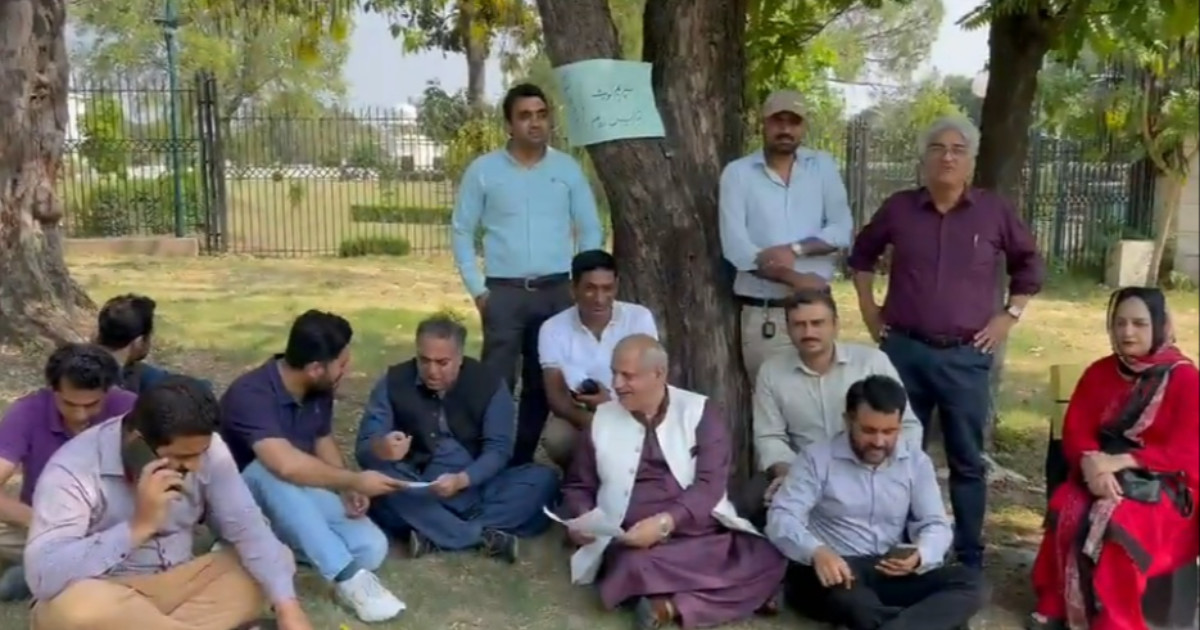
A separate controversy unfolded in Parliament when journalists staged a protest walkout from the press gallery following allegations that a television reporter had been removed from parliamentary coverage after asking a question that reportedly displeased a political leader.
While neither case involved direct censorship in the traditional sense, both highlighted a recurring challenge facing journalists: access.
The ability to observe proceedings, ask questions, and report freely remains fundamental to accountability journalism. When access becomes contested, concerns naturally emerge regarding transparency and the public's right to information.
Women journalists advance reform agenda
Amid the challenges, May also produced important developments aimed at strengthening the profession.
The second Women Journalists Convention announced the creation of the Razia Bhatti Award, which will recognize women journalists demonstrating courage, integrity, public-interest reporting, and commitment to democratic values.
Participants also highlighted continuing concerns regarding workplace discrimination, digital harassment, unequal representation, and professional insecurity faced by women journalists.
The initiative served as a reminder that journalism's future is not shaped solely by threats and restrictions. It is also influenced by efforts to improve professional standards, expand opportunities, and create more inclusive media institutions.
Growing scrutiny of Pakistan's press freedom environment
World Press Freedom Day provided an important backdrop for much of the month's discussion.
Dawn used the occasion to warn that attacks on independent journalism represent a threat not only to media organizations but also to democratic governance itself. Similar concerns were echoed by DigiMAP, the IFJ, HRCP, Pakistan Press Foundation, and other organizations that released assessments examining the condition of press freedom in Pakistan.
While the language varied, the underlying message was consistent: journalists face a combination of legal, economic, digital, and institutional pressures that collectively constrain independent reporting.
Importantly, many of these concerns are no longer limited to traditional newsrooms. Digital journalists, YouTubers, freelancers, and online commentators increasingly find themselves navigating the same risks and vulnerabilities that once primarily affected mainstream media organizations.
What May tells us about the future
The defining lesson of May 2026 is that pressure on journalism in Pakistan is becoming broader, more complex, and harder to isolate.
The challenges facing journalists today are not limited to a single law, institution, or incident. They emerge from the interaction of cybercrime enforcement, legal proceedings, economic instability, workplace insecurity, access restrictions, and digital regulation.
For news organizations, the result is a media environment where survival increasingly depends not only on editorial courage but also on financial resilience and institutional protection.
For journalists, the month served as another reminder that the struggle for independent reporting is evolving. The threats remain real, but they are no longer confined to the traditional forms of censorship that once dominated discussions about press freedom.
As Pakistan's media industry moves into the second half of 2026, the central question is no longer whether pressure exists. It is whether journalism can adapt quickly enough to withstand pressures that are widening in scope, growing in sophistication, and increasingly embedded within the structures that shape the country's information landscape.
ATTRIBUTION: Reporting by JournalismPakistan
Key Points
- Cybercrime enforcement became a central new front shaping the media environment.
- Parliament and Senate briefings highlighted expansion of digital enforcement agencies.
- Journalists faced legal cases, prosecutions and heightened scrutiny in courts.
- Economic pressures included newsroom layoffs, delayed salaries and workplace instability.
- Restrictions on access to public institutions further narrowed journalists' operating space.
Key Questions & Answers
What defined Pakistan's media environment in May?
May was marked by a spread of pressures including cybercrime enforcement, legal proceedings against journalists, newsroom layoffs, salary disputes and limits on access to institutions.
How has cybercrime enforcement affected journalists?
Increased cybercrime investigations and the growth of digital enforcement agencies have led to more probes, legal risks and surveillance affecting reporting and online activity.
What economic challenges did newsrooms face?
Newsrooms experienced layoffs, delayed salaries, shrinking resources and rising job insecurity, undermining newsroom stability and capacity.
What do reports say about press freedom in this period?
National and international reports highlighted that the operating environment for journalists remains under strain, widening the gap between press freedom ideals and newsroom survival.
Relevant Topics
Ask AI: Understand this story your way
AI EnabledDig deeper, ask anything — get instant context, background, and clarity.
Disclaimer: This feature is powered by AI and is intended to help readers explore and understand news stories more easily. While we strive for accuracy, AI-generated responses may occasionally be incomplete or reflect limitations in the underlying model. This feature does not represent the editorial views of JournalismPakistan. For our full, verified reporting, please refer to the original article.