
Digital authoritarianism explained: Technology and state control
JournalismPakistan.com | Published: 21 June 2026 | JP Staff Report
Join our WhatsApp channel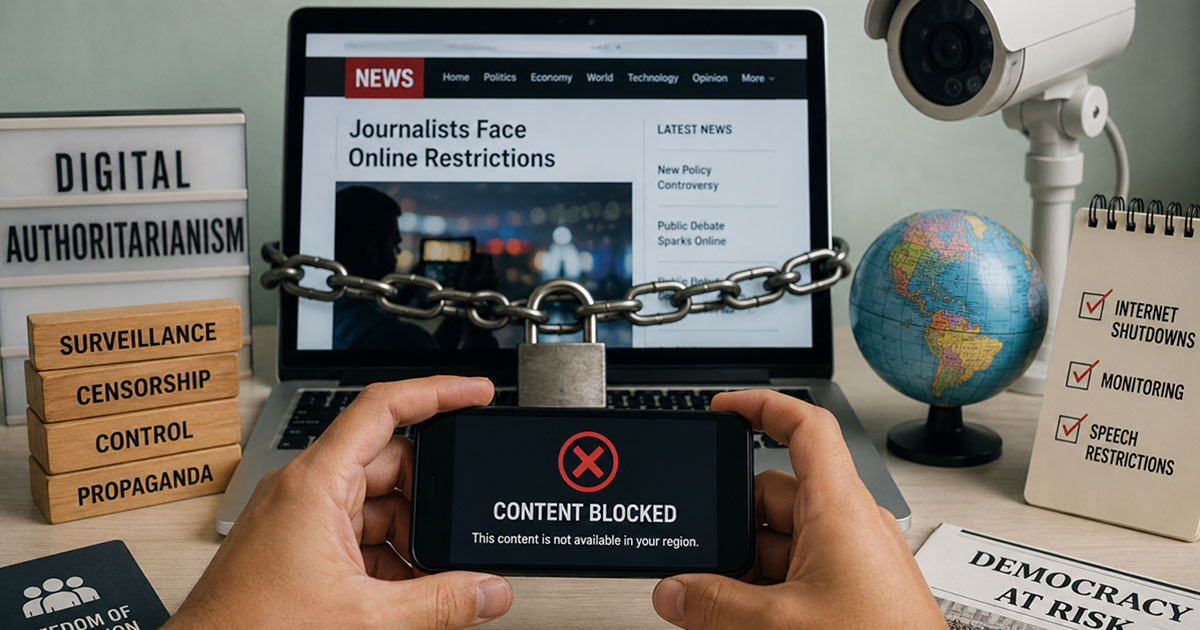
Governments are increasingly deploying digital technologies, surveillance, biometric databases, content moderation and platform regulation to monitor citizens, shape online discourse and tackle security or misinformation challenges. This raises tensions between regulation and rights.Summary
ISLAMABAD — Around the world, governments are increasingly turning to digital technologies to manage information, monitor citizens, and shape online discourse. As societies become more connected through smartphones, social media platforms, artificial intelligence, and digital services, concerns have grown about how these tools can also be used to restrict freedoms and strengthen state control.
The term "digital authoritarianism" has gained prominence in recent years as governments expand their digital capabilities. Debates about online censorship, internet shutdowns, facial recognition systems, biometric databases, and platform regulation have made the concept an important part of discussions about democracy, human rights, and media freedom.
In Pakistan and many other countries, questions about digital governance have become more visible as authorities seek to regulate online spaces, combat misinformation, and address security concerns. At the same time, journalists, civil society groups, and technology experts continue to debate where to draw the line between legitimate regulation and excessive control.
What digital authoritarianism means
Digital authoritarianism refers to the use of digital technologies by governments or state institutions to monitor, influence, restrict, or control citizens, public discourse, and access to information.
The concept does not apply to every form of digital regulation. Governments around the world routinely adopt technology for public services, cybersecurity, crime prevention, and national security. Digital authoritarianism becomes a concern when technological tools are used in ways that undermine civil liberties, suppress dissent, limit independent journalism, or reduce public accountability.
These tools can take many forms. They may include internet shutdowns, online surveillance systems, social media monitoring, content filtering, facial recognition technology, biometric identification programs, and laws that increase government control over digital communication.
The term is often associated with broader discussions about freedom of expression, privacy rights, access to information, and the role of technology in modern governance. While the methods may differ from country to country, the central idea remains the same: digital technologies are used to expand state influence over the flow of information and public behavior.
Why it matters now
Digital authoritarianism has become a major topic because technology now plays a central role in daily life. News consumption, political debate, education, banking, healthcare, and social interaction increasingly take place online. As a result, digital controls can have far-reaching consequences.
For journalists and media organizations, the issue is particularly significant. Online restrictions can affect reporting, limit access to sources, and reduce the ability of news outlets to distribute information. Internet disruptions or content restrictions can also hinder coverage of protests, elections, conflicts, and other major events.
The rapid development of artificial intelligence has added another layer to the debate. Governments and regulators are exploring AI-powered systems that can analyze large volumes of online content, identify trends, and monitor digital activity. Supporters argue such tools can improve public safety and combat harmful content. Critics warn that they can also increase surveillance capabilities and create new risks for privacy and freedom of expression.
The issue has also become more relevant as countries adopt new laws governing online speech and digital platforms. Policymakers face the challenge of addressing misinformation, cybercrime, and national security threats while preserving fundamental rights and maintaining public trust.
For media professionals, understanding digital authoritarianism helps explain why debates over internet regulation, platform accountability, and surveillance technologies have become central issues in modern journalism.
Real-world examples
One frequently cited international example is the extensive use of digital surveillance and online controls in China. Authorities have developed sophisticated systems for internet filtering, content moderation, and digital monitoring. The country's online environment operates under strict regulations that affect social media platforms, search engines, and news distribution. Researchers and human rights organizations have often pointed to these measures when discussing digital authoritarianism.
Another example involves internet shutdowns imposed during periods of political unrest in various countries. Organizations such as the Internet Society and Access Now have documented cases where governments temporarily restricted internet access, arguing that such measures were necessary for security reasons. Critics contend that shutdowns can limit access to information and disrupt journalism, business, and public communication.
In South Asia, concerns about digital authoritarianism have emerged in discussions about internet restrictions, online content regulation, and surveillance practices. Pakistan has experienced periodic debates over internet access, social media restrictions, and legislation governing online content. Measures introduced under laws such as the Prevention of Electronic Crimes Act (PECA) have sparked discussion among policymakers, journalists, digital rights advocates, and media organizations regarding the balance between regulation and freedom of expression.
India has also faced scrutiny over internet shutdowns in certain regions and the regulation of digital platforms. These developments have contributed to broader regional conversations about how governments should manage digital spaces while respecting civil liberties.
As technology continues to evolve, the discussion around digital authoritarianism is likely to remain a key issue for journalists, policymakers, and citizens alike. Understanding the term helps readers interpret debates about internet governance, surveillance, platform regulation, and digital rights. In an era when information increasingly flows through digital channels, the way governments use technology can have a profound impact on media freedom, public discourse, and democratic participation.
MORE JOURNALISM TERMS: You may also find the following JournalismPakistan explainers useful:
PHOTO: AI-generated; for illustrative purposes.
Key Points
- Digital authoritarianism means state use of digital tools to monitor, influence or restrict citizens and information flows.
- Common measures include surveillance systems, biometric databases, content takedowns and platform regulation.
- Governments justify measures for security, misinformation control or public order, complicating assessments.
- Civil society and journalists warn such tools can erode media freedom, privacy and democratic accountability.
- Debates focus on finding legal, transparent limits that balance governance needs with rights protections.
Key Questions & Answers
What is digital authoritarianism?
Digital authoritarianism refers to the use of digital technologies by governments to monitor, influence or restrict citizens, public discourse and access to information.
How do states implement digital control?
States may use surveillance networks, facial recognition, biometric databases, internet shutdowns, content removal and platform rules to shape online spaces and track people.
How is this different from legitimate regulation?
Legitimate regulation targets clear public-interest goals with legal safeguards and transparency; digital authoritarianism involves broad, opaque powers that restrict rights without due process.
What are the main risks?
Risks include curtailed media freedom, weakened privacy, chilling effects on dissent, discrimination from biased technologies and diminished democratic accountability.
Relevant Topics
Ask AI: Understand this story your way
AI EnabledDig deeper, ask anything — get instant context, background, and clarity.
Disclaimer: This feature is powered by AI and is intended to help readers explore and understand news stories more easily. While we strive for accuracy, AI-generated responses may occasionally be incomplete or reflect limitations in the underlying model. This feature does not represent the editorial views of JournalismPakistan. For our full, verified reporting, please refer to the original article.