
Taliban smartphone ban further limits media access in Afghanistan
JournalismPakistan.com | Published: 18 June 2026 | JP Asia Desk
Join our WhatsApp channel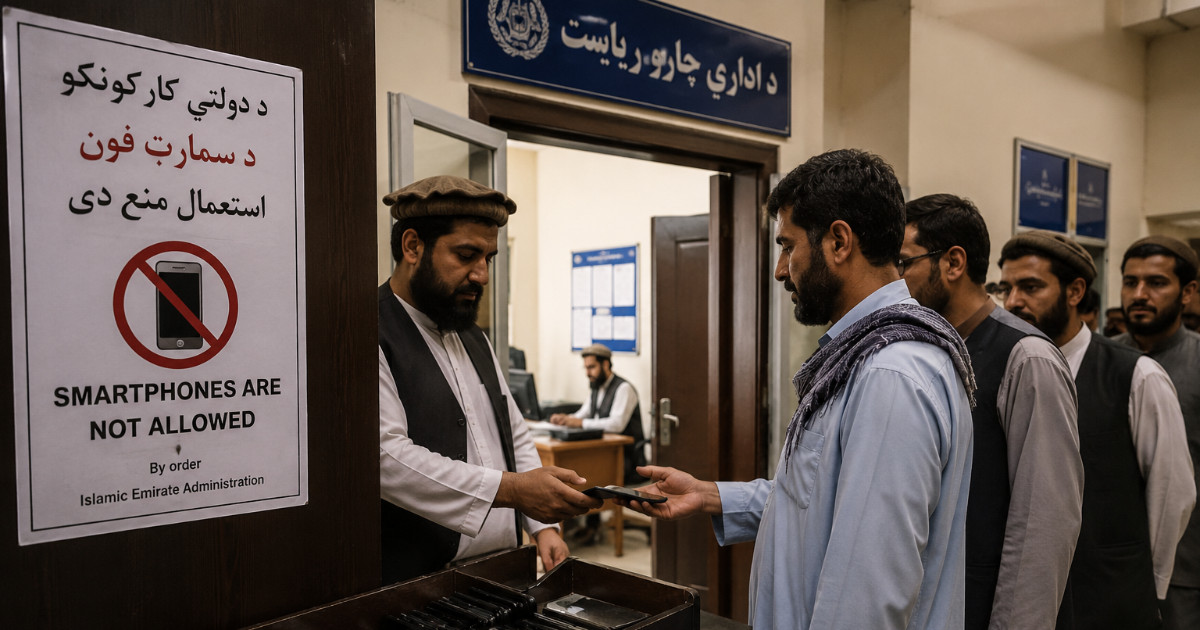
The Taliban have banned smartphones for government employees in many provinces, a directive AFJC says is being implemented. The move is disrupting journalists' ability to get official statements and verify developments, and undermining transparency.Summary
KABUL — The Taliban have begun enforcing a ban on the use of smartphones by government employees across multiple Afghan provinces, a move that press freedom advocates say is further restricting journalists' access to information and complicating public communication with state institutions.
According to the Afghanistan Journalists Center (AFJC), the measure follows a June 7 meeting in Kandahar in which Taliban leader Mullah Hibatullah Akhundzada reportedly instructed provincial authorities to prevent government staff from using smartphones. The organization said implementation of the directive is now underway in several provinces.
Restriction expands across provinces
AFJC reported on June 17 that the order has been communicated to employees in provinces including Paktia, Khost, Logar, Balkh, Kunduz, Baghlan, Badghis, Badakhshan, Herat, Helmand, and Ghazni.
The media rights organization said the policy is being introduced amid a broader pattern of restrictions imposed on Afghanistan's media sector since the Taliban's return to power, including limits on visual content and video interviews.
Information flow disrupted
AFJC said the smartphone ban has already disrupted the flow of information from some government offices that previously relied on online communication channels. Journalists have increasingly depended on digital messaging platforms to obtain official statements, verify developments, and contact government representatives.
The organization warned that the latest measure could further reduce transparency and make it more difficult for both journalists and the public to access timely information from state institutions.
Press freedom concerns persist
Media advocates have repeatedly raised concerns about restrictions affecting reporting conditions in Afghanistan. AFJC described the smartphone ban as part of a continuing policy trajectory that limits freedom of expression and narrows avenues for information sharing.
The organization said such measures risk deepening barriers between government institutions and the media at a time when independent access to official information is already constrained.
WHY THIS MATTERS: The move illustrates how non-media regulations can have a significant impact on journalism by limiting access to sources and official information. For news organizations operating in restrictive environments, the decision highlights the growing importance of alternative verification methods and the challenges of reporting when government communication channels become increasingly inaccessible.
ATTRIBUTION: Reporting by JournalismPakistan, based on a publicly available report by 8 AM Media and statements from the Afghanistan Journalists Center published on June 17, 2026.
PHOTO: AI-generated; for illustrative purposes only.
Key Points
- Directive reportedly issued after a June 7 meeting in Kandahar where Taliban leadership ordered a smartphone ban for government staff.
- AFJC says the order is being implemented across multiple provinces, including Paktia, Khost, Logar and Herat.
- The ban interrupts online channels government offices used to share statements and updates.
- Journalists rely on digital messaging to verify developments; the measure complicates newsgathering and fact-checking.
- Advocates warn the restriction adds to existing media constraints and could further erode transparency and public communication.
Key Questions & Answers
What exactly has the Taliban ordered?
They have ordered provincial authorities to prevent government employees from using smartphones, a directive reportedly issued after a June 7 meeting in Kandahar.
Which provinces are affected by the ban?
AFJC reported the order is being communicated and implemented in provinces including Paktia, Khost, Logar, Balkh, Kunduz, Baghlan, Badghis, Badakhshan, Herat, Helmand and Ghazni.
How will this ban affect journalists and public information?
The ban disrupts digital channels journalists use to obtain official statements and verify developments, making reporting harder and risking reduced transparency and public communication with state institutions.
Relevant Topics
Ask AI: Understand this story your way
AI EnabledDig deeper, ask anything — get instant context, background, and clarity.
Disclaimer: This feature is powered by AI and is intended to help readers explore and understand news stories more easily. While we strive for accuracy, AI-generated responses may occasionally be incomplete or reflect limitations in the underlying model. This feature does not represent the editorial views of JournalismPakistan. For our full, verified reporting, please refer to the original article.