
Germany at the World Cup: The machine that learned to dream
JournalismPakistan.com | Published: 19 June 2026 | Dr. Nauman Niaz (TI)
Join our WhatsApp channel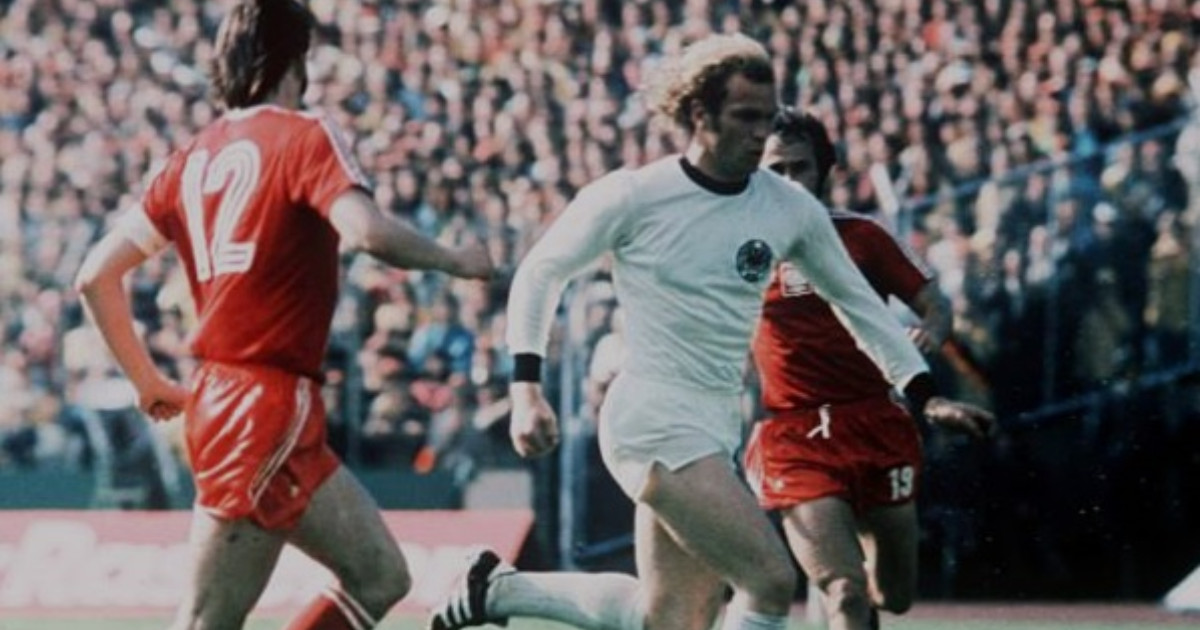
Germany's World Cup record stems from systematic preparation, collective discipline and strategic organization rather than individual flair, a method that across decades has delivered four titles and kept the team consistently competitive on the biggest stage.Summary
There is a kind of excellence that does not seduce. It does not arrive with the anarchic beauty of the Brazilian, nor with the theatrical passion of Argentina, nor with the particular aesthetic philosophy of Italy, which has decided that preventing the other team from scoring is itself a form of creative expression. It arrives, rather, with the subtle authority of something that has been built rather than born, assembled from principles rather than impulses, sustained by a culture of collective purpose that the more individually flamboyant nations have always found slightly unsettling, as one finds unsettling the neighbour who is always on time, always prepared, always more thoroughly competent than the situation strictly requires.
This is German football. It is the football of the well-laid plan and the deeply understood system, the football of men who have studied the game with the rigour that their countrymen have brought to philosophy and music and engineering, who have concluded from their studies that the game yields not to inspiration alone but to preparation, to the organisation of space and time, to the collective intelligence that makes each individual better than he would be in isolation. It is the football of four World Cup titles, of eight finals, of a record at the tournament so sustained and so consistent across nine decades that it must be understood not as luck but as the expression of a national character and a national system that have found in this particular competitive arena their most complete and most public demonstration.
And yet, to stop there, to describe German football only as the triumph of system over inspiration, is to do it an injustice that the evidence does not support. The Germans have produced, within their ordered framework, players of extraordinary individual distinction. They have produced artists as well as artisans, visionaries as well as craftsmen, and the greatest of them have been all of these simultaneously. Franz Beckenbauer played football the way Mozart composed: the form perfect, the content transcendent, the technique and the imagination so completely fused that separating them becomes impossible. Fritz Walter led an entire national team through a World Cup final on a wet afternoon that he had prayed for. Gerd Muller scored goals that defied the angular possibilities available to him. Lothar Matthaus combined the engine of a locomotive with the tactical intelligence of a chess grandmaster across sixteen years of international football that remain without parallel in the game's history.
The story of Germany at the World Cup is therefore both simpler and more complex than it first appears. It is simpler because the pattern is consistent: Germany arrives, Germany competes, Germany endures, Germany very often wins. It is more complex because the means by which they do so have never been purely mechanical, however much the nation's romantic adversaries have preferred to believe otherwise.
From 1930 to the Miracle of Berne: Germany's Early World Cup Journey
Germany's World Cup history begins not in 1934 but in 1930, when they did not travel to Uruguay, a decision that aligned them with the majority of European nations who declined the crossing and reflected the same combination of pride, logistical caution, and political complexity that characterised much of European football's relationship with the new tournament. In 1934, in Mussolini's Italy, they arrived and reached the semi-finals, a solid if unspectacular beginning. In 1938, in France, they were eliminated in the first round by Switzerland, a result that sits awkwardly in the narrative of German football dominance and speaks, perhaps, of a team that had not yet found the synthesis of individual quality and collective organisation that would later become their defining characteristic.
The war, which Germany had caused and which cost the world tens of millions of lives and cost German football the decade of the 1940s, meant that the nation returned to the World Cup in Switzerland in 1954 carrying both the stigma of what the country had done and the particular hunger of a people who had lost everything and were beginning, cautiously and improbably, to rebuild. The German Football Association had been reconstituted in 1949. The team that Sepp Herberger assembled for the 1954 tournament was not, on paper, among the tournament's strongest. They lost their opening group game to Hungary by eight goals to three, a defeat of such magnitude that it appeared to have settled the question of Germany's competitive standing before the tournament had properly begun.
Hungary in 1954 was considered by most contemporary observers to be the finest international football team assembled to that date. The Mighty Magyars, Puskas, Kocsis, and Hidegkuti, had gone four years unbeaten, had demolished England six to three at Wembley in November 1953 in a result that had shaken the English football establishment to its foundations, and had assembled a style of play so sophisticated and so ruthlessly effective that the football world had effectively settled the question of the 1954 World Cup before it was played. Hungary were the inevitable champions. Germany was an interesting footnote.
The World Cup final on the fourth of July 1954 at the Wankdorf Stadium in Berne has come to be known in Germany as the Miracle of Berne, and the title, for all its suggestion of the providential, is not entirely inaccurate, because the probability of Germany defeating Hungary on that afternoon, in those circumstances, was low enough that something beyond the merely expected had to occur to produce the result. Fritz Walter, who was the embodiment of German football in that era, a man of extraordinary vision and passing range who performed best in cold and wet conditions and who had prayed for rain before the final, conducted his team through a performance of disciplined organisation and opportunistic attacking that converted a two-goal deficit into a three-to-two victory. Helmut Rahn scored the winner seven minutes from time, and Germany were world champions for the first time.
The Miracle of Berne was not only a football result. In the context of a nation still recovering from the devastation and the shame of the war, it was a moment of national rehabilitation, the first occasion on which West Germany had been permitted to feel pride in a collective achievement of international standing, and the psychological significance of that permission cannot be overstated. German football had given German society something that politics and economics could not yet provide: a reason to stand up and feel, without complication or qualification, proud.
Wembley 1966, the Match of the Century, and the Road to Dominance
The years between 1954 and 1966 contained within them the development of the system and the culture that would produce the golden generation. England in 1966 brought Germany to a World Cup final at Wembley that they lost four to two to the hosts, a result disputed for decades because of the famous Hurst second goal that crossed the line or did not cross the line depending on where one stood and who one asked, and a result that left a wound in the German football consciousness that the subsequent decade's achievements would cauterise but never entirely heal.
Mexico in 1970 produced what remains the finest German performance without a title. The semi-final against Italy, the match of the century's rival claimant to the 1970 Italian-Germany contest for that designation, ended four to three after extra time and contained in its final twenty minutes a passage of football of such extraordinary mutual abandon, both sides having long since left behind any pretence of defensive organisation, that it has acquired an almost mythological status in the game's collective memory. Germany lost. They won the third-place match. And they returned with the certainty that their time was imminent.
It arrived in 1972, at the European Championship, and was announced with the authority of something that had been preparing itself for years. The West Germany that won in Belgium played football of a quality and an aesthetic ambition that silenced those who had always described the German game as functional rather than beautiful. Beckenbauer at sweeper, conducting the defence and initiating attacks with the same unhurried authority. Gunter Netzer in midfield, languid and magnificent, one of the most gifted creative players European football had produced. Muller at centre forward, compact and predatory, scoring with the frequency and the inevitability of a man to whom goalscoring was not a skill but a vocation.
1974: Beating Total Football and the Age of Beckenbauer
West Germany in 1974 won the World Cup on home soil, defeating the Netherlands in the final two to one, and the result was justice done if not necessarily justice felt, because the Netherlands of Johan Cruyff played Total Football of such evident and overwhelming beauty that the neutral observer wanted them to win in the way that one wants a particularly fine performance of a symphony to continue, simply because the quality of the experience justifies its own extension. Germany won because they were better organised and more experienced and because they were Germans, which in this context means they were the team better equipped to absorb pressure and respond to it with composed, purposeful action rather than increasingly desperate improvisation. Johan Neeskens scored the first penalty in the history of a World Cup final in the first minute, before a German player had touched the ball, and Germany still won, which is perhaps the most succinct available summary of what German football represents at its most complete.
Beckenbauer was the centre of that achievement as he was the centre of everything German football accomplished in that decade. Franz Beckenbauer, born in Munich on September 11th, 1945, is the only man to have won the World Cup as both captain and manager, a fact that represents not an accident of fortune but the outward expression of a footballing intelligence so complete that it could reshape a role from within and produce from the position of sweeper, the libero, a style of play so expansive and so influential that the position was never quite the same after he had occupied it. He did not just defend. He organised, initiated, carried the ball, delivered it, and occasionally, with the particular authority of the man who understands that moments of individual intervention are justified precisely when they are least expected, scored goals of genuine beauty. He was calm always, unhurried always, one step ahead of the game always, a man conducting a complex orchestral arrangement who never once appeared to be reading from the score because the score was already contained within him.
Gerd Muller: The Predator the System Produced
To write of German football and its history at the World Cup without pausing at appropriate length before Gerd Muller is to commit the historian's most fundamental error: the subordination of the specific to the general, the individual to the system. Muller was the system's most eloquent argument against the suggestion that the system was everything. He was, in his physical proportions, what a sophisticated tactician would not have designed: short, broad, with an apparent lack of the athletic poise that the game's romantic tradition had always associated with the great centre forward. He was not Eusebio. He was not Pele. He did not run with the ball the way that made crowds make involuntary sounds of admiration.
What he did was score, with a frequency and a consistency and a variety of methods that those who watched him could not adequately explain and those who faced him could not adequately prevent. Sixty-eight goals in 62 international appearances. Fourteen goals in two World Cups. Ten goals in the 1970 tournament alone, a record subsequently equalled but never surpassed. He scored from impossible angles, from positions where the ball appeared to have already passed the scoring opportunity, in moments so brief that the goalkeeper had not yet completed the preparation of his response before the ball was in the net. He scored from inside the six-yard box, from twenty-five yards, with his left foot, his right foot, his head, his knee, apparently his shoulder on one occasion. He was the most complete finisher in the history of the game at the highest level, and the fact that his career occurred within a system of such collective discipline and tactical organisation meant that his individual genius was sometimes obscured by the collective achievement, which was precisely the kind of subordination of the individual to the whole that the German tradition admired and that Muller himself appeared entirely comfortable with.
1982, 1986, and the Maradona Exception
The World Cup of 1982 in Spain and 1986 in Mexico brought the generation of Rummenigge and Briegel and Littbarski, sides of great quality that reached the final on both occasions and won neither, losing to Italy in 1982 in a manner that reflected a genuinely better Italian side, and losing to Argentina in 1986 when Maradona was achieving feats that no system and no collective organization could adequately contain, because there are individual performances in sport that transcend the tactical framework within which they occur and demand simple acknowledgment.
1990: Beckenbauer the Manager, Matthaus the Maestro
1990 in Italy brought the third World Cup, won against Argentina in a final of considerable tedium that was decided by a penalty in the 85th minute scored by Andreas Brehme, and managed by Franz Beckenbauer, who had concluded his playing career and transitioned to management with the same unhurried authority that had characterised his play. The 1990 German team contained Lothar Matthaus, who was in that tournament the finest footballer in the world, a man of such physical and technical completeness that finding an adequate comparison requires ranging beyond football's own history to the broader question of what supreme athletic intelligence looks like in competitive expression.
Matthaus played international football for West Germany and Germany from 1980 to 2000, a span of twenty years that encompassed four World Cups, and across those twenty years he operated as a box-to-box midfielder, a deep-lying playmaker, a defensive midfielder, and latterly as a sweeper, each transition executed not as an adaptation forced by declining physical capacity but as a considered response to the evolution of the game and his own evolving understanding of where he could be most useful. He won the 1990 World Cup as captain. He was named World Player of the Year in 1991. He was combative and technically precise and tactically aware and ferociously competitive, and he was entirely German in the sense that his individual excellence was always expressed within a framework of collective purpose, always in service of the team, always understood to derive its full meaning from what the team could achieve together.
Euro 2000 Catastrophe and the DFB Revolution
France in 1998 was eliminated in the semi-finals by the hosts. South Korea and Japan in 2002 brought another final, against Brazil, lost two to zero, a result accurate in its reflection of the gap between a Ronaldo-led Brazilian side at the peak of its powers and a German team that had qualified for the tournament through a play-off against Ukraine and had reached the final through defensive organisation and the goalkeeping of Oliver Kahn, who was the best goalkeeper in the world that summer and who might have saved his team had the Brazilian forwards been less precisely the Brazilian forwards they were.
But the most significant development in German football in this period was not a World Cup result. It was a philosophical revolution, quiet in its announcement but seismic in its consequences, that the German Football Association initiated following the catastrophic failure at Euro 2000, where they were eliminated in the group stage having lost to England and to Portugal and having offered evidence of a system that had become rigid, conservative, and technically inadequate in an era when the game's technical demands had accelerated beyond what the German youth development structure was producing. The DFB's response was comprehensive and institutional. Three hundred and sixty talent centres were established across the country. Every club in the top two divisions was required to operate a youth academy meeting prescribed standards. The curriculum emphasised technical development from the earliest age, with a ball in children's hands from the age of five or six rather than the defensive and physical education that had previously dominated the early years. The investment, in financial terms and in institutional commitment, was unprecedented in European football.
The first significant consequence appeared at the 2006 World Cup on home soil, where a young German team reached the semi-finals playing football of genuine quality and attacking ambition, including a five to two victory over Costa Rica and a four to two victory over Sweden, performances that suggested the new generation was not only technically improved but liberated from the defensive caution that had occasionally stifled German football at its less inspired. The semi-final defeat to Italy was painful. The third place was celebrated with the generosity of a nation that recognised something new was emerging.
South Africa in 2010 confirmed the emergence. Germany defeated Australia four to zero, England four to one, Argentina four to zero across the knockout stage, and the football they played was not the German football of organised caution but something more fluid, more direct, more collectively expressive, the product of a generation that had been technically educated from childhood and that played with the confidence that deep technical grounding always eventually produces. Thomas Muller, who bore the name of no relation to the great Muller yet carried something of the same poaching instinct and the same capacity for the important goal, announced himself with five goals in the tournament. Mesut Ozil demonstrated that the new Germany could produce players of individual creative sophistication as well as collective technical proficiency. The semi-final defeat to Spain was a genuine defeat to a genuinely superior side, but the standard Germany had established meant the defeat felt like a temporary interruption rather than a natural ceiling.
Brazil 2014: The Seven to One and the Fourth Star
Brazil in 2014 produced the fourth World Cup title and contained within it the single most dramatic individual match in the tournament's history. The semi-final against Brazil in Belo Horizonte, Germany's seven-to-one demolition of the host nation July 15th, 2014, four goals scored between the 23rd and 29th minute of the game as the Brazilian defence disintegrated in real time before a crowd of 60,000 Brazilians and a global television audience of several hundred million, is a footballing event without precedent or adequate comparison. It was not a football match. It was the sudden and complete collapse of one side's structural integrity in the face of an opponent that was pressing, moving, and passing with a fluency and a collective intelligence of such overwhelming superiority that the match ceased to be a contest in any meaningful sense and became instead a demonstration, conducted on the largest available stage, of what the German footballing philosophy could produce at its most fully realised.
The final against Argentina, won one to zero through Mario Gotze's extra-time goal, confirmed the title. Gotze's goal, the chest control and the left-foot volley, was a goal of genuine beauty executed in the most pressured circumstances that football provides, and its aesthetic quality was important precisely because it refuted the suggestion that German football wins through organisation alone and cannot win through moments of individual inspiration. Gotze won Germany the World Cup with a goal of the kind that Bergkamp would not have disdained.
Russia 2018: The Fall and the Reckoning
The years after 2014 brought the familiar pattern of reassessment and rebuild. The 2018 World Cup in Russia produced the most dramatic failure in German football history, a first-round exit that included defeats to Mexico and South Korea and a performance against South Korea in which they needed two goals in injury time to draw level, and received them, but then conceded immediately from the restart to lose in a manner so public and so comprehensive that the footballing world, which had grown accustomed to Germany's reliability, found itself confronting the evidence that reliability in football is never absolute, that the system can fail, that the cycle can descend as well as ascend.
The Greatest German Players: A Roll Call Without Equal
To write of the greatest German players is to engage with a list so rich and so varied that selection becomes a philosophical act as much as a critical one. But some names stand beyond argument.
Franz Beckenbauer remains the touchstone against which all subsequent German players are measured, and most are found to fall short. As a sweeper, he redefined the position. As a captain, he won the World Cup in 1974. As a manager, he won the World Cup in 1990. As a human being, he possessed the particular quality of effortlessness that all genuine geniuses share, the appearance of operating without strain in circumstances that would break lesser performers. He called himself Kaiser, and the title was not vanity. It was accurate.
Gerd Muller was the most purely efficient goalscorer that the highest level of football has produced. His career statistics are extraordinary in their aggregate and more extraordinary in their context, the majority of those goals scored against the finest defences in the world in the highest competitive environments available. He retired prematurely, struggled in retirement with alcoholism, recovered, returned to Bayern Munich in a coaching capacity, and died in August 2021, mourned by everyone who had watched him score and who understood that what they had witnessed was something that the game would not see again in precisely that form.
Lothar Matthaus was the most complete German outfield player of the post-Beckenbauer era, a man of physical power and technical range and tactical sophistication who played at the highest level for longer than anyone had any right to expect. His competitive edge was ferocious, and his technical intelligence was equally so, an unusual combination that elevated him above those who possessed only one.
Oliver Kahn was the finest German goalkeeper of the modern era and, in 2002, gave a performance across an entire World Cup that is the standard against which all goalkeeping performances at the tournament are subsequently measured. He made saves in that tournament that had no business being saves, interventions of such athletic and technical improbability that they appeared to operate by different physical laws from those governing the rest of the game. He was named the tournament's best player, the first goalkeeper to receive the Golden Ball, and the distinction was deserved.
Miroslav Klose scored sixteen goals in four World Cups, a record that has never been surpassed and that stands as the most complete demonstration of sustained World Cup excellence by a forward in the tournament's history. He was not Muller in his acrobatic variety or his instinctive anticipation, but he was efficient, decisive, technically accomplished, and consistently available for the important goal in the important match, which is the quality that separates the very good from the genuinely great.
Sepp Maier, the goalkeeper who won the 1974 World Cup and who was the best in the world through much of the decade, Karl-Heinz Rummenigge of the two finals and the predatory instinct, Rudi Voller who scored goals and made goals and managed a team to a World Cup final, Michael Ballack who missed the 2002 final through suspension and the 2006 semi-final through injury and who was, when fully available and fully fit, one of the three or four most complete midfielders in the world, Philipp Lahm who combined the technical quality of a playmaker with the defensive discipline of an elite full back and who captained the 2014 World Cup winning side with a composure that suggested he was born for leadership in the way that some men are simply born for it: all of these belong in any honest account of what German football has produced, and the production continues.
The DFB System: How Germany Manufactures Excellence
To understand German football's sustained excellence at the World Cup, one must understand the system that produces it, because the system is the argument made visible. The DFB Leistungszentren, the 360 talent centres established after the 2000 catastrophe, represent a structural commitment to player development that has no equivalent in most other European nations. Every elite youth player in Germany operates within an educational framework designed not only to improve their football but to develop their understanding of the game at a conceptual level, to produce not merely good technical players but players who understand the principles underlying the techniques they execute.
The emphasis on pressing, on Gegenpressing, the immediate recovery of the ball after losing possession, which Jurgen Klopp refined into an almost violent art form at Borussia Dortmund and later at Liverpool, derives from a German footballing culture that has always understood that the transition moments between possession and non-possession are where football matches are most fundamentally decided. The German instinct is to deny the opponent time. To recover the ball before it can be used. To press with collective coordination rather than individual initiative, five or six players closing simultaneously rather than one chasing and six watching. The effect, when it works as it is designed to work, is suffocating, exhausting for the opponent, and ultimately demoralising in the way that sustained pressure without respite is always ultimately demoralising.
The German approach to the game is also characterised by what might be called structural honesty: the acknowledgment that the game is played in space and time, that the creation and exploitation of space is the fundamental tactical problem, and that the solution is the coordinated movement of collective units rather than the individual inspiration of isolated performers. German teams do not wait for a genius to solve their problems. They create the conditions in which the solution becomes available to any of several players simultaneously, and the most appropriately positioned player executes it. The result is an efficiency of exploitation that can look mechanical to the observer accustomed to the individual moment of inspiration, but which represents, in its own way, a sophistication as profound as any individual gift.
Germany at the 2026 World Cup: Nagelsmann, Musiala, Wirtz, and the Fifth Star
The 2026 World Cup in the United States, Canada, and Mexico arrives with German football in a condition of cautious renewal under Julian Nagelsmann, a manager whose youth belies an experience and a tactical sophistication that have made him one of the most interesting minds in European football. The opening seven-to-one victory over Curacao, a result of the kind that tests a side's ability to play with purpose when purpose is not urgently required by the scoreline, suggested a team that has recovered the attacking fluency that was its hallmark in 2014 and that was, in different ways and for different reasons, absent in the years between.
The German squad for 2026 contains elements of a generation that knows how to win and elements of a generation that is learning how to win, which is precisely the combination that Herberger understood in 1954 and that Schon understood in 1974 and that Low understood, eventually and after considerable difficulty, in 2014. Jamal Musiala, born in Stuttgart in 2003, has emerged as the most complete attacking talent Germany has produced since Ozil, a player of such technical refinement and such instinctive creativity that his presence in the team changes what the team is capable of on its best days. He plays with the freedom of a performer who has absorbed the principles of his formation so completely that they operate beneath the level of conscious decision, who moves and passes and dribbles within the system as effortlessly as Beckenbauer once moved and passed within his.
Florian Wirtz, of Bayer Leverkusen's unbeaten Bundesliga title-winning season of 2023-24, brings a different quality: the ability to play in the spaces between opposition lines with a combination of technical composure and creative vision that turns half-chances into dangerous situations and defensive hesitation into attacking opportunities. He and Musiala represent, together, a creative partnership of a quality that Germany has not had available since the best years of Ozil alongside Muller, and the question of how Nagelsmann integrates both into a team structure that does not allow either to be isolated is the central tactical question of Germany's 2026 campaign.
The defensive structure, organised around the experienced Jonathan Tah and the athletic precision of Antonio Rudiger at Real Madrid, is capable of the kind of disciplined rigidity that German football has always made its foundation, the understanding that you cannot win a World Cup without keeping clean sheets in the matches where clean sheets are what winning requires. The goalkeeper position, occupied by Marc-Andre ter Stegen until fitness permitted him to return and in his absence by Manuel Neuer, who in 2014 had redefined what goalkeeping could encompass with his sweeping behind the defensive line and his command of the space behind the defence, has the depth and the quality that the semi-finals and finals of World Cups demand.
The expanded 48-team format of 2026 presents opportunities and challenges simultaneously. The opportunities are obvious: easier group stages, more matches before the genuine eliminations begin, more time for a developing squad to find its collective flow. The challenges are less obvious but no less real: the expanded format increases the probability of meeting sides of significantly lower quality in the early rounds, and the maintenance of competitive intensity and tactical sharpness across matches where the scoreline becomes emphatic early requires a discipline and a purposefulness that the seven to one opening victory against Curacao both demonstrated and hinted at the possibility of momentarily losing, in the sense that very large victories can sometimes encourage a looseness of approach that must be corrected before more demanding opponents are encountered.
Germany's greatest opponents in the path to the final are likely to emerge from the familiar constellation: Brazil, Argentina, France, Spain, England. Each presents different problems. Brazil's attacking talent and defensive vulnerability. Argentina's individual quality and set-piece danger. France's extraordinary depth and physical power. Spain's possession and positional play. England's high-intensity pressing and direct attacking. Against each of these, Germany will need to deploy the full range of what the system can produce: the defensive organisation, the transition speed, the set-piece efficiency, and the individual creativity of Musiala and Wirtz operating at the level their talent enables when everything around them is functioning as it should.
The question that all Germany's World Cup campaigns ultimately ask, and that the 2026 campaign will ask in its turn, is the question of the final match. Germany has been to eight World Cup finals and won four of them. The four they won were won through different combinations of qualities: the discipline of 1954, the tactical perfection of 1974, the collective resilience of 1990, the technical brilliance of 2014. What they share is the German quality that is most difficult to name and most impossible to dismiss: the capacity to be at their best when the match is at its most important, to find within themselves, individually and collectively, the reserves of quality and composure that the final demand reveals, to play the last match of the tournament as though it were the only one that mattered, because in the German understanding of football's deepest logic, it is.
The Enduring Legacy: What Germany Means to World Football
Germany's place in the history of the World Cup is not the place of the romantic or the visionary, of the side that played the most beautiful football or produced the most cherished individual memory. It is the place of the most consistent, the most reliable, the most comprehensively prepared, the most organisationally sophisticated. It is the place of the nation that decided, at some point in the mid-twentieth century, that if the game could be studied, they would study it more thoroughly than anyone. If talent could be developed, they would develop it more systematically than anyone. That if the collective could be made to exceed the sum of individual parts, they would find the method by which this multiplication was achieved, and they would apply it, and they would apply it again, and they would continue applying it regardless of what the immediate results suggested, because the conviction that the method was correct was deeper than any single result could disturb.
And then, within that framework of supreme collective intelligence, something happened that the framework's most dedicated administrators might not have fully anticipated: the framework produced artists. The framework produced Beckenbauer and Muller and Matthaus and Kahn and Klose and now Musiala and Wirtz, players of individual distinction sufficient to stand in any company in any era. The machine, to borrow the metaphor that Germany's detractors most frequently apply, learned to dream. And the dreams it dreams are the dreams that World Cups are made of: ordered, disciplined, collectively expressed, and occasionally, in the moments that matter most, genuinely and irreducibly beautiful.
The 2026 World Cup will unfold as all World Cups unfold: with surprises, with heartbreak, with the particular justice and injustice that large tournaments distribute without regard for what observers consider they deserve. Germany will be there, prepared as they are always prepared, organised as they are always organised, equipped with talent they have never previously had in quite this particular combination. Whether they win will depend on the full complexity of what football requires, the fitness, the draw, the form on the day, the refereeing decisions, the saves made, and the shots missed. But they will compete, with everything the German system can provide, and the German system can provide more than most.
The machine endures. The dream continues. The four stars on the shirt remain, and the fifth, when it comes, will arrive in the German manner: earned, documented, deserved.
ABOUT THE WRITER: Dr. Nauman Niaz, a Post Doctorate (Oxford), PhD (UWA), FRCP (London), FRCP (Edinburgh), FRCP (Ireland), FRCP (Glasgow), CST (Endo, UK), MSc Biomechanics & Kinesiology (UWA), MRCP (UK), MBBS (Pb) is a civil award winner (Tamagha-i-Imtiaz) in Sports Broadcasting & Journalism. He is a regular cricket correspondent, having covered 54 tours and three ICC World Cups, and written over 3700 articles. He has authored 19 books and is the official historian of Pakistan Cricket (Fluctuating Fortunes IV Volumes - 2005). His signature show Game On Hai has been the highest on ratings and acclaim.
Key Points
- Germany's success is rooted in disciplined planning, organization, and collective purpose.
- The team emphasises system and preparation over individual flair.
- Four World Cup titles and consistent deep tournament runs reflect long-term strength.
- Coaching, study of the game, and national infrastructure underpin performance.
- Their style expresses a cultural commitment to efficiency, coordination, and resilience.
Key Questions & Answers
Why has Germany been so successful at the World Cup?
Germany's success comes from systematic preparation, disciplined team organization, effective coaching, and a football culture that prioritizes collective performance over individual brilliance.
How many World Cups has Germany won?
Germany has won the World Cup four times, reflecting sustained competitiveness across many decades.
Is German football more about tactics than flair?
Yes. German football traditionally emphasises tactics, organization, and preparation, which can produce less flamboyant but highly effective performances.
What sustains Germany's consistency at major tournaments?
Consistent youth development, strong coaching structures, national infrastructure, and a culture of studying and preparing for matches all contribute to sustained performance.
Ask AI: Understand this story your way
AI EnabledDig deeper, ask anything — get instant context, background, and clarity.
Disclaimer: This feature is powered by AI and is intended to help readers explore and understand news stories more easily. While we strive for accuracy, AI-generated responses may occasionally be incomplete or reflect limitations in the underlying model. This feature does not represent the editorial views of JournalismPakistan. For our full, verified reporting, please refer to the original article.