
Why France are always the team to beat at the World Cup
JournalismPakistan.com | Published: 21 June 2026 | Dr. Nauman Niaz (TI)
Join our WhatsApp channel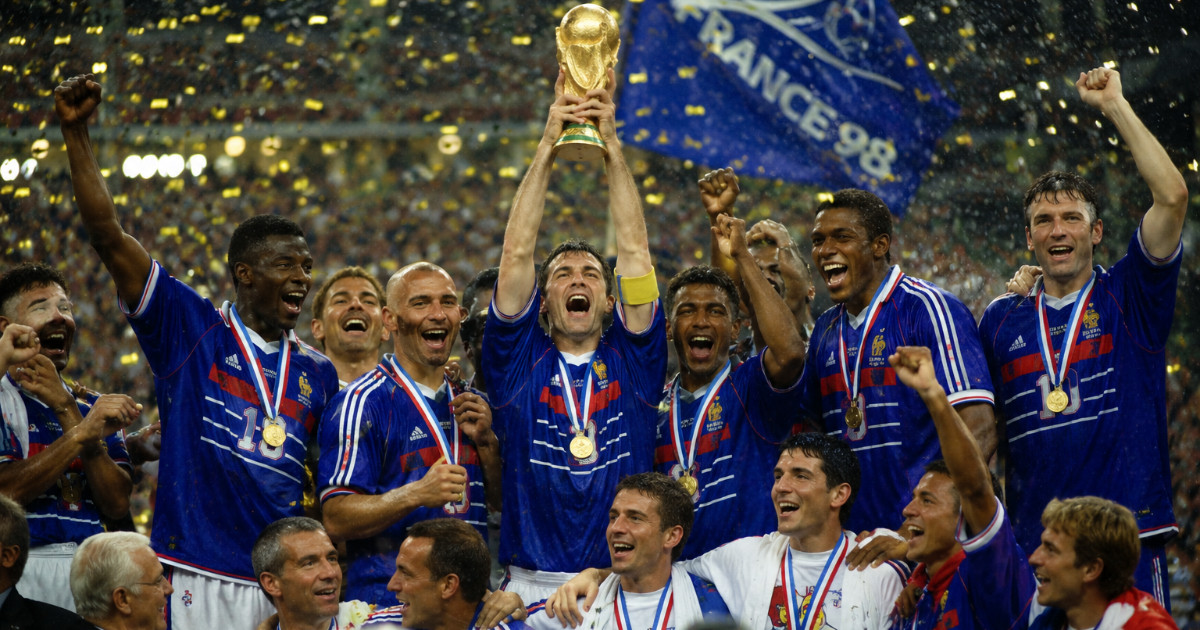
France's ties to the World Cup span a century, from Jules Rimet's founding and early wins to icons like Just Fontaine, Raymond Kopa and Michel Platini; their recurring favourite status reflects footballing excellence and broader national narratives.Summary
Some nations arrive at the World Cup; France, one feels, has always belonged to it. There is a particular intimacy between the French and the great quadrennial festival, an intimacy of paternity rather than mere participation, for it was a Frenchman, Jules Rimet, who dreamed the tournament into being, and France who, in the inaugural summer of 1930 at Montevideo, recorded one of the competition's very first victories. To trace the story of Les Bleus across the near-century since is to trace something larger than football. It is to follow a meditation, played out in studs and grass and the rising noise of crowds, upon what a country might be, and whom it might contain, and how the disparate threads of a republic might be woven, every four years, into a single shirt.
Fontaine, Kopa, and the Beauty Without Coronation
For the longest while, the story was one of beauty without coronation. The 1950s gave France a forward of almost arithmetical cruelty in Just Fontaine, who in Sweden in 1958 scored thirteen goals in a single tournament -- a figure that has survived every assault of the decades since, and which seems, in our era of caution and calculation, less a record than a rumour. Beside him moved Raymond Kopa, elegant, expatriate in spirit, the son of Polish migrants to the mining country of the north, a man who played as though the ball were an idea he was reluctant to surrender. They carried France to third place and to the threshold of greatness, and then the door, as it has a habit of doing, closed.
Platini's Philosopher-King and the Sorrow of Seville
It would not truly open for another four decades, though the waiting produced its own incomparable artist. Michel Platini, in the early 1980s, was football's philosopher-king, a midfielder of such unhurried sovereignty that the game appeared to slow in deference to him. His France reached the semi-finals of 1982 and 1986, and the first of those ended in Seville on a night that the French have never quite forgiven and never quite forgotten -- the match against West Germany, the goalkeeper's assault that went unpunished, the lead surrendered, the cruelty of the penalty shoot-out, then a novelty and now a national inheritance of sorrow. France played the more beautiful football and lost. It is a sentence that might serve as the epitaph of an entire generation.
1998: Zidane, La Castellane, and a Republic Made Whole
And then, in the high summer of 1998, the waiting ended, and it ended at home. There is no need to embroider what occurred at the Stade de France on the twelfth of July, for the facts possess their own poetry: France 3, Brazil 0; Ronaldo wandering through the final in some fugue state no one has ever fully explained; and Zinedine Zidane, the son of Algerian immigrants from the tenements of Marseille, rising twice to head the ball into the Brazilian net. That a boy from La Castellane should settle the destiny of the French nation was not an irony. It was the entire point. The team that lifted the trophy -- black, blanc, beur, as the slogan had it, black, white, Arab -- was held aloft as the living proof of a republic that worked, and for one incandescent night the projection of the Arc de Triomphe carried Zidane's face and the legend merci.
The Genius of Arrival: Immigration and the Making of French Football
Here is the deep secret of French football, the thing that distinguishes it from every rival tradition: its genius has always been a genius of arrival. The French game is built, more than any other, upon the children and grandchildren of those who came from elsewhere -- from Poland and Portugal, from the Antilles and Armenia, from the Maghreb and Mali and the wide francophone reach of West Africa. Kopa from the Polish mines; Platini from Italian stock in Lorraine; Zidane from Kabylie by way of Marseille; and after them an unbroken procession -- Thuram, Henry, Vieira, Desailly, Trezeguet, Pogba, Kante, Mbappe -- in whom the map of France's history, its empire and its penance, its openings and its wounds, is written in flesh and motion. France does not merely tolerate this inheritance. It is constituted by it. The national academy at Clairefontaine and the banlieues that feed it have together produced the most reliable conveyor of footballing talent on earth, and the talent it produces is, almost by definition, plural.
Champions, then Humbled: The 2002 Collapse and Zidane's Final Act
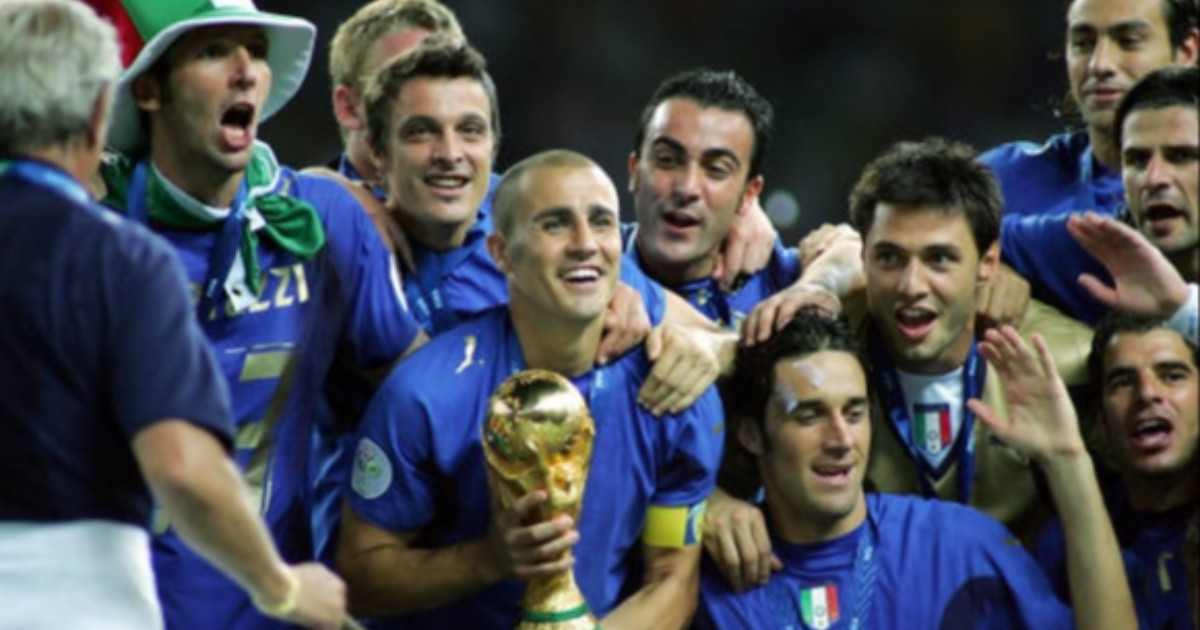
The years immediately after 1998 confirmed the alloy. France added the European Championship of 2000 and entered the new century as the finest team in the world. There followed, as there always must, a humbling -- the wretched first-round exit of 2002, champions sent home without a goal scored -- for the French story is never permitted to run smooth, and seems to require these intervals of darkness as a tragedian requires the interval before the final act. The act itself came in 2006, in Berlin, and it belonged once more to Zidane, who returned from retirement to drag a moderate French side to the very brink of immortality. He scored an impudent, dinked penalty in the final against Italy, and then, in extra time, provoked beyond his own remarkable powers of restraint, he lowered his head and drove it into the chest of Marco Materazzi, and was sent from the field, and from the game forever, in the last act he would ever play. France lost on penalties. It was the most human exit imaginable, genius and frailty inseparable to the last, and it is somehow fitting that the most gifted Frenchman of all should have departed not in triumph but in a fury that all the world could recognise as its own.
Deschamps: The Water-Carrier Who Built a Machine
What lifts France above the cyclical fortunes of other great nations is the modern marriage of this expatriate abundance to a cold and clarifying intelligence, and that intelligence has a name: Didier Deschamps. He had been the captain of 1998, the water-carrier, the unglamorous metronome whom Eric Cantona once dismissed and whom history has comprehensively vindicated. As manager, he understood what the romantics could not bear to accept -- that beauty unaccompanied by ruthlessness is merely a more elaborate way of losing. His France would be pragmatic, defensively immaculate, devastating in transition, and entirely unsentimental about the surrendering of possession. It was not always lovely to watch. It was almost always victorious.
Russia 2018: Mbappe Announces Himself to the World
In Russia in 2018, the method bore its fruit. A French side of bewildering youth -- marshalled by the granite of Kante, propelled by the swagger of Pogba, and illuminated by a nineteen-year-old from Bondy named Kylian Mbappe who ran as though pursued by his own future -- swept to the title, dispatching Argentina in a last-sixteen tie of delirious abandon and Croatia in a final of four goals and total control. Mbappe became the first teenager since Pele to score in a World Cup final, and the comparison, far from seeming absurd, seemed merely premature. France had its second star, twenty years after the first, and the boy who would carry the next era had announced himself before he could legally toast the victory.
Qatar 2022: The Greatest Final and a Loss That Enlarged a Legend
And then Qatar, in 2022, and the final that may stand as the greatest the tournament has ever staged. For an hour France were not present at all, outplayed and outclassed, two goals down to a Messi-driven Argentina who seemed to be receiving the trophy as a gift from destiny itself. What followed was the purest expression of the French character under Deschamps -- not beauty, but refusal. Mbappe scored twice in ninety-seven seconds to level a match that had escaped entirely. He completed his hat-trick in extra time. He finished as the tournament's leading scorer and lost, on penalties, the only prize that mattered, and in losing, he somehow enlarged himself. France had reached consecutive finals, the first nation since Brazil at the turn of the century to do so, and had been beaten only by the convergence of an opponent's lifelong yearning and the lottery of the spot-kick. To lose in such a manner is its own strange species of greatness.
Why France Remain the Team to Beat
Why, then, are they the pre-eminent power of the contemporary game? The answer is a confluence, and it is unmatched. There is the depth, first -- the sheer profligacy of a nation that can leave world-class players at home and scarcely notice the absence, a reservoir replenished endlessly by the banlieues and the academies. There is the philosophy -- Deschamps' unromantic creed of solidity and counter-attack, a tournament method engineered for the knockout round rather than the neutral's applause. There is the culture -- a footballing identity confident enough to absorb the whole world into itself and to call the result, without contradiction, French. And there is, at the apex, Mbappe, the finest player of his generation, for whom the World Cup is not an aspiration but an accustomed stage.
A National Argument, Prosecuted in Goals
Yet to reduce France to its assets is to miss the deeper thing. What France has understood, more profoundly than any rival, is that a national team is a national argument -- a proposition about who belongs, advanced not in the parliament but on the pitch, and settled not by rhetoric but by goals. The French team is forever contested at home, claimed by the republic in victory and disowned by its uglier voices in defeat, and the players carry that weight into every tournament alongside the ordinary burden of the ball. That they have borne it so magnificently, across so many summers, is the measure of them. Les Bleus do not merely play football. They perform, every four years, the difficult and unfinished business of being France -- and they do it, more often than not, better than anyone alive. The trophy may come or go. The argument they embody, and the brilliance with which they prosecute it, does not. That is why, when the next World Cup turns its lights upon them, the world will watch France and know, with a certainty reserved for the truly great, that here is the team to beat.
ABOUT THE WRITER: Dr. Nauman Niaz, a Post Doctorate (Oxford), PhD (UWA), FRCP (London), FRCP (Edinburgh), FRCP (Ireland), FRCP (Glasgow), CST (Endo, UK), MSc Biomechanics & Kinesiology (UWA), MRCP (UK), MBBS (Pb) is a civil award winner (Tamagha-i-Imtiaz) in Sports Broadcasting & Journalism. He is a regular cricket correspondent, having covered 54 tours and three ICC World Cups, and written over 3700 articles. He has authored 19 books and is the official historian of Pakistan Cricket (Fluctuating Fortunes IV Volumes - 2005). His signature show Game On Hai has been the highest on ratings and acclaim.
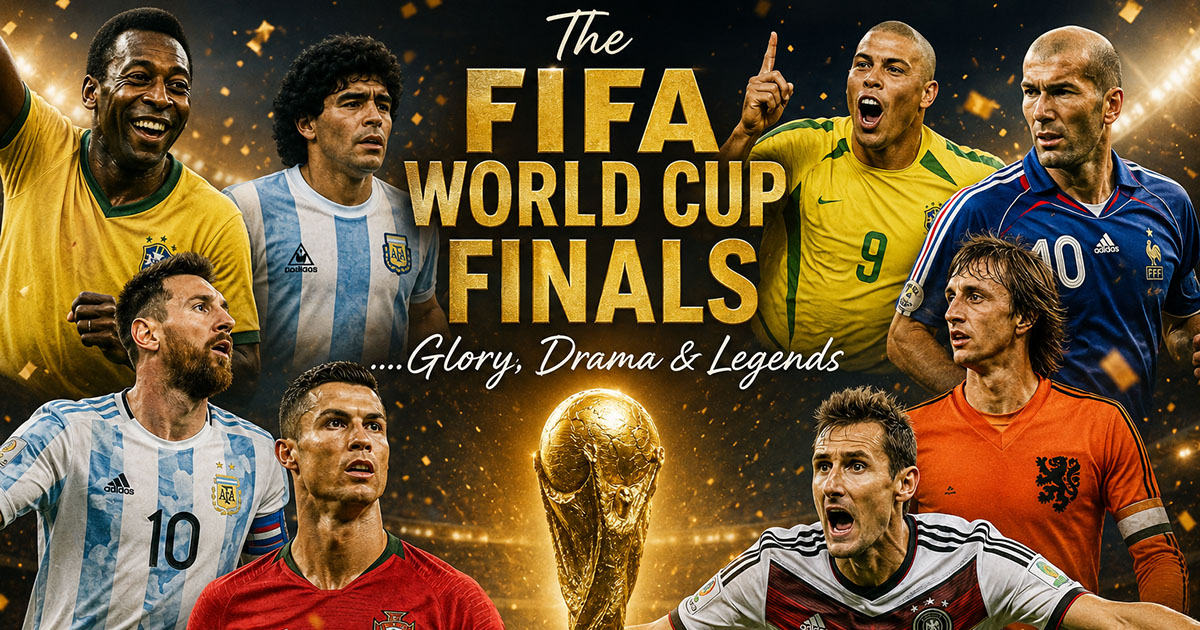
PHOTO: AI-generated; for illustrative purposes
Key Points
- France's historic ties to the World Cup date back to Jules Rimet and early victories.
- Just Fontaine's 1958 goal record remains an iconic example of French attacking brilliance.
- Raymond Kopa and Michel Platini symbolized individual skill during eras of near-success.
- France's repeated status as a favorite reflects both sporting quality and broader national conversations.
- The team's World Cup story often mirrors social and cultural debates within France.
Key Questions & Answers
Why are France often called the team to beat at the World Cup?
France have a long, consistent presence at the tournament, historic early involvement, and recurring generations of top players, which together create an expectation of success.
Who are the historic French players mentioned in this story?
Key figures include Jules Rimet (tournament founder), Just Fontaine, Raymond Kopa, and Michel Platini, each of whom left a notable mark on World Cup history.
What is Just Fontaine's significance to World Cup history?
Just Fontaine scored 13 goals at the 1958 World Cup, a tournament record that remains one of football's most remarkable achievements.
How does France's World Cup role relate to national identity?
The team's performances and diverse squads have often been read as reflections of France's social and cultural conversations, making the tournament a wider national narrative.
Ask AI: Understand this story your way
AI EnabledDig deeper, ask anything — get instant context, background, and clarity.
Disclaimer: This feature is powered by AI and is intended to help readers explore and understand news stories more easily. While we strive for accuracy, AI-generated responses may occasionally be incomplete or reflect limitations in the underlying model. This feature does not represent the editorial views of JournalismPakistan. For our full, verified reporting, please refer to the original article.