.png)
AI hallucination: When machines confidently generate false information
JournalismPakistan.com | Published: 7 June 2026 | JP Staff Report
Join our WhatsApp channel
Newsrooms using generative AI for headlines, summaries and research face growing issues from AI hallucinations, where models fabricate or misstate facts and present them confidently; regulators, tech firms and media worry about verification, trust and legal risks.Summary
ISLAMABAD — Artificial intelligence is rapidly becoming part of daily newsroom operations, from drafting headlines and summarizing reports to assisting with research and translation. As media organizations worldwide experiment with AI tools, a new term has entered journalism discussions with increasing frequency: AI hallucination.
The issue has gained attention as governments, regulators, technology companies, and news organizations grapple with the risks of generative AI. In recent years, widely used AI chatbots and content-generation systems have occasionally produced inaccurate information while presenting it confidently as fact. Some of these errors have appeared in legal filings, public documents, academic work, and media content, raising concerns about reliability and verification.
For journalists, editors, and news consumers, understanding AI hallucination has become increasingly important. As AI-generated content becomes more common across digital platforms, the ability to recognize and address inaccurate machine-generated information is emerging as a key media literacy skill.
What does AI hallucination mean
An AI hallucination occurs when an artificial intelligence system generates information that is false, misleading, exaggerated, or entirely fabricated but presents it as if it were accurate.
Unlike human sources that may intentionally spread misinformation or disinformation, an AI system does not "know" that the information is incorrect. Large language models generate responses by predicting patterns in vast amounts of training data. In some situations, the system may produce answers that sound plausible but have no factual basis.
Hallucinations can take many forms. An AI tool might invent a quotation, create a nonexistent news article, misidentify a person, provide inaccurate statistics, or cite sources that do not exist. Because the language often appears polished and authoritative, errors may not be immediately obvious to readers.
The problem is not limited to text. AI image generators can create visuals depicting events that never happened, while AI video and audio tools can generate realistic but inaccurate representations of people and situations. In media environments where speed is highly valued, these errors can spread quickly if proper verification processes are not followed.
Why it matters now
The rise of generative AI has transformed how information is produced and distributed online. News organizations, technology companies, businesses, governments, and individual users are increasingly relying on AI-powered tools to create content and answer questions.
This growing adoption has intensified concerns about accuracy and trust. Journalism depends on verified facts, reliable sourcing, and accountability. When AI-generated information enters the reporting process without proper fact-checking, it can introduce errors that undermine credibility.
The issue is also relevant because search engines, social media platforms, and AI assistants are becoming major gateways to information. If inaccurate AI-generated content reaches large audiences, false claims can spread rapidly across digital networks before corrections are issued.
Regulators around the world are paying closer attention as well. Policymakers in regions including the European Union, the United States, and parts of Asia have debated rules aimed at improving transparency and accountability in AI systems. News organizations are likewise developing editorial guidelines governing the use of generative AI in reporting and content production.
For journalists, the challenge is not simply avoiding mistakes. It is maintaining public trust at a time when audiences are already navigating misinformation, manipulated content, and increasingly complex digital information environments.
Real-world examples
One of the most widely reported examples occurred in the United States when attorneys submitted court filings that included legal cases generated by an AI chatbot. Subsequent reviews found that several cited cases did not exist. The incident drew international attention and became a prominent example of how AI hallucinations can enter professional workflows when outputs are not independently verified.
Major technology companies have also acknowledged the issue. AI systems developed by organizations such as OpenAI, Google, and Anthropic have all experienced instances where users reported fabricated citations, incorrect factual claims, or invented references. While developers continue improving accuracy, they generally warn users that AI-generated responses should be checked against reliable sources.
In South Asia, concerns about AI-generated inaccuracies have emerged alongside growing interest in AI-assisted journalism and content creation. Newsrooms, educational institutions, and digital publishers across Pakistan and neighboring countries have increasingly discussed the need for human oversight when using generative AI tools.
Pakistan's rapidly expanding digital media sector has also seen broader debates about misinformation, online verification, and responsible technology use. While not every inaccurate AI-generated claim qualifies as a major public incident, media professionals have highlighted the risk that fabricated information could be mistaken for authentic reporting if proper editorial safeguards are absent.
Globally, several news organizations have responded by adopting policies requiring human review of AI-assisted content before publication. These measures typically emphasize source verification, fact-checking, transparency, and editorial accountability.
As artificial intelligence becomes more deeply integrated into information ecosystems, understanding AI hallucination is essential for both journalists and audiences. The term highlights a fundamental reality of modern AI: systems can produce convincing language without guaranteeing factual accuracy. Recognizing that limitation helps readers evaluate information more critically and supports the broader goal of maintaining trust in journalism and public communication.
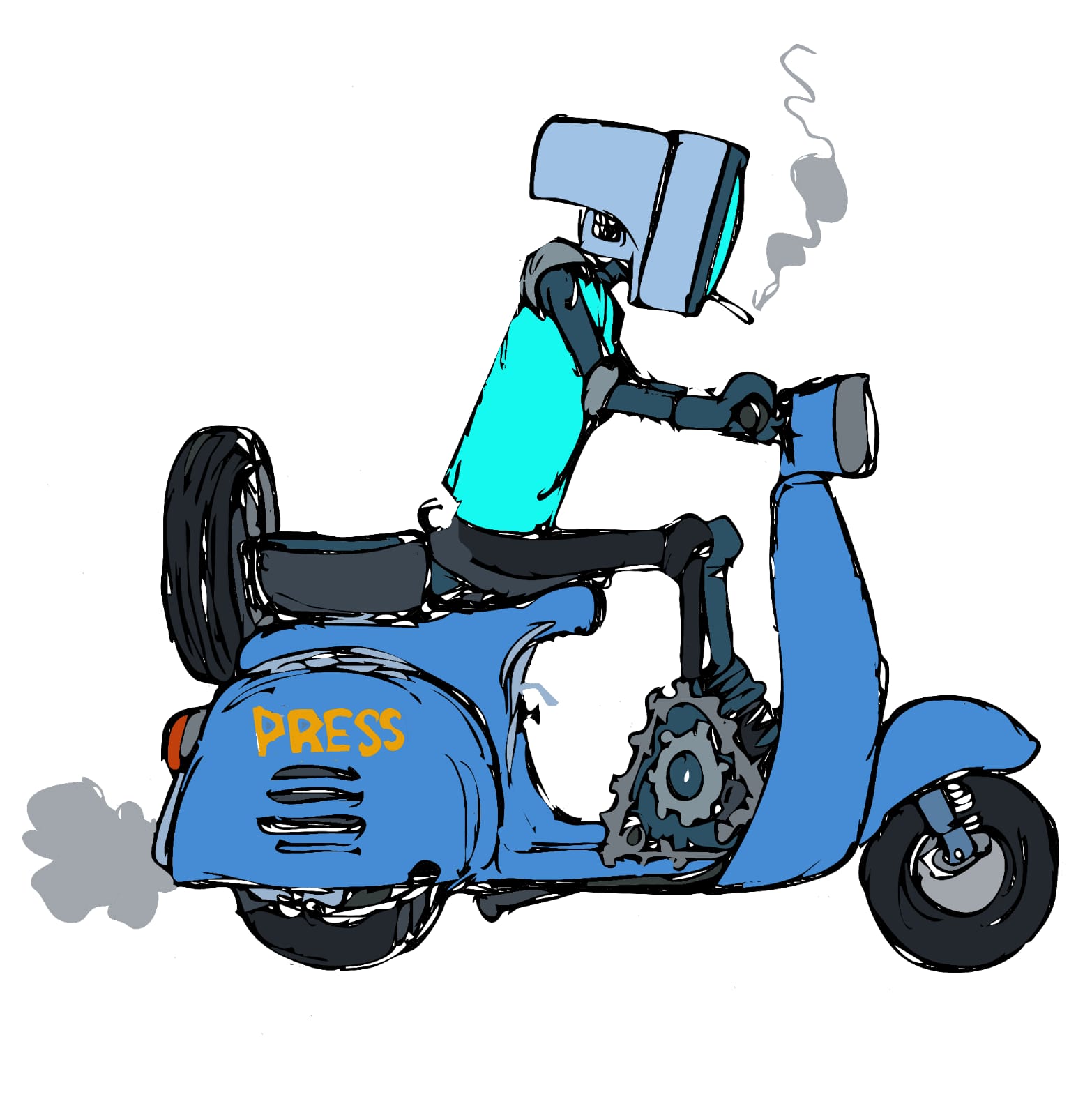
PHOTO: Illustration generated using artificial intelligence for JournalismPakistan
Key Points
- AI hallucination: systems generate false, misleading or fabricated information presented as fact.
- Cause: large language models predict likely text from training data rather than verify facts.
- Impacts include errors in news, legal filings, academic work and public records.
- Verification and fact-checking are essential when using AI outputs in reporting.
- Newsrooms must adopt media literacy, editorial safeguards and clear disclosure practices.
Key Questions & Answers
What is an AI hallucination?
An AI hallucination occurs when a generative system produces information that is false, misleading, or fabricated but presents it as if it were true.
Why do AI models hallucinate?
They generate plausible text by predicting patterns in training data rather than checking facts, which can lead to confident but incorrect outputs.
How can journalists guard against hallucinations?
Use independent verification, cross-check AI outputs with reliable sources, maintain human editorial oversight, and disclose when AI assisted reporting.
What are the main risks of AI hallucinations?
They can undermine trust, introduce legal or reputational harm, spread misinformation, and affect public records and decision-making.
Relevant Topics
Ask AI: Understand this story your way
AI EnabledDig deeper, ask anything — get instant context, background, and clarity.
Disclaimer: This feature is powered by AI and is intended to help readers explore and understand news stories more easily. While we strive for accuracy, AI-generated responses may occasionally be incomplete or reflect limitations in the underlying model. This feature does not represent the editorial views of JournalismPakistan. For our full, verified reporting, please refer to the original article.