
The slow death of Pakistan cricket: Nostalgia, nepotism, and the end of a golden era
JournalismPakistan.com | Published: 19 May 2026 | Dr. Nauman Niaz (TI)
Join our WhatsApp channel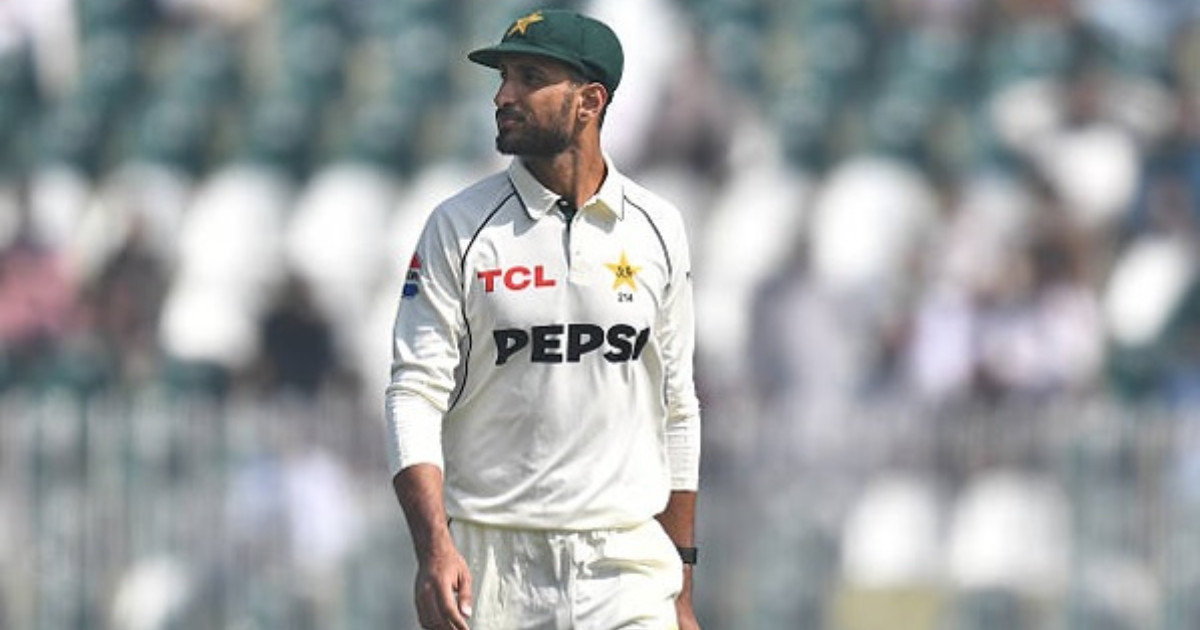
Pakistan cricket has fallen from its golden era, exemplified by successive Test losses to Bangladesh and comparisons with Zimbabwe; insiders blame nostalgia, nepotism and chronic mismanagement for a self-inflicted decline that hollowed the team.Summary
ISLAMABAD -- There was a time when Pakistan cricket moved like weather across the subcontinent, sudden, violent, impossible to predict. It arrived like a dust storm over a summer city, carrying with it the smell of rebellion and genius. It was never perfect, never orderly, but it was alive. Even in defeat it possessed drama, and in victory it carried the grandeur of folklore. Pakistan cricket did not just play the game once; it disturbed it, bent it, made the rest of the world look over its shoulder in disbelief. Now, it barely leaves a trace.
To lose three Test matches in succession to Bangladesh is not simply a statistical embarrassment; it feels like the sound of history closing a heavy door. Only Zimbabwe had previously sunk to such depths against Bangladesh, and Pakistan, a nation that once produced fast bowlers like volcanoes produce fire, now stands beside them in that lonely corridor of decline. And there is still room below. A fourth consecutive defeat waits on the horizon like an inevitable monsoon cloud, gathering shape while those entrusted with the game continue to pretend the sky is clear.
What makes this decay particularly tragic is that it is not the cruelty of fate, nor the inevitability of cyclical decline. Pakistan cricket has not been conquered by stronger opponents as much as it has been abandoned from within. This is self-inflicted ruin, authored slowly over years by men who mistook familiarity for competence and nostalgia for vision. The wrong people were invited to govern the game, not because they understood the modern sport, but because once upon a time they had inhabited its spotlight. Star image became qualification. Reputation became expertise. And from that fatal confusion emerged an administration that feared evolution because evolution exposes irrelevance.
While the rest of the cricketing world disappeared into laboratories, data rooms, sleep cycles, biomechanics, tactical modelling and multidisciplinary excellence, Pakistan cricket remained trapped inside drawing rooms of memory, governed by insecure custodians terrified of being left behind by ideas they could neither understand nor control. Cricket elsewhere became process-driven, scientific, ruthlessly professional. Pakistan responded with committees, patronage and the recycling of yesterday's men into tomorrow's failures. And so mediocrity did not arrive suddenly. It settled gradually, like dust on abandoned furniture.
The saddest part is not only that Pakistan lose now. Teams lose. Great teams collapse. The sadness is that Pakistan cricket has become irrelevant to the central conversation of the sport. There was once a time when the world waited for Pakistan for their fast bowlers, their volatility, their impossible talent, their capacity to turn chaos into art. Today, the world moves on without even noticing them. The game evolved into the future while Pakistan cricket remained stranded in the ruins of its own romance, still telling stories about what it used to be while producing so little of what it must become.
The Birth of a Cricket Nation: Pride, Identity, and Pakistan's First Steps
Pakistan cricket's essence lay in the strange, almost old-fashioned dignity its players carried into the field. Before contracts and leagues and careers stretched across continents, there was the simple, consuming pride of stepping out for a country still learning the shape of itself. They cherished first Iqbal's Shaheen and Crescent, and later the golden star with Pakistan darned into it, as if those symbols were not embroidery on cloth but living things, entrusted to them for an afternoon.
Mian Mohammad Saeed understood this better than most. A PCS officer, disciplined in the habits of the civil service, he had already travelled through the demanding circuits of pre-Partition cricket, representing Mohammedans and All India in Unofficial Tests. When Pakistan assembled its first representative side, it was Saeed who captained it, carrying the burden of a beginning no one could quite measure then. His involvement ran so deep that his daughter, who would later marry the immortal Fazal Mahmood, designed the team's first emblem: Iqbal's Shaheen beside a Crescent, both carrying the yearning of a new nation.
The opponents were the West Indies, not a soft or forgiving side but one carrying names already spoken with admiration across cricket grounds: Sir George Headley, Sir Everton Weekes and John Goddard. Yet Pakistan's players did not arrive bent by awe. Mian Saeed and Imtiaz Ahmad each made hundreds of stern quality, innings touched less by flamboyance than by certainty. Munawar Ali Khan collected four wickets, each one another declaration that this side had not come merely to participate in somebody else's story.
That early Pakistan cricket carried little of the chaos and contradiction that later became attached to it. It was simpler then. Pride and performance walked together. The cap mattered. The country mattered. And in those first matches, played under a fresh flag before crowds still discovering the sound of their own anthem, Pakistan's cricketers gave the nation an image of itself that was upright, unafraid and quietly grand.
Pakistan's first years in cricket unfolded with the uneven rhythm of a young nation trying to steady its feet. They defeated Ceylon at home and away, victories gathered with quiet assurance, though in between came a bruising defeat to the Commonwealth XI at the Bagh-i-Jinnah ground in Lahore. The loss cut deeper because cricket in Pakistan already carried the fever of national identity. Crowds did not yet separate the fate of the team from the fate of the country itself.
A.H. Kardar: The Iron Captain Who Built and Divided Pakistan Cricket
A.H. Kardar stood close to the centre of these currents long before he officially entered them. A left-handed batsman who had begun as a fast bowler before turning to slow left-arm orthodox, he had represented India on the 1946 tour of England. He was an Oxford Blue, elegant and fiercely self-aware, and had played county cricket for Warwickshire. Justice A.R. Cornelius, then vice-president of the Board of Control for Cricket in Pakistan and later one of its finest presidents, believed Kardar belonged in Pakistan's side. Cornelius admired men who carried authority naturally, and Kardar possessed it in abundance.
After the defeat to the Commonwealth XI, anger spilled from the stands. Stones rained towards the players and Mian Mohammad Saeed, Pakistan's first captain, had to escape through the back entrance of the dressing room. Rumours drifted through Lahore that Kardar himself had engineered the hostility against Saeed, that he had moved unseen behind events to clear a path for his own rise. The accusation sounded too theatrical even for those combustible days, though it revealed how quickly intrigue had begun attaching itself to Pakistan cricket.
Nigel Howard soon confirmed that the MCC would tour Pakistan. At the same time, Pakistan's campaign for Full Membership of the Imperial Cricket Conference had stalled. Justice Cornelius wrote to Kardar, who was then working for Pakistan Burmah Shell in Chittagong, asking him to join the side. Kardar's reply came wrapped in the confidence that would define him for years. "My Dear Cornie," he wrote, "if I have to become the part it has to be as captain."
And eventually Mian Mohammad Saeed was cast aside, relieved of the captaincy of the country's side, with Abdul Hafeez Kardar stepping into the role as if it had always been waiting for him. Pakistan cricket, even in infancy, already understood upheaval. Leadership changed not softly but with the force of shifting weather, leaving bitterness hanging in dressing rooms and corridors long after decisions had been made.
The MCC arrived in Lahore carrying the assurance of empire. Pakistan, still searching for permanence in cricket's order, faced them in the Unofficial Test at Lahore and emerged with a victory that travelled far beyond the boundaries of the ground. Hanif Mohammad brought patience carved from endurance, Anwar Hussain stood firm, Fazal Mahmood bowled with that dangerous elegance that would soon become his signature, and Kardar himself shaped a half-century touched by authority and intent. Together they defeated the MCC, and the cricket world looked on with startled disbelief. Pakistan was not expected to challenge the old powers so soon. Yet there they were, unsettling assumptions almost before they had fully entered the game.
That triumph strengthened Pakistan's case for recognition and in 1952 came the reward they had pursued relentlessly. Pakistan became a Full Member of the ICC, admitted into cricket's highest circle less than five years after the country itself had come into being.
Fazal Mahmood and the Oval Miracle: When Pakistan Shook the Cricket World
In October that year Kardar led his side into India for Pakistan's first official Test series. Delhi brought defeat in the opening match, but Pakistan cricket already possessed an instinct for dramatic reversals. At Lucknow they produced another result that stirred astonishment across the cricketing world. Fazal Mahmood dismantled India with hostile mastery, his bowling moving through the batting order like a storm gathering force across open land. Pakistan won the second Test, only their second as a Full Member nation.
In the same match Nazar Mohammad scored Pakistan's first century in Test cricket and carried his bat through the innings, an act of endurance and concentration that entered family history as much as cricket history. Thirty years later, against India again in 1982-83, his son Mudassar Nazar repeated the feat, as though father and son had together traced one long line through Pakistan cricket.
Yet Kardar's years remained filled with friction. Injuries weakened the touring side and he demanded that the all-rounder Syed Asghar Ali be summoned as reinforcement. The selectors ignored him and instead chose a seventeen-year-old batting prodigy, Khalid Ibadulla. Kardar was furious. In Pakistan cricket, displeasing the captain often carried consequences beyond the immediate moment, and Ibadulla would wait thirteen years before finally receiving his Test cap.
When his chance came, time itself seemed unable to burden him. Against Australia in Karachi, Ibadulla scored 166 on debut, the first Pakistani cricketer to reach such heights in his maiden Test innings. It felt fitting somehow that Pakistan cricket should produce beauty after delay, achievement after resentment, glory after years spent waiting outside the door. Thus began one of the most remarkable decades in Pakistan cricket's early life, a period when the side seemed to move with the confidence of a nation discovering its own strength. They won a Test in India, held India to a drawn series at home, and then travelled to England in 1954 where they produced the result that changed forever how the cricket world viewed Pakistan.
At The Oval, Fazal Mahmood bent the match to his will. The English summer had often humbled visiting sides from the subcontinent, but Fazal bowled as though the conditions had been waiting for him alone. He took twelve wickets in the match and dismantled England, then regarded as the finest team in the world. Newspapers responded with delight and disbelief. "Oval's Hero" screamed some headlines. "England Fazalled" declared others, turning his name into a verb of destruction. Yet, as so often in Pakistan cricket, triumph travelled alongside intrigue.
Before the tour there had been uncertainty over the captaincy. The previous year Mian Mohammad Saeed had led the Pakistan Eaglets in England and rumours spread steadily that he might replace Kardar for the full national tour. Kardar, proud and deeply conscious of authority, reportedly contacted Major Sikander Mirza, then Secretary Interior and later President of Pakistan, insisting the team should not even be permitted to travel if he was removed as captain. Whether the intervention altered events or not scarcely mattered in the end. Kardar remained in charge and carried Pakistan to the British Isles, where his team forced the cricket world to acknowledge a new power had arrived.
Kardar's methods were rarely free from controversy. Selection under him often reflected loyalty as much as merit. Certain names appeared protected by the captain's favour while others, stronger in claim and performance, found themselves ignored. Khalid Hassan, Khalid Wazir and Mian Mohammad Aslam all travelled despite widespread belief that more deserving players had been overlooked. Bias lingered openly in the process, impossible to miss and impossible to challenge while results continued arriving.
That was the contradiction at the heart of Kardar's Pakistan. He could be divisive, imperious and stubborn to the point of alienating people around him. Yet he also forged victories that seemed improbable for a country barely settled into existence. Under him Pakistan cricket acquired its first great habit: the ability to unsettle stronger opponents and leave the world astonished at how quickly this young side had learned to compete without fear.
Intrigue, Exile, and Dressing Room Politics in the Kardar Era
Pakistan defeated New Zealand at home, though the victory arrived carrying its own unease. Umpiring became a point of bitter complaint and the series left behind arguments that lingered long after the final ball. Pakistan cricket in those years rarely travelled in calm waters. Even triumph seemed unable to escape dispute. Selection too carried familiar frustrations. Agha Saadat Ali, whose first-class batting average stood at ten, was handed a debut while the gifted Raees Mohammad remained stranded on the benches, waiting through season after season for recognition that never seemed to come. Under Kardar, favour and faith often outweighed evidence. Yet the side continued to win, and victory has a way of silencing grievances, at least for a while.
When the MCC 'A' side toured Pakistan, they were overwhelmed by a team growing steadily in confidence. Kardar stood imposing at the centre of it all, Hanif Mohammad brought his inexhaustible discipline, Khan Mohammad bowled with sharp hostility and Fazal Mahmood once again turned matches into personal theatre. Pakistan did not just compete anymore. They imposed themselves.
At Peshawar, however, the tour descended into farce and fury. During one evening some intoxicated English players subjected umpire Idris Beg to humiliating ragging, dunking him repeatedly in what became infamous as the "ducking" incident. Beg, once a cricketer for Delhi and Mohammedans and also one of Kardar's closest associates, had already enraged the visitors with decisions they considered hopelessly biased against them. Tempers hardened quickly and what began as dressing-room mischief soon threatened diplomatic embarrassment between boards and governments alike.
Group Captain Cheema, the secretary of the Pakistan board, handled the matter with stern resolve, refusing to allow Pakistan cricket to appear subordinate before its former colonial masters. Yet the tension deepened further when the MCC captain ignited another controversy during a post-match speech. Referring sarcastically to Kardar as the "Mistake of the East," he sought to wound a man who during his Oxford days had often been called the "Mystique of the East" for his charisma and style.
The remark struck Kardar deeply. Pride sat close to the surface in him and insults stayed there too. Pakistan reacted furiously and the English were eventually compelled to issue a public apology. Still, upon returning home, the touring players received hardship allowances, a small institutional acknowledgment that the journey through Pakistan had tested far more than their cricket. These episodes revealed something essential about Pakistan cricket in that era. Victories were never clean, relationships never uncomplicated. Glory arrived tangled with resentment, politics, bruised egos and accusations of unfairness. Yet through all the noise, Pakistan kept winning often enough to make the world pay attention.
Australia arrived next and Pakistan defeated them at home, another result that strengthened the growing belief that this young side possessed an uncommon resilience. Fazal Mahmood and Khan Mohammad tore through the Australians with hostile brilliance, bowling that carried both discipline and menace. Gul Mohammad too entered Pakistan cricket's story in singular fashion. Having once played a Test against Pakistan for India, he now made his debut for Pakistan itself, a distinction no other cricketer could claim. In those early decades after Partition, identities still seemed to drift uneasily across borders, carrying memories of older allegiances.
Merry Max and the Price of Sarcasm: Careers Ended by Kardar's Displeasure
Then came the tour of the West Indies in 1957-58, and with it another trail of disputes, wounded loyalties and sudden exclusions that appeared almost inseparable from Kardar's reign. Maqsood Ahmad had been there since Pakistan's earliest days in Test cricket. A stylish batsman and one of Kardar's closest companions, he had survived years when inconsistency should perhaps have cost him his place. Yet when he finally entered a rich vein of form and seemed certain of his position, he was discarded. The reasons had little to do with batting.
Before the tour, at the training camp in Bahawalpur, Kardar and Maqsood had received watches as gifts from a company. Maqsood, devoted as much to late-night revelry as to cricket, arrived late to camp one day and was sharply rebuked by Kardar. Soon after, Kardar himself arrived late and Maqsood, unable to resist mischief, pointed towards the gifted watch and remarked that perhaps it was no longer working. The sarcasm landed badly. Kardar did not forgive easily. And so ended the career of "Merry Max," as Maqsood was affectionately known.
Another casualty of Kardar's moods was Zulfiqar Ahmad, the highly regarded off-spinner who also happened to be Kardar's brother-in-law. Domestic obligations had caused friction between them and Kardar, unwilling to allow Zulfiqar any leverage over selection, searched elsewhere for alternatives. He summoned M.H. Minhas, a modest off-spinner playing league cricket, sending out what seemed almost a desperate call for reinforcement. When Minhas fell ill with malaria, Kardar turned instead to a teenage off-spinner named Haseeb Ahsan, selecting him ahead of the more accomplished Zulfiqar. Zulfiqar still travelled to the West Indies, though not as a player. He went instead as a correspondent for the Pakistan Times, watching from outside the boundary the cricket he might well have played.
And in the West Indies, Pakistan encountered a force far beyond them. Their bowlers were overwhelmed by batting of astonishing freedom and power. Sir Garfield Sobers, Sir Everton Weekes and Conrad Hunte battered Pakistan relentlessly across the islands. At Kingston, Sobers reached 365 not out, then the highest individual score in Test history, an innings so immense it seemed to stretch endlessly beneath the West Indian sun. Yet even before Sobers stamped his name into the record books, Hanif Mohammad had already begun shaping one of cricket's greatest acts of resistance.
Fazal Mahmood, Hanif Mohammad, Imtiaz Ahmad, A.H. Kardar, and Khan Mohammad became the icons. Hanif scored 337 -- the longest innings in Test cricket at Barbados -- staving off an imminent defeat, and back home created a world record scoring 499 versus Bahawalpur, the then highest individual score in first-class cricket until Brian Lara bettered it with a majestic 501 not out. Pakistan lost the series in the West Indies and Kardar decided to retire. Saeed Ahmad made an impressive debut and looked set to be the best after Hanif on the team. Natural heir to the throne Fazal Mahmood replaced him as captain to a series win versus West Indies in 1958-59; nonetheless he was also a man of strong likes and dislikes and had a flair for the parties off the field. Versus Australia Pakistan lost at home, and in one of the Tests Fazal, not fully fit, saw Imtiaz Ahmad standing in as captain. Thus ended the most eventful 1950s for Pakistan.
The 1960s: Fog, Stagnation, and Cricket's Bleakest Chapter
The 1960s arrived with Pakistan cricket standing at a strange crossroads between fading grandeur and uncertain renewal. Fazal Mahmood led the side into India in 1960-61 and the series drifted into stalemate, five Tests suspended somewhere between caution and fatigue, as though neither side possessed the conviction to seize history for itself. Before the tour, Abdul Hafeez Kardar attempted one final return. Retirement had not dimmed his appetite for command. He arrived at the training camp at Lahore's Aitchison College carrying the old authority in his walk, hoping not just to play again but to reclaim the captaincy itself. Yet time had already begun its quiet work upon him. His knees had weakened and the selectors looked elsewhere. Some believed Kardar never forgave those who had allowed Pakistan cricket to move on without him.
On the field Hanif Mohammad continued to inhabit a world apart, collecting runs with that inexhaustible patience which seemed beyond ordinary endurance. Javed Burki, polished by Oxford and blessed with refinement at the crease, announced himself with elegance. Young Mushtaq Mohammad too revealed flashes of a future still waiting to unfold, a child prodigy already carrying the restlessness that would define Pakistan cricket for decades. But beneath the cricket lived unease.
Fazal Mahmood, adored once almost universally, had begun to appear distant to some around him. Fame can isolate men as effectively as failure. Jahangir Khan, the tour manager and former India cricketer, dignified almost to a fault, found himself marginalised within a touring party increasingly divided by ego and disorder. He belonged to one of cricket's great families, father of Majid Khan and uncle to both Javed Burki and Imran Khan, yet even his poise could not steady the tensions gathering quietly around the team.
A.R. Ghani, the assistant manager, contributed little calm himself. Curfews dissolved into indiscipline and the management structure appeared unable to command authority. Fazal travelled separately from the squad, almost detached from the side he captained. Then came the curious moment that entered cricket folklore. Before one Test, Fazal pressed a pencil into the pitch to test its hardness, an act interpreted as suspicion, gamesmanship or eccentricity depending on who narrated it later. The incident travelled quickly through cricket circles and became symbolic of a tour already fraying at the edges.
When the team returned home, the manager's report was severe. Ghani was barred from future assignments. Fazal Mahmood lost the captaincy. Zafar Altaf, prolific throughout the tour, remained denied a Test debut despite his weight of runs, another reminder that Pakistan cricket often rewarded mystery over logic.
Imtiaz Ahmad replaced Fazal as captain for the home series against Ted Dexter's MCC. Fazal himself moved into the role of national selector, though many felt the brilliance that once illuminated him had already begun to recede. Pakistan cricket, entering the new decade, seemed to sense it too. The golden glow of its first years was dimming, replaced by uncertainty, bruised pride and the slow ache that follows the passing of an era.
Imtiaz Ahmad carried too much grace within him to remain captain for long. He belonged to an older idea of cricket, one shaped by manners, restraint and quiet dignity. Leadership in Pakistan cricket, however, had already become something harsher, filled with intrigue, ambition and restless power. His playing days too were nearing their end and the side around him seemed to drift without certainty. Such was the confusion of the time that Fazal Mahmood, already serving as a national selector, was summoned back into the team. Only Pakistan cricket could produce such a scene, where a selector walked back into the dressing room as a player while the game around him moved uncertainly between nostalgia and necessity.
Ted Dexter's MCC arrived and defeated Pakistan. Dexter himself played an imperious double hundred in Karachi, an innings rich with authority and freedom. The defeat effectively closed the chapter on Imtiaz Ahmad's career. Within three years Pakistan cricket had lost Kardar, Fazal Mahmood and Imtiaz Ahmad, the towering figures who had shaped its earliest identity. The departures felt less like retirements and more like the extinguishing of an age.
Politics Over Merit: How Power Shaped Pakistan's Captaincy Choices
And yet, when the moment arrived to appoint a new captain, Pakistan cricket turned away from the obvious choice. Hanif Mohammad, by experience, stature and sacrifice, should have inherited the role naturally. Instead politics entered the dressing room once again. Javed Burki, Oxford educated, elegant and connected through family to the country's ruling elite, was appointed captain after only seven Tests. He was the son of a powerful federal minister and close to the inner circle of Ayub Khan's Pakistan. Cricket, in those years, could never remain untouched by the currents flowing through the state itself. England awaited and disaster gathered almost immediately.
Burki, still new to leadership, dropped Fazal Mahmood before the tour, only for him to be recalled later when Pakistan's bowling crumbled under English conditions. Fazal returned diminished, carrying the weariness of a fading fast bowler whose body no longer obeyed his will. In one Test he bowled for two uninterrupted hours before lunch from a single end, an ageing craftsman pushed beyond reason while the match slipped away.
There appeared too a quiet bitterness between Burki and Fazal, an unease impossible to hide completely. Burki preferred Javed Akhtar over the more accomplished Afaq Hussain and the younger man debuted despite lingering doubts about whether he truly belonged at that level yet. Pakistan's selections often felt shaped less by consensus than by personal conviction and private loyalties.
The series became one of Pakistan cricket's earliest great humiliations. England overwhelmed them 4-0, with only rain rescuing one Test from defeat. Pakistan looked fragile in skill, spirit and leadership. The optimism of the 1950s had dissolved entirely beneath grey English skies. When the team returned home, Burki was removed. At last Hanif Mohammad received the captaincy, though by then the inheritance carried less glory and far greater burden. Pakistan hosted Australia in a solitary Test at Karachi's National Stadium and for the first time in years the horizon appeared bright again. The 1960s, despite their uncertainties, suddenly carried the scent of renewal. A younger generation had begun arriving, eager and unburdened by the weight of old battles.
Pervez Sajjad came with his left-arm craft, Abdul Kadir stepped in behind the stumps as Imtiaz Ahmad drifted towards the end of his journey, while Majid Khan arrived carrying both refinement and quiet assurance. Before Majid's selection, his father Dr. Jahangir Khan resigned as selector, unwilling to allow even the faintest suspicion of favour to touch his son's path. It was an act belonging to another age, when integrity still possessed the power to shame ambition.
Shafqat Rana entered too, tough and combative, and Asif Iqbal, who years earlier had played against Pakistan for Hyderabad Deccan before migration altered the direction of his life, now wore Pakistan's colours as his own. Khalid Ibadulla finally stepped fully into the side after years of waiting. Together they felt like fresh air entering a closed room, carrying with them the possibility that Pakistan cricket could still reinvent itself.
Some performed immediately, others unfolded slowly across time, but among them stood future captains and men who would shape Pakistan cricket for years ahead. Selection, despite the occasional shadow of favouritism, seemed largely guided by merit again. It gave the side a sense of balance that had been missing for too long. Javed Burki retained his place as well, sustained by strong performances against the MCC at home and by an accomplished innings at Lord's during the troubled 1962 tour. Cricket, even in its harshness, still allowed redemption to those capable of answering doubt with runs. And so Pakistan cricket moved uncertainly into the decade, carrying scars from the fall of its first great generation but also the fragile excitement that accompanies every beginning. Beneath the fading memories of Kardar, Fazal and Hanif, another story had quietly started taking shape.
The 1960s settled upon Pakistan cricket like an endless season of fog. The radiance of the first decade had dimmed. Kardar had departed, Fazal Mahmood belonged increasingly to recollection, and Hanif Mohammad stood almost alone, carrying upon his shoulders the exhaustion of a cricket culture searching desperately for continuity. There were gifted men still. Saeed Ahmad batted with panache that seemed touched by instinct rather than coaching. Mushtaq Mohammad arrived impossibly young, restless and fearless. Majid Khan brought refinement, Asif Iqbal elegance and Pervez Sajjad a bowler's quiet intelligence. Together they prevented the decade from collapsing entirely into despair.
Yet around them lingered the sadness of neglected talent. Zafar Altaf, Masood Ul Hassan, Afaq Hussain, Bashir Haider, Waqar Ahmad, Mohammad Sabir and Ijaz Ahmad, known affectionately as Khappra, watched opportunities disappear despite performances demanding recognition. Others, less accomplished and strangely favoured, found themselves wearing Pakistan colours. Selection often resembled an argument between merit and influence, and merit did not always prevail.
Pakistan barely played cricket in those years. Thirty Tests across an entire decade, the fewest among all Test nations. Twice they spent two years without a single Test match. They won only two Tests through those long years. Cricket in Pakistan seemed suspended between inactivity and disappointment, as though the game itself had slowed to a weary crawl.
England tours became harsh lessons in inadequacy. Drawn series against India felt drained of ambition. Six captains came and went, each carrying the burden of replacing Kardar, though men like him are never replaced. Institutions spend generations misunderstanding that truth. The game within the country also changed shape. Matting wickets disappeared and turf pitches emerged, demanding patience, technique and adaptation. Pakistan entered this transition uncertain and unprepared. Domestic cricket drifted through experimentation and disorder. Even the Quaid-i-Azam Trophy was abandoned twice, once for the Ayub Trophy and once because war itself interrupted cricket's fragile existence. Still, amid the gloom, brilliance arrived unexpectedly.
Nasim-ul-Ghani scored a hundred at Lord's. Abdul Kadir made 95 on debut and added 249 for the opening wicket against Australia in Karachi. Khalid Ibadulla scored 166 in his first Test innings. Arif Butt took six wickets in an innings on debut at Melbourne. At The Oval in 1967, Pakistan seemed condemned to humiliation at 65 for 8 before Asif Iqbal and Intikhab Alam produced an extraordinary resistance. Having already checked out of their hotel believing defeat inevitable, they returned to construct a world-record ninth wicket stand of 190. Asif made 146, Intikhab 51. Pakistan still lost, but they denied England the easy destruction it sought.
That was Pakistan cricket's strange gift even in decline. Defiance survived where order did not. Hanif eventually lost the captaincy and Saeed Ahmad replaced him, though peace never lasted long. An argument between Saeed and Hanif over a simple photograph deepened existing divisions. Saeed refused to stand beside Hanif and the incident grew into controversy. Soon Saeed too was removed and Intikhab Alam emerged as a compromise captain while Kardar, now chairman of selectors, continued exerting influence from above. By then the Karachi-Lahore divide had hardened into something larger than geography. It shaped loyalties, opportunities and resentments across Pakistan cricket.
Yet the decade also offered glimpses of another future. Sarfraz Nawaz arrived with raw hostility, Wasim Bari with assurance behind the stumps, Asif Masood with skill and promise. Aftab Baloch, still a teenager, dazzled briefly with immense talent and courage, though his path too narrowed because his father had fallen out with Kardar years earlier. In Pakistan cricket, history often travelled from father to son, carrying old disagreements like inherited wounds.
And so the 1960s ended, slow and burdened, perhaps the bleakest chapter Pakistan cricket had known until modern times began echoing it once again. Yet even in those difficult years, the game refused to lose entirely its capacity for beauty. Somewhere beneath the confusion, the politics and the disappointments, Pakistan cricket still waited for another awakening.
Imran Khan, the 1992 World Cup, and Pakistan's Greatest Era
Pakistan cricket rose again in the 1970s with the stubborn resilience that has always defined it. The darkness of the previous decade slowly receded as a generation of exceptional cricketers emerged, carrying with them elegance, defiance and ambition. Intikhab Alam led first, then Mushtaq Mohammad and Asif Iqbal, while Majid Khan too was briefly entrusted with leadership. Captaincy no longer appeared a burden impossible to bear. Pakistan cricket had rediscovered its depth.
Yet beneath the calm, unrest waited patiently. Towards the end of the decade the board replaced Asif Iqbal with a younger, charismatic cricketer for the home series against Australia. The dressing room resisted him. Senior players struggled to accept authority resting in younger hands. By the time Sri Lanka toured Pakistan in 1981-82, rebellion simmered beneath silence until finally it surfaced openly. Almost by inevitability, Imran Khan became captain in 1982. From there Pakistan cricket entered one of its grandest eras.
Imran led with fierce conviction and transformed Pakistan into a side that travelled without fear. England were defeated in England in 1982. Australia were swept aside at home. India too suffered against a Pakistan side that had begun carrying itself with the assurance of world conquerors. Fast bowling became Pakistan's defining language. Even when Imran's stress fracture left the side vulnerable, others attempted to carry the burden. Sarfraz Nawaz lingered on while Azeem Hafeez, Tahir Naqqash, Jalaluddin and Rashid Khan struggled through periods of uneven promise. Then came the discovery that changed everything.
Javed Miandad recognised something rare in a young left-arm bowler named Wasim Akram. Soon Waqar Younis arrived with his violent pace and late swing. Together they transformed Pakistan cricket into something terrifying and beautiful. The 1992 World Cup victory under Imran became more than triumph. It felt like fulfilment of a national imagination. Pakistan cricket now possessed pace bowlers who seemed capable of bending physics and batsmen who played with instinctive daring.
Aamir Sohail, Saeed Anwar, Inzamam-ul-Haq, Basit Ali, Salim Malik, Rashid Latif, Moin Khan, Saqlain Mushtaq and Mushtaq Ahmad gave Pakistan astonishing richness. Later Shoaib Akhtar arrived like a storm no batting order could truly prepare for. Azhar Mahmood and Abdur Razzaq deepened the all-round strength of the side. Pakistan cricket did not just compete then. It shaped the rhythm of world cricket itself. And yet, even at its peak, decay had already entered quietly.
Corruption, Fixing, and the Wounds That Never Fully Healed
Ball tampering accusations followed Pakistan everywhere. Some dismissed them as prejudice, others knew the practice had become ingrained within the system itself. What may once have begun as desperate gamesmanship slowly seeped into domestic cricket and damaged younger generations learning the game. Rebellions inside dressing rooms became familiar. Wasim Akram lost the captaincy before New Zealand. Salim Malik emerged as compromise leader. Match-fixing allegations soon followed and trust began eroding from within.
The tragedy of Mohammad Amir, Mohammad Asif and Salman Butt in 2010 altered Pakistan cricket profoundly. Spot-fixing did not just stain reputations. It wounded belief itself. Misbah-ul-Haq restored calm for a while, carrying the team through instability with dignity and restraint, while Younis Khan continued gathering runs and respect across the world. Shahid Afridi remained chaos personified, capable of madness and genius within the same over. Pakistan even lifted the World T20 in 2009 and later the Champions Trophy under Sarfraz Ahmed in 2017, though by then the victories often felt temporary, unable to disguise deeper institutional decline.
World cricket evolved rapidly afterwards. Science entered coaching rooms. Fitness became almost scientific devotion. Data, biomechanics and specialised preparation reshaped the modern game. Pakistan cricket, meanwhile, drifted uncertainly between nostalgia and improvisation. Administrative positions filled with insecurity and short-term thinking weakened whatever structure still remained. Chairmen changed endlessly, coaches arrived and disappeared, selectors multiplied until continuity itself vanished. And slowly another decline emerged, quieter yet somehow heavier than the struggles of the 1960s.
Defeats against Bangladesh no longer shocked anyone. Home losses accumulated. Young cricketers entered a system unable to nurture them fully, while older players seemed trapped between stagnation and fading relevance. Pakistan cricket looked unfinished, uncertain whether it belonged to the past or the future. Still, ruin has never entirely defeated it.
After the Oval forfeiture in 2006, after Lahore, after spot-fixing, Pakistan cricket always found a way back through unexpected men and improbable moments. Misbah-ul-Haq and Younis Khan rebuilt dignity from disorder. Others before them had done the same. That perhaps remains Pakistan cricket's deepest truth. It has never belonged fully to stability or permanence. It survives through endurance, through longing, through an almost irrational refusal to disappear. In Pakistan, cricket is not sustained by certainty. It lives because generations continue believing that after every collapse another resurrection still waits somewhere ahead.
Slower Bowlers, Deeper Crisis: Pakistan's Fast-Bowling Identity in Freefall
Pakistan cricket now stands before a sadness once thought unimaginable. The possibility of four successive Test defeats against Bangladesh hangs over them, a collapse so deep that even Zimbabwe's bleakest years may soon appear distant. What was once a team feared for hostility and instinct now looks exhausted by the very demands of Test cricket.
The fast bowlers no longer carry menace. They arrive at the crease without endurance, without sustained pace, without the old cruelty that once defined Pakistan's greatest attacks. Khurram Shahzad, among the quicker bowlers available, labours around 132 kilometres an hour. Mohammad Abbas survives through craft alone at speeds barely touching 124. Hassan Ali hovers near medium pace. And most painful of all is the sight of Shaheen Shah Afridi, once the bright spearhead of a new generation, reduced to deliveries that scarcely resemble the thunder he once produced. To watch him struggle for rhythm and pace is to witness not just personal decline but the fading of an entire idea Pakistan cricket once held about itself.
At Sylhet the contrast became unbearable. Bangladesh's bowlers ran in harder, faster and hungrier. Nahid Rana thundered in above 143 kilometres an hour, Shoriful Islam and Taskin Ahmed followed with discipline and energy, while Pakistan's attack appeared tired before the battle had properly begun. The humiliation was not statistical alone. It was spiritual.
Pakistan cannot bat with consistency, cannot field with sharpness, cannot keep wickets cleanly and no longer bowls with intimidation. This is not simply poor form. It is estrangement from the essence of Test cricket itself. Shan Masood continues as captain despite defeats accumulating relentlessly around him. His own batting has fallen into grim territory among specialist Test batsmen, yet the system persists with him as though continuity alone can cure decline. But continuity without direction becomes drift, and drift eventually turns into collapse.
Since 2022 Pakistan's fast bowlers average worse than almost every major Test nation, ahead only of Ireland. Afghanistan, Zimbabwe and Bangladesh now produce attacks more effective, more disciplined and more resilient. Such comparisons would once have sounded absurd in Pakistan cricket. Today they feel unavoidable. Perhaps this is rock bottom. Or perhaps Pakistan cricket still has deeper darkness waiting below.
Because the real crisis is not defeat. Pakistan cricket has survived defeat before. The real crisis is stagnation disguised as management, nostalgia mistaken for planning and mediocrity protected as though it were achievement. Modern cricket demands science, structure, preparation and clarity of purpose. Pakistan still behaves as though talent alone can rescue disorder.
And so the game slips further downward, slowly and painfully, like a once proud river losing itself in barren land. Yet even now, somewhere beneath the disappointment, remains that old irrational faith which has always accompanied Pakistan cricket. The belief that from ruin, somehow, another beginning can still emerge, though it seems improbable.
ABOUT THE WRITER: Dr. Nauman Niaz is a civil award winner (Tamagha-i-Imtiaz) in Sports Broadcasting & Journalism, and is the sports editor at JournalismPakistan.com. He is a regular cricket correspondent, having covered 54 tours and three ICC World Cups, and having written over 3500 articles. He has authored 15 books and is the official historian of Pakistan Cricket (Fluctuating Fortunes IV Volumes - 2005). His signature show, Game On Hai, has been the highest in ratings and acclaim.
Key Points
- Pakistan lost three consecutive Test matches to Bangladesh, marking a low point.
- Comparisons with Zimbabwe underscore the severity of the decline.
- Observers attribute the fall to internal mismanagement rather than stronger opponents.
- Nepotism and nostalgia-driven appointments weakened leadership and accountability.
- Reform advocates call for transparent governance, merit-based selection and systemic change.
Key Questions & Answers
Why is Pakistan cricket perceived to be in decline?
Experts point to internal mismanagement, nepotism, nostalgia-based decision making and weak governance rather than sporting inevitability as key causes.
How significant are the losses to Bangladesh?
Consecutive Test defeats to Bangladesh are historically notable and symbolise a broader erosion of competitive standards and consistency.
Has nepotism affected team performance?
Analysts argue that preference for familiar figures over merit undermined selection, development and effective leadership, contributing to poor results.
What reforms are being suggested to revive Pakistan cricket?
Calls include merit-based appointments, stronger accountability, transparent administration, investment in domestic structures and clear long-term strategy.
Ask AI: Understand this story your way
AI EnabledDig deeper, ask anything — get instant context, background, and clarity.
Disclaimer: This feature is powered by AI and is intended to help readers explore and understand news stories more easily. While we strive for accuracy, AI-generated responses may occasionally be incomplete or reflect limitations in the underlying model. This feature does not represent the editorial views of JournalismPakistan. For our full, verified reporting, please refer to the original article.