
How Kardar shaped Pakistan cricket forever
JournalismPakistan.com | Published: 7 July 2026 | Dr. Nauman Niaz (TI)
Join our WhatsApp channel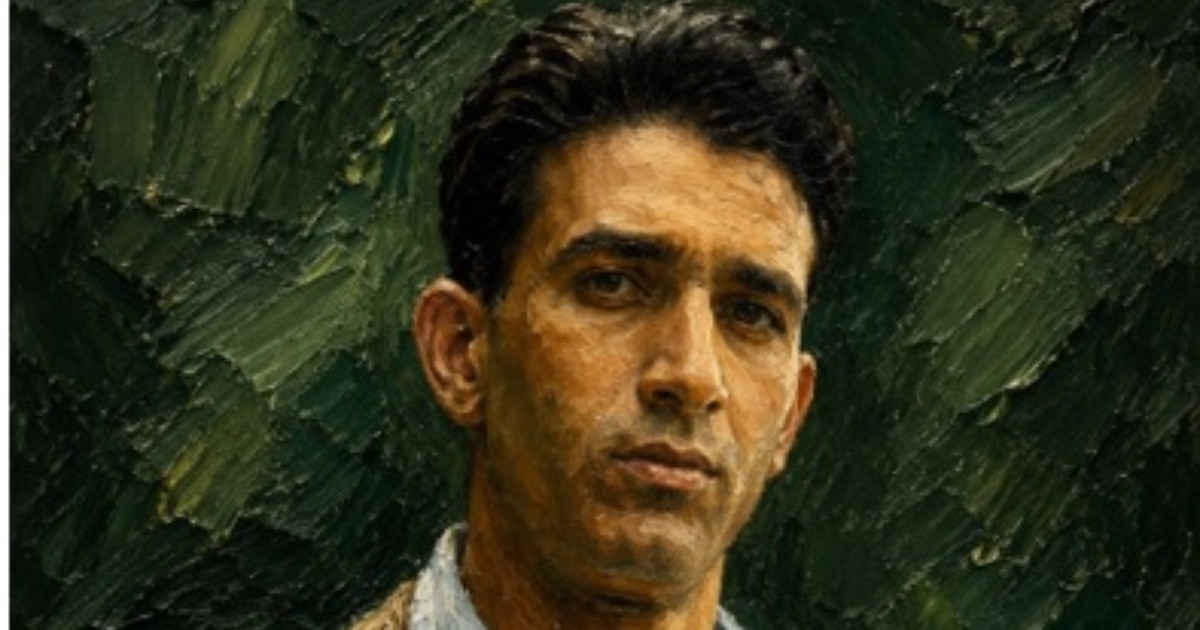
The article examines Abdul Hafeez Kardar's pivotal role in founding Pakistan cricket, highlighting his leadership and vision while noting persistent institutional instability that has often prevented the nation's abundant talent from achieving lasting success.Summary
There exists, in the long and crowded history of national endeavour, a species of failure more melancholy by far than defeat itself: the failure that springs not from any want of talent, but from the squandering of it, the manifestation, at once pitiable and infuriating, of a people richly endowed by nature and as stubbornly betrayed by their own household deities.
Pakistan's cricketing history is, upon the soberest examination a historian can bring to evince, precisely such a narrative, and no honest storyteller of it may pretend otherwise.
It is not, let it be said plainly and at once, the tale of a nation bereft of gift; no serious student of the game, having watched what Pakistan's sons have produced upon a cricket field, would number this country among the ungifted, any more than a naturalist would call the tiger poorly furnished with claws. It is, rather, the tale of a cricketing culture that has spent seven and a half decades manufacturing talents of the most extraordinary and unrepeatable kind, and then, with a consistency so regular as to resemble a household ritual performed each evening without thought or feeling, dismantling every scaffold by which that talent might have been raised into something lasting.
Where England has built her contracts, brick upon patient brick, and Australia her academies, and India her whole shining economy of the game, Pakistan has built, and rebuilt, and demolished, and built again, a carousel, gaudy and turning, of captains, of chairmen, of selectors, of convictions, each mounted upon it in his season only to be flung off before the music has properly begun. The result, seventy-four years after this young nation was first admitted into that solemn fraternity of Test-playing peoples, is a team ranked seventh in the very format that conferred the fraternity upon it; a board that has not suffered a single chairman to complete an undisturbed term in above a decade; and a domestic structure so often reformed, abolished, and sheepishly reinstated that it would put to shame the cabinet reshuffles of the shortest-lived republic ever to totter through a Latin American century. What follows is an attempt, no more, no less to trace that long decline: to set its eras side by side as one might set old photographs upon a table, to weigh its captains in the balance, to open the dusty ledgers of its board, and to ask, at the last, what a nation must do to cease mistaking mere motion for the slow and patient business of progress.
Kardar's Ascent: The Oxford-Made Captain
It is one of the unobtrusive ironies furnished by this history and history, like a patient old solicitor, is rarely without such ironies tucked into its files that Pakistan's cricketing infancy was presided over by a gentleman of exactly that sensibility to which this present attempt has been asked to aspire: Abdul Hafeez Kardar, formed at Islamia College and afterward at University College, Oxford, where he read Politics, Philosophy, and Economics and acquired, along with an incurable taste for the tailors of Jermyn Street, a temperament that Wisden itself, not a publication given to unkindness, would later describe as dictatorial, quick to anger, and, in its curious way, visionary.
It was Kardar who led Pakistan into her very first Test match, at Delhi in October of 1952, and who suffered there an innings defeat that a more superstitious historian might have read as an omen scrawled across the sky. And it was Kardar, too, who within the space of a single week had engineered his young country's maiden Test victory at Lucknow, an innings triumph raised upon Fazal Mahmood's twelve wickets, Nazar Mohammad’s long, patient century and who went on, across 23 Tests as captain, to defeat every Test-playing nation of his day, England not excepted, upon the very lawns of The Oval in 1854, no, let us say it rightly, in 1954, that hallowed turf being no less a sanctuary to a young nation's pride than any cathedral is to an old one's faith.
A Genius for Grievance: The Private Ledger Begins
And yet, for there is always an and yet waiting in the wings of any history worth the telling, this same Kardar, absolute in his authority and not a little intoxicated by it, possessed a genius for chaperoning young men that ran, always, on a parallel track beside a genius for private grievance, and the two were never wholly distinguishable from one another. There was, one must record, an element of intrigue humming away at the back of the house. He was oddly, almost superstitiously, averse to the notion of three brothers sharing a single Pakistan eleven, and when Raees Mohammad, eldest of that gifted clan, and by every reasonable measure entitled to his chance, stood ready to take his place, Kardar astonished the watching world by promoting instead his own particular friend, one Agha Saadat Ali, a gentleman whose first-class average stood at the melancholy number of 10.00, and who was accordingly sent out to play a Test against New Zealand in 1955 as though runs scored elsewhere were just a technicality beside the warmth of an old friendship.
So, too, upon Pakistan's inaugural tour of India in October of 1952, when the touring party required a replacement and the board's own instinct favoured Syed Asghar Ali, a thoroughly competent all-rounder, Kardar bent his considerable will against it, and the selectors, cowed or persuaded, chose instead a boy of seventeen named Khalid Ibadullah. History does not record that young Khalid so much as took guard in a single Test upon that tour; he was left, instead, to wait thirteen long years, thirteen years! before he was permitted his debut, against Australia at Karachi in 1964–65, whereupon, as if in quiet reproach to all the years withheld from him, he answered with a majestic 166 in his very first innings.
Mian Mohammad Saeed: The Rival Unseated
Kardar's true rival for the captaincy and rivals, in this history as in any literature's chancery suit, have a way of outliving their usefulness to the narrative only to reappear at the most inconvenient moment was Mian Mohammad Saeed, a serving officer of the Pakistan Civil Service who had once represented India in unofficial Tests and who carried, in the corridors of cricketing power, an influence not easily dismissed. It was Saeed's own daughter, indeed, who would one day marry Fazal Mahmood and who, in a detail too delightfully improbable for invented fiction, designed the very first emblem of Pakistan cricket, Iqbal's shaheen fluttering upon its crescent and its hilal, a falcon stitched above a moon, as though the whole self-image of the young nation's game had been quietly authored by the family Kardar was working, with such patient thoroughness, to unseat.
Mian Saeed had captained the first Pakistan side ever to take the field, against the West Indies in 1948, and had struck, despite advancing years and an increasing corpulence that the newspapers of the day were not shy of mentioning, a thoroughly munificent century. Kardar, meanwhile, already a Test cricketer of some standing, having represented India in three Tests in England back in 1946, had been absent from that early reckoning, being otherwise occupied with his Oxford degree and his appearances for Warwickshire, where he had, in the fullness of time, married an Englishwoman and settled, for a season, into the particular contentment of the young colonial abroad. And when Pakistan suffered a miserable defeat to a Commonwealth XI, the crowd, in that instant and merciless way that crowds have always possessed, turned upon Mian Saeed himself, pelting him with stones until he was obliged to be smuggled out through the back door of the Lahore Gymkhana pavilion like a debtor fleeing his creditors. It has never been proven, let this be stated with the caution proper to any charge so grave, but more than one player present at the time had murmured, in the manner of old men recalling old grievances, that the entire unhappy sequence had been quietly orchestrated by Kardar himself.
'My Dear Cornie': Securing the Captaincy
When the Vice-President of the Board, Justice A. R. Cornelius, wrote to his friend Kardar inviting him to rejoin the fold before the tour of Nigel Howard's MCC side in 1951–52, the reply that came back was a masterpiece of icy self-assurance: "My Dear Cornie, I can be available but only as captain." And captain he duly became, leading Pakistan to a famous victory over a full-strength MCC, a triumph that paved, more surely than any diplomatic memorandum could have done, the road to full ICC membership later that same year. But the estrangement between Kardar and Mian Saeed, far from healing, deepened into something closer to enmity. In 1953, while Kardar prepared for the coming tour of England, Saeed led a side of Pakistan Eaglets on a successful tour of that same country, and Kardar, scenting in this small triumph the unwelcome possibility of his rival's restoration, felt the cold breath of insecurity upon his neck. He turned, as such men so often do, to friends in high places, to Major, later Major-General, Sikander Mirza, Federal Secretary of the Interior and later Governor-General of Pakistan, and contrived, through channels no self-respecting board would wish examined too closely, to place impediments before the clearances that Saeed's comeback required. Kardar led the England tour; Saeed's career quietly expired; and England, defeated at The Oval, were said thereafter to have been "Fazalled", a verb coined in a single summer and never quite retired.
Friends Favoured, Rivals Undone
Nor did the pattern end there, for a man's character, once truly disclosed, rarely troubles to disguise itself twice. Maqsood Ahmad, once a friend, was carried along through a run of thoroughly mediocre performances on the strength of that old friendship, and then, the moment a private quarrel arose between them, was dropped at the very instant his first-class form most entitled him to be retained, his career, too, extinguished not by failure of skills and form but by failure of favour. Ikram Elahi, a capable all-rounder and, as it happened, was carried to England and performed with credit in every match that did not matter, only to be seized, with almost comic regularity, by freakish illnesses whenever his Test debut drew near, a pattern of misfortune so persistent that it followed him even to the West Indies in 1957–58, as though some invisible fever took a particular interest in his advancement.
Another friend, Mohammad Aslam Khokhar, was likewise carried along, while Yawar Saeed, son of the very Mian Saeed whom Kardar had so thoroughly dispatched, and himself a genuinely fine all-rounder who had scored freely against South Africa while up at Cambridge and turning out for Somerset, and who took five wickets in a single innings against a touring West Indian side in 1958–59, never once wore his country's cap, the sins of the father visited, with almost Biblical precision, upon the son.
Kardar's own brother-in-law, Zulfiqar Ahmad, a spinner of genuine competence, was left out of the West Indies tour amid some private family unpleasantness, and travelled instead as a correspondent for the Pakistan Times, watching from the press box the career that might have been his; and to ensure that no late change of heart might restore him, Kardar had summoned one M. H. Minahis, an off-spinner of the leagues, only for providence, or malaria, which upon this occasion amounted to much the same thing to strike Minahis down in the pre-tour camp, leaving the place to fall, by a final and almost absurd twist, to Haseeb Ahsan, a teenager with an action already under suspicion.
Peshawar, 1955–56: The Mystic and the Mistake
In 1955-56 when MCC 'A' toured Pakistan, Kardar was at his best. However, the home umpires significantly Idris Beg was precarious. At Peshawar, inebriated English players tied him on the chair and avenged what had been transpiring on the field. Ducking incident could have been gently considered a prank and settle nonetheless Kardar was incensed, one Beg was his personal friend from the days he played as a leg spinner in Northern India and also, Donald Car, once Kardar's colleague in England in one of the post dinner speeches had termed Kardar who while in the United Kingdom was often referred to as Mystique of the East, and sarcastic the MCC 'A' captain had termed him Mistake of the East. This had led to a furor and at one time the two governments had to iron out what would possibly had become a diplomatic crisis. re write in highest tier Oxonian literature English lyrical, evocative in style of Charles Dickens.
In the season of 1955–56, when the MCC's second eleven, that "A" side sent out, as the phrase went, to blood the young and rest the celebrated made its tour of Pakistan, Kardar stood at the very zenith of his powers, commanding the field as a general commands a parade ground he has himself laid out stone by stone. Yet even at such a summit, the low valleys of controversy were never far beneath his feet, and it was the home umpires, one Idris Beg most conspicuously among them, who furnished the season's darkest and most curious phase.
Beg's authority upon the field had grown, some ridiculous decisions against them, by degrees the English visitors found intolerable, so precarious a thing that at Peshawar certain of the touring players, their evenings warmed rather more by drink than by discretion, took it upon themselves to seize the unfortunate umpire, bind him to a chair, and there exact upon his person a rough and undignified revenge for grievances nursed since the first over of the match. Had the matter ended there, a more forgiving age might have consigned it to the category of prank ill-judged rather than crime deliberate, and the whole unhappy business settled over a private apology and a stiff colonial handshake. But Kardar was not a man given to forgiving what touched him nearly, and Idris Beg was, as it happened, no stranger to him, the two having been companions of the field in years gone by, when Beg turned his arm over as a leg-spinner for Northern India and Kardar himself was but newly acquainted with the game's higher intrigues.
The insult, moreover, did not confine itself to the person of the umpire, but reached, as such things so often contrive to do, the person of the captain himself. Donald Carr, once Kardar's own colleague in England, and now leader of the touring side had let fall, in the convivial and unguarded hour of a post-dinner speech, a jest that could scarcely have been better calculated to wound. Kardar, while resident in England, had long been known, not without a certain flattering exoticism, as the Mystique of the East; and Carr, with the sharp economy of the practised wit, had turned the phrase inside out, pronouncing him instead the Mistake of the East, two syllables' alteration accomplishing what a season of poor umpiring decisions had failed to do, namely, the wounding of Kardar's pride beyond any private mending.
The furore that followed was of a magnitude entirely disproportionate, on the surface, to its cause, yet entirely proportionate to the wound beneath it; and for a season it seemed that two governments, rather than two cricket boards, must be summoned to the table, so grave had this small and drunken indiscretion grown in the retelling, until at last, with the weary patience of diplomats accustomed to smoothing over the vanities of great men, the affair was quietly ironed out, and cricket, as it always eventually does, resumed.
The Amarnath Episode, and a Captain Denied His Own Return
Such was Kardar's presence that Idris Baig while India was on tour in 1954-55 had been overheard by Lala Amarnath, the Manager taking notes from Kardar about what to do in the match. Amarnath, himself a tough man had taken this to the authorities. And when, at the last, Kardar himself sought a return, his knee painful, his fitness long departed, his eye fixed nonetheless upon the captaincy of the tour to India in 1960–61, he appeared dutifully at the pre-tour camp upon the Aitchison College ground, and was left out. The fury this occasioned in a man who had spent a decade practising the art of leaving others out can scarcely be imagined, though one is tempted to imagine it anyway, and with some relish. It was this same Kardar, now installed as Chairman of Selectors, who would preside over the premature dropping of Hanif Mohammad on the pretext that his knees, too, had given up their long service; and it was not until 1969, against New Zealand at Karachi, that three brothers, Hanif, Mushtaq, and Sadiq last took the field together for Pakistan, a small family reunion that Kardar's own earlier superstition had once so carefully forbidden.
And when, at the last, Kardar himself sought a return, his knee painful, his fitness long departed, his eye fixed nonetheless upon the captaincy of the tour to India in 1960–61, he appeared dutifully at the pre-tour camp upon the Aitchison College ground, and was left out. The fury this occasioned in a man who had spent a decade practising the art of leaving others out can scarcely be imagined, though one is tempted to imagine it anyway, and with some relish. It was this same Kardar, now installed as Chairman of Selectors, who would preside over the premature dropping of Hanif Mohammad on the pretext that his knees, too, had given up their long service; and it was not until 1969, against New Zealand at Karachi, that three brothers, Hanif, Mushtaq, and Sadiq last took the field together for Pakistan, a small family reunion that Kardar's own earlier superstition had once so carefully forbidden.
A Balanced Verdict: The Born Leader
And yet, for the documentation, in fairness, must record both columns, Kardar was also the hand that discovered, cultivated, and drove to greatness a full generation of Pakistan's finest cricketers; whatever the private pettiness of the man, the public achievement of the captain was, by any honest measure, immense. He was, in the truest and most exasperating sense, a born leader, the sort of figure history can neither wholly admire nor wholly forgive, and is obliged, in consequence, to remember in full. And his tenure as President of the BCCP was even better, simply outstanding. He was a competent man with a vision, so essentially required by Pakistan during the 1970s.
From Armband to Presidency: The BCCP Years and Imran's Verdict
What is most instructive about Kardar, however, is not just the record of his captaincy but the shape of what followed it: his shift from the field into the presidency of the Board of Control for Cricket in Pakistan, an office he held from 1972 until his resignation in 1977, a resignation lodged, one notes with a certain grim satisfaction, in protest against government interference, as though the architect of so many private interferences had at last discovered, too late for irony to spare him, what it felt like to stand upon the other side of the same door. An ex-Pakistan captain's verdict upon this transition deserves to be shaped, in letters deep enough to survive a century of Lahore's dust, above the very entrance of the National Stadium: "After Kardar's retirement, Pakistan cricket was thrown to the wolves, the cricket bureaucrats whose progeny still rule the game."
One may quarrel, if one wishes, with this or that particular; but the diagnosis, offered half a century ago, has proved not just accurate but something closer to oracular, and it is worth pausing, before we proceed further into this melancholy history, to notice that the very disease from which the nation now visibly suffers was named named precisely, and named early by its own greatest captain, long before the fever had fully taken hold of the patient.
ABOUT THE WRITER: Dr. Nauman Niaz, a Post Doctorate (Oxford), PhD (UWA), FRCP (London), FRCP (Edinburgh), FRCP (Ireland), FRCP (Glasgow), CST (Endo, UK), MSc Biomechanics and Kinesiology (UWA), MRCP (UK), MBBS (Pb), is a civil award winner (Tamgha-i-Imtiaz) in Sports Broadcasting and Journalism, a regular cricket correspondent having covered 54 tours and three ICC World Cups, and having written over 3,700 articles. He has authored 19 books and is the official historian of Pakistan Cricket (Fluctuating Fortunes, IV Volumes, 2005). His signature show Game On Hai has been the highest-rated and most acclaimed in its category. He is also the sports editor at JournalismPakistan.com.
Key Points
- Abdul Kardar provided the early leadership and vision that established Pakistan's national cricket identity.
- Pakistan has produced exceptional, unrepeatable cricketing talent across generations.
- Recurring institutional instability-selectors, administrators and short tenures-undermined long-term progress.
- The culture often favoured short-term fixes over structured development and contracts.
- Kardar's legacy endures, but the article argues for stronger institutions to convert talent into lasting success.
Key Questions & Answers
Who was Abdul Kardar?
Abdul Kardar was Pakistan's first long-term Test captain and a key figure in establishing the team's early identity and structures.
How did Kardar influence Pakistan cricket?
He provided leadership, tactical direction and a vision that helped shape Pakistan's approach to the game and its initial organisational foundations.
What recurring problems does the article identify?
The piece highlights chronic institutional weaknesses-frequent changes in captains, selectors and administrators-that have repeatedly disrupted development.
Why does Kardar's legacy still matter?
His foundational work set a standard and identity for Pakistan cricket, but the article argues that stronger institutions are needed to realise that legacy fully.
Relevant Topics
Ask AI: Understand this story your way
AI EnabledDig deeper, ask anything — get instant context, background, and clarity.
Disclaimer: This feature is powered by AI and is intended to help readers explore and understand news stories more easily. While we strive for accuracy, AI-generated responses may occasionally be incomplete or reflect limitations in the underlying model. This feature does not represent the editorial views of JournalismPakistan. For our full, verified reporting, please refer to the original article.