
Ten captains in 32 months: Why Pakistan cricket keeps repeating the same mistakes
JournalismPakistan.com | Published: 5 July 2026 | Dr. Nauman Niaz (TI)
Join our WhatsApp channel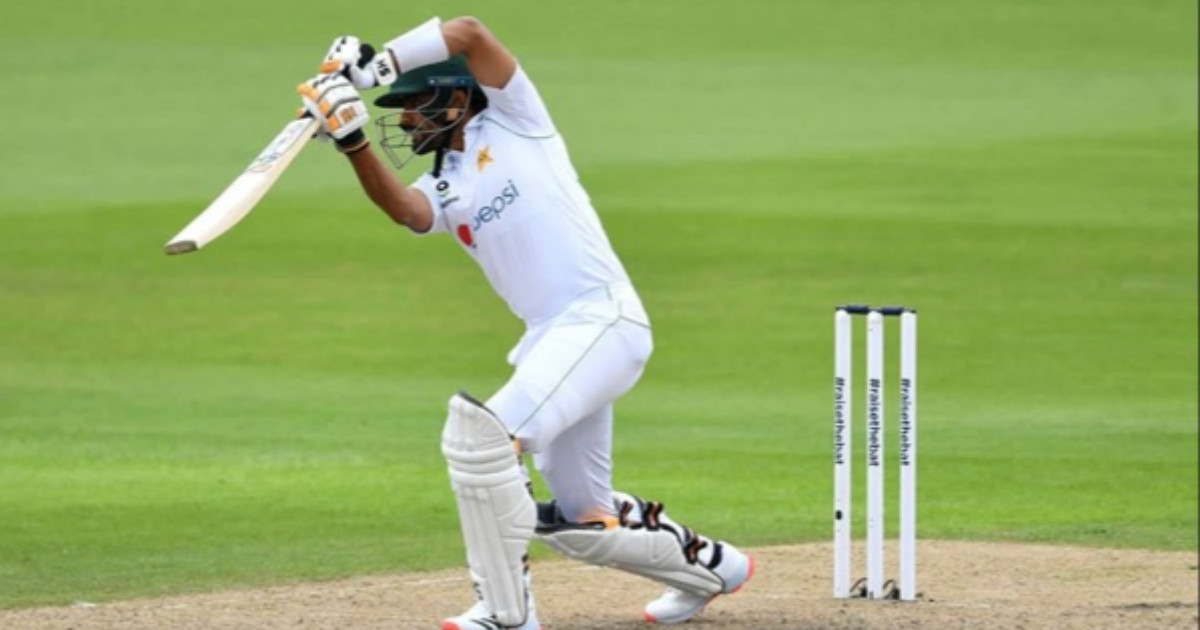
Ten captains in 32 months reflect a pattern of reactionary decision-making by the Pakistan board, shifting blame onto individuals while neglecting systemic failures in selection, domestic cricket and preparation. This cycle undermines continuity and performance.Summary
Ten changes of captaincy in a span of less than three years is not, by any charitable reckoning, a policy of selection. It is a symptom and, like all symptoms, it tells us a great deal more about the patient than about the malady it pretends to name. When an institution changes the men who lead it with such feverish regularity, it ceases, after a certain point, to be making decisions about leadership at all; it is, rather, holding up an unflattering glass to its own countenance, and flinching at what it sees there.
The Board's conduct across this melancholy record answers, with uncomfortable precision, to that condition which the physicians of the mind call an external locus of control, though inverted, as a coat is inverted when a man, in his haste, puts it on inside out and struts about believing himself dressed. The Board comports itself as though the fortunes of a cricketing nation were the sole property and burden of whichever unfortunate gentleman happens, for the season, to be wearing the armband; a conviction as convenient as it is false, for it permits failure to be filed away under a single name rather than acknowledged as the inheritance of a whole crumbling estate, the domestic game left to rot in its outbuildings, the pitches prepared as if by accident, the selectors and coaches shuffled like cards in a game whose rules nobody troubles to remember. Each dismissal is thus a small act of self-forgiveness.
Remove Shan Masood, and the defeat in Bangladesh becomes his defeat alone, not the natural fruit of a system that has, since 2023, exhausted more captains, coaches, and selectors than most nations manage to wear out in a decade of steady misgovernment. Not that Shan deserved a run; he should have been removed long before, presumably after a couple of series, once he was explicitly exposed as someone unable to lead, though as a batsman, he was in the runs, better than most of the lot. Why was he made captain in the first place? What homework had been done? He was made captain because Babar, having been sacked as white-ball captain, refused to take up the Test captaincy. Why was Babar pushed to the wall then? What has changed now? Is it simply a lack of options?
A Pattern of Loss Aversion and Reflexive Reshuffling
There is, besides, a plain and recurring loss aversion, a most short-sighted pattern of decision-making. Every appointment in this dismal ledger is a reflex against the most recent bruise, nothing more. Babar resigns in the bitter aftermath of a World Cup; Shaheen is handed the twenty-over team and stripped of it again before he has served four and a half months, scarcely time enough to lose faith in a man, unless the faith was counterfeit from the first coining of it. Rizwan is confirmed with due ceremony, and sacked with none, despite having won the ODI series in Australia and South Africa. He was ousted, it seemed, because he was not the type inclined to listen to what the decision-makers desired.
Shaheen is restored to another format, as one restores a picture to a different wall, hoping the room will look less shabby for it. Each decision resets the clock of accountability to zero, and guarantees, with the certainty of a numerical proof, that no leader shall ever accumulate the tenure by which anything durable might be built. The rankings so mournfully cited, seventh among the Test-playing nations, sixth in the shortest format, fifth in the one-day game, are not misfortune. They are the product, as surely as smoke is the product of fire, of a system built for the applause of a press conference rather than the patient dynamics of a four-year cycle.
Regression to the Familiar: Why Babar Azam, Why Now
But the deepest pattern, and here the Board's psychology reveals its most human and most pitiable face, is a regression to the familiar. When institutions grow frightened, they do not step forward; they step backward, groping in the dark for whatever hand they last remember holding. Babar's return is no forward-looking appointment. It is a comfort blanket, pulled from an old chest and shaken out for one more winter. His former record, ten victories in twenty Test matches, has ceased to be a statistic and become instead a relic, an object of nostalgic veneration, mute testimony that better days once existed and might, by the sympathetic magic of repetition, be summoned again.
This is a recognized infirmity of judgment: that under uncertainty, men overvalue the vivid memory of triumph and undervalue the vanished conditions that alone made the triumph possible. The Babar of 2020 to 2023 commanded a settled eleven, presided over a period of dominance on home soil, and stood himself at the very summit of his batting powers. Not one of these conditions obtains today; his batting, by every honest measure, has declined since the captaincy was last prised from his hands. The Board, in its anxious wisdom, has not appointed a captain. It has appointed a memory.
The Political Economy of Pakistan's Captaincy
There is, moreover, a political undercurrent that no honest account can decently omit. In Pakistan, the captaincy has ever been an appendage of patronage, and captains rise and fall with their chairmen precisely as ministers rise and fall with their governments. Every incoming chairman desires a captain of his own choosing, partly for the comfort of control, partly for the harvest of credit should fortune smile. The consequence is that the office of captain enjoys no institutional shelter whatsoever; it possesses only personal sponsorship, and personal sponsorship, like the morning frost, is the first thing to vanish when the political weather turns. The players know this perfectly well, and their knowledge colors everything that follows.
Why should a man accept, for a third or fourth time, an office from which he has twice been eased out the back door while the crowd's attention was fixed elsewhere? Several forces are here at work, and one should be loath to call them weaknesses; they are, rather, the very natural, indeed the very human, responses of a man placed within a curious and trying set of circumstances.
Identity, Redemption, and Culture: Why Babar Keeps Saying Yes
The first of these is what might be called an identity-fused past separation. For some four years, Babar Azam was not just a captain of Pakistan; he was, in the public imagination and, one might hazard, in some antechamber of his own, Pakistani cricket itself, its living symbol. The captaincy of all three formats became so entwined with his notion of self that to lose the one was, in some very real sense, to lose a limb of the other. Any offer to restore the office is felt, therefore, not as a matter of professional advancement, but as the restoration of a self believed lost. His decline at the crease since 2023, an average fallen into the low twenties, and not a century to his name in all that barren season, speaks with an eloquence no interview ever could: the man and the office had grown psychologically inseparable, and the amputation of the one left the other bleeding.
The second force is the narrative of restoration, the very human wish to rewrite an unhappy ending. His previous departures were framed, cruelly and perhaps unfairly, as failures: the World Cup of 2023, the T20 World Cup of 2024. To accept the captaincy once more is to be given the authority with which to compose a kinder conclusion. This impulse is as powerful as it is perilous, for it means the decision proceeds not from a cold accounting of whether the office will serve his batting, and the evidence, honestly weighed, suggests it may not, but from unfinished business of the heart.
The third is a matter of culture, and ought not to be dismissed by anyone inclined to smile at it from a comfortable distance. In Pakistani cricket, as in South Asian professional life more broadly, to refuse an institution that solicits one's service is a thing genuinely and gravely difficult. The captaincy is dressed in the vestments of national duty, and to decline it is read as ingratitude, or worse, as cowardice. There exists, besides, a plainer and more practical calculation, understood by every senior cricketer in the land: proximity to the Board is a species of protection. A captain is harder to drop than just a batsman. Having passed the years 2024 and 2025, tasting the particular vulnerability of being no more than one run-getter among eleven, having been, upon occasion, omitted even from a home Test eleven, Babar Azam knows, as intimately as a man knows the weight of his own coat, that the captaincy is armor.
And finally, there is the matter of temperament. Babar has never presented himself as a natural agitator, nor as a tactical revolutionary; his style of leadership has been consensual, dependent upon his senior colleagues, and cautious to a fault. It is precisely this temperament that renders him so easy a man for a Board to appoint, for he threatens nobody, and so easy a man to remove, for he resists nobody. The very agreeableness that persuades him to accept the office again and again is the selfsame quality that has permitted the Board to treat him not as a leader possessed of terms and conditions, but as a resource to be drawn upon and set aside at pleasure, as a good coat kept for funerals. He is not Younis Khan.
A Co-Dependency With No End in Sight
Board and player are thus locked, the one within the other, in a co-dependency as intricate as it is unhappy. The Board requires a name of sufficient lustre to absorb the public's wrath and to wear the appearance of decisiveness; Babar requires the office to restore a sense of self that has, by his own reckoning, gone missing. Neither party troubles to ask the only question that signifies: what conditions would permit any captain of Pakistan, whoever he might be, to succeed? Until tenure is shielded from the verdict of a single unhappy series; until the chairman's private study ceases to function as the true and only selection committee, the identity of the man who holds the armband is a matter of very nearly no consequence. The carousel will turn again, as carousels do, indifferent to the riders upon it; and the record so painstakingly compiled here will simply acquire an eleventh line, and then, in the fullness of time, a twelfth. So far, there have been ten captains in thirty-two months.
ABOUT THE WRITER: Dr. Nauman Niaz, a Post Doctorate (Oxford), PhD (UWA), FRCP (London), FRCP (Edinburgh), FRCP (Ireland), FRCP (Glasgow), CST (Endo, UK), MSc Biomechanics and Kinesiology (UWA), MRCP (UK), MBBS (Pb), is a civil award winner (Tamgha-i-Imtiaz) in Sports Broadcasting and Journalism, a regular cricket correspondent having covered 54 tours and three ICC World Cups, and having written over 3,700 articles. He has authored 19 books and is the official historian of Pakistan Cricket (Fluctuating Fortunes, IV Volumes, 2005). His signature show Game On Hai has been the highest-rated and most acclaimed in its category. He is also the sports editor at JournalismPakistan.com.
Key Points
- Ten captains in 32 months highlight chronic leadership instability.
- The board tends to blame individuals rather than address systemic faults.
- Neglect of domestic structures, pitch preparation and coaching weakens talent pipelines.
- Frequent captaincy changes undermine continuity, team cohesion and performance.
- Lasting improvement requires clear selection policy and governance reforms.
Key Questions & Answers
Why has Pakistan changed captains so often?
Frequent captaincy changes reflect reactionary decision-making by the board, short-term fixes and a reluctance to confront deeper selection and structural problems.
Do captain changes improve results?
Evidence suggests they usually harm continuity and cohesion; without systemic reform, changing captains rarely delivers sustained improvement.
What are the root problems behind these changes?
Weak selection policy, neglected domestic cricket, inconsistent coaching, poor pitch preparation and governance failures are the main underlying issues.
What should the PCB do to stop this cycle?
The PCB should adopt a clear long-term selection policy, invest in domestic structures, stabilise leadership roles and hold institutional processes, not individuals, accountable.
Ask AI: Understand this story your way
AI EnabledDig deeper, ask anything — get instant context, background, and clarity.
Disclaimer: This feature is powered by AI and is intended to help readers explore and understand news stories more easily. While we strive for accuracy, AI-generated responses may occasionally be incomplete or reflect limitations in the underlying model. This feature does not represent the editorial views of JournalismPakistan. For our full, verified reporting, please refer to the original article.