
Why Argentina is football's greatest nation: Maradona, Messi and a century of World Cup glory
JournalismPakistan.com | Published: 24 June 2026 | Dr. Nauman Niaz (TI)
Join our WhatsApp channel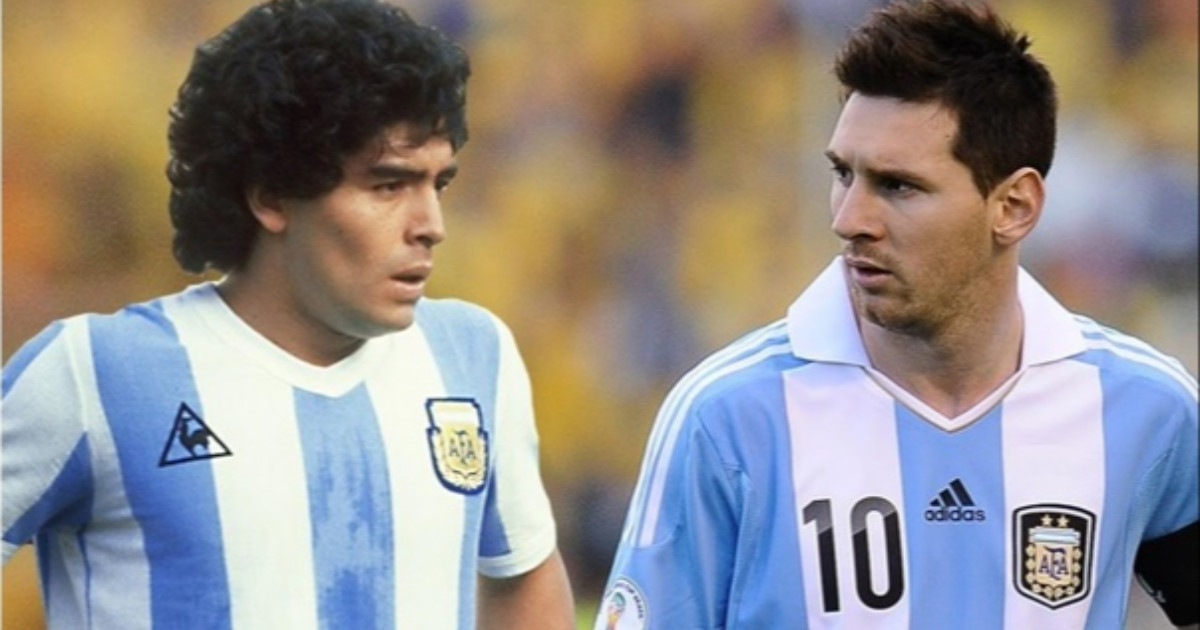
Argentina's relationship with football is framed as a civilisational bond in which the game serves as a communal language of feeling and identity. Icons like Maradona and Messi, alongside a century of World Cup narratives, have anchored football at the heart of national memory and aspiration.Summary
There exist nations that play football, and there exist nations in whose collective consciousness football has become inseparable from the very idea of themselves. Argentina belongs unequivocally to the latter category. The distinction is neither linguistic nor sociological. It is civilisational. It resides within those deeper strata of national experience where memory, imagination, and identity converge. In Argentina, football is not an appendage to public life, nor a diversion from its realities. It is among the principal instruments through which a people have sought to understand themselves, interpret their past, and project their aspirations into the future.
England furnished football with its earliest architecture. It emerged amidst the ordered landscapes of public schools, factory towns, and the disciplined certainties of an industrial civilisation. Brazil liberated the game from its European inheritance and bathed it in sunlight, transforming it into an expression of joy, spontaneity, and creative abundance. Italy refined it into a discipline of calculation, restraint, and strategic intelligence. Argentina, however, bestowed upon football something more profound and perhaps more enduring than any tactical innovation or technical refinement. There, the game became a language of collective sentiment, a vehicle through which an entire nation could articulate its triumphs and disappointments, its pride and melancholy, its rebellions and remembrances. Football became not merely a sport but a repository of national feeling.
To examine Argentina's relationship with the FIFA World Cup is therefore to engage with something considerably larger than a chronology of tournaments, finals, and trophies. It is to witness a nation engaged in a perpetual dialogue with itself. Every generation of Argentine footballers has inherited not just a jersey but an accumulated inheritance of memory. The pale blue and white stripes seem almost burdened by history before they are ever worn. They carry within them the echoes of glorious afternoons and bitter evenings, of celebrations that illuminated entire cities and disappointments that lingered stubbornly across decades. Each player who dresses in them enters a continuum extending far beyond his own career, becoming for a brief moment both custodian and participant in a narrative that precedes him and will outlive him.
For Argentina, the World Cup has always constituted the grandest of theatres because it provides the largest available stage upon which national identity may be examined, challenged, and ultimately reaffirmed. No other competition possesses equivalent emotional authority. No other tournament has demonstrated a comparable capacity to elevate gifted footballers into enduring figures of cultural mythology. Within the Argentine imagination, the World Cup has rarely been regarded as a sporting event alone. Rather, it has functioned as a recurring national reckoning, a moment during which an entire people measure themselves against their history, their expectations, and their dreams.
Football Crosses the Atlantic: The British Roots of Argentine Football
The origins of this profound attachment stretch deep into the nineteenth century, when football first crossed the Atlantic aboard vessels carrying engineers, merchants, labourers and adventurers. British expatriates introduced the game to Buenos Aires, then a city expanding with remarkable confidence, ambition and energy. Railways extended across the immense pampas, binding distant regions into an increasingly integrated nation. Alongside iron rails and steam locomotives travelled footballs, rule books, and sporting customs, all products of an empire whose influence reached every corner of the globe.
Yet what emerged upon Argentine soil bore only a partial resemblance to its British antecedent. The English conception of football valued order, discipline, and structure. The Argentine interpretation increasingly privileged imagination. Somewhere between the railway stations of Buenos Aires and the dusty expanses of provincial towns, football underwent a subtle yet decisive metamorphosis. It ceased to be an imported recreation and became an indigenous expression. Absorbed into the cultural character of the nation, it emerged transformed by the encounter.
The Birth of the Criollo Footballer
From this transformation arose one of football's most enduring archetypes: the figure of the criollo footballer. The criollo player represented something considerably greater than technical accomplishment. He embodied ingenuity. He possessed an instinctive capacity for invention and an almost instinctual refusal to accept the limitations imposed by circumstance. Where others perceived constraints, he discovered opportunities. The crowded street became his academy. The neglected patch of earth became his training ground. Every touch of the ball became an act of creation.
Long before tactical systems were dissected upon illuminated screens and long before football evolved into an enterprise increasingly governed by data, analytics, and scientific measurement, Argentina had already fashioned a philosophy of the game. It was a philosophy rooted not in instruction but in imagination. It celebrated surprise. It prized elegance without sacrificing competitiveness. Above all, it recognised that football, at its highest level of expression, possessed the capacity to reveal something essential about the people who played it.
That understanding has endured across generations. It remains visible in the great figures who populate Argentine footballing history and in the enduring romance with which the nation continues to regard the game. Football in Argentina is not merely remembered. It is inherited. Each generation receives it simultaneously as a privilege and an obligation, adding its own chapter to a narrative that commenced long ago beside the docks of Buenos Aires and continues wherever a child, clad in blue and white, first begins to dream of immortality.
A Nation Shaped by Immigration
The criollo footballer was never defined merely by technical accomplishment. Such a description would be woefully inadequate. He represented a particular cast of mind, a distinctive disposition of imagination. He possessed ingenuity not as an acquired skill but as an instinct. Improvisation came to him as naturally as breathing. He sought solutions beyond the immediately visible, possibilities concealed from less adventurous eyes. Where others encountered impediments, he discerned opportunity. The crowded streets of Buenos Aires became his classrooms; neglected parcels of earth his academies. Every encounter with the ball presented itself as an occasion for invention, every movement an exercise in creative discovery.
Long before football became a subject of tactical orthodoxy, before the emergence of coaching manuals, performance laboratories, and sports science departments, Argentine football had already begun to cultivate a philosophy recognisably its own. It was not codified in textbooks nor articulated through institutional doctrine. Rather, it emerged organically from the character of the society that nurtured it.
The Argentina fashioned by successive waves of immigration during the late nineteenth and early twentieth centuries constituted one of the most intriguing social experiments of the modern age. Italians arrived in vast numbers, carrying with them memories of distant villages and fractured kingdoms. Spaniards followed, bringing their own traditions, habits, and sensibilities. Germans, Levantines, Eastern Europeans, and countless others contributed to an increasingly intricate social mosaic. Buenos Aires evolved into one of the world's great cosmopolitan capitals, a city where identities met, mingled, and gradually transformed one another.
Football absorbed these influences with remarkable receptivity. Italian intensity encountered Spanish technical subtlety. European discipline met South American spontaneity. Distinct traditions collided and coalesced. Out of these encounters emerged something singularly Argentine, a style neither wholly European nor wholly Latin American, but unmistakably belonging to the River Plate.
Gradually, the game ceased to exist apart from everyday life. It entered the flows of ordinary existence. In cafes and barber shops, it supplied conversation. In offices and factories, it offered respite. In schools and neighborhoods, it furnished dreams. Children inherited club loyalties before they acquired political convictions. Grandparents transmitted stories of celebrated footballers with a reverence ordinarily reserved for statesmen, generals, or saints. Football acquired the status of collective memory.
Argentina at the 1930 World Cup: A Footballing Civilization Arrives
Thus, when Argentina arrived in Uruguay for the inaugural World Cup of 1930, they came not as curious participants exploring unfamiliar territory, but as representatives of an already mature footballing civilisation. Their clubs flourished. Their stadiums attracted substantial crowds. Their leading players enjoyed public recognition bordering upon celebrity. Argentina approached the tournament not with uncertainty but with conviction.
Their progress to the final constituted an early declaration of intent. The tournament itself appears almost primitive when viewed from the perspective of the contemporary age. There existed no global television audience, no immense commercial apparatus, no relentless cycle of media scrutiny. Yet the emotional significance was no less profound for its relative simplicity. Argentina defeated France, Mexico, Chile, and the United States with a combination of technical sophistication and attacking confidence that immediately distinguished them from many of their contemporaries.
Observers recognised that Argentine football possessed a character entirely its own. The final against Uruguay carried significance extending well beyond the boundaries of sport. The two nations shared geographical layout, history, and rivalry. The match became an early phase in one of football's most enduring relationships. Uruguay ultimately prevailed, securing the first World Cup for themselves. Yet Argentina departed with something of lasting importance.
Recognition.
The wider footballing world understood that a major force had emerged. The decades that followed revealed the complexity of Argentina's relationship with the World Cup. Exceptional players appeared with remarkable regularity. Strong teams arose and faded. Yet the ultimate prize often remained tantalisingly beyond reach. There were periods of brilliance and periods of frustration. Political instability frequently intersected with sporting ambition. At times, the fortunes of the national team appeared almost to mirror the broader fortunes of the republic itself.
The Menotti-Bilardo Debate: Beauty Versus Effectiveness
What distinguished Argentina during these years was not consistent victory but consistent significance. Even in defeat, they remained impossible to ignore. Even when tournaments ended prematurely, impressions endured. There existed an unmistakable sense that Argentina occupied a privileged place within football's imagination. Part of this distinction derived from the nation's enduring commitment to expressive football. Throughout the history of the sport, debates have persisted regarding the relative claims of beauty and effectiveness. Should victory be pursued at any cost? Or should the game aspire towards aesthetic excellence even when such aspirations entail risk?
Argentina never conclusively resolved the dilemma. Instead, they embraced it. No two figures illustrate this productive tension more vividly than Cesar Luis Menotti and Carlos Bilardo. Menotti regarded football as an expression of culture. Teams, in his view, ought to reflect the deeper character of the nation they represented. He championed technical accomplishment, attacking ambition and creative freedom. Football for Menotti possessed ethical as well as competitive dimensions. Bilardo inhabited an altogether different intellectual universe. For him, results occupied the centre of all meaningful inquiry. Tactical pragmatism superseded aesthetic concern. Adaptability mattered more than ideology. Football, in its final analysis, concerned victory.
Many nations have experienced disagreements regarding style. Argentina elevated such disagreements into matters of philosophy. The Menotti-Bilardo divide transcended tactics. It became an argument concerning identity itself. It reflected broader questions regarding how Argentina understood its place in the world. Should the nation favour romance or realism? Idealism or practicality? Beauty or effectiveness? Remarkably, Argentine football discovered a means of accommodating both traditions. The tension proved productive rather than destructive.
Argentina's Global Coaching Influence
Subsequent generations inherited not a singular doctrine but a rich intellectual inheritance. Argentine football learned to admire elegance without despising ruthlessness. It developed the capacity to celebrate artists while acknowledging pragmatists. In doing so, it achieved a rare synthesis. This intellectual richness helps explain Argentina's extraordinary influence upon football far beyond its own borders. The country's coaches became among the most influential thinkers the game has produced. Helenio Herrera transformed European football. Menotti inspired generations of idealists. Marcelo Bielsa altered conceptions of pressing, movement, and positional responsibility. Mauricio Pochettino carried Argentine ideas into the highest levels of European management. Numerous others extended the nation's influence across continents.
Among them, Bielsa occupies a particularly fascinating position. Few coaches have exercised greater intellectual influence relative to their collection of trophies. His ideas travelled through football like unseen currents through the ocean. His insistence upon intensity, collective movement, and relentless ambition reshaped assumptions across Europe and South America alike. His brief tenure at Marseille lasted scarcely more than a season, yet its influence far exceeded its duration. Players, supporters, and coaches encountered an alternative vision of what football might become.
Contemporary French football continues to bear traces of his thought. Yet the exchange between Argentina and France extends beyond the influence of any individual coach. Both nations possess football cultures shaped by immigration, diversity, and competing conceptions of identity. Both have produced teams capable of combining technical sophistication with physical excellence. Both understand football as something larger than recreation. Yet where France often appears analytical and modern, Argentina retains a profound attachment to the emotional dimensions of the game.
Football, there remains intensely personal. Victories become communal celebrations. Defeats linger in public consciousness for years. The boundary separating football from national life remains remarkably permeable. Perhaps this explains why Argentina has consistently produced footballers of unusual emotional intensity. Its greatest players rarely appear detached from the events unfolding around them. They compete not just as professionals discharging occupational responsibilities but as participants in something deeply significant.
Maradona: Before Him History, After Him Mythology
No figure embodied this reality more completely than Diego Armando Maradona. Before Maradona, Argentina possessed history. After Maradona, Argentina possessed mythology.
Reality proved considerably less accommodating. Argentina struggled. Opponents pursued Maradona with an almost obsessive determination. Defenders fouled him repeatedly, not only as a tactical expedient but as a form of containment. Matches ceased to resemble exhibitions of footballing artistry and increasingly assumed the character of attritional campaigns. The reigning champions departed in the second phase after defeats against Italy and Brazil. Maradona's tournament concluded with a red card. The image possessed an unmistakable symbolism.
His genius remained visible. Its fulfilment remained deferred. Four years later, the world encountered an altogether different reality.
Mexico 1986: Maradona Dominates an Entire World Cup
Mexico 1986 occupies a singular position within football history because it represents one of those exceedingly rare occasions when an entire World Cup became inseparable from the destiny of a single individual. Great teams have won tournaments. Great players have dominated matches. Maradona achieved something far more extraordinary.
He dominated an entire competition. From the earliest stages, there existed something distinctly different about him. He appeared not merely in form but in possession of a peculiar historical momentum. A sense of inevitability accompanied his every movement. Each touch generated anticipation. Each possession suggested a possibility. Opponents confronted not simply a footballer but a phenomenon. Argentina themselves were not an overwhelming favorite. The squad possessed quality, intelligence, and commitment, yet it lacked the depth enjoyed by several rivals. West Germany possessed formidable power. France possessed elegance and refinement. Brazil possessed an abundance of talent almost unrivalled in modern football.
Argentina possessed Diego Armando Maradona. That proved sufficient. Throughout the tournament, he orchestrated attacks, created opportunities, and scored goals of immense consequence. Yet statistics alone fail to explain what occurred in Mexico. There was something curiously theatrical about his performances, as though history itself had developed a preference for dramatic timing. Moments of brilliance appeared precisely when narrative demanded them. The tournament unfolded less like a sporting competition than like a classical epic moving inexorably towards its destined conclusion.
The Hand of God and the Goal of the Century
The quarter-final against England remains perhaps the most scrutinised football match ever played. Circumstances magnified every detail. Only four years earlier, Britain and Argentina had confronted one another in the South Atlantic during the Falklands conflict. Political wounds remained fresh. National sensitivities remained acute. Public emotions on both sides remained unresolved. The match, therefore, carried significance extending beyond the conventional boundaries of sport.
What followed ensured immortality. Early in the second half, Maradona rose alongside England goalkeeper Peter Shilton in pursuit of a descending ball. His fist reached it before Shilton's hand. The referee awarded the goal.
History would remember it as the Hand of God.
The phrase itself revealed Maradona's instinctive understanding of mythology. Few athletes have demonstrated a greater capacity to transform controversy into folklore. What might have remained merely an act of deception became, through his own audacity, part of football's permanent vocabulary. Yet four minutes later, he produced something altogether different. Receiving possession within his own half, he accelerated forward. One English defender disappeared behind him. Then another. Then another. Opponents appeared caught within a sequence unfolding too rapidly for intervention and too brilliantly for comprehension. The movement lasted only a matter of seconds. Its memory has endured for generations.
Commentators continue to struggle when attempting to describe it because ordinary language appears unequal to the task. Certainly, the goal represented technical perfection. Yet its significance extends beyond technique. It possessed emotional force. It symbolised liberation. It represented the triumph of imagination over limitation, of individual genius over collective resistance. Football has produced countless magnificent goals. None has acquired greater symbolic authority. The Hand of God revealed Maradona's cunning. The Goal of the Century revealed his genius. Together, they illuminated the contradictions that defined him. He was capable simultaneously of deception and transcendence, mischief and magnificence, calculation and inspiration.
Flawed and extraordinary. Human and seemingly beyond ordinary humanity. Argentina advanced. Maradona continued. Against Belgium in the semi-final, he delivered another exhibition of supremacy, scoring twice with a confidence that bordered on inevitability. By now, opponents appeared psychologically compromised before matches had even begun. The prospect of confronting him generated anxiety.
The final against West Germany completed the journey. Germany was disciplined, resilient, and formidable. They possessed that particular capacity for endurance that has so often characterised German football. They refused to surrender. A match that initially appeared secure gradually became precarious as Germany recovered from a two-goal deficit and transformed certainty into apprehension. The tension became almost unbearable. Then Maradona intervened once more. With a single pass of extraordinary vision, he unlocked the German defence. Jorge Burruchaga accelerated into space and scored. Argentina were world champions. Again.
Maradona stood at the summit of football. Yet even that description feels insufficient. He had not simply won the World Cup. He had become inseparable from it. Subsequent generations would discuss great tournaments by comparing them with Mexico 1986. Great players would find themselves measured against Maradona's standard. Entire careers would be evaluated through the prism of what he accomplished beneath the Mexican sun.
Italy 1990 and the Weight of Legacy
For Argentina, the consequences proved profound. The nation had discovered not only a footballer but its defining football figure. Every future star would confront comparison. Every future captain would inherit expectations. Every future World Cup campaign would unfold beneath the immense shadow cast by Maradona's achievement. The inheritance proved simultaneously inspirational and burdensome. Argentina reached another World Cup final in 1990, once more led by their talismanic captain. The side itself was significantly weaker than its predecessor. Injuries accumulated. Performances fluctuated. Circumstances frequently appeared unfavourable.
Yet Maradona's presence seemed capable of altering probability itself. Argentina survived penalty shootouts. They overcame opponents of superior balance and depth. They reached the final through stubbornness, resilience, and force of collective belief. Ultimately, West Germany prevailed. Yet even in defeat, Maradona's influence remained extraordinary. The image of him weeping following the final has become one of football's most enduring photographs. It captured something fundamental about Argentina's relationship with the game. Victory produced ecstasy. Defeat produced devastation. Emotional moderation rarely entered the equation. Football occupied too central a place within the national imagination for indifference.
By the early 1990s, Maradona had become larger than football itself. Children imitated him. Artists painted him. Writers attempted to explain him. Supporters regarded him with a reverence approaching devotion. His subsequent struggles with addiction, controversy, and personal decline complicated the narrative but never destroyed it. Indeed, one might argue that imperfection strengthened the mythology. Argentinians recognised in Maradona qualities they admired and flaws they understood. He appeared neither distant nor inaccessible. He was one of them.
This identification explains why his legacy remains unparalleled. Many nations celebrate great footballers. Argentina mourned Maradona as though mourning a member of the family. When he died in 2020, grief swept across the country with remarkable intensity. Crowds gathered spontaneously. Streets filled with tears, memories, and silence. The nation seemed to pause. It was not simply the death of a footballer. It felt like the conclusion of an era. Yet mythology seldom ends. It evolves.
Messi Emerges: A New Chapter Beneath an Immense Shadow
And as Argentina entered the twenty-first century, another extraordinary talent was beginning his own journey towards footballing immortality. His name was Lionel Messi. And whether he desired it or not, the next two decades of his life would be spent in dialogue with Maradona's shadow.
The greatest challenge confronting Argentine football after Diego Armando Maradona was never tactical, administrative, or even competitive. It was psychological. How does a nation continue after producing a figure who appears impossible to surpass? How does a young footballer dream freely when every achievement is measured against a myth? Maradona's shadow stretched across Argentine football like an Andean mountain range dominating the horizon. Every subsequent generation found itself navigating a landscape shaped by his memory.
The years following his decline were characterised by longing. Argentina remained talented. Argentina remained competitive. Yet the sense of inevitability that had accompanied Maradona gradually receded.
The 1994 World Cup in the United States initially appeared capable of restoring lost glory. Argentina arrived with one of the tournament's most formidable attacking ensembles. Gabriel Batistuta stood at the zenith of his powers. Claudio Caniggia retained his devastating acceleration. Maradona, older yet still influential, returned for one final campaign. For a brief moment, the dream seemed plausible. Argentina defeated Greece with authority and elegance. Maradona scored and celebrated with an expression that remains among the most haunting images in World Cup history. He ran towards the camera, eyes blazing with almost prophetic intensity, appearing less a footballer than a visionary proclaiming revelation. Days later, everything collapsed. Maradona failed a drug test. The tournament lost its central character. Argentina lost its emotional centre. The team continued, but belief had already departed.
France 1998: Saint-Etienne and Near Greatness
The match with England in Saint-Etienne immediately entered footballing memory. It possessed all the constituent elements of enduring drama. Michael Owen's astonishing run and finish was a moment of youthful brilliance that seemed to arrive from nowhere. Javier Zanetti's exquisitely conceived equaliser was born of intelligence rather than force. The mounting psychological strain of penalties. David Beckham's dismissal. Every episode contributed to a contest that acquired the quality of theatre in its highest form, where tension, uncertainty, and consequence exist in perfect equilibrium. Argentina prevailed. Hope expanded accordingly. The horizon appeared limitless. Then came the Netherlands.
In the final moments of the quarter-final, Dennis Bergkamp produced one of the defining acts of technical genius in World Cup history. The ball descended from the French evening sky with almost celestial precision. Bergkamp received it with a touch of astonishing delicacy, transformed control into opportunity, and opportunity into elimination. Moments later, it rested within the Argentine net. A campaign rich with promise ended abruptly.
The experience would become painfully familiar. Argentina was seldom inadequate. More often than not, they were excellent. Yet excellence repeatedly discovered its own limitations. Again and again, achievement halted just short of permanence. The nation seemed condemned to approach immortality only to find the final threshold barred.
Riquelme: The Philosopher of Argentine Football
The opening years of the new century introduced another extraordinary figure. Juan Roman Riquelme played football as though he inhabited a different relationship with time itself. Modern football increasingly worships velocity. Riquelme preferred contemplation. Others hurried. He paused. Others accelerated. He observed. While the sport around him became progressively more frantic, Riquelme appeared almost serenely detached from its urgency. To watch him was to witness a rare intellectual operating amidst a world preoccupied with instinct.
Space disclosed itself to him before it became visible to anyone else. Passing lanes emerged where opponents perceived only congestion. Possibilities appeared before circumstances seemed to justify them. He possessed the uncommon gift of slowing a match without diminishing its intensity. Football appeared calmer when filtered through his imagination. Riquelme consequently became the intellectual centre of Argentine football during a period increasingly defined by speed and physicality. There existed within his game traces of an earlier tradition, echoes of a more reflective footballing culture. He represented continuity amid transformation.
Yet his relationship with the national side remained curiously complex. Argentina has rarely been a nation comfortable with tranquillity. It admires emotional transparency, intensity and visible passion. Riquelme's composure occasionally invited misunderstanding. His serenity was mistaken by some for detachment. Nevertheless, his influence proved profound. He emerged as the spiritual successor to a distinguished lineage of Argentine creators stretching across generations, inheriting and preserving an aesthetic tradition central to the nation's footballing identity.
Germany 2006: Argentina's Finest Modern Vintage
The World Cup of 2006 perhaps represented Argentina's finest side of the modern era before Lionel Messi attained full maturity. Jose Pekerman assembled a squad of remarkable richness. Riquelme supplied vision and orchestration. Javier Mascherano provided steel and discipline. Hernan Crespo contributed goals. Carlos Tevez brought energy and unpredictability. Meanwhile, a teenage Lionel Messi waited impatiently at the edge of greatness, aware perhaps that his own era was approaching.
The football Argentina produced was often magnificent. Their destruction of Serbia and Montenegro remains among the most complete collective performances ever witnessed at a World Cup. Possession flowed effortlessly. Movement appeared instinctive rather than rehearsed. Goals emerged from mutual understanding, from an almost telepathic appreciation of space and rhythm. The team seemed to operate according to an internal logic inaccessible to opponents. For a brief period they appeared irresistible.
Then came Germany. The quarter-final unfolded with a familiarity bordering upon cruelty. Argentina led. Germany responded. Penalties followed. Argentina departed. The defeat proved especially painful because it appeared unnecessary. Many supporters remained convinced that the strongest team in the tournament had failed to survive it.
Messi and the Question That Haunted a Generation
Such disappointments accumulated. By now, another figure had begun attracting global attention with increasing intensity. Lionel Andres Messi. At Barcelona, his development followed a trajectory that defied conventional understanding. He evolved from prodigy into phenomenon, from phenomenon into genius, and from genius into something that football itself had rarely encountered. Year after year, he expanded the boundaries of possibility.
Defenders devised entire strategies specifically for his containment. Analysts exhausted language in search of appropriate superlatives. Records collapsed with astonishing regularity. Goals arrived in quantities so extravagant that they threatened credibility. Yet within Argentina, an unusual unease persisted. The issue was never Messi's ability. The issue was Maradona. Every touch invited comparison. Every disappointment intensified scrutiny. Every triumph appeared somehow incomplete. Messi occupied perhaps the most difficult position available to a sporting figure. He was universally celebrated and yet, for some within his own nation, perpetually insufficient. The burden deepened with each tournament.
Brazil 2014: The Agony of Almost
South Africa in 2010 concluded in humiliation against Germany. Brazil in 2014 brought something infinitely more painful. Hope.
Alejandro Sabella assembled a side distinguished less by extravagance than by resilience. Messi performed superbly throughout the tournament. Javier Mascherano produced one of the greatest defensive campaigns in modern football history. Argentina advanced steadily towards the final. The nation began to dream. Victory against Germany would end decades of waiting. It would elevate Messi into football's highest pantheon. Opportunities arrived. Gonzalo Higuain failed to convert. Rodrigo Palacio failed to convert. The match drifted inexorably towards extra time. Then Mario Gotze intervened. The silence that followed seemed to engulf an entire nation. Messi stood staring towards the trophy that had slipped beyond his grasp. The image acquired immediate permanence. Not because it depicted failure, but because it captured longing. Millions recognised within that solitary figure the ache of proximity, the agony of arriving within touching distance of fulfilment only to watch it disappear.
Copa America Finals and the Retirement That Never Was
Argentina had approached the dream so closely that its contours appeared visible. Then it vanished. The subsequent years deepened the wound. Consecutive Copa America finals against Chile ended in defeat. Penalty shootouts delivered fresh anguish. Messi missed a decisive penalty in the 2016 final. Afterwards, he announced his retirement from international football. The reaction within Argentina bordered on collective alarm. Supporters understood the magnitude of the moment. For all the criticism he had endured, they recognised a fundamental truth. Messi remained their greatest hope. Without him, the future appeared uncertain. Fortunately, retirement proved temporary. Messi returned. Yet something essential had changed.
Years of disappointment had transformed him. Youthful exuberance gave way to quieter determination. The desire to prove himself gradually disappeared. He ceased seeking approval. Instead, he sought fulfilment. The alteration was subtle but profound. As he entered his thirties, Messi appeared increasingly reconciled with his own story. Comparisons with Maradona remained unavoidable, yet they gradually lost their capacity to dominate the narrative. He ceased competing against ghosts. Instead, he began constructing a legacy uniquely his own.
Simultaneously, a new generation emerged around him. These younger footballers had grown up idolising Messi. They did not perceive him as Maradona's rival. They regarded him as their captain, their leader, their point of reference. The distinction proved decisive. By the time Lionel Scaloni assumed control of the national side, Argentina possessed something invaluable. Experience. Perspective. Scar tissue. Years of disappointment had imparted lessons unavailable through victory. The players understood suffering. They understood pressure. Most importantly, they understood the fragility of opportunity.
Copa America 2021: Liberation at the Maracana
When Argentina finally defeated Brazil in the 2021 Copa America final at the Maracana, the significance extended far beyond silverware. The victory liberated Messi. For more than a decade, he had carried a burden that increasingly appeared unreasonable. In a single evening, much of that weight disappeared. The celebrations were revealing. There was joy, certainly. But there was also relief. The release of accumulated tension. The gratitude of men who had finally escaped a long captivity. Yet the greatest challenge still lay ahead. Beyond the horizon stood Qatar. Beyond Qatar stood destiny. And beyond destiny stood immortality.
Qatar 2022: The Final That Defied Belief
Their performance approached that rare condition in sport which borders upon perfection. Every movement possessed purpose. Every decision appeared touched by clarity. The team functioned with a coherence that seemed almost instinctive, as though eleven separate minds had surrendered themselves to a singular intelligence. Angel Di Maria delivered one of the most accomplished performances of his career, while Messi presided over proceedings with the calm authority of a statesman guiding events towards their anticipated conclusion. At two goals ahead, Argentina appeared to have entered the final stages of fulfilment. The trophy seemed visible upon the horizon. History appeared prepared to yield.
Then football, that most capricious of companions, intervened. Within a matter of minutes, France restored equilibrium to a contest that had seemed decided. Certainty dissolved. Anxiety returned. What had appeared secure suddenly became precarious. A final that seemed destined for a straightforward conclusion transformed itself into something stranger, grander, and infinitely more dramatic. Extra time followed. Messi scored. Argentina celebrated. Mbappe replied. Another equaliser. Another reversal. Another refusal by fate to permit closure. The match now occupied a realm beyond ordinary sporting experience. Players appeared trapped within a narrative unwilling to accept resolution. Every apparent ending generated a new beginning. Every moment of certainty produced fresh uncertainty. Penalties became inevitable.
There was an extraordinary symbolism in that inevitability. Throughout his career, Messi had repeatedly encountered moments over which he possessed only partial control. Football, unlike the romantic myths constructed around it, remains fundamentally collective. Even the greatest footballer is dependent upon others. Genius alone cannot secure immortality. This time, however, those around him proved equal to the moment. Emiliano Martinez produced the saves required of him. Argentina converted their penalties with composure. Gonzalo Montiel stepped forward, carrying not merely a ball but the accumulated hopes of an entire nation. The strike entered the net. History altered course. For a few bewildering moments, comprehension surrendered to emotion. Players collapsed upon the turf. Supporters wept. Commentators searched desperately for language adequate to the occasion. Yet words appeared strangely insufficient. Messi simply smiled. Few sporting images have possessed greater emotional resonance.
The Question That Defined an Era Finally Answered
For almost two decades, a single question had dominated football's imagination. Could Lionel Messi win the World Cup? Could the most gifted footballer of his generation secure the one distinction that seemed perpetually beyond reach? Now he had. The question vanished. The argument ended. Yet the significance extended far beyond individual accomplishment. Argentina had reclaimed football's highest summit. More importantly, they had achieved it through a style and spirit recognisably their own. The side combined technical sophistication with emotional intensity, imagination with discipline, artistry with pragmatism. In their success one could discern traces of every great Argentine footballing tradition.
Menotti would have recognised elements of his vision. Bilardo would have recognised elements of his. The triumph represented not the victory of one philosophy over another but their reconciliation. It was a uniquely Argentine synthesis.
It also illuminated why Argentina has emerged as the pre-eminent footballing nation of the contemporary age. Strength in international football cannot be measured solely through trophies. Silverware provides evidence but not explanation. True greatness derives from continuity. It emerges from culture. It depends upon a nation's capacity to renew excellence across generations without severing itself from its own traditions. Argentina possess this capacity to a remarkable degree. Their developmental structures remain productive, but structures alone explain little. Many countries possess academies. Many countries produce talented footballers. What distinguishes Argentina is that talent emerges from a cultural environment in which football remains intimately connected to everyday existence.
Children encounter the game not as a scheduled activity but as a natural condition of life. Knowledge accumulates organically. Stories pass effortlessly from one generation to the next. Great players become reference points within ordinary conversation. Football forms part of the nation's inherited memory. This inheritance creates continuity. Kempes inspired Maradona. Maradona inspired Riquelme. Riquelme influenced Messi. Messi now inspires children whose names remain unknown but whose futures may one day shape football itself. The chain remains unbroken.
Authenticity: Argentina's Rarest and Most Enduring Quality
Argentina also possesses something increasingly rare within modern sport. Authenticity. Their football retains an intimate connection with ordinary life. Supporters recognise themselves within the team. The national side appears less a corporate project than a collective expression of society. Success matters because it feels communal rather than transactional. Defeat hurts because it feels personal. This authenticity generates emotional force. Players compete not solely for medals or acclaim but for belonging. Perhaps that explains why Argentine victories appear so deeply felt. Their celebrations possess sincerity. Their disappointments possess honesty. Nothing appears manufactured. Nothing appears distant. The relationship between team and nation remains profoundly human.
It is this relationship that has carried Argentina through nearly a century of World Cup history. It has survived political upheaval, economic uncertainty, sporting disappointment and generational transition. It has produced champions, legends and myths. Today, Argentina stands not simply as world champions but as custodians of one of football's richest inheritances.
The Perpetual Cycle: Blue and White Stripes Endure
Their story continues because football itself remains unfinished. Somewhere tonight, beneath the lights of Buenos Aires, Rosario, or Cordoba, a child pursues a ball across cracked concrete. He dreams impossible dreams because previous generations have demonstrated that impossibility occasionally yields to persistence. He has heard stories of Kempes. He has heard stories of Maradona. He has heard stories of Messi.
One day, others may tell stories about him. Such is the perpetual cycle of Argentine football. The names alter. The faces change. The decades pass. Yet the blue and white stripes endure. Every four years, when the World Cup returns, Argentina steps once more onto football's grandest stage carrying with them the memories of the dead, the hopes of the living, and the ambitions of those yet unborn. That is why Argentina matters. That is why they endure. And that is why, in the contemporary age, no footballing nation stands taller.
The Answer Lies in Memory
Yet every great football nation eventually discovers a truth from which there can be no escape. Trophies are finite. Silver tarnishes. Photographs fade. Stadiums age. Heroes grow old. Generations pass. Even the loudest celebrations are ultimately surrendered to silence. What remains? The question lies at the very centre of Argentina's relationship with football. The country has won World Cups. It has produced some of the greatest players ever to grace the game. It has shaped tactical thought, inspired generations, and influenced continents. Yet none of these achievements, impressive though they are, entirely explains Argentina's singular position within football's imagination. The answer lies elsewhere. The answer lies in memory.
Football in Argentina has always existed as a conversation between generations. The game inhabits the past and the present simultaneously. A child kicking a ball in Rosario participates in an inheritance stretching back more than a century. He may never have witnessed Jose Manuel Moreno, Alfredo Di Stefano, Omar Sivori, or Mario Kempes. Yet their presence remains. Stories preserve them. Families preserve them. Culture preserves them. In Argentina, footballers never disappear entirely. They continue to inhabit the national consciousness. The dead remain among the living. Great matches continue unfolding long after the final whistle. Great goals continue traveling through time.
Perhaps nowhere is this more evident than Buenos Aires itself. Few cities maintain such an intimate relationship with football. The game is woven into its architecture, its rhythms, its vocabulary, and its sense of self. Streets carry memories. Neighbourhoods preserve allegiances. Stadiums function as repositories of collective experience. The city remembers. The city records. The city refuses to forget. And it is in that refusal that the enduring mystery of Argentine football ultimately resides. Not in victory alone. Not in trophies. Not even in greatness. But in remembrance.
For what Argentina have sought throughout their footballing history is not simply glory. It is permanence. Not just success. But continuity. Not just triumph. But a place, however small, against the immense and indifferent elapsing of time itself.
ABOUT THE WRITER: Dr. Nauman Niaz, a Post Doctorate (Oxford), PhD (UWA), FRCP (London), FRCP (Edinburgh), FRCP (Ireland), FRCP (Glasgow), CST (Endo, UK), MSc Biomechanics and Kinesiology (UWA), MRCP (UK), MBBS (Pb), is a civil award winner (Tamgha-e-Imtiaz) in Sports Broadcasting and Journalism. He is a regular cricket correspondent, having covered 54 tours and three ICC World Cups, and has written over 3,700 articles. He has authored 19 books and is the official historian of Pakistan Cricket (Fluctuating Fortunes, IV Volumes, 2005). His signature show Game On Hai has been the highest-rated in both ratings and acclaim.
Key Points
- Football in Argentina functions as a national language of sentiment and memory.
- Icons like Diego Maradona and Lionel Messi embody the country's sporting soul.
- A century of World Cup participation and triumphs has shaped collective identity.
- Argentine football reflects social, historical and emotional dimensions beyond tactics.
- Comparisons with England, Brazil and Italy highlight Argentina's cultural imprint on the game.
Key Questions & Answers
Why is Argentina often called football's greatest nation?
Because football in Argentina transcends sport: it is deeply woven into national memory and identity, amplified by legendary players and sustained World Cup narratives.
What roles do Maradona and Messi play in this story?
Maradona and Messi are emblematic figures whose individual brilliance and global fame have personified Argentina's footballing pride and emotional landscape.
How has the World Cup shaped Argentina's football culture?
Decades of World Cup competition and landmark moments have created shared memories, milestones and myths that anchor football in Argentina's public life.
Is Argentine football just about style and skill?
No; while style and technique matter, the game's significance in Argentina also lies in its social, historical and emotional meanings for the nation.
Ask AI: Understand this story your way
AI EnabledDig deeper, ask anything — get instant context, background, and clarity.
Disclaimer: This feature is powered by AI and is intended to help readers explore and understand news stories more easily. While we strive for accuracy, AI-generated responses may occasionally be incomplete or reflect limitations in the underlying model. This feature does not represent the editorial views of JournalismPakistan. For our full, verified reporting, please refer to the original article.