
The JournalismPakistan Global Media Brief | Edition 8 | February 20, 2026
JournalismPakistan.com | Published: 20 February 2026 | JP News Desk
Join our WhatsApp channel
Edition 8 notes Anderson Cooper's exit from 60 Minutes; Radio Free Asia resumed Mandarin, Uyghur, and Tibetan broadcasts to China after partial USAGM funding; and Indian editors urged AI firms to attribute and pay newsrooms as digital rules tighten.Summary
Editor's note
Welcome to the eighth edition of the JournalismPakistan Global Media Brief. This week’s developments reflect a recalibrating media landscape. Legacy broadcasters are navigating leadership transitions, governments are tightening digital rules, and courts are shaping the limits of online speech. At the same time, publishers are pressing technology firms for fair value in the AI era. Together, these trends reveal how authority over information, whether exercised by states, platforms, or institutions, continues to redefine the operating environment for journalism.
Global media power shifts
Anderson Cooper exits 60 Minutes after nearly two decades — Veteran journalist Anderson Cooper will leave 60 Minutes, marking a significant talent shift at CBS News. His departure underscores broader leadership realignments in U.S. broadcast media and the evolving identity of flagship news programs.
Radio Free Asia resumes China broadcasts — Radio Free Asia has restarted Mandarin, Uyghur, and Tibetan broadcasts to China after partial U.S. congressional funding restoration for USAGM. Using private transmitters and digital distribution, the move strengthens independent news flows into heavily censored regions and highlights the geopolitical role of international media outlets.
Indian summit presses AI firms on journalism value — At the India AI Impact Summit 2026, leading Indian news executives urged artificial intelligence companies to attribute and fairly compensate journalistic content used in AI systems. Editors called for transparent licensing models and structured dialogue between publishers and technology firms as AI reshapes content ecosystems.
Asia media watch
Thai court clears Australian writer in cross-border defamation case — A Thai court cleared Australian journalist Murray Hunter of Malaysian defamation charges linked to his online commentary. The decision may influence how regional courts approach transnational digital speech and legal actions targeting independent publishers.
State-level media access rules scrutinized in India — Debate over proposed reporting restrictions in Karnataka highlights how subnational authorities can affect day-to-day journalistic access, particularly in legislative settings. Media advocates warn that fragmented regulatory approaches risk normalizing administrative barriers to coverage.
Middle East media
Jordan cybercrime enforcement raises press concerns — Authorities in Jordan defended enforcement measures under the country’s revised cybercrime framework this week, after journalists and rights advocates warned that broadly worded provisions could chill online reporting. Observers say the case reflects a wider regional pattern in which digital-era legislation increasingly intersects with investigative journalism.
Platforms and technology
Fake X post misleads Pakistani outlets — BBC Urdu and Dawn.com removed stories and issued corrections after a fake verified X account impersonating a relative of Imran Khan circulated false health claims. The episode underscores the risks of platform-driven verification gaps in fast-moving news cycles.
India mandates three-hour takedowns for tech platforms — India’s IT ministry reduced the compliance window for global platforms, including YouTube, Meta, and X, from 36 hours to three hours, while advancing measures targeting AI-generated deepfakes. The tighter framework signals expanded regulatory oversight with direct implications for digital publishers and cross-border platforms.
Press freedom and journalist safety
Press freedom incidents and journalist safety cases are documented separately in the JP Press Freedom Tracker, published every Sunday. For detailed country-by-country incidents and ongoing cases, see the current edition of the JP Press Freedom Tracker.
WHY THIS MATTERS: The dividing lines between newsroom decision-making, government regulation, and platform governance are becoming increasingly blurred. Leadership shifts in legacy media affect editorial direction and audience trust. Regulatory tightening — particularly in digital spaces — shapes what can be published, amplified, or removed. Meanwhile, AI-driven technologies are forcing publishers to renegotiate the economic foundations of journalism. For media professionals, understanding these structural shifts is essential to navigating risk, protecting editorial independence, and sustaining viable news operations in a rapidly changing global information order.
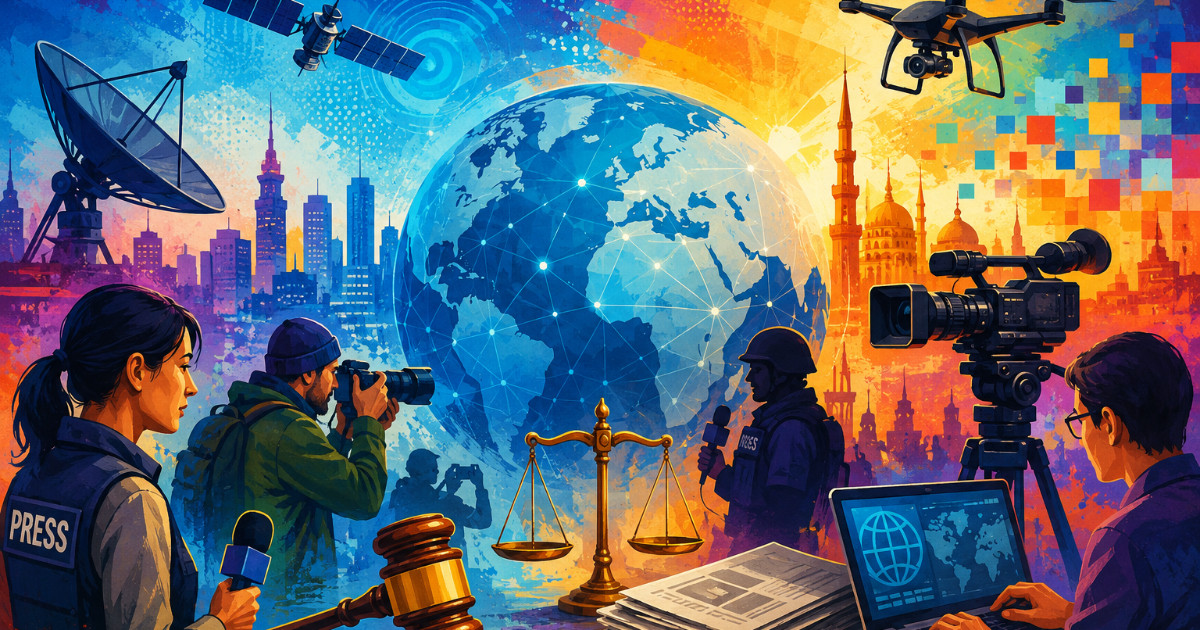
ILLUSTRATION: AI-generated; for illustrative purposes.
Key Points
- Editor's note highlights a recalibrating media landscape with state, platform, and institutional pressures.
- Anderson Cooper will leave 60 Minutes, marking a notable talent shift at CBS News.
- Radio Free Asia has restarted Mandarin, Uyghur, and Tibetan broadcasts to China after partial USAGM funding.
- At the India AI Impact Summit 2026, news executives urged AI firms to attribute and fairly compensate journalistic content.
- Governments tightening digital rules and court rulings are shaping limits on online speech globally.
Key Questions & Answers
Why is Anderson Cooper leaving 60 Minutes?
He is departing 60 Minutes after nearly two decades; his exit is described as a significant talent shift at CBS News.
How is Radio Free Asia reaching audiences in China?
Radio Free Asia has restarted Mandarin, Uyghur and Tibetan broadcasts using private transmitters and digital distribution following partial restoration of USAGM funding.
What did Indian editors request from AI firms?
Editors at the India AI Impact Summit urged AI companies to attribute and fairly compensate journalistic content and to adopt transparent licensing models.
How are governments and courts affecting online speech?
Governments are tightening digital rules while courts are increasingly defining the legal limits of online speech; both trends are reshaping the operating environment for journalism.
Relevant Topics
Ask AI: Understand this story your way
AI EnabledDig deeper, ask anything — get instant context, background, and clarity.
Disclaimer: This feature is powered by AI and is intended to help readers explore and understand news stories more easily. While we strive for accuracy, AI-generated responses may occasionally be incomplete or reflect limitations in the underlying model. This feature does not represent the editorial views of JournalismPakistan. For our full, verified reporting, please refer to the original article.