
Are newsrooms quietly replacing reporters with AI in 2026?
JournalismPakistan.com | Published: 28 February 2026 | JP Special Report
Join our WhatsApp channel
News organizations in North America, Europe, and South Asia are expanding AI uses from pilots into daily workflows, deploying tools for copy editing, headline testing, translation, and search optimization. Editors oversee output; AI handles routine, data-heavy tasks.Summary
ISLAMABAD — News organizations across North America, Europe, and increasingly South Asia are expanding the use of artificial intelligence in news production, editing, and distribution workflows in 2026, signaling a structural shift in how journalism is created and delivered rather than a wholesale replacement of reporters.
Over the past year, several major publishers have publicly detailed new AI deployments focused on copy editing, headline testing, translation, and search optimization. While editors continue to oversee final output, newsroom managers increasingly describe AI tools as embedded assistants in daily production cycles, with media executives in India and other South Asian markets also acknowledging experimentation with generative AI to improve efficiency and digital reach.
AI moves from pilot to workflow
In early 2024, German media group Axel Springer announced a partnership with OpenAI to integrate generative AI tools into editorial and business operations. The company said AI would support content creation and personalization while journalists would focus on investigative and original reporting.
In the United States, The Associated Press has continued to use automation for earnings reports and sports recaps, building on years of structured data reporting. AP executives have publicly emphasized that automation handles repetitive, data-heavy tasks while journalists concentrate on analysis and enterprise reporting.
Meanwhile, The Washington Post has expanded internal AI experimentation beyond its earlier Heliograf system, exploring generative AI tools for research assistance and workflow support, according to public statements and newsroom briefings. Editors have stressed that AI-generated material is reviewed and that transparency standards remain under discussion.
Productivity gains and newsroom restructuring
In the United Kingdom, publishers including The Guardian and BBC News have issued guidelines governing staff use of generative AI. Both organizations state that AI may assist with background research, transcription, and formatting, but should not replace editorial judgment. The BBC has publicly committed to labeling AI-generated content where applicable.
At the same time, media executives in Europe, the United States, and parts of South Asia have acknowledged cost pressures driven by declining advertising revenues and platform competition. In public strategy discussions and industry forums, some publishers have linked AI adoption to efficiency gains, though they have not formally announced AI-driven staff reductions as a primary strategy.
Industry bodies such as the Reuters Institute for the Study of Journalism have reported in recent surveys that newsroom leaders expect AI to play a growing role in personalization, distribution, and back-end production tasks in 2026. However, most respondents also indicate that human oversight remains central to maintaining credibility and audience trust.
Transparency and trust under scrutiny
The expansion of AI use has prompted renewed debate about transparency, intellectual property, and labor implications. News unions in parts of Europe and North America have called for clearer disclosure policies and safeguards against automation-driven job losses.
Separately, publishers, including The New York Times, have pursued legal action against AI developers over the use of journalistic content in model training, highlighting tensions between innovation and copyright protection. These disputes underscore that while AI is becoming embedded in newsroom operations, its regulatory and economic framework remains unsettled.
Industry analysts describe 2026 as a hybrid phase, where AI tools are increasingly normalized but not yet fully transformative. Rather than eliminating reporters, the current trajectory suggests role redefinition: more emphasis on investigative depth, verification, multimedia storytelling, and audience engagement, with machines handling structured, repetitive, or optimization-focused tasks.
WHY THIS MATTERS: For Pakistani journalists and media organizations, the global shift signals that AI adoption is no longer optional but strategic. Newsrooms in Pakistan facing tight budgets may use AI for translation, transcription, and SEO, but international experience shows that credibility depends on human oversight and clear editorial standards. The key lesson is to integrate AI for efficiency without weakening reporting depth or public trust.
ATTRIBUTION: Based on publicly available corporate statements, newsroom policy documents, earnings briefings, and reports from the Reuters Institute for the Study of Journalism and major international media organizations.
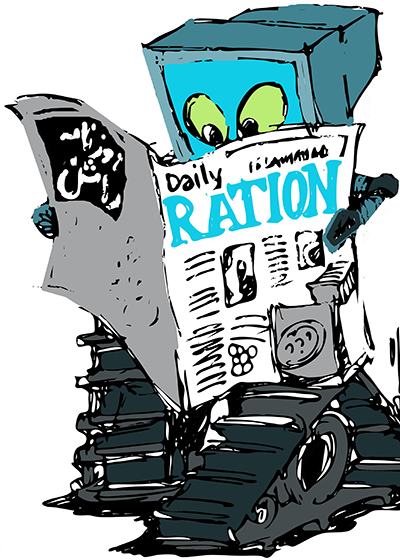
PHOTO: AI-generated; for illustrative purposes only.
Key Points
- Newsrooms in North America, Europe and South Asia moved AI from pilots into core production and distribution workflows.
- Publishers deploy AI for copy editing, headline testing, translation and search optimization to improve efficiency and reach.
- Automation handles repetitive, data-heavy tasks such as earnings reports and sports recaps, while editors supervise final output.
- Major organizations mentioned include Axel Springer, The Associated Press and The Washington Post, each expanding AI use in different areas.
- Media executives in India and other South Asian markets are experimenting with generative AI to boost digital reach and operational efficiency.
Key Questions & Answers
Are newsrooms replacing reporters with AI?
No, most publishers describe AI as augmenting workflows and handling repetitive tasks; editors and journalists continue to manage editorial judgment and original reporting.
What tasks are newsrooms using AI for?
Common uses include copy editing, headline testing, translation, search optimization and automated generation of structured reports like earnings and sports recaps.
Which publishers have publicly expanded AI use?
Examples cited include Axel Springer, The Associated Press and The Washington Post, all of which moved AI from experiments into integrated workflows.
Is this trend happening in South Asia as well?
Yes, media executives in India and other South Asian markets report experimenting with generative AI to improve efficiency and digital reach.
Ask AI: Understand this story your way
AI EnabledDig deeper, ask anything — get instant context, background, and clarity.
Disclaimer: This feature is powered by AI and is intended to help readers explore and understand news stories more easily. While we strive for accuracy, AI-generated responses may occasionally be incomplete or reflect limitations in the underlying model. This feature does not represent the editorial views of JournalismPakistan. For our full, verified reporting, please refer to the original article.