.jpg)
Amar Guriro: Journalism's future is human-AI partnership
JournalismPakistan.com | Published: 5 June 2026 | JP Staff Report
Join our WhatsApp channel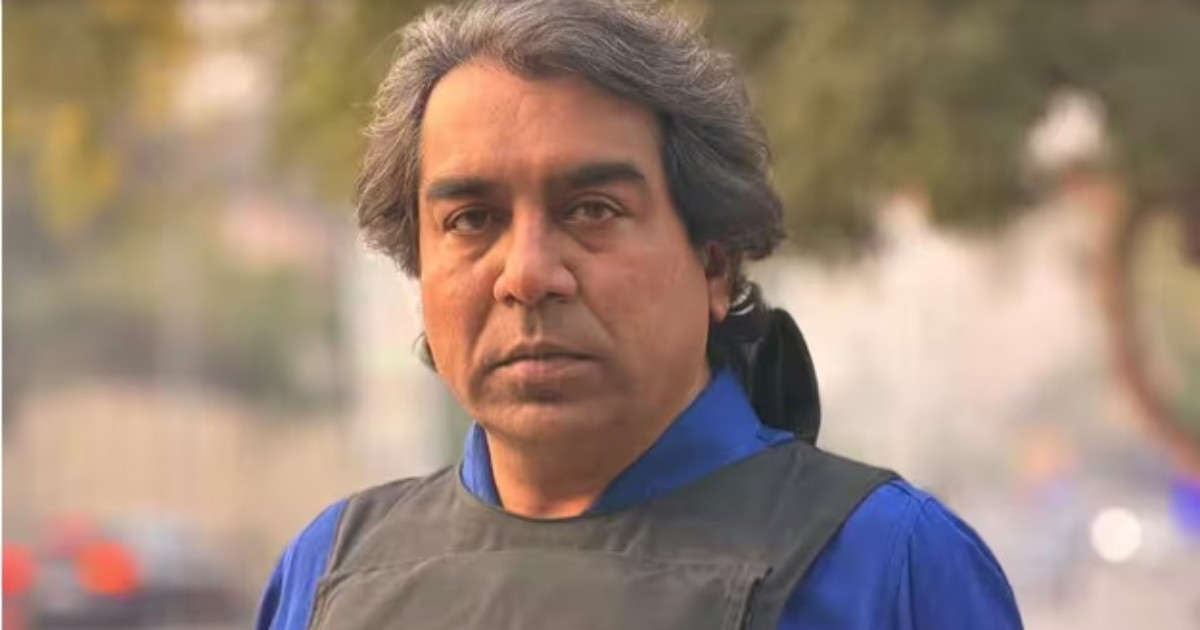
Amar Guriro, a veteran journalist and founder of Saga Digital AI, argues that artificial intelligence should strengthen journalism rather than replace it, treating AI as a tool and medium that requires human editorial oversight. He says AI can clarify complex subjects if journalists maintain verification and ethical standards.Summary
ISLAMABAD — Pakistan's first AI-powered news platform founder, Amar Guriro, says artificial intelligence should strengthen journalism rather than replace it, arguing that the profession's future lies in collaboration between humans and machines.
Speaking in an interview with SBS Urdu, the veteran journalist reflected on his 25-year career and the technological changes that have transformed newsrooms, from handwritten copy and traditional typesetting to digital publishing and AI-assisted content creation.
Human oversight remains essential
Guriro said journalism's core principles have remained constant despite dramatic shifts in technology. While the industry has moved through different mediums, including print, radio, television, digital platforms, and now AI, he argued that the underlying commitment to accuracy and ethical reporting has not changed.
He said the idea behind launching Saga Digital AI, described as Pakistan's first AI-powered news media platform, emerged from a belief that journalists must adapt to changing technologies while preserving professional standards. According to Guriro, AI should be regarded as another medium and tool rather than a replacement for journalism itself.
Addressing concerns that AI could undermine journalistic quality, Guriro rejected the notion that artificial intelligence is inherently linked to misinformation or poor-quality content. He said AI can help explain complex subjects in a more accessible way, provided journalists continue to apply established editorial principles and verification standards.
AI as a newsroom tool
Guriro emphasized that AI-generated content still depends heavily on human input. He noted that journalists write scripts, provide instructions, establish editorial guidelines, and make ethical decisions that determine how AI-generated material is produced and presented.
"AI does nothing on its own," he said, stressing that editorial control remains with human operators who are responsible for ensuring compliance with journalistic standards.
He also addressed growing concerns about employment in the media sector, arguing that technological advances have historically reshaped newsroom roles rather than eliminating journalism. He compared AI's emergence to previous technological changes that altered the work of photographers, reporters, and multimedia journalists.
New skills for a changing industry
Looking ahead, Guriro said fully autonomous AI-driven newsrooms are unlikely because human expertise will remain necessary. He predicted continued demand for editors, scriptwriters, prompt engineers, and other specialists who can guide and supervise AI systems.
According to Guriro, the essential functions of journalism, including gathering facts, verifying information, and serving the public interest, will remain human responsibilities even as AI tools become more sophisticated. He described the future of journalism as a partnership in which technology enhances journalists' capabilities rather than replacing them.
WHY THIS MATTERS: As Pakistani media organizations explore AI tools, Guriro's comments highlight a growing debate about how technology should be integrated into newsroom workflows. His emphasis on human oversight reflects a broader industry consensus that verification, editorial judgment, and ethical decision-making remain central to credible journalism, regardless of technological advances.
ATTRIBUTION: Reporting by JournalismPakistan, based on a publicly available SBS Urdu interview with Amar Guriro published on June 5, 2026.
Key Points
- Amar Guriro founded Saga Digital AI, described as Pakistan's first AI-powered news platform.
- He emphasizes that AI should strengthen journalism, not replace journalists.
- Human editorial oversight and verification remain essential in AI-assisted reporting.
- AI can help make complex topics more accessible when used with established standards.
- Journalists must adapt to technological change while preserving professional ethics.
Key Questions & Answers
Who is Amar Guriro?
Amar Guriro is a veteran Pakistani journalist with about 25 years of experience and founder of Saga Digital AI.
What is Saga Digital AI?
It is described as Pakistan's first AI-powered news media platform, launched to integrate AI as a tool in news production.
Does Guriro believe AI will replace journalists?
No. He argues that AI should complement journalists and that human oversight is essential to maintain quality and ethics.
How can AI improve journalism according to Guriro?
AI can make complex subjects more accessible and assist content creation, provided journalists apply verification and editorial standards.
Relevant Topics
Ask AI: Understand this story your way
AI EnabledDig deeper, ask anything — get instant context, background, and clarity.
Disclaimer: This feature is powered by AI and is intended to help readers explore and understand news stories more easily. While we strive for accuracy, AI-generated responses may occasionally be incomplete or reflect limitations in the underlying model. This feature does not represent the editorial views of JournalismPakistan. For our full, verified reporting, please refer to the original article.