.png)
Kane Williamson retires: The end of an era
JournalismPakistan.com | Published: 13 June 2026 | By Dr. Nauman Niaz (TI)
Join our WhatsApp channel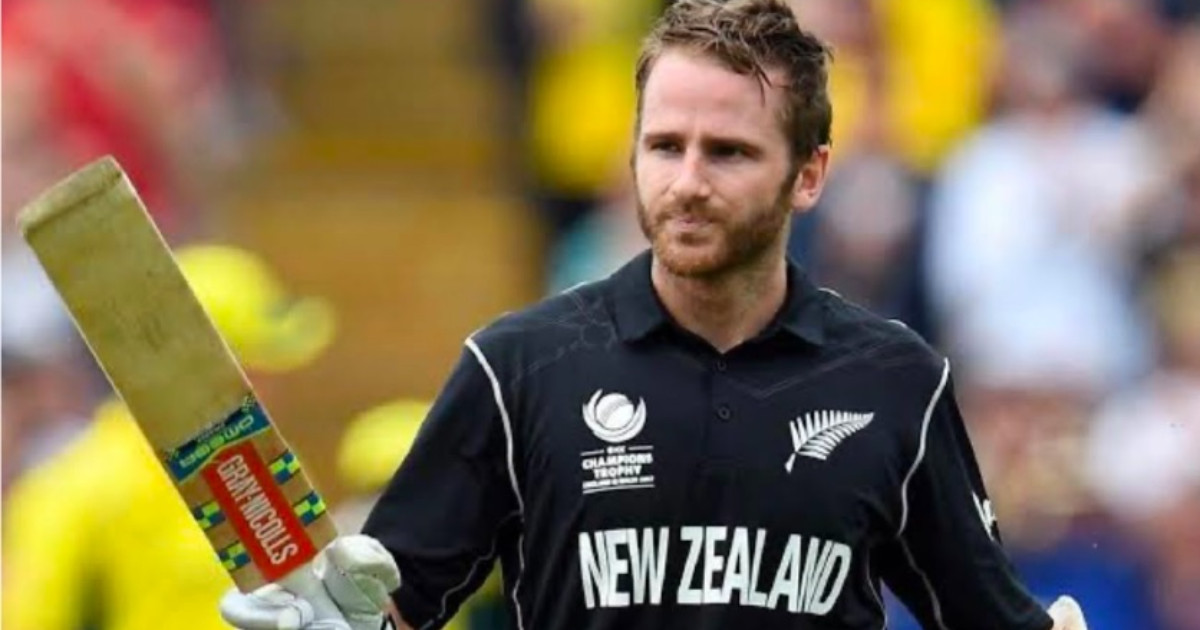
On June 12, 2026, Kane Williamson retired from international cricket after a Test at Lord's, ending a 16-year career. Known for his calm technique and measured presence, he scored roughly 19,346 runs across Tests, ODIs and T20s in 378 matches.Summary
ISLAMABAD — There is a kind of cricketer who announces himself with sound, the crack of ball departing at velocity, the roar of the crowd following it like a surge finding shore, the broadcaster's voice climbing half an octave as if pulled upward by the stroke itself. And then there is Kane Stuart Williamson, who announced himself with something else entirely: with unobtrusive stillness, with correctness, with a composure so complete it seemed less like a batting stance and more like a philosophical position. The world, he seemed to say each time he settled into his guard, does not require your noise. It requires only your attention.
A farewell at Lord's
On the twelfth of June, 2026, at thirty-five years of age, following a Test against England at Lord's — that most temple-like of cricket grounds, where the slope falls away from the pavilion end as if the ground itself is bowing — Williamson stepped away from international cricket. The announcement was characteristically spare. No ceremony, no lengthy farewell tour, no valedictory press conference in which the great man consented to be celebrated. Just a statement from New Zealand Cricket, a few measured sentences from the man himself, and the sudden, vertiginous awareness that something the game had taken for granted — the presence of Williamson at a crease somewhere on the planet, making it all look easier than it was — would be taken for granted no longer.
Sixteen years. 19,346 runs across Tests, One-Day Internationals and T20 Internationals, across 378 matches, including 48 centuries and six double-centuries. 9,515 runs from 110 Test matches at an average of 54.06. Numbers that, stated baldly, convey achievement without conveying wonder. The wonder requires something else. It requires us to talk about the way he played.
The stillness that defined a career
Begin at the crease, because that is where Williamson began to make himself understood. He arrived, in those earliest Test appearances after his debut against India in November 2010, looking almost improbably unassuming for a man who would eventually become the greatest run-scorer in his country's history. There was none of the bristling physical authority of a Pietersen or a Kohli. He was compact rather than imposing, still rather than kinetic, a batsman who seemed to understand that the first economy of batting is the economy of movement — that wasted motion is not just inefficient but philosophically wrong, a kind of lie told to the ball.
His stance was the key to everything. His head stayed perfectly still, his front foot balanced, his bat straight. This is coaching-manual stuff, of course; half the batting guides ever written prescribe exactly these things. What they cannot prescribe is the degree of naturalness with which Williamson embodied them, the way these prescriptions seemed to have become, through the long alchemy of practice and temperament, simply who he was. The still head was not a technical instruction obeyed; it was an expression of character. The man was still before the ball arrived because the man was still.
The technical blueprint: trigger, grip, and late play
Williamson employed what coaches call a back-and-across trigger movement, a minimal, economical shift of weight that placed him in a solid base at the moment of delivery, from which neutral position he could go forward or back with equal ease. Where other batsmen broadcast their intentions, telegraphing their decisions to anyone watching closely enough, Williamson concealed them — not through deception but through genuine equipoise. He did not know yet what the ball would do, and so he committed to nothing except the readiness to respond to whatever it decided.
Then there was the grip. Williamson employed a split grip, one hand at the top of the bat, one at the lower end, which gave him close control and was particularly suited to nudging the ball into gaps, to maintaining a solid and compact defense. The split grip is out of fashion in an era that prizes the clean, high-backlift slam, the grip unified for maximum torque. Williamson's grip was a different statement. It said: I am not here to beat you with power. I am here to outthink you.
The single most distinctive feature of Williamson's batting — the thing that separated him most completely from his contemporaries, the quality that coaches pointed to and commentators reached for metaphors to describe — was his habit of playing the ball late. Extraordinarily, almost implausibly late. Late in the way that jazz musicians play behind the beat: technically delayed, but creating, through that delay, a kind of suspension, a held breath, that resolves with more expressiveness than any perfectly timed response could achieve.
Most modern batsmen, under the influence of T20 formats that reward aggression and early interception, have moved closer to the ball. They commit early, get onto the front foot, meet the ball before it fully reveals itself. The advantage is power and dominance. The risk is error, the committed lunge to a ball that was never quite where you thought it would be. Williamson took the opposite approach. He had a limited front-foot stride and waited for the ball to come to him, playing it late and under his eyes. He could judge the swing and seam of the delivery and therefore adjust his stroke accordingly. The late play was not passivity. It was a different kind of aggression — the aggression of the chess player who makes the move after fully understanding the board, rather than the aggression of the brawler who throws first and assesses the damage afterward.
Biomechanics of the batting genius
Biomechanically, what this late play required was exceptional. Research on cricket batting has identified the maximum separation between the pelvis and thorax segments — what analysts call the X-factor — along with front elbow extension and wrist uncocking during the downswing as the primary determinants of bat speed. In the conventional powerful striker, these elements are loaded early and released in a sequence timed to meet the ball at the earliest possible point. In Williamson, the release sequence was compressed into a tighter, later window. He was, in engineering terms, operating with narrower margins, and doing so with a consistency that bordered on the inhuman.
His high elbow technique and late play gave him time to adjust to movement off the pitch, crucial in seaming conditions. The raised lead elbow is both a mechanical requirement — it keeps the bat on a straighter plane, maintains the face of the bat toward the fielder longer, enables the soft, absorbing defense that characterizes the best Test batsmen — and an aesthetic signature. Watching Williamson from side-on, you saw the elbow rise as the ball arrived, almost like a wing being unfurled, and the bat coming down along a line so straight it seemed to have been laid against a ruler.
He was particularly strong through the off-side, with a cover drive that commentators often called 'liquid gold.' The phrase earns its cliché status by pointing toward something true: the stroke had a quality of continuous, frictionless movement, ball and bat meeting and parting in a transaction so smooth it seemed to have no collision in it at all. Against spin, his soft hands and nimble footwork neutralized the threat. The soft hands were the same quality expressed differently — hands that absorbed pace rather than resisting it, hands that could lay a ball dead at his feet or deflect it to the boundary with equal precision, because they were listening to the ball rather than imposing upon it.
And then there was the injury. Williamson himself reflected on how his elbow problems affected the shape of what he was trying to do, particularly in Test cricket, and how the need to compensate for physical limitation altered the geometry of his stroke-making. That he played through it and produced under its constraints some of the most refined batting of his career suggests something important about the relationship between limitation and excellence. The body's constraints became another variable to manage, another thing to listen to and account for.
Statistics that demand awe
Statistics in cricket have a dangerous tendency to substitute for understanding. They look like an explanation while actually being another form of mystery. Williamson's Test average of 54.06 places him among the finest practitioners of the long form the game has produced. But the number conceals the conditions in which many of those runs were made — the seaming pitches of home and abroad on which New Zealand played much of their cricket, grounds like Dunedin and Wellington where morning sessions can resemble navigating darkness, where the ball does things that no average can adequately represent. His 33 Test centuries and six double-centuries point toward the particular quality of his marathon innings, the capacity not only to reach three figures but to continue there, to turn a century into a statement of dominion, to bat sessions as if they were arguments he intended to win.
The fab four: where Williamson stood apart
He was the final assembled figure of a generation — the so-called Fab Four, alongside Joe Root, Steve Smith, and Virat Kohli — and yet in certain essential ways he was the odd one out. Root accumulated with the compulsive efficiency of an accountant who enjoys his work. Smith reconstructed the idea of what a batting technique could be, then scored relentlessly from within his own peculiar geometry. Kohli burned. Williamson was something different from all of them. He was still, patient, and had an almost ethical insistence on doing things correctly. In an era that valued the spectacular, he valued the correct. This was, in its way, the most radical position of all.
Captain, leader, custodian
For eight years, between 2016 and 2024, Kane Williamson was not merely New Zealand's best batsman. He was, in the fullest sense, New Zealand cricket's representative self. As captain, Williamson led New Zealand in all three formats during the period from 2016 to 2024, in which they made two ICC World Cup finals, three semi-finals, and won the inaugural ICC World Test Championship in 2021 — New Zealand's first ICC trophy since the Champions Trophy in 2000. In Test cricket alone, he led New Zealand in 40 Tests, winning 22, losing 10, and drawing 8, a record of consistent excellence for a small nation without the population or resources of the great cricketing powers.
Leadership in cricket is always a performance within a performance — the captain must manage his own batting while simultaneously holding in his mind the dynamics of the game, the state of his bowlers, the psychology of his opponents, the mood of his team. Great captains are those who can do this simultaneously, whose personal brilliance does not consume all their bandwidth. Williamson did this with an apparent ease that was surely only apparent, the ease being another performance, the visible surface of enormous inner organization.
The WTC final: a nation delivered
The 2021 World Test Championship Final against India at Southampton is the moment that perhaps best captures what kind of captain, what kind of man, Williamson was. In the fourth innings, chasing with a nation depending on him for deliverance — the words were Ian Bishop's, and they were precisely right — Williamson scored 52 not out, a knock in which the arithmetic of runs was almost secondary to the quality of presence. He batted as if undisturbed. As if the weight of the occasion had been acknowledged, assessed, and quietly set aside as a distraction from the actual business of batting. New Zealand won. Williamson walked off without pumping his fist, without performing. He had always seemed to know that the performance was the batting.
The 2019 World Cup final: grace under injustice
The 2019 World Cup Final is a wound that may never entirely close — the Super Over that forced a boundary-count tiebreaker, an absurdity of resolution that stripped New Zealand of a title they had arguably deserved more than anyone. The way Williamson handled the pressure in the 2019 World Cup Final was remarkable. What is perhaps even more remarkable is what he said afterward: gracious, philosophical, almost uncannily composed for a man who had just lost the biggest game of his life to a rule his team had not written. He accepted it without bitterness, which is not the same as accepting it without pain. The acceptance was the product of a disposition cultivated over years.
Williamson believed that representing the national team is about being a custodian of the cap — where players come and go but should aim to leave the team in a better place. This is the kind of thing athletes say, and it is often said. From Williamson, who lived it visibly across eight years of captaincy, who organized his schedule in his final years specifically to allow younger players room to develop without competing against his own status, it rang with the authority of genuine conviction.
The Gradual Farewell: Reordering Priorities
The end came not suddenly but in the way tides recede — by degrees, almost imperceptible at first, until one looks up and the waterline is somewhere entirely different. In 2024, Williamson declined a central contract with New Zealand Cricket, citing the changed circumstances of his life outside cricket. He had relinquished the Test captaincy a year earlier and now stepped back from white-ball leadership too, his public statement acknowledging the delicate balance between time with his young family and commitment to the team. This was not withdrawal but reordering — the recognition that the claims of cricket, which had been total for sixteen years, now had to compete with other claims that had equal or greater validity.
In November 2025, he retired from T20I cricket, his final appearance in the format having come at the ICC T20 World Cup 2024 against Papua New Guinea. He left as New Zealand's second-highest run-scorer in T20 internationals, with 2,575 runs at an average of 33.44, numbers that tell only part of the story of what he meant in that format. He had led New Zealand to the T20 World Cup Final in 2021, top-scoring in that final with 85, a knock of extraordinary quality against Australia's pace and pressure. His T20 captaincy record — the most T20I wins by a New Zealand captain, with 39 victories in 75 matches — reflected a man who had made himself competent in a format that did not entirely suit his nature, and through sheer will and intelligence had turned competence into excellence.
Then, on June 12th, 2026, the announcement came: complete retirement from international cricket, effective immediately, after a Test at Lord's. He had spoken before the match about it being his last playing appearance at Lord's. He stepped away from all international cricket, having reorganized his commitments over two years to reach this point on his own terms. "I've always felt a strong drive and hunger for international cricket, and I take pride in knowing I've given it my all in every match I've played for New Zealand. Continuing with anything less wouldn't be right, and I feel fortunate to step away on my own terms." The precision of that word, right, is characteristic. Not successful, not glorious, but right. The man who valued correctness above all else was concerned, in his retirement, with correctness above all else.
A legacy embedded in DNA
Cricket has a long tradition of lionizing the volcanic, the extravagant, the personality that transcends the sport and becomes a kind of public theater. We celebrate the fire of Kohli, the baroque idiosyncrasy of Smith, the effortful brilliance of Root. These are great cricketers who are also vivid characters, and their vividness is part of what we love about them.
Williamson's greatness was of another kind, and it created a different kind of affection — the affection we feel for things that are reliable and illuminating simultaneously, for presences that make us feel steadier rather than more excited. In a sport where adrenaline often rules, Williamson's composure is legendary. But composure is not the absence of passion. What Williamson demonstrated, year after year, series after series, was that passion channelled entirely inward, directed at the work, not at its audience, could produce results at least as extraordinary as passion expressed outward.
His coach, Rob Walter, reflecting on the retirement, described his influence as extending far beyond statistics and results: "Anyone who's had the privilege of working with Kane understands he is a very special player and person. His impact on the culture and standards of this team will remain embedded in its DNA. An incredible player, awesome teammate, a wonderful leader, and a fantastic ambassador for our sport."
The word DNA is instructive. Walter is pointing at something that cannot be measured in averages or centuries — the way that sustained excellence conducted with consistent grace over a long period becomes, eventually, the standard against which a team measures itself. Williamson raised the invisible ceiling of what was expected from a New Zealand cricketer, not by demanding it from others but by demonstrating it himself, day after day, without announcement.
Virat Kohli, reflecting on their relationship, wrote on social media: "From an opponent to a friend over the years. It's been a pleasure watching you bat and compete against you over so many years, but more than that, I value our friendship and shared perspectives on the game and beyond." The detail that stands out is shared perspectives — suggesting a conversation between two men who have found, across the opposition of their careers, an agreement about what the game is for and what it asks of those who play it at its highest levels. Kohli and Williamson play differently and present differently, but they are both, in their different registers, serious. They take cricket with the seriousness it deserves.
Honors and recognition
Among Williamson's individual honors are the ICC Cricketer of the Year award in 2015, ICC Test Player of the Year in 2019, and a record four Sir Richard Hadlee Medals. The Hadlee Medals, given by New Zealand Cricket for the best New Zealand cricketer of each year, are in some ways the most revealing of these honors because they were voted for by people who knew him, who competed alongside him, who saw him in dressing rooms and practice sessions and bus journeys between grounds. Four times, those who knew him best said: him. Him again.
New Zealand's perfect cricket son
To fully understand Kane Williamson, you have to understand the country that made him. New Zealand is small — a population of just over five million, spread across islands at the bottom of the world. It is a country that has always punched above its weight in sport because it has had to: you do not survive in international competition when you are this small without extraordinary organization, extraordinary commitment, and extraordinary individuals who carry a nation's aspirations on modest shoulders. The All Blacks understand this. The Black Caps understand this.
Williamson, from Tauranga on the Bay of Plenty, was in many ways a perfectly New Zealand creation — reserved, technically excellent, hard-working, allergic to ostentation, finding meaning in the correct execution of difficult things rather than in the public performance of them. He embodied qualities his country recognizes in itself. And in doing so, he gave New Zealand cricket a face and a philosophy that extended the sport's reach into the national consciousness in ways that mere results cannot achieve.
Under his leadership, the Black Caps became, arguably, the most admired team in world cricket — not the most feared, not the most successful by the cold measure of titles won, but the most admired. They played the game with an integrity and a quality that generated affection well beyond their country's borders. Neutral fans found themselves supporting New Zealand in finals they had no tribal reason to care about, because there was something in how the team conducted itself — an honesty, a resistance to manipulation, a refusal of theatrical grievance that felt like what the game is supposed to look like.
This was, to a significant degree, Williamson's achievement. A captain cannot manufacture culture. He can, however, model it so consistently and so visibly that it becomes the culture. And that is what he did. Leaving the game, Williamson expressed confidence in the future of New Zealand cricket, highlighting the strength of the current squad and the emerging talent coming through. "I leave feeling optimistic about where this group is heading. There's a huge amount of talent, and a real desire to do something special with this New Zealand team. It's a team I love, and I feel incredibly fortunate to have been part of it for so long."
The optimism is not just farewell rhetoric. New Zealand cricket is, by any reasonable measure, in a better position than it was when Williamson began. The WTC triumph of 2021 was transformative — proof of concept, evidence that this small nation could win the most demanding form of the game's championship against the world's best. The generation behind Williamson — Rachin Ravindra, Daryl Mitchell, Tom Latham carrying the line into his own final chapter — has been formed in the environment Williamson helped create.
New Zealand cricket's board, in its farewell, spoke of Williamson as an incredible player, an awesome teammate, a wonderful leader, and a fantastic ambassador for the sport. The ambassador's quality matters as much as the others. Cricket needs its ambassadors, needs figures who, when shown to people who do not know the game, make them want to know it. Williamson was that figure. You could show a non-cricket-watcher a clip of his batting — the serene stance, the late movement, the cover drive flowing to the boundary — and they would understand, without being told, that something special was happening. The beauty was accessible even without the context.
The numbers, and beyond them
There is a type of question that cricket provokes more than any other sport: the comparison question, the ranking question, the where-does-he-fit question. It is irresistible and almost entirely unanswerable, and so we will resist it here, mostly. What can be said is this: Williamson ends his international journey as New Zealand's highest run-scorer across formats, with 19,346 runs in 378 matches, including 48 centuries and six double-centuries. These are numbers that, in any era, command respect. Set against the era he played in — an era of seaming pitches used cynically to produce results, of pitches that crumbled alarmingly, of bowling attacks better than perhaps any cricket has seen — they command something more than respect. They command a kind of awe.
But the numbers, finally, are not the point. The point is what was demonstrated, match after match, season after season, across sixteen years in the colors of a small country at the end of the world. The point is the dynamics of a batting stance that turned stillness into a kind of violence. The point is a cover drive that existed in the gap between what the bowler thought was possible and what turned out to be possible. The point is a captain walking off a field after losing the World Cup to a boundary count and saying, graciously, that cricket is a beautiful game. The point is the impact on a team's DNA, the invisible mark left by someone who did things right for long enough that the doing-right-of-things became a team's inheritance rather than merely an individual's achievement.
"I've thought about it for a while, but over the last few days it's become clear now is the right time," he said. The right time. The right time to leave is when you can leave without diminishing what preceded the leaving. It is when the ending confirms the meaning of everything that came before it. Williamson's retirement is of that kind. It is, like his batting, perfectly timed — late, perhaps, to the eye of those who wanted more, but precisely right to the eye that understands what was being attempted. He stepped back. The crease was empty. And the game was poorer and richer simultaneously, poorer for the absence of him, richer for the permanent fact of having had him at all.
ABOUT THE WRITER: Dr. Nauman Niaz, a Post Doctorate (Oxford), PhD (UWA), FRCP (London), FRCP (Edinburgh), FRCP (Ireland), FRCP (Glasgow), CST (Endo, UK), MSc Biomechanics & Kinesiology (UWA), MRCP (UK), MBBS (Pb) is a civil award winner (Tamagha-i-Imtiaz) in Sports Broadcasting & Journalism, a regular cricket correspondent having covered 54 tours and three ICC World Cups, having written over 3,700 articles. He has authored 19 books and is the official historian of Pakistan Cricket (Fluctuating Fortunes IV Volumes - 2005). His signature show Game On Hai has been the highest-rated in both ratings and acclaim.
Key Points
- Announced retirement on June 12, 2026, after a Test at Lord's.
- Ended a 16-year international career marked by calm technique and composure.
- Accumulated roughly 19,346 runs across Tests, ODIs and T20Is in 378 matches.
- The departure came via a concise statement from New Zealand Cricket without a large farewell tour.
- Remembered for steady, classical batting and leadership on and off the field.
Key Questions & Answers
When did Kane Williamson retire?
He announced his retirement on June 12, 2026, following a Test match at Lord's, with New Zealand Cricket issuing a brief statement.
How long was his international career?
Williamson's international career spanned 16 years, during which he played Tests, One-Day Internationals and T20 Internationals.
What were his main career statistics?
Across formats he scored about 19,346 runs in 378 international matches.
Was there a formal farewell or tour?
No major farewell tour or valedictory press conference was announced; the retirement was communicated in a measured, spare statement.
Relevant Topics
Ask AI: Understand this story your way
AI EnabledDig deeper, ask anything — get instant context, background, and clarity.
Disclaimer: This feature is powered by AI and is intended to help readers explore and understand news stories more easily. While we strive for accuracy, AI-generated responses may occasionally be incomplete or reflect limitations in the underlying model. This feature does not represent the editorial views of JournalismPakistan. For our full, verified reporting, please refer to the original article.