
Pele to Messi: How World Cup finals wrote football's greatest story
JournalismPakistan.com | Published: 15 June 2026 | Dr. Nauman Niaz (TI)
Join our WhatsApp channel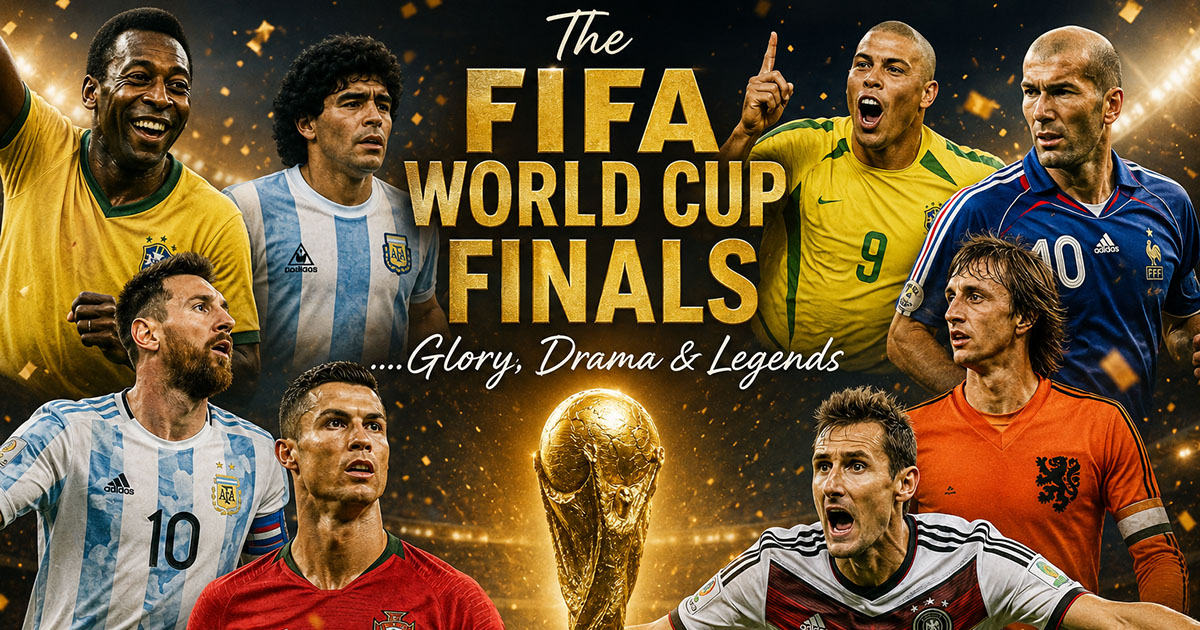
This piece traces the drama of World Cup finals from Pele to Messi, examining how pivotal matches, players and moments shaped football's global stature. It explores triumphs, heartbreaks and how the tournament turned the game into a global cultural touchstone.Summary
ISLAMABAD — There is a particular quality of silence that settles over a great stadium in the moment before a World Cup final begins, a silence that is not truly silence at all, but the held breath of eighty thousand, and beyond them, through the crackling intermediaries of radio and television, of hundreds of millions more. It is the silence of anticipation so keen it becomes almost a physical thing, a pressure in the chest, a tightening of the throat. It is the silence, one imagines, that precedes great natural events: the last stillness before the wave breaks, the final hush before the storm speaks. And then the referee's whistle cuts it, and the world exhales into sound.
Football, of all the great sporting events, is the one most perfectly suited to such moments. It needs no equipment beyond a ball and a patch of earth. It asks nothing of birth or privilege. It is played in the back-streets of Montevideo and the dust-plains of Nairobi and the frozen parks of Sheffield with precisely the same passionate intensity. And once every four years, this longest of intervals, long enough for wars to start and end, for children to be born and to learn to walk, the nations of the world assemble to determine which among them is, for the time being, the best at this most human of games.
This is that story. Not just of trophies lifted and penalties missed, though there are both in abundance. It is the story of how a game became the world's common language; of the men and they have, by tournament law's oversight, been almost exclusively men, who played it with such genius that they transcended sport entirely and became something closer to myth. It is the story of the finals themselves: those great dramatic confrontations in which everything a nation believes about itself is, for ninety minutes, laid bare on a rectangle of green. The World Cup final is not just a match; it is a civilization submitting itself to examination, and hoping, against the evidence of its anxiety, to pass.
The First Time: Uruguay 1930 — Uruguay vs Argentina
The thing about beginnings is that nobody quite believes they are beginnings. When thirteen nations sailed to Uruguay in July 1930, some with considerable reluctance, the Europeans in particular grumbling about the long Atlantic crossing, they were attending, they thought, a tournament. They could not have known they were attending the birth of the modern world's greatest recurring drama.
Uruguay had earned the right to host. They were the Olympic champions of 1924 and 1928; their government had built the Estadio Centenario, a vast bowl of concrete named for the centenary of the country's independence, a monument to footballing ambition that was, in its way, the Colosseum of the New World. And they had the players to justify the architecture: Jose Leandro Andrade, the Black Marvel, whose ball control seemed to violate the ordinary laws of physics; Hector Scarone, the Gardel of football, who moved with the fluid elegance of a dancer; Pedro Cea, industrious and exact.
The final, against their River Plate neighbors Argentina, was an event that required police armed with bayonets to manage the crowd. The River Plate derby, in any year, is a matter of existential importance. In 1930, with a world championship at stake, it reached a temperature that had nothing to do with the July sun. Argentina led 2-1 at half-time, and the Uruguayan dressing room was, by all accounts, not a tranquil place. But in the second half the hosts found their authority, Pedro Cea equalizing, Santos Iriarte putting them ahead, and Hector Castro, who had lost his right forearm in a childhood accident and played with a stump where most men had a fist, completing the rout with the fourth goal, which had a wild frenzy to it that no novelist would have dared to invent.
Uruguay's great strength was tactical coherence and physical endurance, products of a footballing culture already two decades mature. Argentina countered with arguably more gifted individualists; their forwards, led by Guillermo Stabile, who finished as the tournament's top scorer with eight goals, were capable of moments of invention that left opponents standing in bewilderment. Their weakness, and it would prove a recurring weakness, was temperamental: the capacity for inspiration was matched by a capacity for fragility under the highest pressure.
The two finalists between them established an axis that would define South American football for the rest of the century: technical mastery, intense personal expression, a relationship with the ball that was almost sensual in its intimacy, and a tendency to treat defeat as a form of personal bereavement.
The European Interruption: Italy 1934 and 1938 — Italy vs. Czechoslovakia and Italy vs Hungary
The 1930s belonged, in large part, to Italy; though whether the football or Benito Mussolini deserves the greater credit has been a matter of uncomfortable debate ever since. The Azzurri of Vittorio Pozzo were a formidable construction: the coach had the tactical sophistication of a chess grandmaster and the emotional intelligence to coax the best from players of very different temperaments and backgrounds.
Giuseppe Meazza was the centerpiece, a man of such natural grace that watching him was an aesthetic experience quite separate from any consideration of competitive outcome. He could score with either foot, could head with conviction, could hold the ball long enough in tight spaces to make defenders feel that they were operating at some temporal disadvantage. His shirt, famously held up by one hand in the 1938 semi-final as his shorts disintegrated, remains one of football's enduring images: a man in the act of scoring a penalty while the uniform of his nation collapses around him. There is a metaphor there, perhaps, that one should not press too hard.
The 1934 final against Czechoslovakia was tense and physical, decided in extra time by goals from Raimundo Orsi and Angelo Schiavio. The Czechs had their own player of rare gifts in Oldrich Nejedly, who had scored five times in the tournament and moved with a sharp-angled directness that troubled the Italian defense throughout. They led with eight minutes left in normal time, and the Italian equalizer came with a quality of desperate improvisation that final-minute goals uniquely possess.
The 1938 edition in France, the last before six years of darkness put football, like everything else civilized, into abeyance, saw Silvio Piola complete a masterclass against Hungary, whose own team was notably gifted. Gyorgy Sarosi was among the most complete players of the inter-war era, but against an Italy playing with the cold efficiency of a side that had already won one title and intended to win another, his virtuosity was insufficient. Four goals to two, and Pozzo became the only man to coach a world champion twice.
The Maracanazo: Brazil 1950 — Uruguay vs. Brazil
There was no final in the formal sense in 1950, a round-robin group decided the champion, but the last match, Uruguay versus Brazil before the largest crowd in footballing history, was as complete a final as the game has ever produced. The Maracanazo, the Maracaná blow, has passed into legend so thoroughly that Brazilians of a certain generation reportedly had nightmares about it for the rest of their lives.
Brazil needed only a draw. They had beaten Sweden 7-1 and Spain 6-1. Their team glittered with talent: Zizinho, who would later be called by Pele the greatest player he had seen; Ademir, the tournament's top scorer with nine goals; Jair, whose left foot was an instrument of almost supernatural precision. The Maracanã, barely completed in time, swayed with the conviction of a nation that had already begun to celebrate.
Alcides Ghiggia was not, in the ordinary way, the sort of man to alter history. He was small, quick, and possessed of a directness that Brazilian defenders found, in the end, impossible to contain. His winner, struck past Barbosa at the near post in the 79th minute, produced a silence in that vast bowl which observers have never quite found words for. Two hundred thousand people being silent is a sound of its own, a hollow roar of negation, a city swallowing its grief. Barbosa, the Brazilian goalkeeper, was haunted by that moment until he died in 2000, refused entry to a supermarket by a woman who pointed at him and told her son, "This is the man who made all of Brazil weep." The cruelty of football's memory is, like its joy, absolute.
The Miracle of Bern: West Germany 1954 — West Germany vs. Hungary
The Hungarian team of 1950-54 was, by the consensus of those who saw them, the finest collection of footballers ever assembled. Ferenc Puskas, Sandor Kocsis, Nandor Hidegkuti, Zoltan Czibor: names that still carry, for those who understand such things, the weight of something lost. They had beaten England 6-3 at Wembley, the first foreign side to win there, and then 7-1 in Budapest. They entered the 1954 World Cup having gone thirty-two matches unbeaten.
West Germany had lost to Hungary 8-3 in the group stage, fielding a heavily rotated team, a tactical withdrawal that Sepp Herberger had planned with the care of a military strategist. In the final, in the Swiss rain, Puskas gave Hungary a lead inside the first minute, and Czibor made it 2-0 within eight. The thing was over. Except it was not. Morlock and Rahn replied for Germany, and with six minutes remaining, Rahn scored again, his shot squirming past Grosics at the near post with the casual authority of a man who has not read the script and is indifferent to its provisions.
Puskas thought he had equalized; a linesman's flag said otherwise. The verdict on that flag is still debated in Budapest. The Miracle of Bern, the title of a film, a myth, a foundation narrative of the new West German republic, was, for Hungary, the beginning of a long silence. The Mighty Magyars would never again threaten in quite the same way. Football, like all great theatrical enterprises, can only sustain so much tragedy before it moves on to other stories.
Ferenc Puskas deserves a paragraph to himself, which is the least he is owed. He was short, stocky, left-footed with an almost absurd severity of preference, and capable of scoring goals that seemed to belong to some other, more exalted sporting dimension. After the Hungarian uprising of 1956, he played for Real Madrid and then for Spain, scoring 156 goals in 180 appearances for Real Madrid in league football alone. He scored four in a European Cup final. He scored a hat-trick in another. The FIFA Goal of the Year award is named after him, and if awards could perfectly capture the character of the man they commemorate, this one does.
The Brazilian Canonization: 1958-1970 — How Pele and the Beautiful Game Changed Everything
Edson Arantes do Nascimento was seventeen years old when he arrived at the 1958 World Cup and changed, by the simple act of playing, what football thought it knew about itself. He scored twice in the final against Sweden, the first of which involved a chest-trap, a flick over a defender's head, a turn, and a volley, executed in a space the size of a modest dining room table, against a defender who was neither slow nor unintelligent and simply had no preparation for what happened to him. This was, for those present, like watching some new species of movement, elegant and unhurried even in its speed, impossibly economical even in its extravagance.
The Brazil of 1958 was not merely Pele. Garrincha, Manoel Francisco dos Santos, called the Little Bird, born with a spine curved to the left and both legs bent in the same direction, played on the right wing with a dribbling technique so idiosyncratic and effective that defenders who faced him once rarely entirely recovered their confidence. Didi orchestrated from deep, his long passes landing with the accuracy of letters addressed to specific recipients. Vava scored twice in the final. This was a collective masterwork, and yet Pele was its radiant center, the proof that human physical possibility had a frontier not yet reached.
1962 brought a different Brazil, more functional, less luminous. Pele was injured early in the tournament and was replaced by Amarildo. Garrincha, freed from the tactical shadow of perfection that Pele's presence sometimes cast, was magnificent, a one-man hurricane through the knockout rounds. The final against Czechoslovakia was controlled rather than brilliant, though Vava and Zito and the prolific Amarildo ensured it never seriously threatened to go wrong.
England's Finest Hour: The 1966 Wembley Final
What happened at Wembley in the summer of 1966 has been subjected to more retrospective analysis than perhaps any sporting event in English history, which is partly a testament to the event's importance and partly evidence of England's difficulty in accepting that it has not been repeated. Alf Ramsey's Wingless Wonders, a team built on tactical solidity, the indefatigable running of Alan Ball, the defensive intelligence of Bobby Moore, the dynamism and goal-scoring efficiency of Geoff Hurst, were not the most beautiful team in the tournament. They were, however, organized with a rigor that West Germany found, ultimately and controversially, impossible to overcome.
The final produced perhaps the single most debated moment in football history: Geoff Hurst's second goal, a shot that struck the underside of the bar and bounced down, the referee's assistant, Roger Hunt, running in to capitalize on the rebound, turned away, certain, awarding the goal. Did it cross the line? The technology of 1966 could not say definitively. The arguments have not been resolved in sixty years and are unlikely to be resolved ever, which gives them a quality of permanence that actual clarity would have denied. Hurst scored again in the final minute, the hat-trick sealed, and Kenneth Wolstenholme's commentary -- "they think it's all over; it is now" -- became the most quoted sentence in British sporting history.
Bobby Moore, lifting the trophy, was the image of a certain English ideal: fair-haired, composed, seemingly untouched by the emotion that was dissolving everyone around him. He was the most complete defender England has produced, a reader of the game who made anticipation look like clairvoyance. His tackle on Pele in 1970, clean, perfectly timed, a masterclass of defensive intelligence, was praised by Pele himself as the greatest tackle he had ever been on the receiving end of. These two men's mutual admiration constitutes one of football's more touching relationships.
Brazil 1970: The Greatest Team in Football History
The Brazil of 1970 is the team against which all other teams are measured, and found wanting. Not because they won the World Cup, though they did, but because of the quality of feeling they produced in those who watched them. Pele at thirty, a veteran of abuse and injury and the grinding demands of competitive football, was playing with a joy that seemed to transcend competition entirely. Carlos Alberto, Gerson, Tostao, Rivelino, Jairzinho, who scored in every single match of the tournament, constituted a collective that made football seem, briefly, as though it were not a contest at all but a form of expression, like music, like poetry.
The final against Italy was a rout that did not feel like a rout because it was achieved with such grace. Pele's headed goal, he hung in the air longer than biology permits, directing the ball with the precision of a man completing a fine craft, and Carlos Alberto's last goal, the crescendo of a sweeping movement that began in Brazil's own half and involved every attacker as though the game had been choreographed, are among the few sporting moments that can be called, without hyperbole, works of art. Carlos Alberto's goal was not a goal. It was a statement. It said: We have been before you, and we will be here after you, and this is what football is for.
Total Football and Its Discontents: 1974-1986 — Cruyff, Maradona, and the Age of Genius
The Dutch did not win the World Cup in 1974, and this fact has generated more theoretical literature than most actual victories. Johan Cruyff and his contemporaries, Johan Neeskens, Rob Rensenbrink, Johnny Rep, played a form of football so conceptually advanced that it has been discussed in the language of philosophy, of art, of political economy. Total Football, in which every player was, in principle, capable of occupying every position, in which the team was a fluid organism rather than a fixed structure, was the beautiful theory to which reality, unfortunately, was not entirely equal.
The 1974 final, against a West Germany that Helmut Schon had constructed with characteristic German thoroughness, began with a Dutch penalty in the first minute before Germany had touched the ball. The Dutch, perhaps, relaxed prematurely. The Germans equalized through Paul Breitner and won through Gerd Muller, whose goal, a swivel and a finish in a space that seemed to admit of no such possibility, was the sort that only great goalscorers score: seen from the outside, inexplicable; explained, afterwards, by the fact of Muller's particular genius for finding spaces that do not exist until he occupies them.
Cruyff, retiring from the national team on the eve of 1978 for reasons that have been variously attributed to a kidnap attempt on his family and a contractual dispute with Adidas, the full story has never been completely told, left the Dutch stripped of their supreme intelligence. They still reached the final, against an Argentina that had the considerable advantage of playing at home under a military government that understood the political utility of sporting triumph, and lost in extra time.
Maradona's 1986 Masterpiece: Argentina vs. West Germany
Diego Armando Maradona was, in 1986, at the absolute summit of his powers and of human footballing possibility. Argentina reached the final against West Germany in what was essentially a one-man tournament, though to describe it thus is both accurate and inadequate. Maradona scored five goals and assisted five more. His goal against England in the quarter-final, the second one, the legitimate one, the one he called the goal of the century, the one in which he received the ball in his own half and, over the course of ten seconds, humiliated five England defenders and the goalkeeper, was the most complete individual goal ever scored in a World Cup match, and probably the most complete individual goal ever scored in any competitive context by a human being.
The 1986 final itself was a curiously understated vehicle for a tournament of such drama. Argentina led 2-0 through Jose Luis Brown and Jorge Valdano; Germany equalized through Rummenigge and Voller; Jorge Burruchaga, released by Maradona with the sort of pass that requires both technical perfection and an almost extra-sensory reading of space, won it in the 83rd minute. Maradona lifted the trophy with the arms of a man who had decided, four years earlier in the wreckage of a poor Argentine team at the 1982 tournament, that he would carry his country to this moment alone if necessary. He very nearly did.
Germany's strength in this era was precisely complementary to Argentina's: where Argentina depended on the transcendent individual, Germany relied on the excellence of the collective, the relentless pressing, the clinical finishing, the tactical discipline that made them perhaps the most consistent performers in World Cup history. They appeared in four finals between 1974 and 1990. Their weakness, such as it was, lay in a tendency towards efficiency that occasionally excluded beauty; they were never the crowd's romantics, never the neutrals' favorites, but they were almost always there at the end.
The Modern Age: 1990-2002 — Baggio's Miss, Ronaldo's Redemption, and the Rise of France
The 1990 final was the worst in the tournament's history, and it would be dishonest to pretend otherwise. A single penalty in the 85th minute, converted by Andreas Brehme and struck with sufficient conviction that the deflection off Sensini's shin seemed almost incidental, decided a match of such studied grimness that the booing of the crowd in Rome was a form of aesthetic judgment rendered in real time. Both teams had been reduced to ten men. Both teams had decided that not losing was more important than winning. The referee, Edgardo Codesal, showed a red card that remains debated. It was, in every sense, a monument to the less appetizing aspects of sporting competition.
Roberto Baggio and the Penalty That Missed
In 1994, four years after Italia 90's purgatory, football contrived to produce a final whose deciding moment, a penalty shootout, that cruellest of arbitrations, is remembered almost entirely for a single miss. Italy's Roberto Baggio, the Pigtailed Buddhist, the most technically gifted Italian player of his generation and one of the most beautiful footballers Europe has produced in the second half of the twentieth century, strode up to take the fifth penalty with Italy needing to score to stay alive. His shot sailed over the bar. He stood, arms falling, head bowed, and in that posture, the posture of a man absorbing unbearable information, became one of sport's most famous images. Brazil won. The occasion felt, despite this, unresolved.
France 1998: Zidane's Coronation
1998 gave France their first title, in the most improbable of circumstances. Ronaldo, the Brazilian Ronaldo, Ronaldo Luis Nazario de Lima, who was at that point the most dangerous attacking player on earth, was taken ill on the morning of the final, included in the starting lineup anyway, and played as though under some heavy sedation. France won 3-0, Zinedine Zidane heading in two first-half corners with the calm authority of a man performing a familiar task. The mystery of Ronaldo's collapse, convulsions, the medical reports said, though the full truth was never established to everyone's satisfaction, cast a shadow over France's genuine achievement, which deserved better than to be a footnote to another country's medical emergency.
Zidane, Zinedine Yazid Zidane, born of Algerian parents in Marseille, was a player of uncommon dignity and uncommon power, a man who could receive the ball with his back to goal under severe pressure and emerge, apparently undisturbed, facing forward, with the game's tempo entirely in his possession. His pirouette, the Marseille turn, executed at pace in tight spaces, was so aesthetically pleasing that opponents sometimes seemed reluctant to interrupt it. He won the tournament for France in 1998 with two goals, and then performed the most extraordinary act of self-destruction at the 2006 final, of which more shortly.
Ronaldo's Redemption: Brazil vs Germany 2002
Ronaldo in 2002 was a story of recovery and redemption of a kind that sport rarely provides so neatly. Devastated by injury, by illness, by the weight of expectation that had accumulated around him since his teenage years, he arrived in Japan and South Korea having spent four years unable entirely to prove that he was the player everyone remembered. He finished the tournament with eight goals. He scored both in the final against Germany, the first a predatory finish when Oliver Kahn, the best goalkeeper in the tournament and perhaps the world, fumbled a Ronaldo shot and presented the ball at his feet; the second a swerving strike of such controlled ferocity that it suggested the reappearance not merely of a great player but of something approaching the fullness of his powers. He smiled, afterwards, with a gap in his front teeth that had become, in its way, as recognizable as any image in world football. The smile of a man who has come back from somewhere terrible and found the door still open.
The European Decade: 2006-2014 — Zidane's Headbutt, Spain's Dominance, and Germany's 7-1
The 2006 final would be remembered entirely for Zidane's headbutt were it not for the fact that Italy were, throughout the tournament, an extremely fine team, and the final itself, before its descent into notoriety, was a match of considerable quality. Gianluigi Buffon behind the Italian defense, a goalkeeper of such concentrated excellence that he seemed to occupy the goal in a way that made it smaller; Marco Materazzi imposing at center-half despite his subsequent infamy; and Fabio Cannavaro lifting the trophy with the expression of a man who has discovered, to his considerable surprise, that the cosmos occasionally distributes justice.
But Zidane. The great Zidane. Playing what everyone understood to be his final competitive match, producing a first-half performance of such authority that it recalled the summit of his powers, scoring a penalty of such calculated impudence, a chip down the middle, bouncing off the underside of the bar and in, Buffon's dive irrelevant, that it deserved to be a World Cup winning goal. And then, in the 110th minute, turning and burying his forehead in the chest of Marco Materazzi, who had said something, something unforgivable, Zidane has suggested, though he has never repeated it, and walking off the pitch, past the Jules Rimet trophy, without looking at it. A great career and a great sporting occasion ending not with a fanfare but a thud of skull against sternum, and the long walk to the dressing room.
Spain's Golden Era and the 2010 World Cup Final
The Spain of 2008 to 2012 was, in their own way, as complete a footballing expression as anything since 1970. Built around the possession philosophy of Pep Guardiola's Barcelona and organized by Vicente del Bosque with a calm that bordered on the otherworldly, they played football of such technical sophistication that opponents sometimes looked not merely beaten but confused, uncertain of the rules of a game they had thought they understood. Xavi Hernandez and Andres Iniesta in central midfield, Xavi the metronome, Iniesta the ghost, able to receive the ball in the tightest spaces and emerge, apparently untroubled, in possession and forward-facing, provided the structural grammar through which David Villa and Fernando Torres expressed the attacking vocabulary.
The 2010 final against the Netherlands was not a pleasant match. The Dutch, under Bert van Marwijk, had decided that if you cannot play as beautifully as Spain, you can at minimum make the game ugly enough that beauty becomes irrelevant. Nigel de Jong's flying kick into Xabi Alonso's chest, a challenge of such spectacular illegality that the referee's failure to produce a red card remains one of officiating's more puzzling decisions, set the tone. Iniesta's goal in the 116th minute, struck with a clarity of purpose that the preceding two hours had done nothing to diminish, was both the correct and the beautiful resolution. He removed his shirt to reveal a message for a friend recently deceased, and was booked for it, which seemed, in the circumstances, somewhat beside the point.
Germany's 7-1 and the 2014 World Cup Final
Germany won the 2014 World Cup in Brazil in a manner that combined, more completely than any German team since perhaps 1974, efficiency and beauty. Their 7-1 semi-final demolition of the host nation, a result so improbable that it seemed, for the ninety minutes it was happening, to be occurring in some parallel universe, was the most extraordinary result in World Cup knockout history. Against Argentina in the final, in the Maracanã, the game was decided by Mario Gotze, who entered as a substitute and, instructed by Jürgen Klopp to show the world that he was better than Messi, controlled a Schurrle cross on his chest and volleyed past Romero with thirteen minutes of extra time remaining. The instruction was extravagant. The execution, however, was close to perfect.
The Most Recent Phase: 2018-2022 — Mbappe, Modric, and the Greatest Final Ever Played
Croatia in 2018 had no business being in a World Cup final, except that they had Luka Modric, who has perhaps the most complete midfield game of his generation: a reader of space who plays at a tempo of his own choosing, a tackler of unexpected physicality for a man of his slight frame, a distributor of such accuracy that his passes arrive not merely in the vicinity of their targets but at precisely the pace and angle at which they can be most productively used. His tournament performance earned him the Golden Ball, the first non-Messi, non-Ronaldo winner since Kaka in 2007, and the award felt not merely deserved but slightly tardy.
France, meanwhile, had Kylian Mbappe: nineteen years old, the fastest player in the tournament, a forward whose acceleration from standing start to full sprint occupied so brief a timeframe that opponents processed his departure only after the fact. Mbappe's goal to make it 4-1, a first touch to set the ball, a shot of such crisp directness that it seemed to arrive at the net simultaneously with the decision to shoot, announced him as the necessary heir to the lineage that ran from Pele through Maradona through Ronaldo. France were comfortable winners, their 4-2 final score slightly flattering Croatia but accurately reflecting the outcome.
Qatar 2022: The Greatest Football Match Ever Played
The 2022 final in Qatar was, by the consensus of those present, the greatest football match ever played. The hyperbole, for once, was proportionate. Argentina led 2-0 through goals from Di Maria and Mbappe's hat-trick, the second of which, a penalty, and the third, a volley in the ninety-seventh minute, are among the most dramatic goals ever scored in a World Cup final. Penalties. Gonzalo Montiel converted the decisive kick. Lionel Messi, thirty-five years old, lifted the trophy he had pursued for eighteen years with the expression of a man who has just learned that the universe is, after all, just.
Messi's career and the parallel question of whether he or Ronaldo was the better player, a question that has occupied footballing discourse with a relentlessness that sometimes suggests we have run out of more important questions, achieved its definitive punctuation in Qatar. Six goals, three assists, and a performance against the Netherlands in the quarter-finals, in which he seemed to grow in stature as the match grew in intensity, provided the final evidence: this was a player of complete genius, technically sophisticated, tactically intelligent, physically capable in ways that his slight frame obscured, and possessed of a competitive instinct so concentrated that it expressed itself, paradoxically, as serenity.
Mbappe's hat-trick in the final, the second player ever to score a hat-trick in a World Cup final, the first since Geoff Hurst in 1966, announced that the story was not ending but continuing. Football always finds a new narrator. The generation of Pele gave way to Maradona, who gave way to Ronaldo, who gave way to Zidane, who gave way to Messi, who has now handed the baton, visibly and completely, to a twenty-three-year-old Parisian of Cameroonian descent who runs so fast it seems the rules of sprinting may need revision.
Why Football Endures: The World Cup Final as the Ultimate Human Drama
Football endures because it is the most human of games. It requires the minimum of resources and the maximum of imagination. It is played by children on street corners and by professionals in stadiums holding a hundred thousand people, and the essential experience, of outwitting a defender, of striking a ball cleanly, of the ball crossing the line, is recognizably the same in both settings. The World Cup final is simply the extreme articulation of something that begins in back-gardens and schoolyards: the desire to play, and to win, and to feel, briefly, that you are capable of something exceptional.
The great players of this history, Puskas, Pele, Cruyff, Maradona, Ronaldo, Zidane, Messi, and Mbappe, share a quality that is easier to identify than to define. They play as though the game's difficulties do not apply to them in quite the way they apply to everyone else. Not because they are insensible to pressure, Maradona felt it so acutely that it eventually destroyed him; Baggio's missed penalty remains one of sport's most affecting images. But because under pressure they do not constrict, they expand. The game's demands bring out not the worst but the best, not the ordinary but the extraordinary.
The nations, too, have their characters, and the World Cup is as much an exercise in national self-expression as a sporting competition. Brazil plays with joy, even when the joy is complicated by pressure. Germany plays with organization, even when the organization achieves beauty. Argentina plays with passion, even when the passion tips into something darker. France plays with elegance, even when the elegance is intermittent. England plays with hope, always with hope, every four years renewed.
The competition goes on. New nations have discovered football and are learning its disciplines. African teams have come closer and closer to the final; an African winner feels, in the current dispensation, not merely possible but imminent. Asian football grows in quality each cycle. The women's game, for too long excluded from this particular narrative, produces its own magnificent stories. The game expands, and in expanding, includes more of the world in its great argument about excellence. There will be another final. There will always be another final. The game does not permit us to stop believing in it. This is its genius, and its hold over us, and the reason why, after ninety-two years of this beautiful argument, we are still here, still watching, still hoping.
In Montevideo in 1930, two countries disputed, with a violence of effort that required bayonets at the perimeter, who was the best at this game. In Lusail in 2022, ninety-two years later, two countries disputed the same question, with a drama so complete that the world ran out of language to describe it adequately. In between, the game has been played by saints and sinners, by tacticians and romantics, by players of genius and players of application, by teams that won when they should have lost and teams that lost when they should have won.
The field will be marked out again. The referee will raise the whistle to his lips. Eighty thousand people and behind them, invisibly, the hundreds of millions watching on screens of every size in every timezone will fall into the particular silence that precedes the particular sound of the beginning of a World Cup final. And somewhere, in a house in Buenos Aires or Lagos or Seoul or Bradford, a child will watch a great player do something impossible and will think: I could do that. I will do that. And perhaps, one day, they will. The game waits for them.
ABOUT THE WRITER: Dr. Nauman Niaz, a Post Doctorate (Oxford), PhD (UWA), FRCP (London), FRCP (Edinburgh), FRCP (Ireland), FRCP (Glasgow), CST (Endo, UK), MSc Biomechanics and Kinesiology (UWA), MRCP (UK), MBBS (Pb), is a civil award winner (Tamgha-i-Imtiaz) in Sports Broadcasting and Journalism, a regular cricket correspondent having covered 54 tours and three ICC World Cups, having written over 3,700 articles. He has authored 19 books and is the official historian of Pakistan Cricket (Fluctuating Fortunes, IV Volumes, 2005). His signature show Game On Hai has been the highest-rated in its genre.
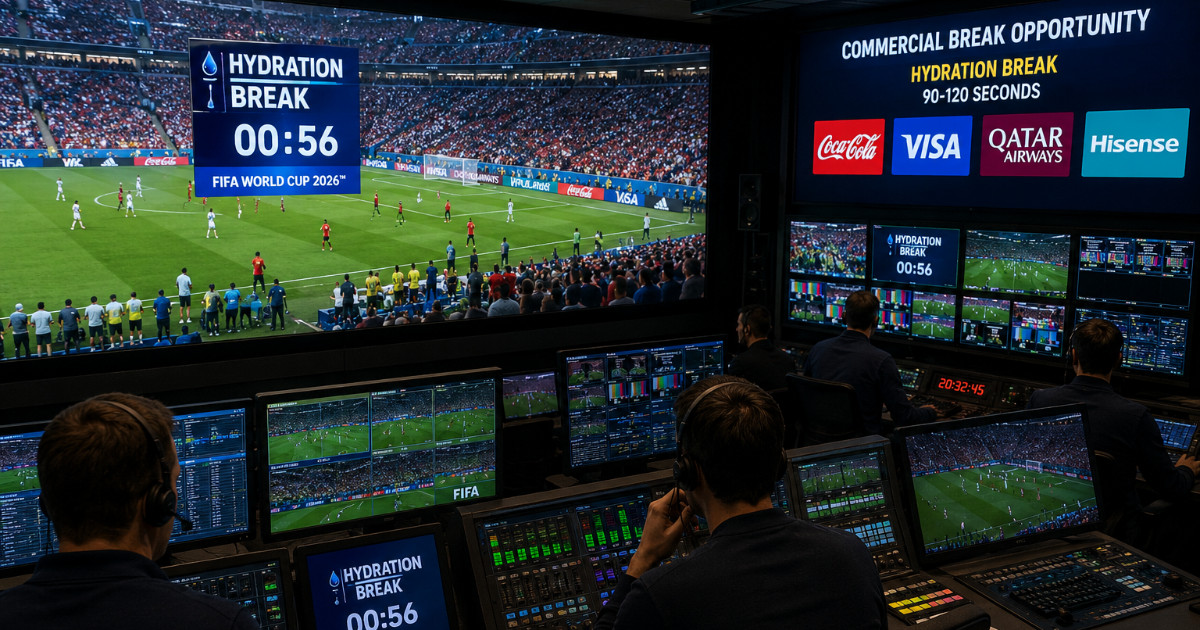
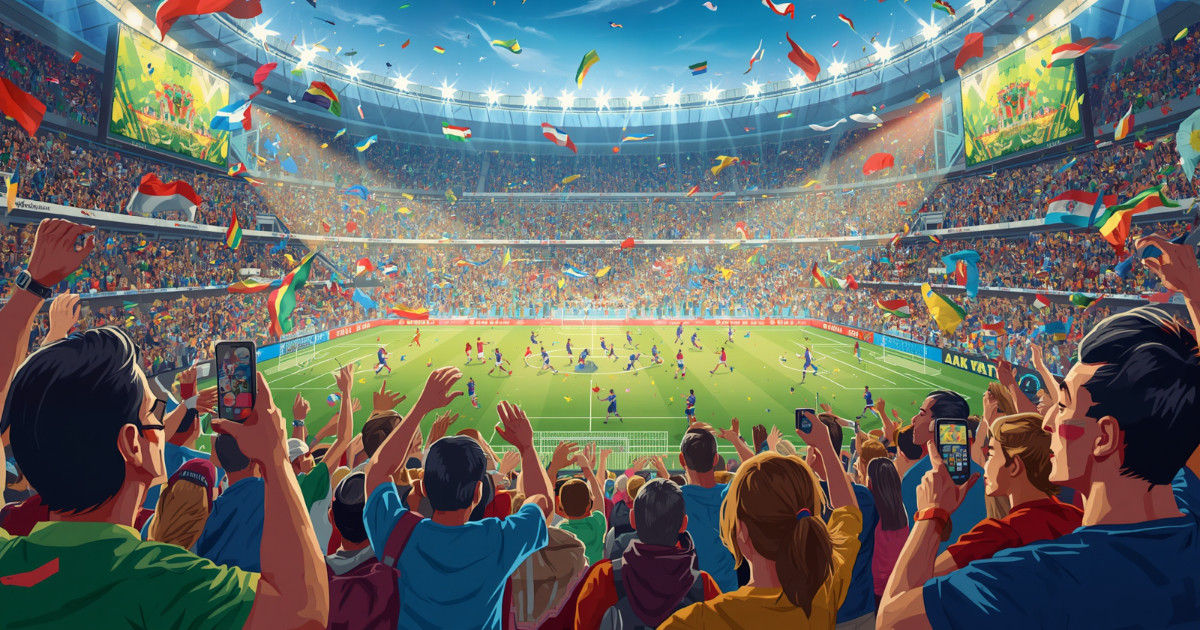
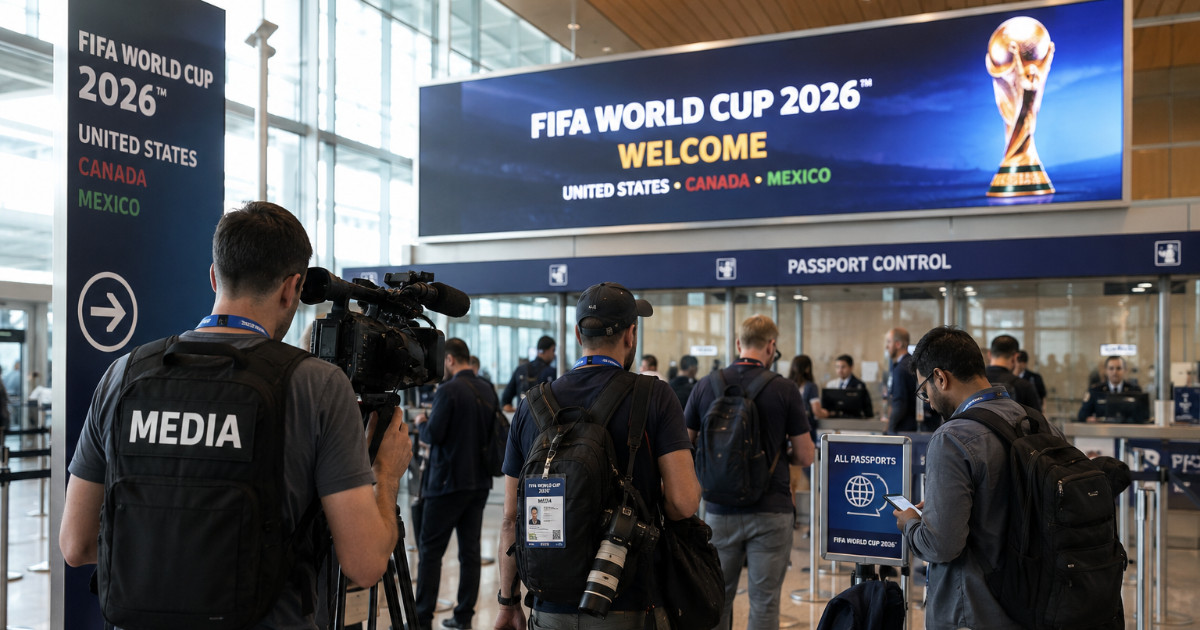
PHOTO: AI-generated; for illustrative purposes.
Key Points
- Chronicles the evolution of World Cup finals from early tournaments to the modern era.
- Highlights iconic players and defining moments that shaped the sport.
- Explores recurring themes of triumph, heartbreak and national identity.
- Shows how finals amplified football's global reach and cultural impact.
- Notes tactical shifts, penalty drama and enduring narratives across eras.
Key Questions & Answers
What is this article about?
The article traces the history and cultural impact of World Cup finals, from early tournaments to the modern era, through key matches and players.
Which players are highlighted?
It references iconic figures such as Pelé and Messi and discusses other match-defining players and moments across generations.
How did World Cup finals shape global football?
Finals magnified pivotal moments and narratives that boosted football's popularity worldwide and turned it into a shared cultural language.
Why are World Cup finals so emotionally powerful?
Finals condense national pride, individual brilliance and high stakes into a single event, producing dramatic triumphs, heartbreaks and unforgettable memories.
Ask AI: Understand this story your way
AI EnabledDig deeper, ask anything — get instant context, background, and clarity.
Disclaimer: This feature is powered by AI and is intended to help readers explore and understand news stories more easily. While we strive for accuracy, AI-generated responses may occasionally be incomplete or reflect limitations in the underlying model. This feature does not represent the editorial views of JournalismPakistan. For our full, verified reporting, please refer to the original article.