.png)
Australia media warns delay could hurt public-interest journalism
JournalismPakistan.com | Published: 22 June 2026 | JP Global Monitoring
Join our WhatsApp channel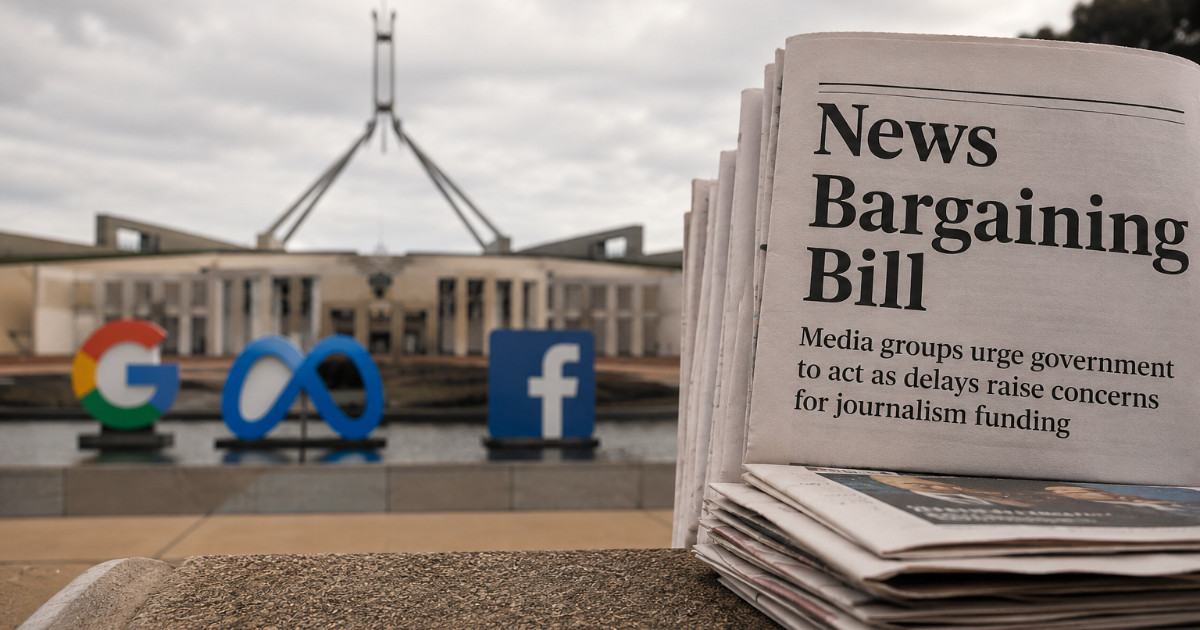
Australian media warn delays to the government's News Bargaining Incentive could weaken funding for public-interest journalism amid falling ad revenues. Industry seeks certainty on platform payments to protect local and regional reporting.Summary
CANBERRA — Australian media executives have warned that delays to the government's proposed News Bargaining Incentive (NBI) legislation could undermine the financial sustainability of public-interest journalism, adding to concerns about the economic pressures facing news organizations in the digital era. The proposed measure is designed to encourage major technology platforms, including Meta and Google, to compensate news publishers for the value derived from news content.
Media companies argue that prolonged uncertainty around the legislation is creating additional strain for publishers already grappling with declining advertising revenues, changing audience habits, and reduced referral traffic from digital platforms. Industry leaders say the proposal is intended to help support newsroom operations and preserve the production of original journalism.
Publishers seek certainty on platform payments
The NBI proposal forms part of Australia's broader effort to address the imbalance between global technology platforms and news organizations. The country has previously been at the center of international debates over whether digital platforms should contribute financially to the news ecosystem from which they benefit.
Publishers contend that delays to the latest proposal risk weakening confidence in future revenue streams at a time when many newsrooms are seeking sustainable business models. They argue that public-interest journalism, particularly regional and local reporting, remains vulnerable without stronger mechanisms to support media funding.
Debate resonates beyond Australia
The discussion is being closely monitored across Asia, where governments, regulators, and media organizations are examining ways to strengthen the economic foundations of journalism. Several countries have explored or considered policies aimed at securing greater financial contributions from digital platforms that distribute or benefit from news content.
Supporters of such measures argue that they can help sustain reporting resources and encourage investment in journalism. Critics, however, have cautioned that regulatory approaches must be carefully designed to avoid unintended consequences for news distribution, audience access, and competition within the media sector.
For many publishers, the Australian debate has become a test case for how governments can respond to the growing influence of global technology companies over news consumption and advertising markets. The outcome could influence future policy discussions in other jurisdictions seeking to bolster media sustainability.
Pressure on news business models continues
The warning from Australian media executives comes amid continued challenges for news organizations worldwide. Publishers have faced years of disruption from shifting digital advertising patterns, audience fragmentation, and changing platform policies that affect the visibility and distribution of news content.
Industry observers note that while platform compensation mechanisms are not viewed as a complete solution to the sector's financial challenges, they are increasingly seen as one tool that could help support the production of independent journalism and maintain newsroom capacity.
WHY THIS MATTERS: The Australian debate highlights a growing global struggle over how journalism should be funded in an environment increasingly dominated by digital platforms. For media organizations, the outcome could influence future negotiations with technology companies and shape policy discussions on newsroom sustainability across Asia and beyond.
ATTRIBUTION: Reporting by JournalismPakistan, based on publicly available reports and industry statements concerning Australia's proposed News Bargaining Incentive legislation in June 2026.
PHOTO: AI-generated; for illustrative purposes only.
Key Points
- Executives warn delays to the News Bargaining Incentive bill risk undermining public-interest journalism funding.
- The proposal aims to make major tech platforms like Google and Meta compensate publishers for news content value.
- Publishers face falling advertising revenue, changing audience habits, and reduced referral traffic from platforms.
- Regional and local reporting are particularly vulnerable without stronger funding mechanisms.
- Industry leaders call for clarity and certainty on platform payments to sustain newsroom operations.
Key Questions & Answers
What is the News Bargaining Incentive?
It is a proposed Australian measure designed to encourage major technology platforms to negotiate payments to news publishers for the value derived from their content.
Why do media executives say delays are harmful?
They say prolonged uncertainty can weaken future revenue streams and make it harder for publishers to sustain newsroom operations amid declining ad income.
Which parts of journalism are most at risk?
Regional and local reporting are highlighted as particularly vulnerable because they rely heavily on stable funding and referral traffic from digital platforms.
What are publishers asking for?
Publishers seek clear rules and timely implementation around platform payments to provide predictable revenue that can support original journalism.
Relevant Topics
Ask AI: Understand this story your way
AI EnabledDig deeper, ask anything — get instant context, background, and clarity.
Disclaimer: This feature is powered by AI and is intended to help readers explore and understand news stories more easily. While we strive for accuracy, AI-generated responses may occasionally be incomplete or reflect limitations in the underlying model. This feature does not represent the editorial views of JournalismPakistan. For our full, verified reporting, please refer to the original article.