.png)
What pack journalism means in modern news coverage
JournalismPakistan.com | Published: 15 March 2026 | JP Staff Report
Join our WhatsApp channel
Pack journalism occurs when reporters across outlets pursue the same angles, sources and narratives, producing uniform coverage; amplified by digital monitoring and social media, it helps determine which stories dominate the news agenda.Summary
ISLAMABAD — In the fast-moving world of modern news, competition between media organizations is intense, but the coverage audiences see can sometimes appear strikingly similar. When major events unfold, whether a political scandal, a court ruling, or a viral social media controversy, many outlets publish nearly identical headlines, quote the same sources, and frame the story in comparable ways. This pattern has a name in journalism: pack journalism.
The term describes a tendency among reporters to pursue the same stories and angles as their competitors, often moving together like a group following the same trail. The phenomenon has been observed for decades, particularly in political reporting, but it has taken on new relevance in the digital era, where newsrooms monitor competitors’ websites, trending topics, and social media feeds in real time.
Understanding pack journalism helps readers recognize why certain stories dominate the news agenda while others receive little attention. For journalists, the concept highlights the tension between competitive pressure, newsroom routines, and the professional responsibility to produce original and independent reporting.
What pack journalism means
Pack journalism refers to a situation in which journalists from different news organizations pursue the same story angles, sources, and narratives, often because other outlets are doing so. Rather than developing distinct perspectives or investigations, reporters collectively focus on the same events and talking points, resulting in synchronized coverage across multiple platforms.
The term draws on the metaphor of a pack of animals moving together. In a newsroom context, the “pack” consists of reporters and editors who respond to similar signals about what counts as newsworthy. These signals can include breaking developments, public statements from officials, trending topics online, or coverage by influential media organizations.
Pack journalism is not necessarily intentional. It often emerges from structural pressures within the media industry. Journalists working on tight deadlines may rely on the same official briefings, press conferences, or public statements. News editors also track what competitors are reporting to ensure their outlets do not miss a major story.
In some cases, pack journalism can help ensure that important information reaches a wide audience quickly. When multiple outlets report on the same development, such as a major court ruling or government announcement, the story gains visibility and public attention. However, the phenomenon can also narrow the range of perspectives presented to audiences.
Why it matters now
The dynamics that produce pack journalism have become more visible in the digital news environment. Social media platforms, real-time analytics, and constant monitoring of competing outlets mean that journalists are exposed to the same information streams throughout the day.
Editors frequently track trending topics on platforms such as X, Facebook, and YouTube, as well as analytics dashboards showing which stories are attracting readers. When one outlet’s report begins to gain traction, competing organizations may rush to publish their own versions of the same story, often with similar framing and sources.
Economic pressures within the news industry also contribute to the trend. Many newsrooms have faced layoffs, shrinking budgets, and reduced reporting staff in recent years. With fewer journalists available to pursue original investigations, outlets may rely more heavily on shared news events or widely circulated reports.
The rise of artificial intelligence tools in news production has also raised new questions about how stories are selected and framed. AI systems that analyze trending topics or audience engagement data can reinforce patterns in which multiple outlets prioritize the same stories. While such tools can improve efficiency, they may also amplify the tendency toward uniform coverage.
Pack journalism can influence the public agenda by concentrating attention on certain topics while leaving others underreported. Media scholars often point out that when journalists collectively focus on a single narrative, alternative perspectives or overlooked issues may receive less scrutiny.
Real-world examples
International political reporting provides some of the most visible examples of pack journalism. During United States presidential election campaigns, journalists from major outlets such as The New York Times, CNN, and The Washington Post often travel together on campaign planes or buses, attending the same rallies and press briefings. Because they witness the same events and hear the same statements from candidates, their reports frequently highlight similar themes and moments from the campaign trail.
Another example can be seen during major technology or regulatory announcements. When the European Union announces new digital regulations or antitrust investigations involving companies such as Google or Meta, news outlets around the world typically publish stories within minutes of each other. These reports often cite the same official statements from European Commission officials and rely on similar background information.
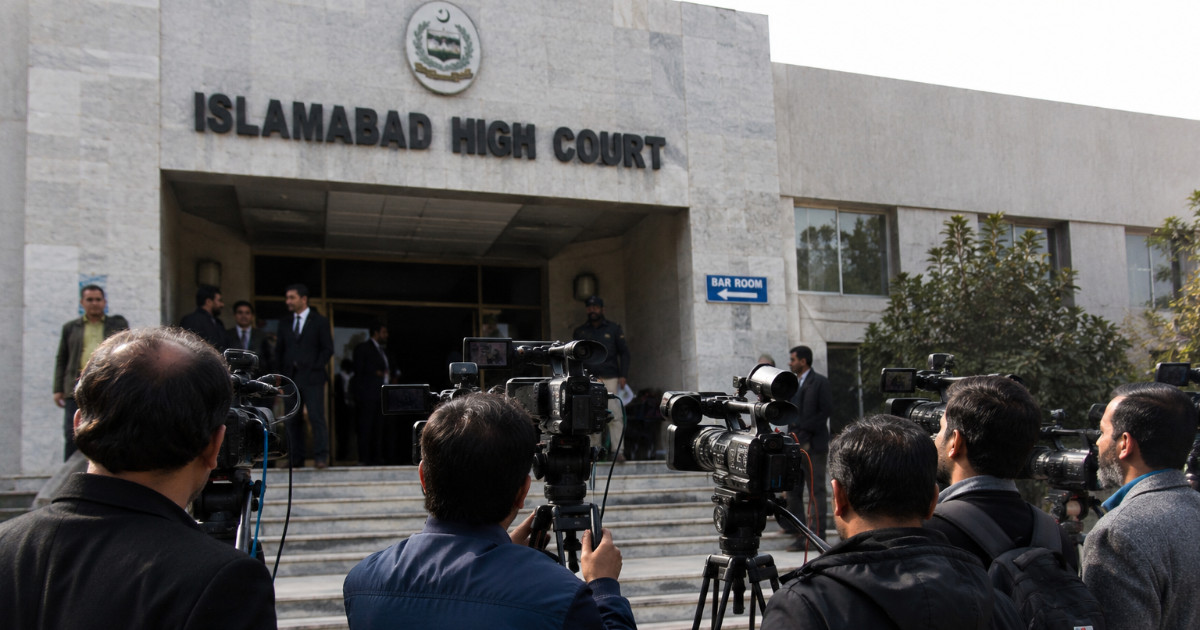
In South Asia, political reporting has also displayed elements of pack journalism. During high-profile court proceedings in Pakistan, such as constitutional cases heard by the Supreme Court of Pakistan, multiple television channels and news websites often rely on the same courtroom updates, statements from lawyers, and briefings provided outside the court. As a result, headlines and story angles across different outlets can appear nearly identical.
Another example emerged during major government announcements about digital regulation. When Pakistan introduced measures affecting online platforms under the Prevention of Electronic Crimes Act and related regulatory frameworks, many news organizations reported the development simultaneously, using the same official statements and ministry briefings as their primary sources.
These examples illustrate how shared access to information and competitive pressures can lead to similar reporting across outlets, even when organizations operate independently.
The challenge for modern newsrooms
Pack journalism is a long-recognized feature of the media ecosystem, shaped by newsroom routines, professional competition, and the realities of modern news production. While it can help amplify important developments and ensure that major events receive widespread attention, it can also limit diversity in reporting when too many outlets follow the same narrative path.
For readers and media observers, understanding pack journalism provides insight into how news agendas form and why certain stories dominate headlines. As journalism continues to evolve in an era of digital platforms, data-driven decisions, and emerging technologies, the challenge for newsrooms remains the same: balancing speed and competition with originality, independence, and depth in reporting.
RELATED JOURNALISM TERMS: Readers interested in pack journalism may also find these JournalismPakistan explainers useful:
PHOTO: AI-generated; for illustrative purposes
Key Points
- Definition: reporters from different outlets follow the same angles, sources and narratives.
- Causes include competitive pressure, newsroom routines and reliance on common sources.
- Digital monitoring and social media accelerate and amplify pack behavior.
- Results often include uniform coverage and marginalization of less-prominent stories.
- Solutions involve editorial emphasis on independent reporting and source diversity.
Key Questions & Answers
What is pack journalism?
Pack journalism is when reporters at multiple outlets converge on the same angles, sources and narratives; coverage across platforms becomes synchronized.
Why does pack journalism happen?
It stems from competitive pressure, newsroom routines and real-time digital monitoring; social media trends often push reporters toward identical leads.
Is this a new phenomenon?
No, pack behavior has long been observed in reporting, especially politics; the digital era has increased its speed and reach.
How can newsrooms reduce pack coverage?
Editors can encourage independent beats, diversify sources and allow time for original investigation; policies that reward distinct angles help too.
Relevant Topics
Ask AI: Understand this story your way
AI EnabledDig deeper, ask anything — get instant context, background, and clarity.
Disclaimer: This feature is powered by AI and is intended to help readers explore and understand news stories more easily. While we strive for accuracy, AI-generated responses may occasionally be incomplete or reflect limitations in the underlying model. This feature does not represent the editorial views of JournalismPakistan. For our full, verified reporting, please refer to the original article.