
Why Punjab's district journalists are working second jobs to survive
JournalismPakistan.com | Published: 14 July 2026 | Wajid Ali
Join our WhatsApp channel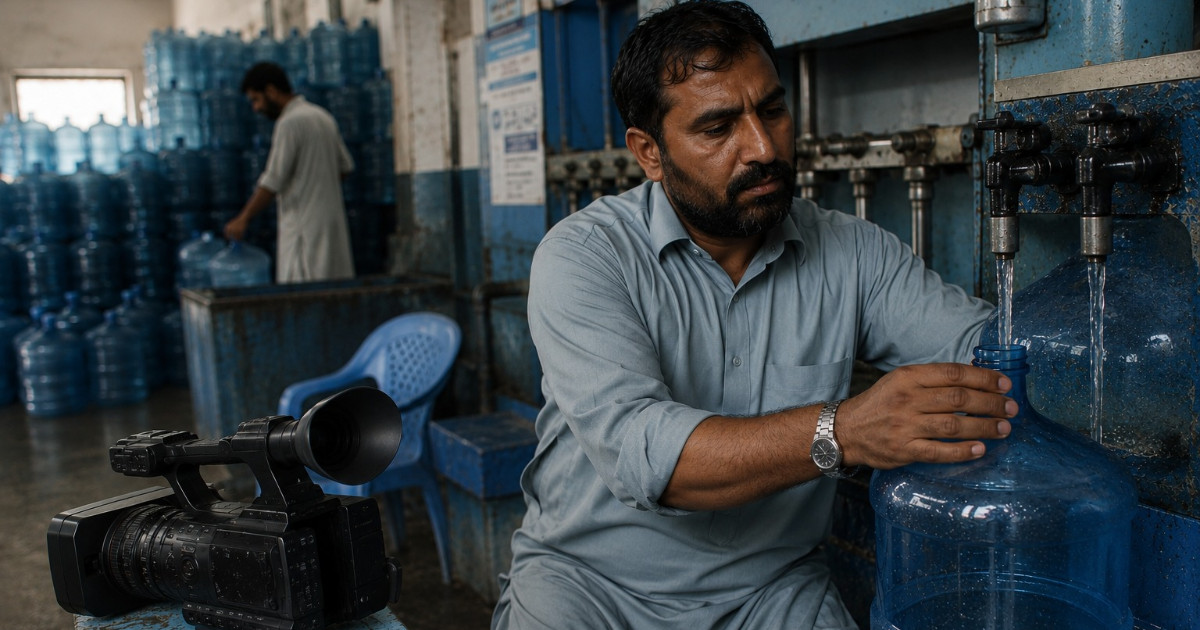
Reporters across Punjab districts now juggle journalism and second jobs, running shops, tuition centres or filtration plants, because newsroom pay is insufficient to meet living costs. This dual work keeps reporting going but strains reporters' time.Summary
Every afternoon, long after the morning headlines have faded, Arshad Khan settles onto a plastic chair beside a humming water filtration plant in Jhang. Rows of empty 19-litre bottles wait to be cleaned, filled, capped, and loaded for delivery. For every bottle sold, he earns about Rs40.
It is not the career he imagined when he entered journalism more than a decade ago. Nor is it the work that earned him recognition as Samaa TV's district correspondent in central Punjab. Yet today, the filtration plant—not the newsroom—is what keeps food on the table for his family of six.
When breaking news interrupts the routine, Khan leaves a hired worker to oversee the machines, grabs his camera, and heads out to report. Once the story is filed, he returns to the plant, where another batch of bottles awaits.
"Journalism is still my profession," he says. "This is simply what pays the bills."
His experience captures a quiet reality that has spread across much of Punjab's local media landscape. Behind television reports and newspaper bylines are district correspondents who increasingly rely on businesses, tuition centres, ride-hailing services, shops, farms, or public relations work to survive because journalism alone no longer provides a dependable income.
What was once an occasional side hustle has become, for many, the business model that keeps local journalism alive.
A profession sustained by second jobs
Across districts including Jhang, Faisalabad, Sargodha, and Gujranwala, reporters describe lives divided between journalism and entirely different occupations. Some teach after filing stories. Others operate retail businesses, drive for ride-hailing platforms or manage small family enterprises. Several acknowledged taking communications or public relations work despite the ethical dilemmas such arrangements can create.
Most preferred not to discuss these jobs publicly.
Within Pakistan's newsroom culture, a second occupation is often seen as a sign that a journalist has failed professionally. Correspondents, therefore, tend to hide the work that actually sustains their households.
Yet interviews conducted for this investigation suggest the phenomenon has become widespread among district reporters, particularly those working without formal employment contracts or regular salaries.
"Many of our members have not received salaries for months, and some haven't been paid properly for years," says Liaquat Anjum, president of the Jhang Press Club. "They continue carrying press cards because journalism is their identity, but their families survive on income earned somewhere else."
That economic reality has implications extending far beyond personal hardship.
When a reporter depends on a politician's public relations contract, a local business partnership or another influential client for income, editorial independence can become more difficult to maintain. Journalists facing financial insecurity may avoid stories that could jeopardize those relationships or expose them to retaliation.
Several senior journalists interviewed for this story argued that economic vulnerability has become one of the least acknowledged threats to press freedom in Pakistan.
Journalism's weakest link
Pakistan's district correspondents occupy a crucial position in the country's news ecosystem.
They are usually first to reach scenes of political protests, sectarian violence, floods, road accidents, election disputes, and crime. National television channels and newspapers rely heavily on their reporting to cover communities far from major cities.
Yet they often remain the least protected members of the profession.
Unlike staff reporters based in Islamabad, Lahore, or Karachi, many district correspondents work without appointment letters, health insurance, legal protection, or clearly defined employment terms. Some receive modest retainers. Others are compensated irregularly. Many rely partly or entirely on commissions generated through local advertising.
As advertising revenues have shrunk and traditional business models have weakened, those commissions have largely disappeared.
The result is a growing class of journalists who continue performing full-time reporting duties while financing their lives through unrelated work.
A crisis years in the making
The financial pressures facing Pakistan's media industry did not emerge overnight.
Over the past several years, media organisations have grappled with declining advertising revenues, rising operating costs, delayed government advertising payments and growing competition from digital platforms.
The consequences have become increasingly visible.
Industry salary surveys compiled earlier this year placed entry-level journalism salaries between roughly Rs35,000 and Rs60,000 per month, although many journalists say delayed payments have become as significant a problem as low wages themselves. A parliamentary committee has recommended introducing a minimum monthly salary of Rs37,500 for media workers and urged stronger enforcement mechanisms against organisations that fail to pay employees.
Meanwhile, layoffs have accelerated across television and digital media.
In May, Suno News dismissed more than 160 employees without paying April salaries, prompting protests by parliamentary reporters and temporary suspension of federal government advertising to the channel. Although advertising resumed after management pledged to address outstanding dues, dismissed employees say many remain without their jobs.
The episode became one of the clearest public illustrations of a wider industry problem.
An April assessment by the Rawalpindi-Islamabad Union of Journalists documented layoffs, salary delays, and reductions in employee benefits across several media organisations. The report also highlighted cuts to field allowances and the withdrawal of transport facilities for women employees at some outlets.
For district correspondents already operating on the margins, these developments further weakened an already fragile system.
Beyond unpaid salaries
The consequences of financial instability extend beyond household budgets.
Freedom of expression organisations have repeatedly documented increasing threats against Pakistani journalists, particularly those covering local politics, land disputes, organised crime and governance.
The International Federation of Journalists' latest South Asia Press Freedom Report recorded more than 250 media rights violations across the region during 2024-25, including 20 journalist killings. Pakistan experienced one of its deadliest years for journalists in decades.
Many of the reporters facing the greatest physical risks are district correspondents working far from major newsrooms.
Several media experts interviewed for this investigation argued that economic insecurity compounds those dangers.
Without formal contracts, reporters often lack institutional backing if threatened, sued, or assaulted while reporting. Few have legal assistance, insurance or financial protection should they become unable to work.
In practice, they shoulder many of the risks associated with frontline journalism while receiving few of the protections afforded to permanent employees.
Building parallel careers
For Massab Farooq, journalism has remained both a profession and a calling for more than a decade.
The ARY News correspondent from Jhang also runs a private school—an enterprise his employer is aware of and does not object to.
He says the school exists for a simple reason.
"Journalism alone couldn't support my family."
Farooq recalls asking about a salary increase after one was publicly announced by the network's owner. He says he and fellow correspondents are still waiting.
"If I had waited for the raise, my children would have waited for their school fees," he says. "The school allows me to continue being a journalist."
His story reflects a pattern echoed by journalists elsewhere in Punjab.
Instead of leaving journalism entirely, many are creating parallel careers that allow them to remain in the profession while reducing dependence on increasingly uncertain newsroom incomes.
The arrangement keeps experienced reporters in the field, but it also raises difficult questions about workload, burnout, and conflicts of interest.
Women face additional pressures
For freelance journalist Manahil Sarfraz, the financial equation is even more complicated.
Reporting from Gujranwala for We News and Independent Urdu, she supplements her income by running an online candle-making business.
"Freelance reporting isn't enough for bread and butter," she says. "Media organisations aren't doing enough for workers, so we have to create our own opportunities."
Women's rights advocates argue that economic instability affects female journalists in distinct ways.
When organisations reduce costs, transportation services, field allowances, and institutional support are often among the first benefits to disappear. Those cuts can make field reporting more difficult and increase safety concerns, particularly outside major cities.
The Rawalpindi-Islamabad Union of Journalists' recent assessment documented the discontinuation of employer-provided transport for women employees at several organisations, reinforcing concerns raised by digital rights advocates that financial pressures can have broader consequences for workplace safety and inclusion.
For many women working in district journalism, maintaining a second source of income has become not simply a financial decision but a strategy for remaining in the profession.
When journalism no longer pays
The economic crisis confronting district correspondents mirrors a broader transformation in Pakistan's media industry. Years of declining revenues, shrinking advertising budgets, and changing audience habits have steadily eroded the financial foundations on which traditional news organisations were built.
For journalists in the districts, the effects have been immediate. For media executives, advertisers, and industry representatives, they are symptoms of a business model struggling to adapt.
The debate is no longer over whether the crisis exists. It is over who bears responsibility for it—and how it can be fixed.
'A journalist without a contract is a journalist without a shield'
Press freedom in Pakistan is typically discussed through the lens of arrests, censorship, legal cases, and physical attacks. But several media leaders interviewed for this investigation argue that financial insecurity has become an equally significant threat.
Qamar Bhatti of the Punjab Union of Journalists believes employment protections lie at the heart of the problem.
"A journalist without a contract is a journalist without a shield," he says. "Without an appointment letter, there is no legal standing, no insurance and often no institution willing to stand behind a reporter when threats emerge."
District correspondents, he argues, occupy the weakest position within the profession. Many work continuously for years while remaining outside formal employment structures, making it difficult to claim unpaid wages or pursue legal remedies when disputes arise.
The consequences extend beyond labour rights.
Reporters who rely on politicians, business owners, or other influential figures for supplementary income may find themselves under pressure to avoid sensitive investigations. Others may simply withdraw from difficult reporting because they cannot afford the personal or financial risks.
Several journalists interviewed for this story described an environment where economic survival increasingly shapes editorial decisions, particularly in smaller cities where personal, political and professional relationships often overlap.
The hidden cost to journalism
The impact of financial instability is not measured only in unpaid salaries.
It is also reflected in stories that are never pursued.
Senior journalist Mazhar Abbas says deteriorating working conditions ultimately affect the quality of journalism itself.
"If professionals are not paid properly," he says, "there is always the danger that motivation declines, experienced journalists leave the profession, and misinformation fills the space they leave behind."
That warning echoes concerns expressed by press freedom organisations internationally, which increasingly view economic sustainability as a prerequisite for independent journalism.
District correspondents frequently cover issues involving land disputes, local government, crime, and political patronage, subjects that often place them in direct contact with influential local actors. When reporters lack institutional backing or financial security, those assignments become considerably more difficult.
Several journalists interviewed for this investigation said colleagues have become more selective about which stories they pursue, particularly when reporting could jeopardise secondary sources of income or expose them to legal and financial consequences without support from employers.
While few acknowledged outright self-censorship, many described making pragmatic decisions based on economic realities.
Media owners say the crisis runs deeper than salaries
Industry representatives do not dispute that delayed salaries and financial hardship have become widespread.
They argue, however, that the underlying causes extend well beyond newsroom management.
Naveed Chaudhry, a member of the All Pakistan Newspapers Society (APNS), says the crisis now affects virtually every segment of Pakistan's media industry, including newspapers, television and digital outlets.
According to Chaudhry, shrinking advertising revenue has left many organisations struggling to meet operating costs, forcing difficult decisions about staffing and expenditure.
He nevertheless rejects the notion that journalism itself has become economically unviable.
Instead, he argues that policy decisions over many years have weakened independent media while failing to create a sustainable environment for news organisations.
Chaudhry also believes management practices have contributed to the problem. In some organisations, he says, key financial and administrative decisions are increasingly made by executives with limited newsroom experience, creating a disconnect between corporate priorities and the realities faced by working journalists.
District correspondents, he says, have suffered disproportionately.
Historically, many local reporters received modest salaries supplemented by commissions earned through local advertising sales. That arrangement worked while businesses continued advertising through traditional media.
As those advertising revenues declined, the commissions largely disappeared. In many cases, correspondents found themselves without either meaningful commissions or reliable salaries.
"The people suffering most," Chaudhry says, "are the correspondents working in the districts."
Following the advertising money
While media organisations frequently cite declining advertising revenue, advertising professionals argue that the money has not disappeared.
It has simply moved elsewhere.
Mussab Bin Iqbal, a senior account manager at advertising agency Interflow Communications, says brands have steadily shifted spending toward digital platforms because they provide something traditional television increasingly cannot: measurable results.
"Advertisers today want data," he says. "On digital platforms, they can measure reach, engagement, and conversions almost immediately."
Television advertising, by comparison, has become harder to justify.
Brands increasingly question audience measurement systems, while digital platforms offer sophisticated targeting tools that allow campaigns to reach specific demographics at significantly lower cost.
Social media platforms such as Facebook, YouTube, and TikTok now compete directly for advertising budgets that once flowed almost automatically toward television.
Even companies that continue advertising on television often allocate a growing share of their budgets to digital campaigns.
For regional journalism, the consequences have been particularly severe.
Without independently verified audience data or substantial digital reach, district media outlets struggle to compete for advertising against global technology platforms capable of demonstrating precise performance metrics.
Iqbal argues that many Pakistani broadcasters have adapted too slowly.
Some continue pricing advertising according to assumptions formed during television's peak years, while audiences—particularly younger viewers—have increasingly migrated online.
"The advertising money is still there," he says. "But it is being spent where the audiences have already gone."
A promise made to regulators
Mazhar Abbas believes the debate over financial hardship cannot ignore an important question of accountability.
When television channels apply for licences, he notes, they are required to demonstrate financial capacity to operate sustainably.
If organisations later prove unable to meet basic employment obligations, Abbas argues, regulators should examine whether those commitments remain valid.
He is particularly concerned about the status of district correspondents, many of whom continue working without formal employment contracts despite years of service.
"In many cases," he says, "they have little more than an identification card."
While acknowledging the financial pressures confronting the industry, Abbas argues that responsibility ultimately rests with employers to ensure those gathering the news receive fair treatment and basic employment protections.
Newsroom management responds
Samaa TV, whose district correspondent Arshad Khan is featured in this investigation, acknowledged that delayed payments have affected some employees but said the situation reflects wider challenges facing Pakistan's media industry rather than deliberate policy.
A senior newsroom executive, responding to detailed questions from JournalismPakistan, said salary delays stem from cash-flow pressures caused by declining advertising revenue and rising operational costs.
The executive said management remains committed to clearing outstanding payments as financial conditions improve.
Asked why district correspondents often appear to receive payments later than newsroom-based staff, the executive said the organisation does not intentionally prioritise one category of employees over another. Financial decisions, the executive said, are made according to operational requirements and available resources while seeking to keep news operations functioning.
Regarding previously announced salary increases that some correspondents say have not materialised, the executive said implementation depends on the company's financial position rather than any change in management policy.
The executive added that the long-term solution lies in diversifying revenue streams, strengthening digital operations, improving efficiency, and creating a more stable advertising environment for the industry as a whole.
The response reflects a broader position increasingly adopted by media organisations: while acknowledging financial hardship, they argue that sustainable improvements depend on structural reforms affecting the entire media economy rather than individual newsrooms alone.
Can local journalism be saved?
The financial pressures bearing down on Pakistan's media industry are widely acknowledged. Less clear is who should be responsible for fixing them.
Journalists point to employers that continue operating while delaying salaries. Media owners cite shrinking revenues and a collapsing advertising model. Industry representatives argue that government policies have weakened independent media. Regulators say they act when complaints reach them, but cannot intervene unless formal procedures are initiated.
What emerges is a system in which responsibility is shared, but accountability is often elusive.
The government's most powerful lever
Punjab's Directorate General Public Relations (DGPR) occupies an influential position in the media economy through the allocation of government advertising.
Muhammad Siddique Kayani, an assistant director at DGPR Punjab, says the department investigates complaints it receives regarding non-payment of media workers and can move to suspend government advertising to organisations found violating applicable rules.
He says layoffs across the media industry remain a matter of concern and acknowledges that many journalists continue facing financial hardship.
The limits of that approach, however, became evident during the Suno News layoffs earlier this year.
Government advertising on the channel was suspended shortly after more than 160 employees were dismissed without receiving their salaries. Within a day, following assurances from management that outstanding dues would be addressed, the suspension was lifted.
For many former employees, however, the restoration of advertising did not result in the restoration of their jobs.
The episode highlighted both the influence and the limitations of advertising sanctions as an enforcement tool. While governments can act quickly to pressure media organisations, sustained monitoring and long-term compliance remain far more difficult.
Welfare cannot replace employment
Press clubs across Punjab have increasingly found themselves responding to crises that once would have been handled by employers.
Salik Nawaz, finance secretary of the Lahore Press Club, says requests for emergency financial assistance have become noticeably more frequent in recent years.
The hardship cases no longer involve only junior reporters or freelancers. Increasingly, experienced journalists from district newsrooms are approaching press clubs seeking help with school fees, medical expenses and other essential household costs.
Press clubs, Nawaz says, can provide temporary relief but cannot solve the industry's underlying financial problems.
Their welfare funds were designed to assist journalists during exceptional circumstances, not to compensate for chronic failures in salary payments.
Contracts matter
For Liaquat Anjum, president of the Jhang Press Club, the most urgent reform is also one of the simplest.
Too many district correspondents, he says, continue working for years without formal appointment letters.
Without written contracts, journalists often struggle to establish their legal status as employees, making it significantly harder to pursue unpaid salaries or other employment benefits through existing labour mechanisms.
Employment documentation also carries practical implications beyond wages.
Formal contracts can strengthen access to legal protection, insurance, institutional backing, and workplace rights, protections that become particularly important when journalists face threats while reporting.
Several media experts interviewed for this investigation agreed that extending formal employment protections to district correspondents would represent one of the most meaningful structural reforms available.
Adapting to a changing media economy
Even if employment practices improve, few believe Pakistan's media industry can simply return to the business model that sustained it for decades.
Advertising has migrated toward digital platforms. Audiences increasingly consume news through smartphones rather than television bulletins or printed newspapers. Global technology companies now compete directly with local news organisations for advertising revenue.
Those shifts are unlikely to reverse.
Advertising executive Mussab Bin Iqbal argues that survival will depend on whether media organisations adapt to those realities rather than continue relying primarily on traditional television advertising.
That means investing in digital publishing, strengthening audience analytics, developing sustainable subscription or membership models where possible, and creating advertising products that compete more effectively in an increasingly data-driven marketplace.
The transition will not be easy, particularly for regional journalism, where resources remain limited.
But industry observers broadly agree that long-term sustainability will require innovation alongside stronger labour protections.
Responsibility begins in the newsroom
For veteran journalist Mazhar Abbas, however, structural reforms cannot absolve employers of their immediate responsibilities.
Media organisations, he argues, accepted financial obligations when applying for broadcasting licences and should ensure that the journalists producing their content receive salaries, employment protections and basic professional support.
He also cautions that replacing experienced reporters with cheaper or less qualified staff carries long-term consequences for journalism itself.
When skilled journalists leave the profession because they can no longer support their families, rebuilding that expertise becomes far more difficult.
The loss extends beyond individual careers.
It affects the quality, depth, and credibility of reporting available to the public.
Building independent futures
Some journalists have concluded they can no longer depend entirely on traditional employers.
Senior journalist Qazafi Butt has responded by building his own digital platform alongside his newsroom work.
His decision reflects a broader trend across Pakistan's media landscape, where experienced journalists are increasingly launching YouTube channels, newsletters, podcasts and independent digital ventures.
For many, these projects serve two purposes.
They create additional income while allowing journalists to retain editorial independence if newsroom jobs disappear.
The approach does not solve the industry's wider economic challenges, but it offers individuals a measure of resilience in an increasingly uncertain profession.
A profession at a crossroads
Pakistan's district correspondents remain indispensable to the country's journalism.
They report from flood-hit villages, election rallies, crime scenes, district courts, and remote communities that rarely receive sustained national attention. They are often the first to verify breaking news and the last to leave after cameras from larger cities have gone.
Yet many continue performing that work without the financial security traditionally associated with full-time employment.
Their experiences suggest that the debate over press freedom can no longer focus solely on censorship, violence, or restrictive legislation.
Economic insecurity has become an equally significant challenge.
A journalist who is unsure when the next salary will arrive, who relies on unrelated work to support a family, or who lacks institutional protection when facing threats, confronts constraints that are different from censorship—but potentially just as damaging to independent reporting.
Addressing those pressures will require action from multiple stakeholders.
Media organisations will need to strengthen employment practices and modernise business models.
Governments and regulators will need to enforce labour protections consistently and transparently.
Industry bodies must continue advocating for sustainable funding mechanisms while promoting accountability among their own members.
And journalists themselves will continue adapting, as many already have, to a profession undergoing profound change.
Back at the water plant
As another working day ends in Jhang, Arshad Khan returns to the filtration plant after covering the day's news.
The cameras have been packed away. The headlines have moved on.
The bottles, however, are still waiting.
Tomorrow, he will likely file another report for television before returning to the business that now supports his household.
He says he has never wanted to leave journalism.
Like many district correspondents across Punjab, he continues reporting because he believes local communities deserve to have their stories told.
But his experience also raises a question that extends far beyond one district or one newsroom.
If the journalists responsible for documenting public life cannot earn a living from journalism itself, what does that mean for the future of local news?
For many of Punjab's district correspondents, that question is no longer theoretical.
It is part of their daily routine, measured in stories filed, businesses run, and families supported while waiting for the next salary that may or may not arrive.
ABOUT THE WRITER: The author is a digital journalist covering climate change, artificial intelligence, and technology, with a focus on in-depth reporting, insightful storytelling, and evidence-based analysis. Contact: [email protected]
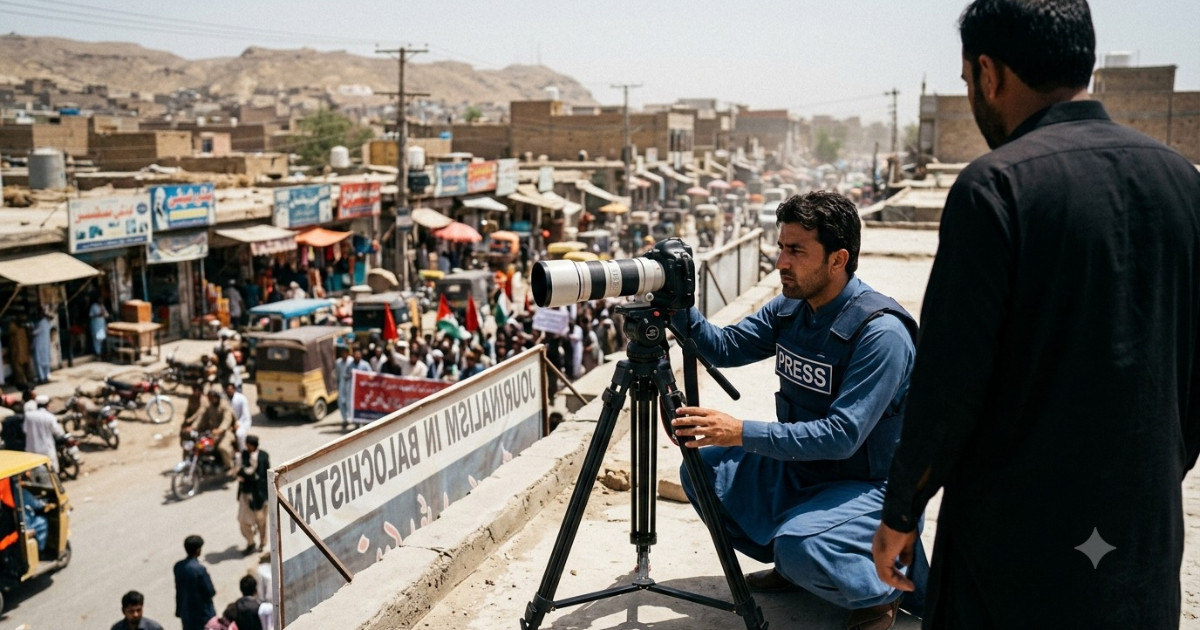
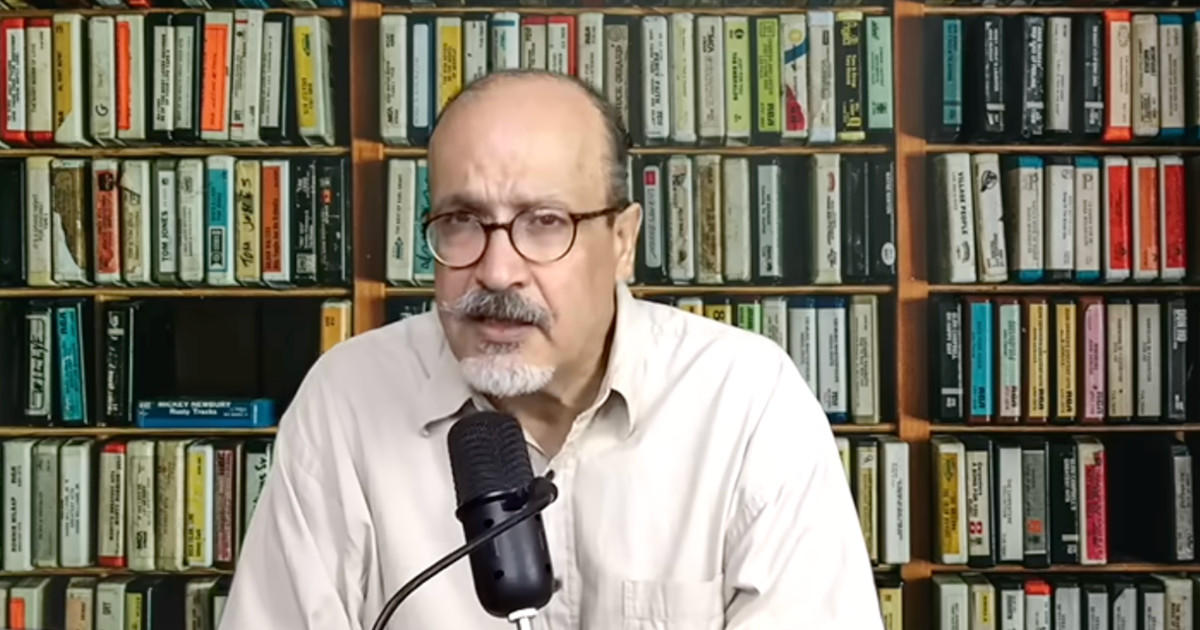
PHOTO: An AI-generated representation inspired by the story; it does not depict the actual individual.
Key Points
- Arshad Khan, a Samaa TV district correspondent in Jhang, supplements reporting by working at a water filtration plant.
- Many reporters run shops, tuition centres, ride services, farms or do PR work alongside journalism to earn enough.
- Declining newsroom pay, unstable contracts and rising living costs push journalists toward second jobs.
- Second jobs help sustain local reporting but reduce time for newsgathering and raise potential conflicts of interest.
- The trend is widespread across Punjab districts including Jhang, Faisalabad, Sargodha and Gujranwala.
Key Questions & Answers
Why are district journalists taking second jobs?
Because newsroom pay is often low and contracts unstable, reporters take additional work to cover living costs and support their families.
What kinds of second jobs do reporters do?
They work in shops, tuition centres, filtration plants, ride‑hailing, farms, small businesses or offer PR and freelance services.
How does holding a second job affect reporting?
While it helps reporters survive financially, it limits time for reporting, can delay coverage and may create conflicts of interest.
Are media organisations addressing the issue?
Many local outlets lack resources to increase pay or offer stable contracts, so systemic support and funding remains limited.
Relevant Topics
Ask AI: Understand this story your way
AI EnabledDig deeper, ask anything — get instant context, background, and clarity.
Disclaimer: This feature is powered by AI and is intended to help readers explore and understand news stories more easily. While we strive for accuracy, AI-generated responses may occasionally be incomplete or reflect limitations in the underlying model. This feature does not represent the editorial views of JournalismPakistan. For our full, verified reporting, please refer to the original article.