
The State of Pakistan Media: June 2026
JournalismPakistan.com | Published: 30 June 2026 | JP News Desk
Join our WhatsApp channel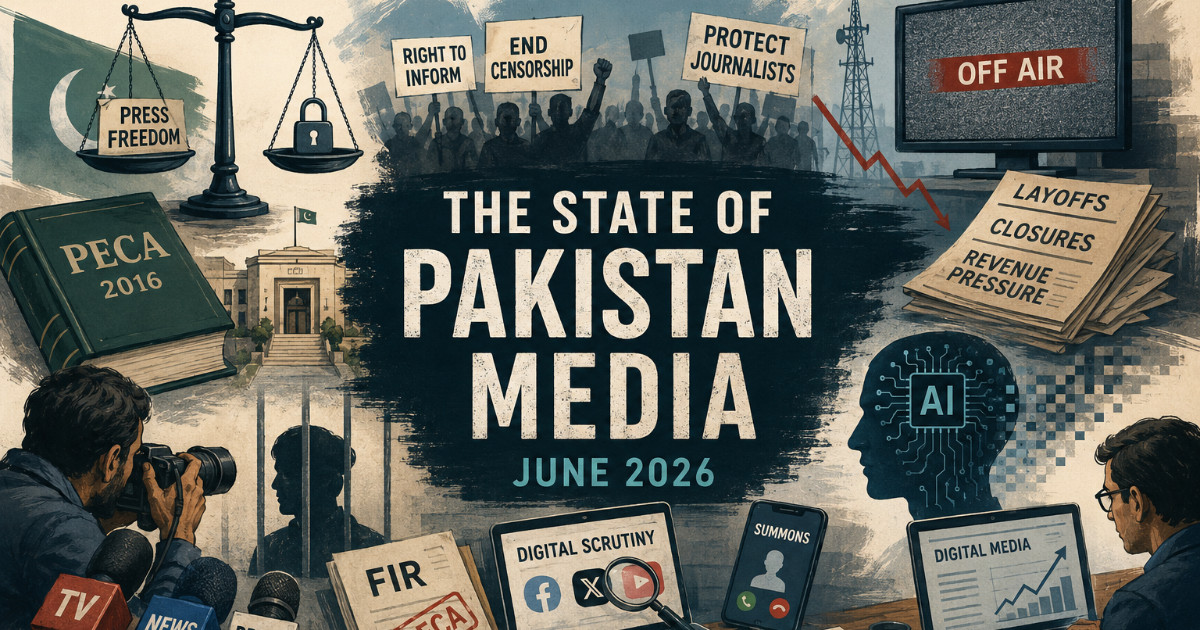
June 2026 was turbulent for Pakistan's media as journalists faced arrests, PECA probes, missing reporters and online harassment. Newsrooms faced financial strain, layoffs and the shutdown of a major TV channel; debates over AI and influencer taxes intensified.Summary
Executive summary
June 2026 proved to be one of the most consequential months for Pakistan's media industry this year. Journalists faced arrests, legal investigations, disappearances, online harassment, and growing regulatory scrutiny, while news organizations continued to grapple with financial pressures, layoffs, and the closure of a major television channel.
The month also saw important conversations about journalism itself. Artificial intelligence emerged as a serious newsroom topic, debates over verification and editorial standards intensified, and digital creators became part of national policy discussions as the government proposed taxation measures affecting influencers.
Taken together, June reflected a media industry balancing immediate challenges with long-term transformation. Questions surrounding press freedom, economic sustainability, technological change, and public trust continued to shape Pakistan's journalism landscape.
Press freedom watch
Press freedom remained the defining issue throughout June.
Journalist Razi Tahir became the focus of one of the month's most closely watched legal cases. After obtaining bail in proceedings linked to the Prevention of Electronic Crimes Act (PECA), he later secured an extension of his pre-arrest bail before ultimately being arrested in connection with a social media post. The case drew widespread concern among journalists and rights advocates over the continued use of cybercrime legislation against members of the media.
Concern also spread after GNN journalist Yasir Ayaz Khan was reported missing from Islamabad. Following several days of uncertainty, he was located in Swabi and safely returned, bringing relief to colleagues while renewing concerns about journalists' safety.
Journalist Sohrab Barkat was released on bail after spending ten days in custody under PECA, while columnist Taufiq Butt and several television journalists were summoned by the National Cyber Crime Investigation Agency over published content and television broadcasts.
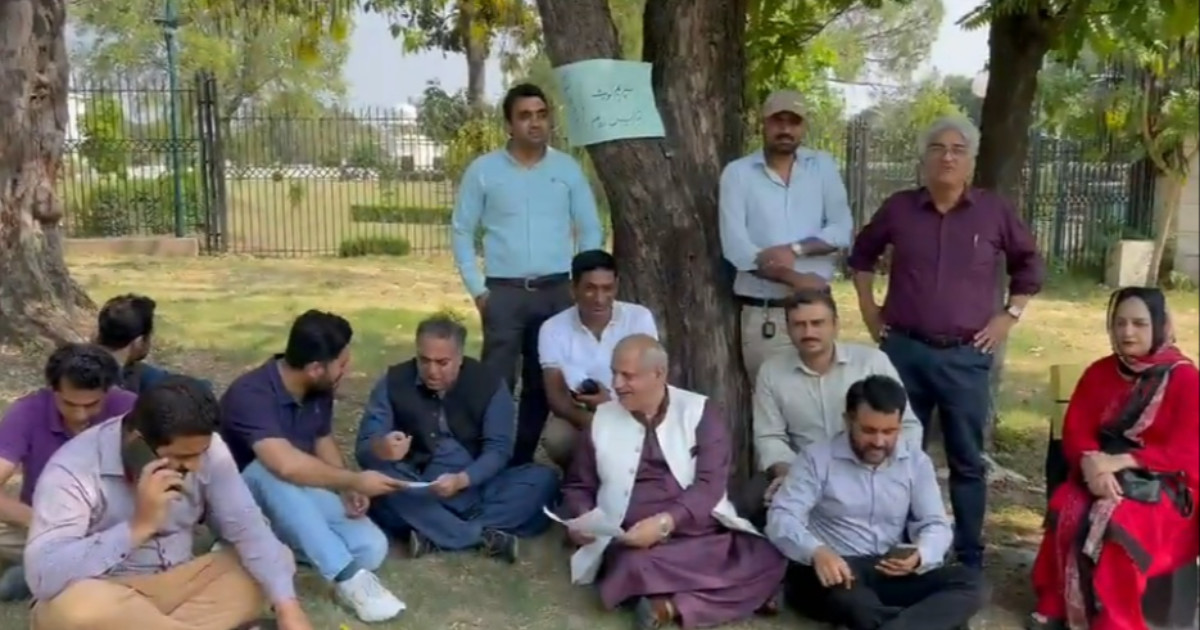
Journalists covering Pakistan's Supreme Court protested after losing their longstanding press room inside the court building and facing new restrictions on media access, prompting an unusual open-air newsroom outside the apex court.
The profession also mourned the killing of journalist Lala Asrafeel in Balochistan, while journalist Javeria Siddique publicly described an ongoing online harassment campaign against her. Separately, the Human Rights Council of Pakistan questioned the manner in which authorities attempted to proceed against journalist Razi Tahir.
Law, courts & regulation
Legal and regulatory developments occupied an increasingly central place in Pakistan's media landscape during June.
Multiple investigations, FIRs, summonses, and court proceedings involving journalists demonstrated the expanding role of PECA and cybercrime enforcement in matters relating to journalism and digital expression.
The month also witnessed continuing debate over the relationship between broadcast regulation and cyber enforcement as authorities pursued cases involving television content that later circulated online. These developments highlighted the increasingly blurred boundaries between traditional broadcasting and digital publishing.
Meanwhile, the Pakistan Electronic Media Regulatory Authority ordered a 15-day suspension of Geo News after it aired a Muharram documentary that the regulator said violated broadcasting rules relating to religious content and public sensitivity.
Media business & industry
Economic pressures continued to reshape Pakistan's media industry.
The Karachi Union of Journalists condemned layoffs at Aik News, describing them as another sign of worsening job insecurity affecting media workers across the country.
One of the month's biggest industry stories came with the closure of ATV, ending an important chapter in Pakistan's broadcasting history while highlighting the fragile financial position of many legacy broadcasters.
The shutdown of Metro One also sparked debate over ownership, licensing, corporate governance, and management responsibility, moving the discussion beyond regulatory decisions alone.
Parliamentary disclosures, meanwhile, revealed that the federal government had spent more than Rs14.1 billion on advertising across electronic, print, and social media platforms since 2022, underlining the continuing importance of government advertising within Pakistan's media economy.
Journalism & ethics
June also became a month of self-reflection for Pakistan's journalism community.
The collapse of allegations aired by Public News regarding government spending prompted wider discussion about verification, sourcing, editorial responsibility, and the risks of amplifying sensational claims before establishing their accuracy.
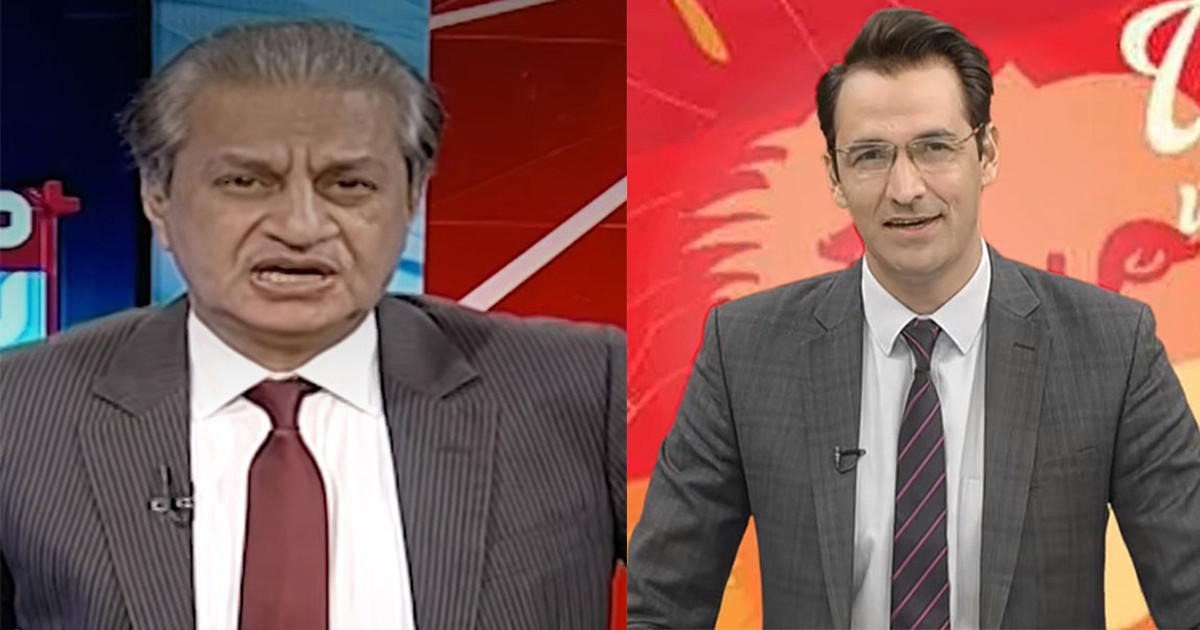
Another debate emerged following an on-air exchange between senior journalists over Kashmiri identity, illustrating how broadcast journalism, political commentary, and social media increasingly intersect in shaping public discourse.
Together, these discussions reinforced that public trust remains journalism's most valuable asset and that accuracy continues to be the profession's strongest defense.
Digital media & AI
Artificial intelligence moved further into Pakistan's newsroom conversation during June.
Veteran journalist Amar Guriro argued that AI should strengthen journalism rather than replace it, describing the technology as another medium through which journalists can better serve audiences while preserving professional standards.
At the same time, a nationwide survey found broad public support for taxing social media influencers, provided such measures do not discourage emerging digital creators, highlighting the growing influence of Pakistan's digital economy.
These developments reflected an industry increasingly focused on how technology will reshape journalism without undermining its core values.
JournalismPakistan originals
JournalismPakistan continued to expand its original reporting during June through enterprise journalism and in-depth analysis.
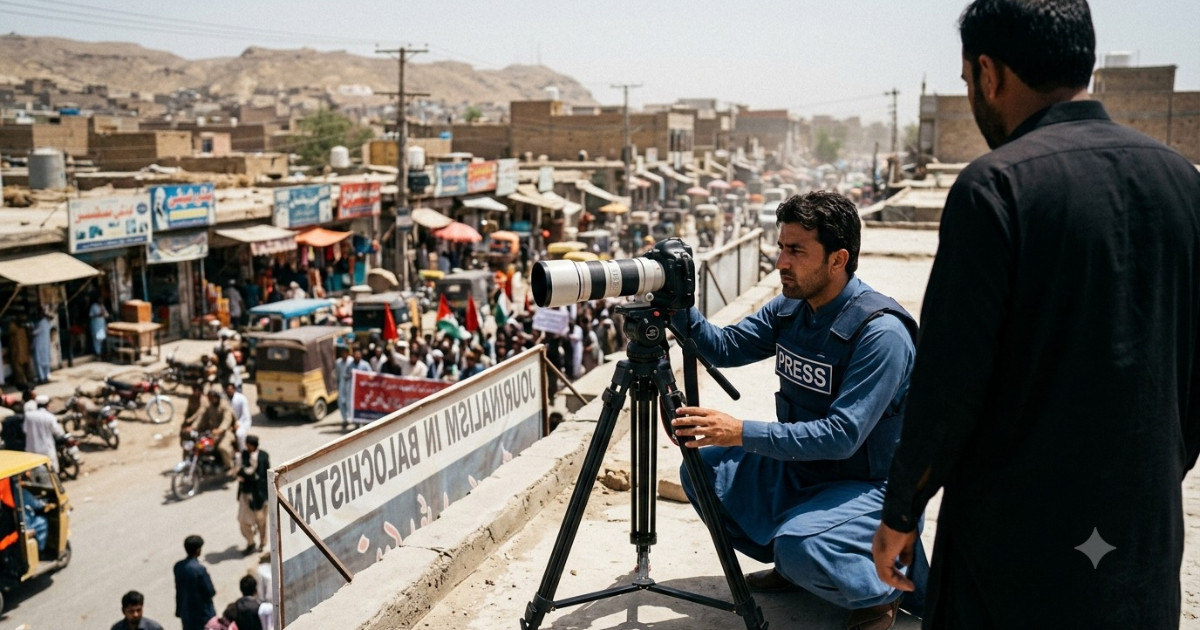
Among the month's standout work was a special report examining the pressures confronting journalists in Balochistan, where security concerns, intimidation, and competing pressures continue to limit independent reporting.
The publication also produced a historical feature marking ATV's closure, a detailed tribute to legendary cricket writer Qamar Ahmed, and exclusive reporting exploring the emergence of artificial intelligence in Pakistan's media industry. These stories reinforced JournalismPakistan's commitment to combining daily news coverage with original reporting and deeper context.
Quote of the month
"Artificial intelligence should strengthen journalism, not replace it."
— Amar Guriro, founder of Pakistan's first AI-powered news platform
By the numbers
1 journalist killed
1 journalist reported missing and later found safe
2 journalists arrested or detained in major cases
Several journalists summoned by NCCIA
1 television channel closed (ATV)
1 major newsroom layoffs controversy (Aik News)
More than Rs14.1 billion in government advertising disclosed
15-day suspension ordered against Geo News
Timeline
Early June — GNN journalist Yasir Ayaz Khan is reported missing.
June 8–9 — Razi Tahir secures bail in a PECA-related case.
June 10 — NCCIA summons journalists over televised allegations.
Mid-June — Supreme Court journalists lose their press room and establish an open-air newsroom in protest.
June 19 — ATV ceases broadcasting after decades on air.
Late June — Razi Tahir is arrested following court proceedings.
Late June — PEMRA orders a 15-day suspension of Geo News.
Throughout June — Artificial intelligence, newsroom ethics, media sustainability, and digital regulation dominate industry discussions.
Looking ahead
June 2026 demonstrated that Pakistan's media industry is confronting several challenges simultaneously. Journalists continue to operate in an environment shaped by legal scrutiny, safety concerns, financial uncertainty, and rapid technological change.
Yet the month also highlighted the resilience of Pakistan's journalism community. Newsrooms continued to report, investigate, adapt, and innovate while engaging in important conversations about ethics, artificial intelligence, sustainability, and public trust.
As the second half of 2026 begins, these themes are likely to remain central to the country's evolving media landscape, making the months ahead just as significant for journalism as those that have passed.
ATTRIBUTION: The State of Pakistan Media is JournalismPakistan's flagship monthly review, providing a comprehensive assessment of the developments, challenges, and emerging trends shaping journalism and the media industry across Pakistan.
Key Points
- Journalists faced arrests and legal actions, including high-profile PECA-related cases.
- Reports of disappearances and online harassment raised press freedom concerns.
- News organizations struggled with financial strain, layoffs and a major TV channel closure.
- Artificial intelligence, verification and editorial standards became central newsroom topics.
- Policy debates expanded to include influencer taxation and regulatory scrutiny of digital creators.
Key Questions & Answers
What were the main threats to journalists in June 2026?
Journalists faced arrests, PECA-related legal actions, reports of disappearances and increased online harassment, prompting concern from press freedom advocates.
How has PECA been used against media workers?
Authorities have invoked the Prevention of Electronic Crimes Act (PECA) in cases against journalists for social media posts and online content, raising questions about legal overreach.
Why did a major TV channel close?
The closure followed sustained financial pressures across the sector, including reduced advertising revenue, operational costs and broader economic challenges facing news organizations.
What role did AI and digital creators play in June's media discussion?
AI emerged as a significant newsroom issue, influencing verification and editorial practices, while policymakers debated taxation and regulation for influencers and digital creators.
Relevant Topics
Ask AI: Understand this story your way
AI EnabledDig deeper, ask anything — get instant context, background, and clarity.
Disclaimer: This feature is powered by AI and is intended to help readers explore and understand news stories more easily. While we strive for accuracy, AI-generated responses may occasionally be incomplete or reflect limitations in the underlying model. This feature does not represent the editorial views of JournalismPakistan. For our full, verified reporting, please refer to the original article.