Lawsuit against The Atlantic fuels press freedom concerns Meera walkout puts focus on Irshad Bhatti's interview ethics One article, no newsroom: Viral piece sparks debate on Pakistan media From regulation to resignations: Pakistan's media fault lines Asia press freedom: A week of pressure and progress Five reasons slow news days strengthen journalism Press freedom review: Detentions, digital control, and industry upheaval Chilling effect in media: The unseen pressure behind newsroom decisions South Asia sees 250 media rights violations in a year Media coverage of violence against women falls sharply globally Attack on Assamese newspaper deepens press safety concerns London arrests over Iran International attack The JournalismPakistan Global Media Brief | Edition 16 | April 17, 2026 Jahanzaib Haque takes helm as Nukta chief editor Khaleej Times at 48: A legacy newspaper navigating the digital age Lawsuit against The Atlantic fuels press freedom concerns Meera walkout puts focus on Irshad Bhatti's interview ethics One article, no newsroom: Viral piece sparks debate on Pakistan media From regulation to resignations: Pakistan's media fault lines Asia press freedom: A week of pressure and progress Five reasons slow news days strengthen journalism Press freedom review: Detentions, digital control, and industry upheaval Chilling effect in media: The unseen pressure behind newsroom decisions South Asia sees 250 media rights violations in a year Media coverage of violence against women falls sharply globally Attack on Assamese newspaper deepens press safety concerns London arrests over Iran International attack The JournalismPakistan Global Media Brief | Edition 16 | April 17, 2026 Jahanzaib Haque takes helm as Nukta chief editor Khaleej Times at 48: A legacy newspaper navigating the digital age
Logo
Janu
Insights

South Sudan radio station forced to cease broadcasting

 JournalismPakistan.com |  Published: 12 November 2016

Join our WhatsApp channel

South Sudan radio station forced to cease broadcasting
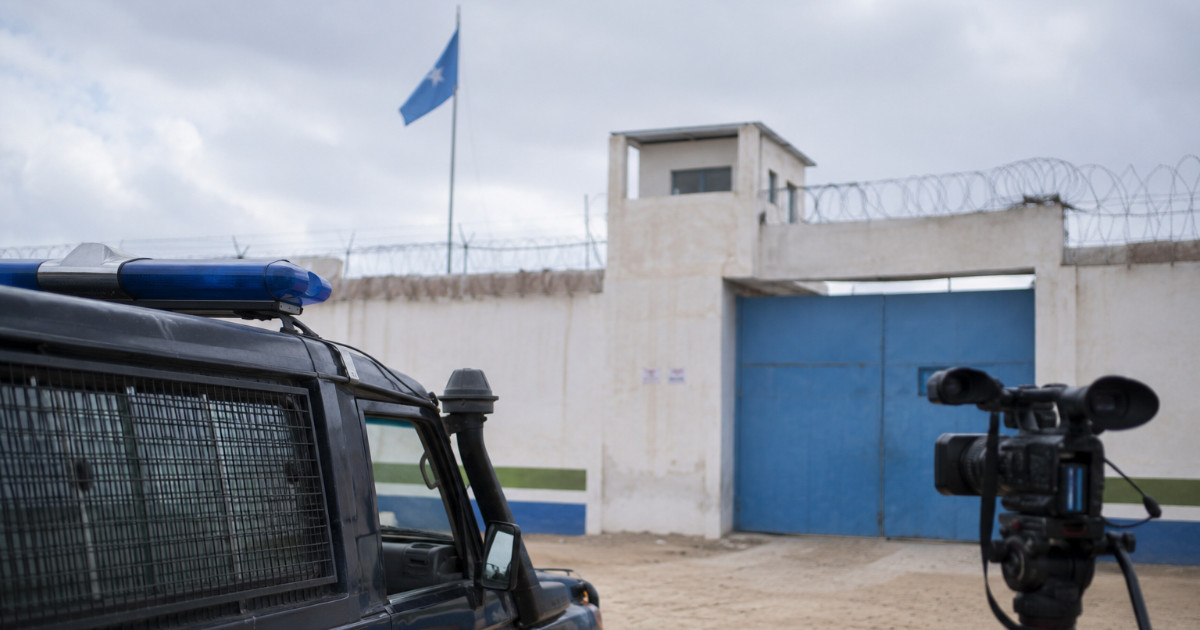
Eye Radio, one of South Sudan's few independent media outlets, has been shut down by authorities. The Committee to Protect Journalists has condemned this action and called for the station to be allowed to resume broadcasting.

NAIROBI - The Committee to Protect Journalists Friday called on South Sudanese authorities to allow the independent station Eye Radio to resume broadcasting.

Nichola Mandil, an editor at the station, told the BBC that members of the National Security Service arrived at the station's office in Juba at 11:20 a.m. local time Friday, switched off the transmitter and locked four studios before leaving with the keys. They ordered all staff to leave the premises.

The security officials, who gave no reasons for their action, told Stephen Omiri, chief executive of Eye Media, to make an appointment with the director general of the National Security Service, the BBC reported. No date was given for the meeting.

"The closure of Eye Radio is arbitrary and amounts to brute force censorship of a vital source of independent news for the people of South Sudan," said Murithi Mutiga, CPJ's East Africa representative. "The government should immediately allow Eye Radio to resume broadcasts and stop harassing journalists for doing their jobs."

On Twitter, Eye Radio said that it was "unfortunately shutting down" broadcasts "for reasons beyond our control." The station, which broadcasts a mix of news, discussion programs, and entertainment, is one of the few remaining independent outlets in South Sudan. In a press release posted to its website the station said senior management were working with authorities "with the view to immediately resolve this matter."

Paul Jacob Kumbo, South Sudan's director-general of Information, told CPJ he had no information on why Eye Radio had been ordered closed.

CPJ has documented attempts by authorities in South Sudan to curtail media freedom in recent months. In July the daily Juba Monitor was ordered closed and its editor, Alfred Taban, was detained for a week after he wrote a column critical of President Salva Kiir and the former Vice-President Riek Machar. In September, the independent newspaper Nation Mirror was shuttered. - CPJ

Key Points

  • Eye Radio was forcibly closed by South Sudan's National Security Service.
  • Officials locked the studio and ordered all staff to leave without explanation.
  • The closure has been described as arbitrary censorship of independent news.
  • CPJ reports ongoing threats to media freedom in South Sudan.
  • No timeline for the resolution of the station's closure has been provided.

Ask AI: Understand this story your way

AI Enabled

Dig deeper, ask anything — get instant context, background, and clarity.

Not sure what to choose? Try one of these.

The AI generates results based on your selected options
Your AI-generated results will appear here after you click the button.

Disclaimer: This feature is powered by AI and is intended to help readers explore and understand news stories more easily. While we strive for accuracy, AI-generated responses may occasionally be incomplete or reflect limitations in the underlying model. This feature does not represent the editorial views of JournalismPakistan. For our full, verified reporting, please refer to the original article.
Dive Deeper

Newsroom
Lawsuit against The Atlantic fuels press freedom concerns

Lawsuit against The Atlantic fuels press freedom concerns

 April 21, 2026 Kash Patel's defamation suit against The Atlantic has intensified scrutiny of legal pressures on journalists and raised concerns about press freedom.


Meera walkout puts focus on Irshad Bhatti's interview ethics

Meera walkout puts focus on Irshad Bhatti's interview ethics

 April 20, 2026 Irshad Bhatti's podcast interview with actor Meera drew criticism after he pressed personal topics and Meera walked out, sparking debate over media accountability.


One article, no newsroom: Viral piece sparks debate on Pakistan media

One article, no newsroom: Viral piece sparks debate on Pakistan media

 April 20, 2026 Dan Qayyum's viral article drew one million views in days, igniting debate about independent creators' reach and what it means for Pakistan's newsrooms.


Asia press freedom: A week of pressure and progress

Asia press freedom: A week of pressure and progress

 April 19, 2026 Across Asia, journalists faced growing legal pressure, expanded surveillance and attacks on media outlets, even as a key appointment boosted gender diversity.


Five reasons slow news days strengthen journalism

Five reasons slow news days strengthen journalism

 April 19, 2026 Slow news days give journalists time to verify facts, pursue in-depth reporting, and reduce errors, strengthening overall newsroom accuracy and long-form storytelling.


Popular Stories