
Why governments are tightening controls on foreign journalists
JournalismPakistan.com | Published: 2 June 2026 | JP Special Report
Join our WhatsApp channel
Governments have tightened controls on foreign journalists, imposing visa limits, accreditation hurdles, expulsions, and surveillance, citing security and sovereignty needs, while press groups warn that these moves curb independent reporting.Summary
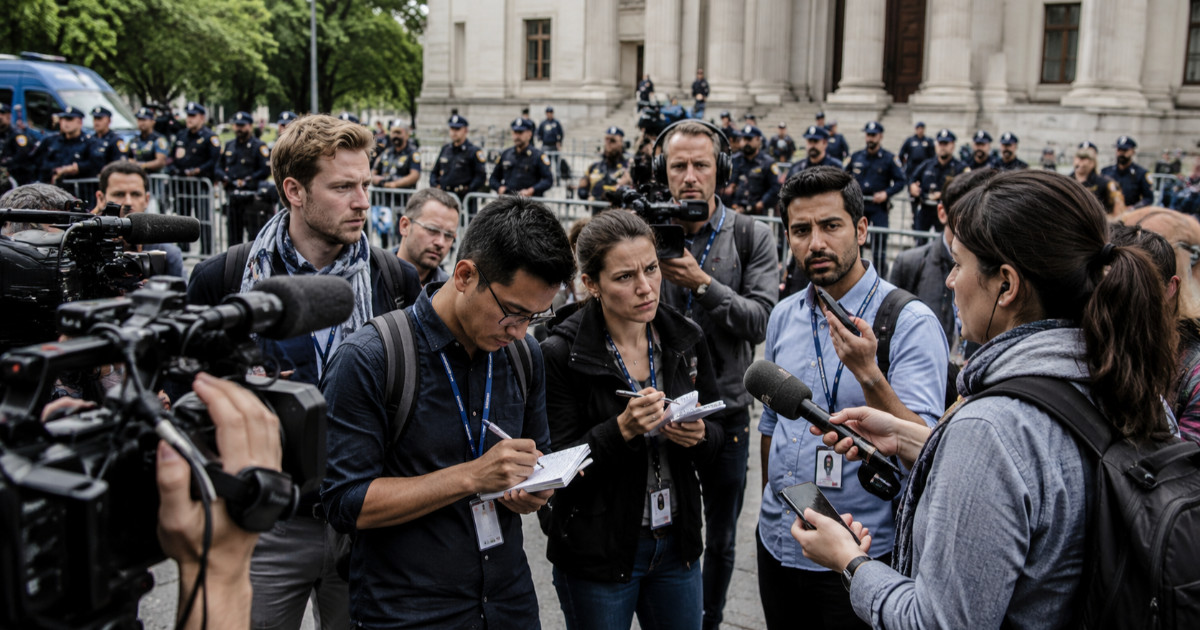
ISLAMABAD — Foreign correspondents have long served as a bridge between countries, helping global audiences understand events beyond their own borders. Whether covering elections, conflicts, economic developments, public health emergencies, or diplomatic disputes, international reporters provide independent accounts that often shape how the world understands major events.
In recent years, however, governments across multiple regions have imposed increasing restrictions on foreign journalists. These measures range from visa denials and delayed renewals to expulsions, accreditation hurdles, surveillance concerns, reporting limitations, and outright suspensions of foreign media organizations. Officials frequently justify such actions on grounds including national security, public order, sovereignty, or regulatory compliance, while press freedom groups argue that some restrictions limit independent reporting and public access to information.
Why foreign correspondents matter
Foreign correspondents perform a unique role in journalism. Unlike diplomats, government officials, or advocacy groups, they are expected to independently gather information, interview sources, and provide reporting for audiences outside the countries they cover.
Their work often becomes especially important during crises, conflicts, political transitions, and international disputes. Independent reporting can provide context that helps global audiences understand events that might otherwise be filtered through official narratives.
To operate legally, foreign journalists typically require visas, press accreditation, work permits, or other government approvals. These administrative mechanisms are standard features of international journalism. Problems arise when access is delayed, denied, or withdrawn in ways that significantly affect reporting capacity.
Governments generally retain the sovereign authority to regulate foreign media activity within their borders. The debate often centers on where legitimate regulation ends and where restrictions begin.
How visas and accreditation shape reporting
Visa approvals and press credentials are among the most powerful tools governments possess in managing foreign media access.
A foreign correspondent whose visa is delayed may be unable to enter a country. A journalist whose accreditation is revoked may lose access to official events, press briefings, or government institutions. In some cases, correspondents have been required to leave countries after their visas were not renewed.
The issue has gained renewed attention after Taiwan publicly criticized China following reports that New York Times correspondent Vivian Wang was expelled from China after the newspaper published an interview with Taiwanese President Lai Ching-te. Reports indicated Wang was not involved in conducting the interview. The case drew international attention because it highlighted concerns about the vulnerability of foreign journalists working amid sensitive geopolitical disputes.
The incident also underscored how diplomatic tensions can directly affect media access. Cross-strait relations between China and Taiwan remain politically sensitive, and reporting involving sovereignty issues frequently attracts heightened scrutiny.
When journalism becomes entangled in geopolitics
Foreign correspondents increasingly find themselves caught in broader diplomatic disputes between governments.
Media access has become part of wider geopolitical competition in some regions. Restrictions imposed on journalists from one country may be viewed by another government as reciprocal measures or responses to perceived unfair treatment.
This dynamic was evident this week when China accused the United States of political suppression after a Xinhua News Agency reporter reportedly faced restrictions in the United States. Public details surrounding the case remained limited, but the dispute illustrated how media access can become intertwined with broader tensions between major powers.
Similar disputes have emerged over the past decade involving foreign correspondents working in countries such as China, Russia, Iran, and elsewhere. Governments often argue that restrictions are necessary to protect national interests, while critics contend that reciprocal measures can create an environment in which journalists become indirect participants in diplomatic conflicts.
Media scholars have noted that as geopolitical competition intensifies, foreign correspondents may face increasing pressure because their reporting is often viewed through a national security or strategic lens rather than solely as journalistic work.
National security and information control
National security is among the most frequently cited reasons for restrictions on foreign media organizations.
Governments facing armed conflict, insurgencies, political instability, or terrorism concerns often argue that tighter controls are necessary to prevent misinformation, protect military operations, or safeguard public order.
In Niger, the military-led government suspended nine French media organizations, including AFP, France 24, and Radio France Internationale (RFI), citing concerns related to national security and public morale. The decision intensified debate about the balance between state security interests and access to independent international reporting.
The case reflects a broader trend visible in several regions where authorities have sought greater control over information flows during periods of political uncertainty or security challenges.
Supporters of such measures argue that governments have legitimate responsibilities to protect national interests and prevent harmful information campaigns. Critics counter that broad restrictions can reduce transparency and limit independent scrutiny of official actions.
The distinction between regulation and restriction
Not every government requirement imposed on foreign journalists is considered restrictive by press freedom organizations.
Most countries maintain accreditation systems, visa procedures, and reporting regulations. These frameworks can serve legitimate administrative and security purposes when applied consistently and transparently.
Press freedom advocates generally focus on issues such as arbitrary visa denials, selective enforcement, politically motivated expulsions, prolonged accreditation delays, restrictions targeting specific outlets, or measures that disproportionately hinder reporting.
Organizations including the Committee to Protect Journalists (CPJ), Reporters Without Borders (RSF), the International Press Institute (IPI), and UNESCO have repeatedly emphasized the importance of predictable and transparent processes governing foreign media access.
These organizations argue that independent international reporting contributes to informed public debate, accountability, and cross-border understanding. They also warn that restrictions affecting foreign correspondents can reduce the diversity of information available to both domestic and international audiences.
Consequences for global news coverage
Restrictions on foreign journalists can have consequences that extend well beyond individual reporters or media outlets.
When international correspondents leave a country, news organizations may rely more heavily on remote reporting, official statements, third-party information, or local contributors. While such methods can still produce important journalism, they may limit direct observation and on-the-ground verification.
Reduced foreign media presence can also affect how global audiences understand major events. International reporting often provides context that helps readers and viewers compare developments across countries and assess competing claims.
For media organizations, restrictions can increase operational costs and uncertainty. Newsrooms may need to relocate correspondents, adjust coverage strategies, or devote additional resources to legal and administrative compliance.
The future of foreign correspondence
The challenges facing foreign correspondents are likely to remain a significant issue for global journalism.
Growing geopolitical rivalry, technological surveillance capabilities, information warfare concerns, and heightened sensitivity around national sovereignty are reshaping the environment in which international journalists operate.
At the same time, demand for reliable cross-border reporting remains strong. Global audiences continue to seek independent information about conflicts, elections, economic developments, climate issues, and international diplomacy.
The future of foreign correspondence may depend on whether governments, media organizations, and international institutions can maintain frameworks that balance legitimate regulatory concerns with the need for independent journalism. As information increasingly crosses borders instantly, the ability of foreign reporters to work freely and safely remains closely linked to broader debates about transparency, accountability, and public access to information worldwide.
WHY THIS MATTERS: Restrictions on foreign correspondents are becoming an increasingly important indicator of how governments manage information in an interconnected world. For journalists and media organizations, understanding these trends is essential because visa controls, accreditation policies, and geopolitical disputes increasingly shape what reporting reaches global audiences. The issue also highlights the growing intersection between journalism, diplomacy, and national security.
ATTRIBUTION: Reporting by JournalismPakistan, based on publicly available reports by The New York Times, Reuters, AFP, CPJ, RSF, UNESCO, and official statements issued or reported during 2026.
PHOTO: By Freddy Kearney on Unsplash
Key Points
- Governments use visa denials, delayed renewals and accreditation hurdles to limit foreign reporters.
- Expulsions, suspensions and surveillance are increasingly applied against international media.
- Officials commonly cite national security, public order and sovereignty as reasons for restrictions.
- Press freedom groups warn such measures restrict independent reporting and public access to information.
- Foreign correspondents provide independent international coverage, especially vital during crises and conflicts.
Key Questions & Answers
Why are governments restricting foreign journalists?
Officials often cite national security, public order, sovereignty or regulatory compliance as reasons for tighter controls.
What measures are being used to limit foreign reporting?
Common actions include visa denials or delays, accreditation hurdles, expulsions, suspensions of media outlets and increased surveillance.
How do these restrictions affect news coverage?
They can hinder independent reporting, reduce on-the-ground coverage, and limit public access to diverse information during critical events.
What do press freedom groups say about these actions?
Advocacy groups warn such measures can be used to silence scrutiny, constrain journalists and undermine transparency.
Relevant Topics
Ask AI: Understand this story your way
AI EnabledDig deeper, ask anything — get instant context, background, and clarity.
Disclaimer: This feature is powered by AI and is intended to help readers explore and understand news stories more easily. While we strive for accuracy, AI-generated responses may occasionally be incomplete or reflect limitations in the underlying model. This feature does not represent the editorial views of JournalismPakistan. For our full, verified reporting, please refer to the original article.