.jpg)
Journalist unions in India urge action on gender inequalities during pandemic
JournalismPakistan.com | Published: 27 July 2020
Join our WhatsApp channel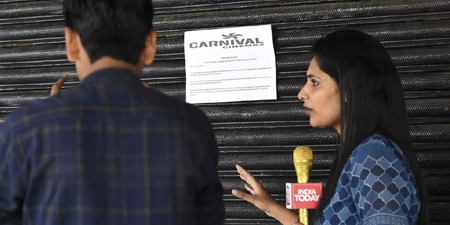
A recent survey highlights the worsening gender inequalities faced by women journalists in India due to the pandemic. Unions demand action from media houses to support female journalists.Summary
According to a recent survey conducted by the International Federation of Journalists (IFJ), more than half of women journalists have experienced increased gender inequalities due to COVID-19.
IFJ and its affiliate, the Indian Journalists Association (IJU), and the National Union of Journalists (India) (NUJ-I) urge media houses and professional organizations to prioritize and implement strategies to support female journalists.
The survey carried out by more than 558 women journalists in 52 countries revealed more than half of the respondents indicated an increase in gender inequalities in the industry, with devastating consequences on their conciliation of work and private life (62 percent), work responsibilities (46 percent) and salaries (27 percent). Further, over two-thirds of respondents noted the negative impact of media funding cuts on the industry’s gender strategies.
According to the responses from women journalists in India, the survey highlighted that as a result of the Pandemic:
-Over 3/5 of respondents saw their level of stress increase, with more than half highlighting carrying out multiple duties while at home as the primary cause.
-Forty-six percent of respondents said their health had been affected, which resulted in almost 3/5 of them in sleeping problems.
-Less than 4 in 10 women journalists claimed they received protective equipment from their employers.
-More than half of the respondents claim unions have not developed any specific strategies to tackle gender inequalities during the pandemic.
-Seventy-one percent said their industry had provided some form of protocol for teleworking.
-More than half of respondents said the level of harassment (including online) and bullying has not increased during the crisis.
-Only 20 percent of respondents claimed they worked “mainly from home,” with 30 percent working in the field, 23 percent in the office, and 27 percent a mix of all.
IJU’s Secretary-General Sabina Inderjit said: “We urge the media houses, newsrooms and professional organizations working in media development to prioritize the gender equity as one of their major agenda. Media houses should emphasize gender sensitivity and work-life balance in their in-house operational strategies. As pandemic has a higher impact to women, this should be given special priority during the p0andemic.”
NUJ-I’s President Ras Bihari said: “The survey revealed the bitter reality of gender inequality in the news-room. NUI-I calls on the media institutions, media managers and media advocacy organisations to prioritise gender equality in their policy and plan.”
The IFJ said: “The IFJ urges affiliates, media companies and workers to take note of the survey results and implement effective strategies to support women in the workplace. To enact change, unions must advocate for women to take leadership roles and lead the way for greater representation and structural change.”—IFJ media release/Photo: AFP
Key Points
- Over half of women journalists experienced increased gender inequalities due to COVID-19.
- 62% reported increased stress from balancing work and home responsibilities.
- Less than 40% received protective equipment from employers.
- 71% noted that their industry established teleworking protocols.
- Only 20% primarily worked from home during the pandemic.
Relevant Topics
Ask AI: Understand this story your way
AI EnabledDig deeper, ask anything — get instant context, background, and clarity.
Disclaimer: This feature is powered by AI and is intended to help readers explore and understand news stories more easily. While we strive for accuracy, AI-generated responses may occasionally be incomplete or reflect limitations in the underlying model. This feature does not represent the editorial views of JournalismPakistan. For our full, verified reporting, please refer to the original article.