.png)
Gender imbalance: Only 9% female guests invited on TV talk shows
JournalismPakistan.com | Published: 23 September 2015
Join our WhatsApp channel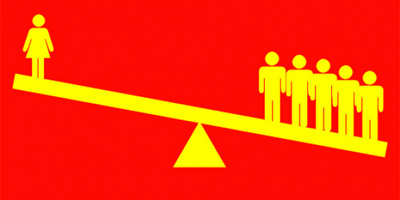
Gallup Pakistan's analysis shows a stark gender imbalance in TV talk shows, with only 9% of guests being women. The discussions predominantly focused on political issues.Summary
ISLAMABAD: In eight television talk shows analyzed by Gallup Pakistan Media Research Service in July 2015, only 9 percent of the guests invited were women and ‘Politics’ was the main topic under discussion (34 percent).
The majority of the guests on these shows were politicians (67 percent) whereas Pakistan Tehreek- e-Insaaf, Pakistan Musim League-N and the Pakistan People’s party led in terms of airtime representation at an equal standing of 24 percent. Content analyses of eight popular current events talk shows including Off the Record, Capital Talk, Meray Mutabiq, Sawal Yeh Hai, News Eye, Aapas Ki Baat, Nadeem Malik Live and Tonight with Fareeha consisting of a total of 119 episodes aired on different cable television networks was conducted for July 2015.
The topics discussed on these shows were distilled into seven broad categories including economy, governance, law, politics, media, security and miscellaneous. Issues that discussed less frequently, for example sports and sociocultural subjects, were included in the miscellaneous category. On average three guests appeared per episode on each show. While some were frequently invited on different talk shows, overall there were 96 unique guests out of a total of 356. This repeated appearance by guests signifies the limited availability and rudimentary capacity of talk shows in attracting fresh faces. It also underlies the limited nature of fresh ideas and lack of diversity of opinion in talk shows. Furthermore, the majority of the guests were politicians (67 per cent), followed by experts including professors, defense analysts and senior analysts at 18 percent only. Six percent of the guests invited were from miscellaneous occupational categories such as art, cricket, civil society and bureaucracy. Media personnel (anchors, experts, journalists) had a 5 percent representation, with religious experts having 2 percent and judiciary members at one per cent share of the broadcast participation. In July the maximum participation in talk shows from amongst political parties was that of PTI, PML-N, and the PPP. Members of the Muttahida Qaumi Movement (MQM) were also prominently featured with a 15 percent share in representation. Three percent of the participants were independent, with the remaining share constituted by other smaller parties. Politics yet again led the talk shows as the most discussed topic. Thirty-four per cent of the total time in talk shows was dedicated to discussing political on goings in Pakistan. Security was the second most frequently discussed topic at 20 percent while law and governance were each discussed 16 percent of the time. Miscellaneous issues were discussed 10 percent of the time and only 2 percent was taken up by media-related topics. Discussions regarding economy were negligible, taking only 1 percent of the total time in these shows. The most frequently-discussed topic was the PTI apology for the 35-punctures allegations and the party's future (13 percent). An equal proportion of 13 percent was accounted for by general political discussions. These were closely followed by conversations on Altaf Hussain’s speech against the Army (12 percent) and the operations undertaken by the Rangers against parties, especially the PPP and MQM (12 per cent). Within Security, the most discussed theme was the Karachi Operation (32 per cent). Other frequently mentioned subjects were the Pakistan-India relationship (14 percent), the security policies of the Army to eradicate terrorism (8 percent), the role of Pakistan in negotiations between Kabul and the Afghani Taliban (8 per ent) as well as the confirmation of the death of Mullah Umar by the Taliban (8 percent). Law formed the third most frequently discussed category. Some of the major themes discussed under law issues were: Judicial Commission rigging and report (38 percent), followed by demand for electoral reforms (26 percent), extension in the powers of Rangers (15 percent) and the money laundering case against the MQM (8 percent). The main topic discussed under the theme of Governance was the scandal involving corruption cases (49 percent). Big changes in the Sindh Government and performance of the government in relations to the floods were other important topics discussed. The analysis of talk shows during July reveals that politics once again prevailed over the media landscape, as has been the pattern over the past year, with very few exceptions. Its share may have fallen considerably in comparison to June (50 percent), but it still has a significant lead of 14 percent over the next most discussed category of Security (20 percent). Furthermore, a trend that has persisted over the past months, yet again surfaced in talk shows in July. Data reveals that the gender-wise representation of guests is very unbalanced in these leading talk shows. Ninety-one percent of the guests invited were male while only 9 percent were female. This figure is similar to those observed in May (8 percent female) and June (7 percent female), thus showing only a slight improvement. ENDS
Key Points
- Only 9% of talk show guests were female, according to Gallup Pakistan.
- Politics dominated discussions, making up 34% of topics covered.
- The majority of guests (67%) were politicians.
- Only 5% of guests were media personnel and 2% religious experts.
- This gender imbalance has remained consistent over the last few months.
Relevant Topics
Ask AI: Understand this story your way
AI EnabledDig deeper, ask anything — get instant context, background, and clarity.
Disclaimer: This feature is powered by AI and is intended to help readers explore and understand news stories more easily. While we strive for accuracy, AI-generated responses may occasionally be incomplete or reflect limitations in the underlying model. This feature does not represent the editorial views of JournalismPakistan. For our full, verified reporting, please refer to the original article.