.png)
50% FATA journos received threats: report
JournalismPakistan.com | Published: 25 September 2012
Join our WhatsApp channel
A recent report indicates that more than half of FATA journalists experienced various threats last year. The study emphasizes the dangers faced by media practitioners in the region.Summary
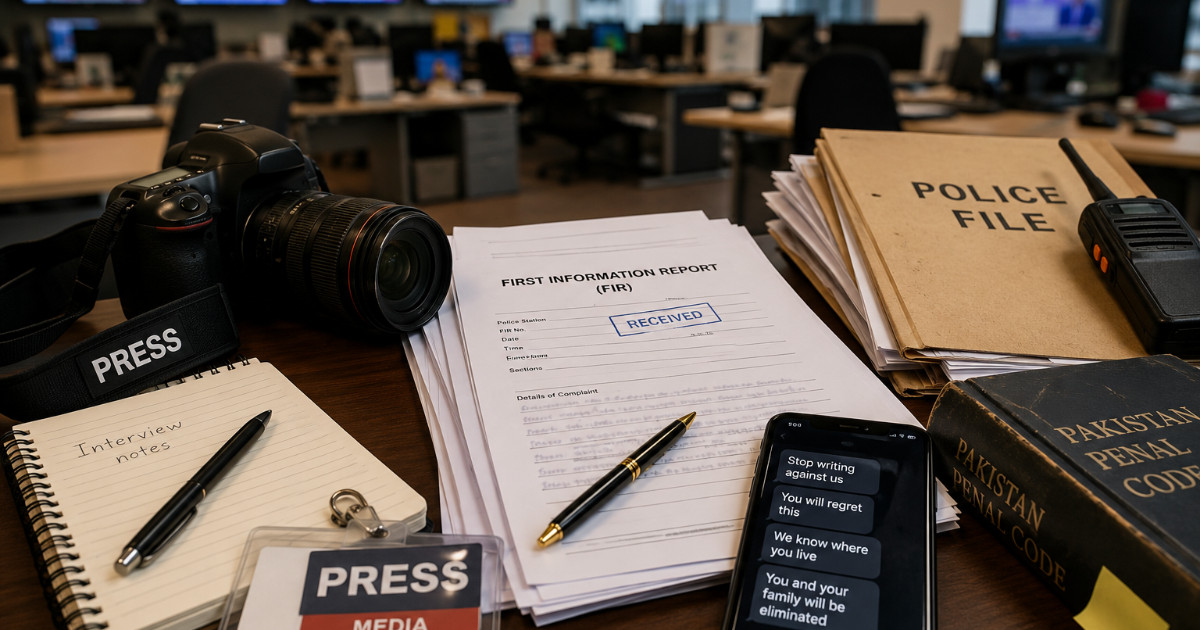
ISLAMABAD: More than 50 percent journalists from the Federally Administered Tribal Areas (FATA) received threats of various kinds last year while at least 33 percent of the tribal journalists have faced threats of assault in line of duty.
In Khyber Pakhtunkhwa 87 percent journalists surveyed termed militants and security forces as biggest threats they face as media practitioners.
In contrast, in FATA all the respondents termed militants as the biggest threat while 79 percent felt threatened by security forces.
These statistics have been revealed in a recent research report “Reporting from the Frontlines” (http://journalistsafety.files.wordpress.com/2012/09/reporting-from-the-frontline-final.pdf) published my Intermedia Pakistan, a national media advocacy, research and training organization. The detailed research and analysis report takes stock of the state of media and journalism in FATA.
Nearly 50 percent of total members of the Trial Union of Journalists (TUJ) surveyed participated in multiple surveys to determine the unique threats present in different agencies.
Some other key findings include the following:
Militants have been identified as a major threat source by 100 percent respondents from Khyber, Mohmand and Kurram Agencies. From Orakzai, North Waziristan and South Waziristan 90 percent of the respondents indicated militants as a source of threats to their security, while journalists from Bajaur seem to be relatively less harassed by the militants with 60 percent identifying them as a major threat. A high percentage of journalists from both North and South Waziristan indicated that military and paramilitary agencies cause them distress.
Political administration has been called a source of threat by 80 percent of the respondents from Bajaur Agency, 60 percent from Khyber, Mohmand and South Waziristan, 50 percent from Orakzai and Kurram Agency and 40 per cent of the respondents from North Waziristan.
The identification of political agents as a source of threat is interesting, as in another research survey as many as 73 percent of the respondents had identified political administration among the primary news sources from FATA.
From within the tribal areas, the research also shows that journalists from Khyber Agency have a higher threat perception than journalists reporting from other agencies. Journalists from South Waziristan have not indicated the level of threat that relates with perception of higher threat level than other agencies.
The possible explanation for the perceived higher level of threat and a lower number of reported threats might be the fact that the news flow from South Waziristan has slowed down due to the level of threat, and the journalists are not being threatened so much as sensitive stories are not being filed by them.
Apart from security issues, the research report also takes a look at media consumption habits of tribal journalists and their attitudes towards journalistic career.
Job and financial insecurity has been termed as one of the main reasons for rising frustration amongst journalists. The research reports that 57 percent of the tribal journalists are working without any financial compensation. Only 18 percent journalists surveyed for this research receive monthly salary and 14 percent are paid on a per story basis.
In a research conducted among 12 percent of the tribal journalist populace, only 6 percent had medical and life insurance while 94 percent work in the conflict region without basic medical allowance.
Key Points
- 50% of journalists from FATA received threats last year.
- 87% of Khyber Pakhtunkhwa journalists identified militants and security forces as primary threats.
- 100% of respondents from Khyber, Mohmand, and Kurram reported militants as a major threat.
- 57% of tribal journalists work without financial compensation.
- Only 6% of surveyed journalists have medical and life insurance.
Relevant Topics
Ask AI: Understand this story your way
AI EnabledDig deeper, ask anything — get instant context, background, and clarity.
Disclaimer: This feature is powered by AI and is intended to help readers explore and understand news stories more easily. While we strive for accuracy, AI-generated responses may occasionally be incomplete or reflect limitations in the underlying model. This feature does not represent the editorial views of JournalismPakistan. For our full, verified reporting, please refer to the original article.