.png)
Watchdog welcomes setting up of judicial tribunals to investigate journalist murders
JournalismPakistan.com | Published: 8 April 2015
Join our WhatsApp channel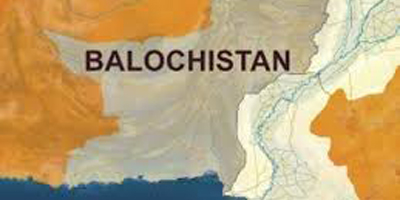
The establishment of two judicial tribunals in Balochistan aims to investigate journalist murders since 2011. The tribunals will work in Khuzdar and Makran districts to seek justice for the victims.Summary
ISLAMABAD: The International Federation of Journalists (IFJ) has welcomed the establishment of two judicial tribunals to investigate six journalist murders in Balochistan since 2011.
According to a statement from the Home Department in Quetta, the two tribunals will work in Khuzdar and Makran districts to investigate the murder cases of a number of journalists, naming those responsible and recommending measures to prevent such murders of journalists in future.
The News reported that murders of Abdul Haq Baloch, Javed Ahmed and Munir Shakil from Khuzdar district and Abdul Razzaq, Abudost Rind and Ilyas Nazar from Makran district, who were killed from 2011 to 2013 will be investigated.
Jane Worthington, the IFJ Asia Pacific acting director, said: “The IFJ welcomes the decision by the Balochistan government to investigate the murders of journalists. The IFJ views the development as a step forward in delivering justice and breaking Pakistan’s cycle of impunity.”
Pakistan remains the deadliest and most dangerous country for journalists in the world. In 2014, 14 journalists were killed for their work. Four of those murders were in Balochistan.
"The IFJ calls on the Balochistan provincial government to expand the reach of the tribunals to investigate all murder cases in the province and urges the government to establish a federal level mechanism to investigate “the murder of more than 100 Pakistani journalists since 2001.”
Key Points
- Two judicial tribunals established in Balochistan.
- Investigating six journalist murders since 2011.
- Tribunals to focus on cases in Khuzdar and Makran districts.
- IFJ calls for broader investigations across the province.
- Pakistan remains one of the deadliest countries for journalists.
Relevant Topics
Ask AI: Understand this story your way
AI EnabledDig deeper, ask anything — get instant context, background, and clarity.
Disclaimer: This feature is powered by AI and is intended to help readers explore and understand news stories more easily. While we strive for accuracy, AI-generated responses may occasionally be incomplete or reflect limitations in the underlying model. This feature does not represent the editorial views of JournalismPakistan. For our full, verified reporting, please refer to the original article.