.png)
Underbelly of Pakistan media exposed
JournalismPakistan.com | Published: 13 July 2013 | Arshad Sharif
Join our WhatsApp channel
The Media Commission's report exposed serious flaws in the training of Pakistani journalists, emphasizing the impact of advertising on news content. The report calls for better training and regulation in media practices.Summary
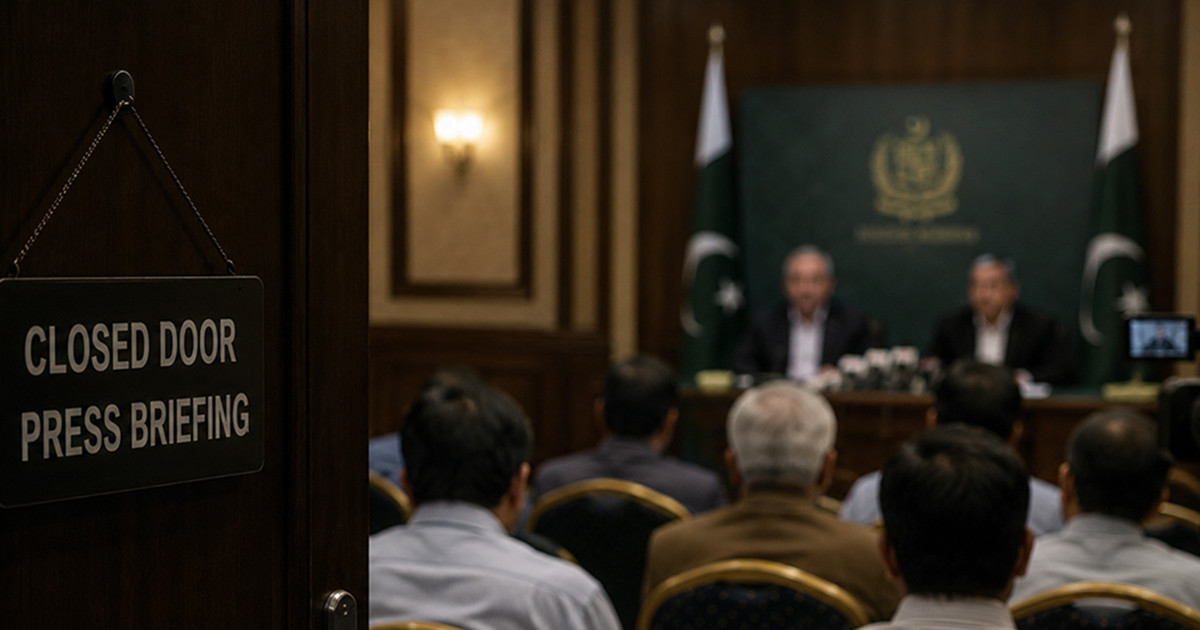
ISLAMABAD: The sensitive task of informing the public about important news and current affairs is in the hands of media persons who lack adequate and comprehensive training in print and broadcast journalism, said the final report of the two-member Media Commission appointed by the Supreme Court.
According to a post on reportersdiary.com, lack of adequate, comprehensive training in print journalism and in broadcast journalism before persons are given the opportunity to become reporters, anchors, news readers, content controllers etc,” the Commission said while identifying the negative aspects of the media in Part-II of its report submitted before the Supreme Court on May 31st, 2013.
The Supreme Court appointed a two member Media Commission comprising Senator (Retd) Javed Jabbar and Justice (R) Nasir Aslam Zahid on 15th January, 2013 and submitted the first part of its report on 21st March.
Part-II of the Media Commission report contains 17 annexures including versions of Pakistan Broadcasters Association (PBA), Pakistan Federal Union of Journalists (PFUJ), Pakistan Electronic Media Regulatory Authority (PEMRA) and other stakeholders.
The observations of the Commission were also echoed by PFUJ which admitted the absence of professional skills in journalists who had entered the field of electronic media.
“Unlike the print media where the journalists undergo training whether in the field of reporting or editing, in the electronic media freshmen were recruited into senior position without any aptitude or experience resulting in utter chaos,” PFUJ said in its official stance before the Media Commission.
In an observation which is critical of the editorial independence of TV content, the Commission noted that advertisers influenced the prime time content in Pakistani media.
“Advertisers virtually dictate prime time content preferences by using a narrow, relatively non-representative, heavily urban and consumption oriented rating system to pressurise channels into cut throat competition and to a lowering of standards of content,” the Commission said in its findings.
PBA in its version before the Commission accepted the need for content regulation.
“The absence of parallel sources of revenue such as the subscription revenue had made the media dependent upon advertising revenue and as a natural corollary there was competition for ratings within the industry. Assured revenue would provide opportunity to the channels to devote more time to content regulation instead of trying to be one up to the competitor,” PBA said in its statement before the Commission.
PBA informed the Commission that TV channels were facing cash flow problems and therefore at times the disbursement of salary to the staff got delayed.
PBA said that 90 per cent of the news TV channels were “in the red” and the cost of news gathering had gone up phenomenally.
(The writer is a senior journalist at Aaj TV)
Key Points
- Media personnel lack adequate training in journalism.
- Advertisers significantly influence prime time content.
- The majority of TV channels are financially struggling.
- Competition for ratings harms content quality.
- PBA stresses the need for content regulation.
Relevant Topics
Ask AI: Understand this story your way
AI EnabledDig deeper, ask anything — get instant context, background, and clarity.
Disclaimer: This feature is powered by AI and is intended to help readers explore and understand news stories more easily. While we strive for accuracy, AI-generated responses may occasionally be incomplete or reflect limitations in the underlying model. This feature does not represent the editorial views of JournalismPakistan. For our full, verified reporting, please refer to the original article.