
The Hindu viral front page exposes AI misinformation risks
JournalismPakistan.com | Published: 13 May 2026 | JP Asia Desk
Join our WhatsApp channel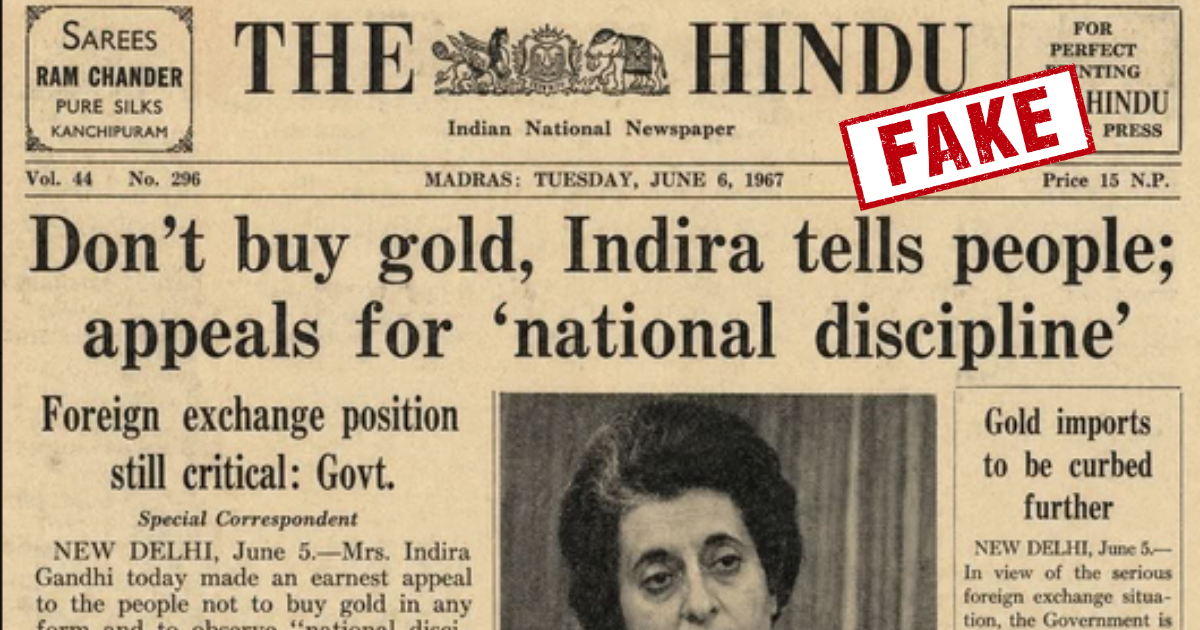
A manipulated image of a June 6, 1967 front page claimed to be The Hindu circulated on X, Facebook and WhatsApp, falsely attributing a headline to Indira Gandhi. The newspaper and fact-checkers exposed the fake and warned about AI-enabled archival manipulation.Summary
NEW DELHI — A fabricated front page of the Indian newspaper The Hindu circulated widely on social media this week, triggering fresh concerns about AI-generated misinformation, manipulated archival content, and the growing use of fake media branding in political discourse.
The viral image falsely appeared to show a June 6, 1967, edition of The Hindu carrying a headline suggesting former Prime Minister Indira Gandhi had urged Indians not to buy gold during an economic crisis. The image spread across X, Facebook, and WhatsApp amid debate over recent economic messaging linked to rising global energy costs and consumer spending pressures in India.
Newspaper rejects fabricated archive image
The Hindu publicly denied the authenticity of the image after it gained traction online. Journalists associated with the newspaper also shared screenshots of the genuine June 6, 1967 front page, which primarily focused on the Arab-Israeli conflict rather than domestic economic policy.
Indian fact-checking organizations, including Newschecker, reported that the viral page had been digitally manipulated and did not exist in the newspaper’s archives. Analysts tracking misinformation said the fabricated page appeared designed to lend historical legitimacy to contemporary economic or political narratives.
The controversy emerged shortly after discussions on social media around appeals for restrained consumer spending and economic discipline in response to international market volatility and oil price pressures linked to tensions in the Middle East.
Real historical policies added credibility to a fake claim
The false claim gained credibility partly because India did introduce strict gold-related controls during the late 1960s. In 1968, the Indian government enacted the Gold Control Act under Finance Minister Morarji Desai to curb gold imports and protect foreign exchange reserves during a period of economic stress.
Media researchers noted that misinformation campaigns increasingly combine genuine historical context with fabricated visuals or altered documents to create believable but false narratives. The spread of AI-assisted editing tools has made such content easier to produce and more difficult for ordinary users to detect quickly.
Experts in digital verification warned that forged newspaper layouts and manipulated archival material can damage trust in legacy media institutions because readers often assume newspaper front pages represent verified historical records.
AI-generated misinformation challenges news verification
The incident has also renewed debate in India about safeguards against AI-generated misinformation ahead of future elections and major political campaigns. Researchers and journalists have increasingly warned that synthetic media, including fake headlines, cloned voices, and altered videos, are becoming more sophisticated and more difficult to identify in real time.
The case reflects a broader global trend in which established news brands are being imitated or manipulated online to spread false information with greater credibility. Fact-checkers said the use of recognizable newspaper branding remains one of the most effective methods for amplifying misinformation on social media platforms.
WHY THIS MATTERS: The incident highlights how trusted news brands can be weaponized through manipulated visuals and AI-assisted editing tools. For newsrooms, the episode underscores the importance of digital verification training, archive authentication, and rapid fact-checking systems as misinformation campaigns become more sophisticated across South Asia.
ATTRIBUTION: Reporting by JournalismPakistan, based on publicly available reporting by Newschecker (May 2026), public statements from The Hindu journalists shared on social media, and publicly available archival references reviewed on May 13, 2026.
PHOTO: Screenshot of the fake front page of The Hindu circulating online.
Key Points
- Viral image purported to show a June 6, 1967 front page of The Hindu with a headline about Indira Gandhi and gold purchases.
- The Hindu and associated journalists published the authentic June 6, 1967 front page, which covered the Arab-Israeli conflict, not domestic economic policy.
- Fact-checking organisations, including Newschecker, verified the image was digitally manipulated and absent from archival records.
- Analysts say the fabricated page appeared aimed at lending historical legitimacy to modern political or economic narratives.
- The episode highlights growing risks from AI-generated misinformation, manipulated archives, and fake media branding on social platforms.
Key Questions & Answers
Was the front page genuine?
No. The Hindu denied the image's authenticity and published the real June 6, 1967 front page; fact-checkers also found the viral page was digitally manipulated.
What did the authentic 1967 page cover?
The genuine June 6, 1967 front page focused on the Arab-Israeli conflict rather than domestic economic policy or appeals about gold purchases.
Who verified the image was fake?
Journalists from The Hindu, independent fact-checkers including Newschecker, and misinformation analysts investigated and concluded the page was fabricated.
Why does this matter?
The incident illustrates how AI and image editing can create convincing fake archives that lend false historical legitimacy to contemporary political or economic claims.
Ask AI: Understand this story your way
AI EnabledDig deeper, ask anything — get instant context, background, and clarity.
Disclaimer: This feature is powered by AI and is intended to help readers explore and understand news stories more easily. While we strive for accuracy, AI-generated responses may occasionally be incomplete or reflect limitations in the underlying model. This feature does not represent the editorial views of JournalismPakistan. For our full, verified reporting, please refer to the original article.