
Thailand pressures two broadcast journalists off the air
JournalismPakistan.com | Published: 18 August 2016
Join our WhatsApp channel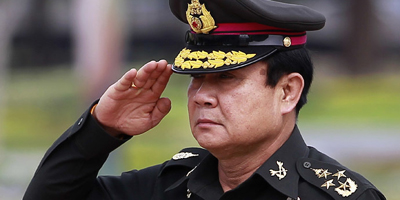
Two reporters from Voice TV in Thailand have been suspended under pressure from military officials due to their critical coverage of the regime. The move highlights ongoing issues of media censorship in the country.Summary
BANGKOK -- Two television reporters in Thailand have been suspended for a 10-day period under pressure from military authorities and state media regulators over their critical news coverage, according to news reports.
The Committee to Protect Journalists called on Thailand's ruling military regime to cease its systematic harassment of the broadcast media and allow reporters to do their jobs without interference or fear of reprisal.
Nattakorn Devakula and Atukkit Sawangsuk, both political program hosts with the privately run Voice TV news station, were removed from their regular programs for 10 days by company executives to avoid the imposition of penalties from the National Broadcasting and Telecommunications Commission (NBTC), a state-run media regulator, according to news reports. The reporters' suspension will run from August 15-24, the reports said.
The station proposed the suspensions to avoid harsher penalties imposed last weekend by the NBTC for news coverage deemed overly critical of the ruling military regime: a ban of one week for two Voice TV programs, "Wake Up News" and "Tonight Thailand," and a 50,000 baht ($1,440) fine, according to reports. Voice TV news director Prateep Kongsib wrote on Twitter that the station agreed to the temporary suspension of its reporters instead "in order to survive under these special circumstances," reports said.
"The censorship of Voice TV for reporting on a topic of national importance shows just how dire the press freedom situation has become for Thailand's broadcast media," said Steven Butler, CPJ's Asia program coordinator, in New York. "If Thailand is truly on a path back to democracy, as Prime Minister Prayuth frequently claims, then it's time to stop this crude censorship and targeted harassment of individual journalists."
Last month, Prime Minister Prayuth Chan-ocha (pictured) empowered the NBTC to shutter media outlets without the right to appeal for reasons of national security. The executive order, known as No. 41/2559, allows the media regulator to block any broadcast news or information deemed as "detrimental to the political system or may destabilize national stability or damage the moral values of the people," reports said.
Nattakorn told CPJ that his coverage and analysis of a national referendum held on August 7, where a military-backed regressive constitution was passed amid sharp curbs on free expression and vote "no" campaigning, was singled out by officials for violating orders against critical news. He said it was the third time the junta-controlled media regulator had pressured Voice TV to suspend his programs. Voice TV is owned by Panthongtae Shinawatra, the son of self-exiled, criminally convicted former premier Thaksin Shinawatra, who was overthrown in a separate 2006 coup.
The news website Khaosod cited Prateep, the Voice TV news director, as saying Atukkit was also singled out for criticism of the junta and that he had earned further disfavor among officials due to his work for other media, including columns for Khaosod.
Under military rule, the NBTC has enforced broad censorship directives, outlined in orders No. 97/2557 and No. 103/2557, against news reporting that could "create confusion, instigate unrest or deepen divisions among people," or be deemed as "malicious" or "misleading" about the ruling National Council for Peace and Order junta and its actions.
The broadcast media has been particularly hard hit, CPJ research shows. In November 2014, Thai Public Broadcasting reporter Nattaya Wawweerakup was suspended from hosting her program, "Voices of the People that Change Thailand," after soldiers raised objections with the station's managers about her interviews with local people who criticized junta rule. News reports at the time said junta officials threatened to suspend the program if she was not replaced as its host.
In May 2015, authorities revoked the operating license of Peace TV, a news station aligned with the elected government ousted in the 2014 coup. The NBTC's media monitoring committee banned Peace TV for airing news that "could stir up unrest," according to news reports. The regulator had earlier suspended the station for one week for the same reason, though it did not indicate which specific program or commentary caused the ban, the reports said. - By Committee to Protect Journalists
Key Points
- Nattakorn Devakula and Atukkit Sawangsuk suspended for 10 days.
- Suspension imposed to avoid penalties from National Broadcasting and Telecommunications Commission.
- The incident raises concerns about press freedom in Thailand.
- Military regime criticized for systematic harassment of journalists.
- Voice TV faced prior penalties for critical news reporting.
Relevant Topics
Ask AI: Understand this story your way
AI EnabledDig deeper, ask anything — get instant context, background, and clarity.
Disclaimer: This feature is powered by AI and is intended to help readers explore and understand news stories more easily. While we strive for accuracy, AI-generated responses may occasionally be incomplete or reflect limitations in the underlying model. This feature does not represent the editorial views of JournalismPakistan. For our full, verified reporting, please refer to the original article.