.png)
RSF decries government inaction in face of attacks on media
JournalismPakistan.com | Published: 9 December 2015
Join our WhatsApp channel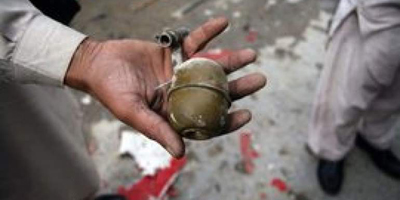
Reporters Without Borders has condemned the government's lack of response to rising attacks on media outlets in Pakistan. Recent incidents include bombings and threats against various news organizations.Summary
Reporters Without Borders (RSF) has condemned the government’s failure to respond to a wave of attacks on media outlets throughout Pakistan in recent weeks and the absence of effective measures to protect news organizations and journalists. In the latest attack, two individuals on a motorcycle threw a homemade bomb at the bureau of Express News in Sargodha on 7 December, injuring a security guard and damaging one of its vehicles. Express News is regarded as a liberal news organization and has been the target of previous attacks that were claimed by the Taliban. The Sargodha attack came just six days after militants threw a grenade at the Din News channel’s bureau in Lahore, injuring an employee and two policemen. They also scattered Islamic State leaflets threatening to continue attacking media outlets until they “revert to neutral journalism” and “side with truth that is Sharia and Islam.” The attackers fled on a motorcycle and since then no arrests have been made. An arson attack on Gawahi Television, a Christian Web TV station inKarachi, on 24 November destroyed its studios and computer equipment. The station had been the target of threats, which were reported to the Karachi authorities. Surveillance cameras had been installed, but they were also destroyed by the fire. Three Dunya News employees were injured when militants on a motorcycle threw a grenade at the TV station’s bureau in Faisalabad on 20 November. After the attackers fled, pamphlets of Islamic State’s Khorasan branch were found at the scene. “We deplore the lack of action by the authorities, who are displaying a complete absence of political will to protect the media,” said Benjamin Ismaïl, the head of RSF’s Asia-Pacific desk. “Extremist groups had threatened all of these media outlets. The local authorities should have taken energetic measures to protect their staff. It is time that Prime Minister Nawaz Sharif’s government reacted and responded to the calls from media defence NGOs and Pakistani journalists’ unions.” RSF urges the Pakistani authorities to:
- Allocate more material and human resources to monitoring and protecting news media staff - Organize the reinforcement of the security of media premises (guards, surveillance cameras, entrance barriers and so on)
- Establish an effective alert system that allows the police to intervene quickly in the event of an attack. According to some Pakistani journalists, the extremist groups are stepping up their attacks on media outlets with the aim of getting them to resume covering the activities of these groups. After an attack on a Peshawar school in December 2014 that killed more than 100 children, the authorities banned the Pakistani media from covering the activities of militant and terrorist groups. Ranked 159th out of 180 countries in the 2015 Reporters Without Borders press freedom index, Pakistan is one of the pilot countries of the UN Plan of Action on the Safety of Journalists and the Issue of Impunity. - Reporters Without Borders
Key Points
- RSF highlights government inaction despite rising media attacks.
- Recent bombings targeted Express News and Din News channels.
- An arson attack on Gawahi Television destroyed its studios.
- Authorities urged to implement protective measures for media personnel.
- Pakistan ranks 159th in the press freedom index, indicating serious concerns.
Relevant Topics
Ask AI: Understand this story your way
AI EnabledDig deeper, ask anything — get instant context, background, and clarity.
Disclaimer: This feature is powered by AI and is intended to help readers explore and understand news stories more easily. While we strive for accuracy, AI-generated responses may occasionally be incomplete or reflect limitations in the underlying model. This feature does not represent the editorial views of JournalismPakistan. For our full, verified reporting, please refer to the original article.