
RSF calls for an end to intimidation of Dawn
JournalismPakistan.com | Published: 24 May 2019
Join our WhatsApp channel
Reporters Without Borders has criticized the Pakistani government's decision to withdraw advertising from the newspaper Dawn. This action raises concerns about press freedom and the economic viability of the country's oldest newspaper.Summary
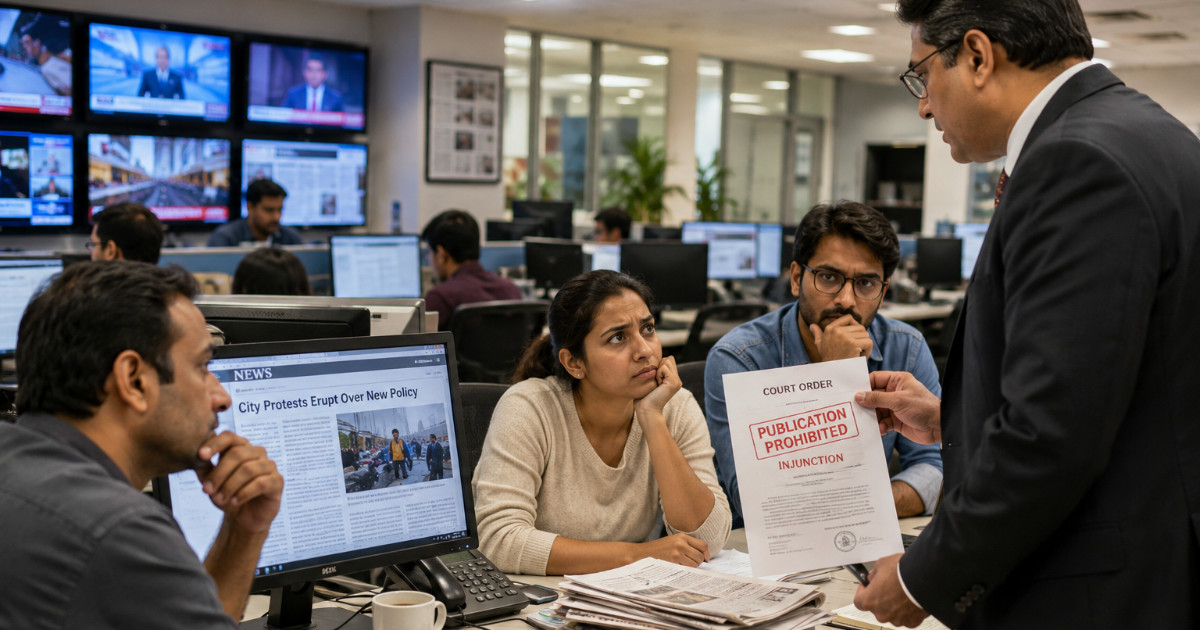
Reporters Without Borders (RSF) says it is appalled by the withdrawal of state advertising from Pakistan’s prestigious daily Dawn for the past month and has called for an end to this method of pressure and intimidation, which is jeopardizing the editorial independence of the country’s oldest newspaper.
In one of the most insidious forms of coercion, Dawn was suddenly deprived of any income from federal government advertising on 24 April. Its sister media outlet, DawnNews TV, was subjected to the same treatment two days later.
As Pakistan is a country where almost no advertising revenue is available from a fledgling private sector independent of the government, this advertising ban poses a grave threat to the media group’s economic viability.
The authorities have not explained their treatment of Dawn, but the newspaper thinks it knows the reason. Speaking on condition of anonymity, a member of its management told RSF: “Our understanding is that this ad ban started a day after we published Prime Minister Imran Khan’s comments at a press conference in Tehran, when he said militants based in Pakistan had been involved in attacks inside Iran.”
Dawn’s story was based on quotes from the official transcript of the press conference, but certain government officials did not like the angle taken by the newspaper’s reporters, or the fact that what the prime minister said while abroad was being reproduced for domestic readers.
“It is unacceptable that a newspaper that just reports undisputed facts in the public interest should be punished with such a drastic form of economic strangulation,” said Daniel Bastard, the head of RSF’s Asia-Pacific desk. “We unreservedly condemn this crude intimidatory tactic designed to dictate the editorial line journalists should take. This method, which bears the military establishment’s hallmark, harks back to the worst moments of military dictatorship in Pakistan.”
Iqbal Khattak of Freedom Network, RSF’s partner NGO in Pakistan, added: “This civilian government won the 2018 election with the slogan ‘Tabdeeli’ (Change), but the decision to withdraw all state advertising from the newspaper Dawn is a blatant continuation of governmental news control methods. We urge Prime Minister Imran Khan to intercede personally to end this unjustified measure and to defend press freedom in Pakistan.”
The month-old withdrawal of advertising from the Dawn group is typical of the harassment, intimidation and censorship methods used by Pakistan’s “deep state,” a euphemism for its armed forces and intelligence services, which cannot stand journalistic freedom.
Journalists are exposed to reprisals if they venture across the red lines imposed by the military, which include any criticism – even implicit – of the armed forces or government, any reference to movements that defend the rights of minorities, and even any mention of jailed former Prime Minister Nawaz Sharif, the military’s bugbear.
It was because of an interview with Sharif that Dawn Deputy Editor Cyril Almeida was charged with treason last September. Distribution of the newspaper was arbitrarily blocked when the interview was published on 12 May 2018. This is also an effective way to jeopardize a newspaper’s survivability, as advertisers are reluctant to buy space in a publication whose circulation is being restricted.
Still speaking on condition of anonymity, a member of the Dawn group’s management told RSF that, for the past two and a half years, Dawn had received absolutely no advertising from commercial entities linked to the military, such as the Fauji and Askari groups, whose activities include banking, energy, food processing and construction.
“There have been instances in which one of these companies has reserved advertising space in one of Dawn’s supplements and then withdrawn the order at the last minute without giving any reason,” the source said.
This was retaliation for an earlier offense in October 2016, when Dawn dared to publish a story containing explosive details of the way the military and intelligence agencies defy the civilian government. The story’s author, Cyril Almeida, and Editor Zaffar Abbas were threatened with serious reprisals and Dawn has been in the deep state’s sights ever since.
Launched in 1941 as part of the fight against British colonialism, Dawn is now one of the last bastions of press freedom in Pakistan.
After falling three places, Pakistan is ranked 142nd out of 180 countries in the 2019 World Press Freedom Index which RSF published last month, drawing attention to the “cycle of fear” that has taken hold in many countries. – By Reporters Without Borders
Key Points
- RSF calls for an end to intimidation tactics against Dawn.
- The advertising withdrawal threatens editorial independence.
- Dawn has not received advertising from military-linked companies for over two years.
- The move is seen as a method of coercion by the military establishment in Pakistan.
- Dawn's history includes challenges and reprisals from the government for its reporting.
Relevant Topics
Ask AI: Understand this story your way
AI EnabledDig deeper, ask anything — get instant context, background, and clarity.
Disclaimer: This feature is powered by AI and is intended to help readers explore and understand news stories more easily. While we strive for accuracy, AI-generated responses may occasionally be incomplete or reflect limitations in the underlying model. This feature does not represent the editorial views of JournalismPakistan. For our full, verified reporting, please refer to the original article.