.png)
Qadri, media and the 'revolution'
JournalismPakistan.com | Published: 18 January 2013 | Aamir Saeed
Join our WhatsApp channel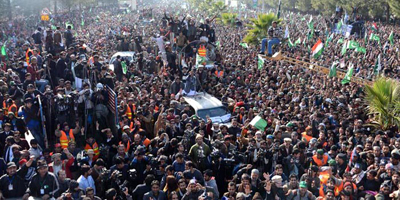
Dr. Tahirul Qadri's long march aimed at electoral reforms has captivated and disappointed citizens. After initially promising change, he reversed his demands, leaving followers disenchanted.Summary
ISLAMABAD: There is never a dull moment in Pakistan with theatrics aplenty, thanks to some of our politicians and religious clerics.
The latest amusement in Islamabad was the “million march” aimed at bringing a revolution.
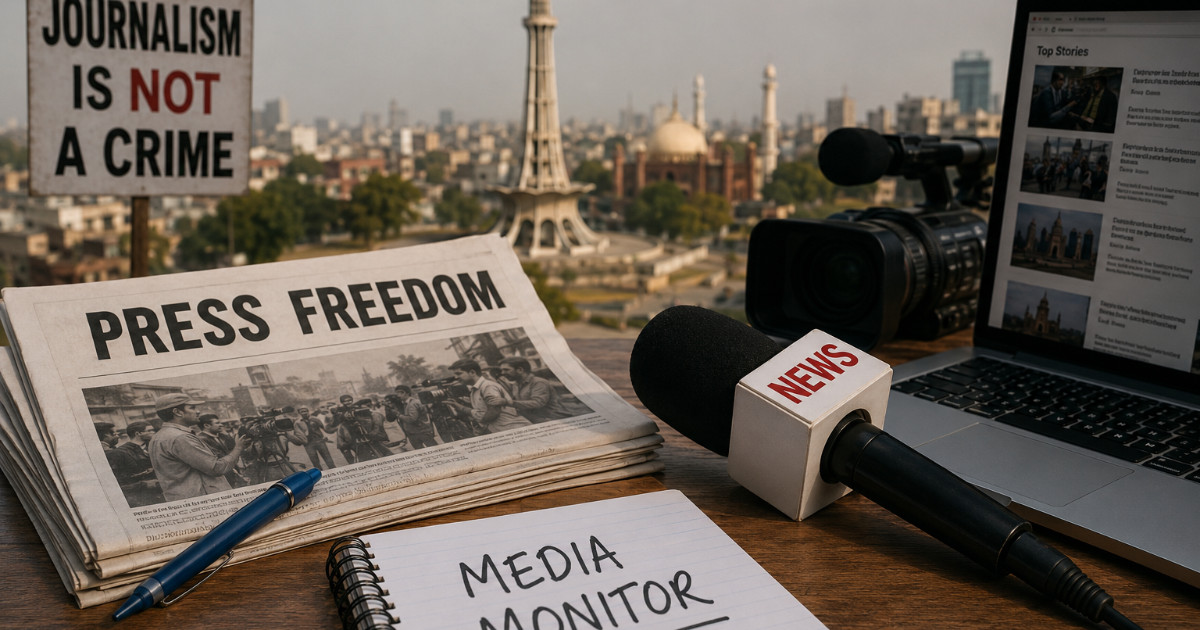
All this began on December 23 after an enigmatic cleric Dr. Tahirul Qadri held an impressive political gathering at Minar-e-Pakistan in Lahore. He promised the participants in general and the entire nation in particular a different Pakistan in the wake of his political struggle against corrupt politicians.
The doctor threatened the government he would organize a long march from Lahore to Islamabad if his demands - ensuring free and transparent elections besides bringing reforms in the electoral process - were not met by January 10.
The government didn’t take the cleric’s demands seriously and termed it mere rhetoric. On the other hand, Dr. Qadri’s followers and Pakistan’s poor people hoped for a revolution via the long march. As pledged by the cleric, the long march for the promised revolution began last Sunday.
Here comes the role of media and the political parties. By and large, the electronic, print and the social media chided the cleric for several things, ranging from his dual nationality to hoodwinking his followers in the name of religion.
The mainstream media gave due coverage to the event but it all appeared biased and partial. Instead of focusing on his agenda, the media appeared to highlight flaws in persona of Dr Qadri. One of the media houses even equated the cleric’s security with female security guards of late Libyan dictator Muammer al-Qaddafi.
On social media, the so-called liberals also missed no opportunity to make mockery of the cleric but none of them seemed to discuss his agenda. What is wrong in asking for electoral reforms and improve governance? The media also missed the opportunity to pressure the political leadership so that the entry into parliament of corrupt and inept politicians could be barred.
To protect their vested interests, the politicians also ridiculed the cleric publicly for his ‘unconstitutional and undemocratic’ demands. The media and the politicians also tried their best to find the ‘hidden hand’ in cleric’s campaign, though they failed to unearth it. The whole exercise was meant to keep people away from the long march, not forgetting Interior Minister Rehman Malik’s repeated warnings of terror attacks on the rally.
One should however, admit that a record number of people (of course not 40 million as claimed by Dr. Qadri), including women and children reached Islamabad Monday night to protest against the government.
Clearly, the crowd was big enough to shake the political dispensation and ruin the whole city. But much to everyone’s surprise, the participants remained peaceful. They stayed in Islamabad for three nights and four days, braving cold weather, rain and threats of an operation to drive them away.
The fiery doctor kept promising revolution. Fearing military intervention, all opposition parties except for PTI huddled together at Raiwind on the invite of Mian Nawaz Sharif. They unanimously agreed to protect democracy at any cost and rejected Dr. Qadri’s agenda.
Following this announcement, PTI chairman Imran Khan rejected joining the sit-in. The cleric was left alone. Desperate to save face, he gave the government a deadline of 90-minutes on Thursday for dialogue that was complied.
In the end, the cleric withdrew all his demands – dissolution of assemblies and Election Commission of Pakistan and bringing in an honest caretaker prime minister. He congratulated the participants for joining the march and staying put on Jinnah Avenue.
The participants were virtually left appalled and devastated by the announcement. “Where is the revolution? This is what we came for? Our leader proved to be no different than other corrupt politicians.” These were some remarks overheard at Jinnah Avenue after the ‘Islamabad Long March Declaration,’ was announced.
Sorry, ladies and gentlemen, the revolution stands postponed!
(The writer is a journalist based in Islamabad)
Key Points
- Tahirul Qadri initiated a long march for electoral reforms in Pakistan.
- The event attracted significant public participation despite media criticisms.
- Qadri withdrew his demands after threats of government intervention.
- Opposition parties united against Qadri's agenda, fearing military involvement.
- Disappointment spread among supporters after Qadri's retreat from his revolutionary promises.
Relevant Topics
Ask AI: Understand this story your way
AI EnabledDig deeper, ask anything — get instant context, background, and clarity.
Disclaimer: This feature is powered by AI and is intended to help readers explore and understand news stories more easily. While we strive for accuracy, AI-generated responses may occasionally be incomplete or reflect limitations in the underlying model. This feature does not represent the editorial views of JournalismPakistan. For our full, verified reporting, please refer to the original article.