Amar Guriro: Journalism's future is human-AI partnership The JournalismPakistan Global Media Brief | Edition 23 | June 5, 2026 As AI reshapes news, publishers seek a sustainable future Every frame at a cost: The safety crisis facing Pakistan's camerapersons Why journalists are increasingly targeted in conflict zones What the 60 Minutes controversy means for TV journalism Zee secures FIFA World Cup rights in India through 2030 How fact-checkers verify viral videos during breaking news Pentagon restrictions on reporters draw media backlash Israel-Lebanon talks proceed as conflict hinders reporting Why governments are tightening controls on foreign journalists China condemns US restrictions on Xinhua reporter Taiwan condemns China over New York Times reporter expulsion The biggest threats facing journalism in Asia today Press freedom review: The many faces of pressure on the press Amar Guriro: Journalism's future is human-AI partnership The JournalismPakistan Global Media Brief | Edition 23 | June 5, 2026 As AI reshapes news, publishers seek a sustainable future Every frame at a cost: The safety crisis facing Pakistan's camerapersons Why journalists are increasingly targeted in conflict zones What the 60 Minutes controversy means for TV journalism Zee secures FIFA World Cup rights in India through 2030 How fact-checkers verify viral videos during breaking news Pentagon restrictions on reporters draw media backlash Israel-Lebanon talks proceed as conflict hinders reporting Why governments are tightening controls on foreign journalists China condemns US restrictions on Xinhua reporter Taiwan condemns China over New York Times reporter expulsion The biggest threats facing journalism in Asia today Press freedom review: The many faces of pressure on the press
Logo
Janu
World

Prime Minister Shahid Khaqan meets editors of Nepalese media

 JournalismPakistan.com |  Published: 5 March 2018

Join our WhatsApp channel
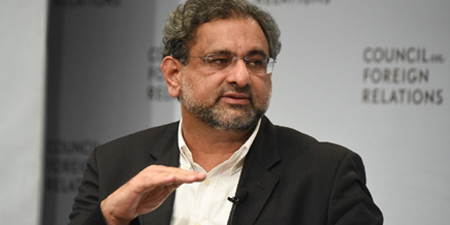
Prime Minister Shahid Khaqan meets editors of Nepalese media
Prime Minister Shahid Khaqan Abbasi engaged with editors from Nepal's top media outlets in Kathmandu. Discussions focused on CPEC and the media landscape in Nepal post-democracy.

KATHMANDU - A delegation of CEOs and editors from Nepal's leading national dailies and television channels called on Prime Minister Shahid Khaqan Abbasi here on Monday.

The editors showed a keen interest in learning about progress on China Pakistan Economic Corridor (CPEC) since Nepal had also joined One Belt-One Road (OBOR) project in 2016. The prime minister said the participation of Nepal in OBOR would usher in a new era of prosperity for the country.

Abbasi shared with editors the success of Pakistan in the war against terrorism and apprised them that peace had been restored in all cities including Karachi that suffered law and order situation in the past.

He also mentioned the country's high economic growth rate and the construction of 1700-kilometer network of roads and motorways across the country. He stressed that progress was the result of political stability and democracy.

The media representatives shared the state of media in Nepal, which they said had undergone a massive change with the transition of democracy in the country.

Abbasi said the media of Pakistan was quite dynamic and vibrant as democratic norms in the country ensured its independence. The media chiefs represented the ABC News Nepal, Janata Television, Gorkha Express and Nayapatrika National Daily. - APP/Photo: YouTube

Key Points

  • Nepalese media delegation met with Prime Minister Abbasi.
  • Discussions centered on the China Pakistan Economic Corridor progress.
  • Nepal's role in the OBOR project was highlighted.
  • Abbasi emphasized Pakistan's political stability and media freedom.
  • Editors represented major media outlets like ABC News Nepal and Janata Television.

Ask AI: Understand this story your way

AI Enabled

Dig deeper, ask anything — get instant context, background, and clarity.

Not sure what to choose? Try one of these.

The AI generates results based on your selected options
Your AI-generated results will appear here after you click the button.

Disclaimer: This feature is powered by AI and is intended to help readers explore and understand news stories more easily. While we strive for accuracy, AI-generated responses may occasionally be incomplete or reflect limitations in the underlying model. This feature does not represent the editorial views of JournalismPakistan. For our full, verified reporting, please refer to the original article.

Dive Deeper

Newsroom
Amar Guriro: Journalism's future is human-AI partnership

Amar Guriro: Journalism's future is human-AI partnership

 June 05, 2026 Amar Guriro, founder of Pakistan's first AI-powered news platform, says journalism's future rests on human-AI collaboration to improve reporting while preserving editorial oversight.


The JournalismPakistan Global Media Brief | Edition 23 | June 5, 2026

The JournalismPakistan Global Media Brief | Edition 23 | June 5, 2026

 June 05, 2026 Global Media Brief reviews pressures reshaping journalism, press freedom, AI and platform power, and reports BBC's Emmy, 60 Minutes turmoil and Taiwan's protest.


As AI reshapes news, publishers seek a sustainable future

As AI reshapes news, publishers seek a sustainable future

 June 05, 2026 At the World News Media Congress in Marseille, publishers discussed how generative AI is altering newsroom workflows, audience engagement and content licensing.


Why journalists are increasingly targeted in conflict zones

Why journalists are increasingly targeted in conflict zones

 June 04, 2026 Journalists in conflict zones face rising danger as combatants, states and militias increasingly target independent reporting to control narratives.


What the 60 Minutes controversy means for TV journalism

What the 60 Minutes controversy means for TV journalism

 June 03, 2026 The 60 Minutes controversy at CBS exposes tensions over leadership, editorial independence and pressures on legacy TV journalism amid political polarization.


Popular Stories