Amar Guriro: Journalism's future is human-AI partnership The JournalismPakistan Global Media Brief | Edition 23 | June 5, 2026 As AI reshapes news, publishers seek a sustainable future Every frame at a cost: The safety crisis facing Pakistan's camerapersons Why journalists are increasingly targeted in conflict zones What the 60 Minutes controversy means for TV journalism Zee secures FIFA World Cup rights in India through 2030 How fact-checkers verify viral videos during breaking news Pentagon restrictions on reporters draw media backlash Israel-Lebanon talks proceed as conflict hinders reporting Why governments are tightening controls on foreign journalists China condemns US restrictions on Xinhua reporter Taiwan condemns China over New York Times reporter expulsion The biggest threats facing journalism in Asia today Press freedom review: The many faces of pressure on the press Amar Guriro: Journalism's future is human-AI partnership The JournalismPakistan Global Media Brief | Edition 23 | June 5, 2026 As AI reshapes news, publishers seek a sustainable future Every frame at a cost: The safety crisis facing Pakistan's camerapersons Why journalists are increasingly targeted in conflict zones What the 60 Minutes controversy means for TV journalism Zee secures FIFA World Cup rights in India through 2030 How fact-checkers verify viral videos during breaking news Pentagon restrictions on reporters draw media backlash Israel-Lebanon talks proceed as conflict hinders reporting Why governments are tightening controls on foreign journalists China condemns US restrictions on Xinhua reporter Taiwan condemns China over New York Times reporter expulsion The biggest threats facing journalism in Asia today Press freedom review: The many faces of pressure on the press
Logo
Janu
Women in Media

PFUJ warns Sindh government it will oppose any attempt to gag print media

 JournalismPakistan.com |  Published: 20 September 2017

Join our WhatsApp channel
PFUJ warns Sindh government it will oppose any attempt to gag print media
The Pakistan Federal Union of Journalists (PFUJ) has condemned the Sindh government's draft law aimed at regulating print media. They emphasize that existing frameworks are sufficient and warn against further attempts to restrict media freedom.

PFUJ warns Sindh government it will oppose any attempt to gag print media

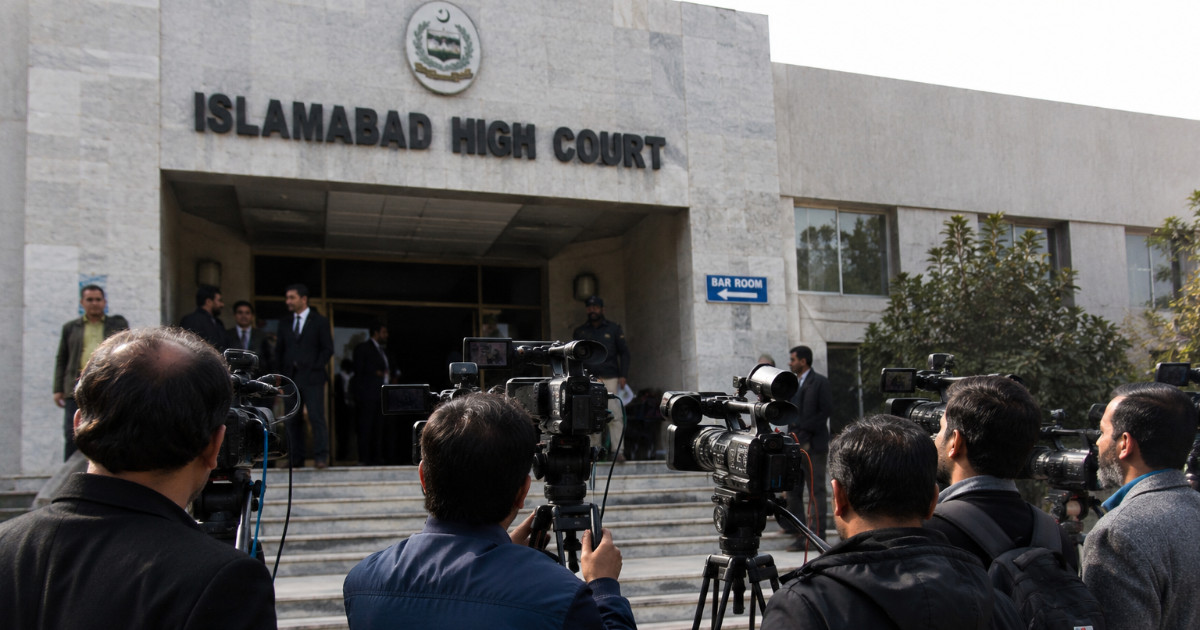
ISLAMABAD – The Pakistan Federal Union of Journalists (PFUJ) has expressed its deep concern over the Sindh government's move to shackle press freedom through a so-called regulatory body.

The union made it clear that any such attempt will be opposed tooth and nail.

"The proposed draft law for the creation of the so-called regulatory body is nothing but a new version of the previous black law,” PFUJ said in a statement Wednesday.

All this is being done to control the free press in Sindh and to curtail the freedom of expression provided by the constitution.

"Neither journalists nor the owners will accept any such draconian law and we warn the government to desist from any such attempt," the statement said.

The PFUJ is of the considered opinion that in the presence of Press Council of Pakistan, there is no need for the formation of any regulatory authority for the print media.

The journalists and all other stakeholders had agreed and are also following the press code of the Press Council of Pakistan, hence there is no need for any other code for the print media, PFUJ said.

Dawn reported last week that the Sindh government had drafted a law to regulate the registration of newspapers, news agencies, printing presses, and books.

Mubarak Zeb Khan, President of Rawalpindi-Islamabad Union of Journalists (RIUJ) said Wednesday he had spoken to Sindh Chief Minister Murad Ali Shah, and the province’s information minister regarding the proposed law. “Both showed their ignorance about it,” he said.

The chief minister was in Islamabad Tuesday and visited the National Press Club.

Key Points

  • PFUJ opposes Sindh government's proposed regulatory authority for print media.
  • The union believes current laws are adequate for media governance.
  • Journalists and media owners reject any new restrictive laws.
  • Concerns raised about government efforts to control press freedom.
  • Sindh Chief Minister and information minister unaware of the proposed law.

Ask AI: Understand this story your way

AI Enabled

Dig deeper, ask anything — get instant context, background, and clarity.

Not sure what to choose? Try one of these.

The AI generates results based on your selected options
Your AI-generated results will appear here after you click the button.

Disclaimer: This feature is powered by AI and is intended to help readers explore and understand news stories more easily. While we strive for accuracy, AI-generated responses may occasionally be incomplete or reflect limitations in the underlying model. This feature does not represent the editorial views of JournalismPakistan. For our full, verified reporting, please refer to the original article.
Read Next

Newsroom
Amar Guriro: Journalism's future is human-AI partnership

Amar Guriro: Journalism's future is human-AI partnership

 June 05, 2026 Amar Guriro, founder of Pakistan's first AI-powered news platform, says journalism's future rests on human-AI collaboration to improve reporting while preserving editorial oversight.


The JournalismPakistan Global Media Brief | Edition 23 | June 5, 2026

The JournalismPakistan Global Media Brief | Edition 23 | June 5, 2026

 June 05, 2026 Global Media Brief reviews pressures reshaping journalism, press freedom, AI and platform power, and reports BBC's Emmy, 60 Minutes turmoil and Taiwan's protest.


As AI reshapes news, publishers seek a sustainable future

As AI reshapes news, publishers seek a sustainable future

 June 05, 2026 At the World News Media Congress in Marseille, publishers discussed how generative AI is altering newsroom workflows, audience engagement and content licensing.


Why journalists are increasingly targeted in conflict zones

Why journalists are increasingly targeted in conflict zones

 June 04, 2026 Journalists in conflict zones face rising danger as combatants, states and militias increasingly target independent reporting to control narratives.


What the 60 Minutes controversy means for TV journalism

What the 60 Minutes controversy means for TV journalism

 June 03, 2026 The 60 Minutes controversy at CBS exposes tensions over leadership, editorial independence and pressures on legacy TV journalism amid political polarization.


Popular Stories