
PFUJ holds countrywide protests against media owners
JournalismPakistan.com | Published: 25 April 2017
Join our WhatsApp channel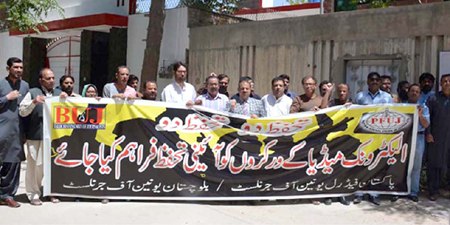
Absar Alam, chairman of PEMRA, met with protesting journalists across Pakistan who demanded fair treatment from media owners. The Punjab Assembly expressed support for the journalists' cause, while protests were held in major cities.Summary
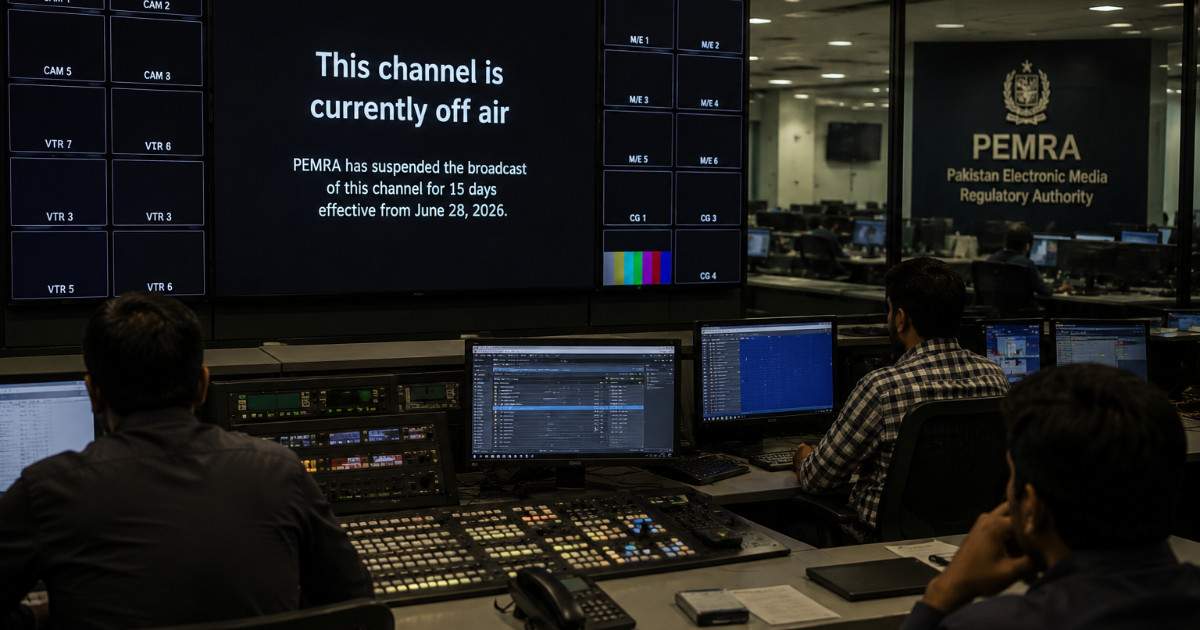
ISLAMABAD - Absar Alam, Chairman of Pakistan Electronic Media Regulatory Authority (PEMRA), has assured the journalist community his organization will not extend any favors to media owners unless they redress the grievances of their employees.
The Punjab Assembly has assured passing a resolution to support journalists’ demands, a Pakistan Federal Union of Journalists (PFUJ) media release said Tuesday.
The two developments came in the wake of journalists’ protests across the country outside PEMRA offices demanding rights for the electronic media workers. The protest call was given by PFUJ.
The main and biggest protest demonstration was held outside the PEMRA Headquarters in Islamabad which was organized by Rawalpindi-Islamabad Union of Journalists (RIUJ).
Hundreds of workers gathered outside the PEMRA Headquarters in Islamabad where a delegation of Pakistan Broadcasters Association (PBA), a representative body of electronic media owners, was meeting PEMRA chairman to seek enhancement of advertisement air-time for their channels.
PEMRA Chairman came out of the meeting to meet the demonstrators.
The PFUJ leaders informed him that several channels were not paying salaries to their staff and there was no service structure for people working in television channels. He was informed that while the PFUJ is not against the enhancement of air-time for advertisements, it should not be granted until the owners agree to set up a wage structure. The protesters handed him a memorandum/charter of demands.
Absar assured journalists he would forward their demands to the owners. He said he would grant no new privilege to the news organizations unless they talked to the PFUJ.
In Lahore, the journalists community’, led by Punjab Union of Journalists’ President Gohar Butt, walked out of the Punjab Assembly on the same issue.
Punjab Assembly speaker sent a three-member team led by the Irrigation Minister to talk to the journalists. When apprised of the problems, the team assured that the Punjab Assembly would pass a resolution to support the demands of journalists.
In Quetta, demonstrators reached the Regional Offices of PEMRA on Zargoon Road to protest against the media owners. PFUJ President Afzal Butt led the protest. A large number of members representing Balochistan Union of Journalists took part.
In Karachi, the demonstration was led by Karachi Union of Journalists’ President Faheem Siddiqui. Holding banners and placards, journalists gathered outside PEMRA regional office near Clifton and chanted slogans against the media owners. They also presented a memorandum to the Regional Chief of PEMRA.
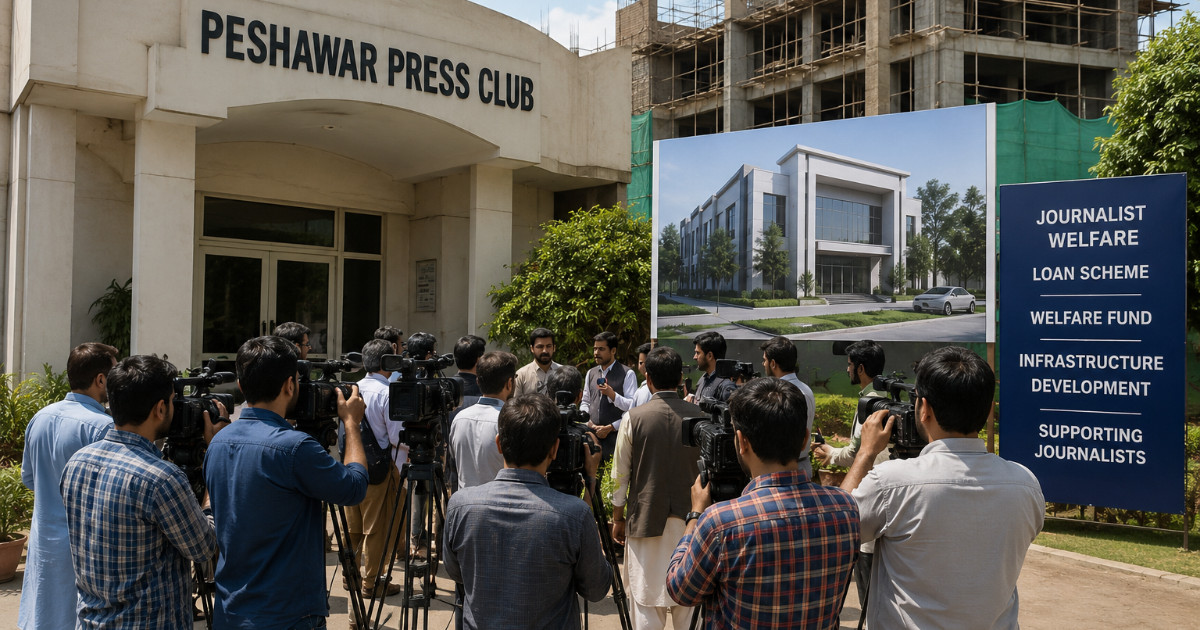
In Peshawar, PFUJ Vice-President Bakhtzada Yousafzai spearheaded the protest. The demonstrators presented a memorandum and chanted slogans against the owners for denying rights to their workers.
The Abbottabad Union of Journalists also held a similar protest. Supreme Court Bar Association President Rasheed A. Rizvi also joined the protestors to express solidarity. He assured that his association would struggle shoulder to shoulder with them.
In Sukkur, the demonstration was led by PFUJ Assistant Secretary General and Sukkur Union of Journalists’ President Javed Memon. A memorandum was handed over to PEMRA’s regional chief by the demonstrators.
In Multan, the protest was led by PFUJ member FEC Muhammad Shakeel. Journalists in large numbers took part and also handed over a memorandum to the regional chief of PEMRA.
J.Parkash Moorani, President of Hyderabad Union of Journalists, led the demonstration in his city.
Key Points
- PFUJ called for protests against media owners across Pakistan.
- PEMRA chairman assured no favors would be given to media owners until grievances are addressed.
- Protests occurred in Islamabad, Lahore, Quetta, Karachi, Peshawar, and other cities.
Relevant Topics
Ask AI: Understand this story your way
AI EnabledDig deeper, ask anything — get instant context, background, and clarity.
Disclaimer: This feature is powered by AI and is intended to help readers explore and understand news stories more easily. While we strive for accuracy, AI-generated responses may occasionally be incomplete or reflect limitations in the underlying model. This feature does not represent the editorial views of JournalismPakistan. For our full, verified reporting, please refer to the original article.