
Media bodies told to observe sanctity of holy texts
JournalismPakistan.com | Published: 18 March 2015
Join our WhatsApp channel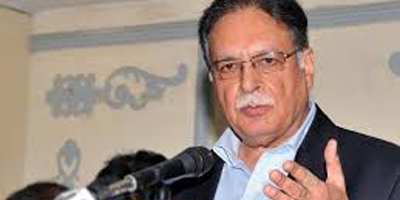
The government has issued a letter to media bodies to maintain respect for sacred texts, specifically the Holy Quran. Minister Pervez Rashid addressed concerns about the publication and disposal of copies of the Quran in newspapers.Summary
ISLAMABAD: The National Assembly was informed on Wednesday that the government is sending out a letter to media representative bodies to “instruct all their member publications to avoid publication of sacred materials and to observe and preserve sanctity of holy texts in the newspapers.”
Minister for Information, Broadcasting and National Heritage Pervez Rashid (pictured) said the Press Information Department, on the request of the Ministry of Religious Affairs, had written a letter to the Presidents of APNS, and CPNE and Chairman PBA, “requesting them for observance of reverence of the verses of Holy Quran.” The letter was sent in February 2014.
He was replying to a query by MQM legislator Sheikh Salahuddin during Question Hour regarding verses and translation of the Holy Quran printed on the newspapers’ front pages. The MNA wanted to know “steps being taken to prevent desecration of the verses of Holy Quran.”
Saying that the newspapers are publishing verses and translation of Holy Quran on their front page for information and education of their readers, the minister added: “It has also come into the notice that these newspapers are disposed of as raw materials which may also be used for packing by certain sections of society.”
The minister also the law regarding offences relating to “Defiling, of Holy Quran” vide chapter XV, Section-295-B of Pakistan Penal Code, which states, ““Whoever willfully defiles, damages or desecrates a copy of the Holy Quran or of extract there from or uses it in any derogatory manner or for any unlawful purpose shall be punishable with imprisonment for life.”
Key Points
- Government sends letter to media bodies on publication of holy texts.
- Minister addresses concerns over Quran verses in newspapers.
- Legislation exists against desecration of the Holy Quran.
- Publications instructed to ensure reverence of sacred texts.
- Report follows query from MQM legislator regarding Quran publication.
Relevant Topics
Ask AI: Understand this story your way
AI EnabledDig deeper, ask anything — get instant context, background, and clarity.
Disclaimer: This feature is powered by AI and is intended to help readers explore and understand news stories more easily. While we strive for accuracy, AI-generated responses may occasionally be incomplete or reflect limitations in the underlying model. This feature does not represent the editorial views of JournalismPakistan. For our full, verified reporting, please refer to the original article.