
Learn from mistakes and move on, says journalist Najia Ashar
JournalismPakistan.com | Published: 8 April 2015
Join our WhatsApp channel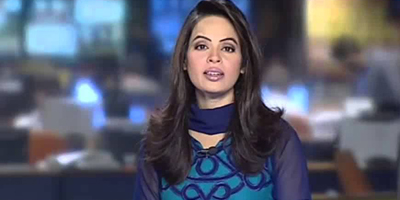
Najia Ashar, a Pakistani journalist on a JSK Fellowship, stresses acknowledging mistakes as key to personal growth. She aims to empower female journalists through technology.Summary
ISLAMABAD: Najia Ashar, a well-known broadcast journalist, says that one should acknowledge his/her mistakes, learn from them and move forward to become a successful person.
She is currently on a JSK Fellowship in the United States where she is trying to develop a mechanism for training of journalists, especially the female, to protect them through technology. “Last spring, I was awarded the prestigious JSK Fellowship, in part on the basis of my idea to explore ways to protect journalists in Pakistan using technology,” she wrote on the JSK website.
She said that during her fellowship she got tremendous opportunities to interact with other fellows, students and experts and it helped her formulate a training model for Pakistani journalists.
“All these activities, feedback, suggestions and ideas opened a whole new world to me and helped me to pursue my challenge in a more effective way,” she said.
Regarding her experience she said: “Now, I know I will be disappointed at some points in the future, and that I won’t stop making mistakes. But this time I will shout “Ta Dah,” not awkwardly but with more energy and enthusiasm. I’ve learned that our failures are a natural way of guiding us to what really works and helping us find the path to success.”
Key Points
- Najia Ashar is a prominent broadcast journalist in Pakistan.
- She is currently on a JSK Fellowship in the United States.
- Ashar aims to create a training model for female journalists using technology.
- Her experiences have opened new opportunities and insights.
- She believes failures are crucial to guiding one towards success.
Relevant Topics
Ask AI: Understand this story your way
AI EnabledDig deeper, ask anything — get instant context, background, and clarity.
Disclaimer: This feature is powered by AI and is intended to help readers explore and understand news stories more easily. While we strive for accuracy, AI-generated responses may occasionally be incomplete or reflect limitations in the underlying model. This feature does not represent the editorial views of JournalismPakistan. For our full, verified reporting, please refer to the original article.