
Lack of cooperation by rival PFUJ factions failed Unification Committee
JournalismPakistan.com | Published: 30 August 2016
Join our WhatsApp channel
The Unification Committee of the Pakistan Federal Union of Journalists has been disbanded after failing to unify rival factions. The rivalry, marked by lack of cooperation, led to a widening gap between the factions despite initial agreements.Summary
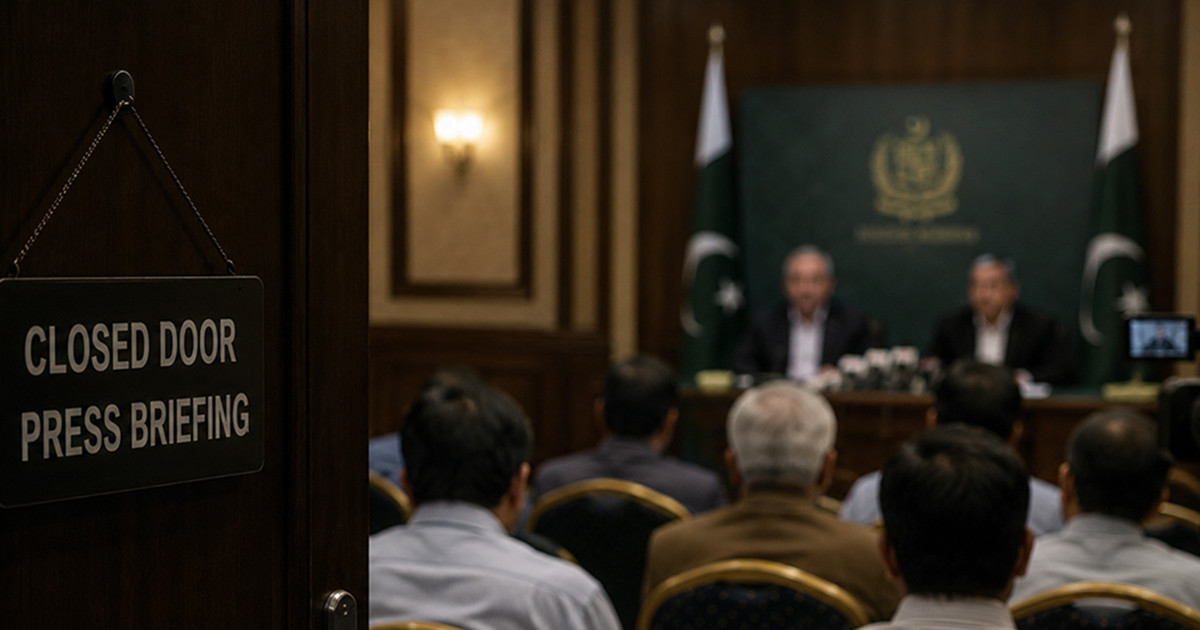
ISLAMABAD – The defunct Unification Committee of Pakistan Federal Union of Journalists said in statement Tuesday it had finally reached the conclusion that efforts to unify rival factions - one led by Rana Azeem and the other by Afzal Butt - would only end up further widening the gap between the two.
The Unification Committee announced its dissolution on August 27, hours before the scheduled polls for a unified body were to take place.
The two factions while publicly reposing full confidence in the Unification Committee and after having signed a settlement document, instead of abiding by the UC’s decisions kept trying to impose their own respective ideas about how to proceed, the statement said.
The Unification Committee comprised Mohammad Ziauddin, I A Rehman, Hussain Naqi, Khawar Naeem Hashmi, Shahidur Rahman, Nasir Zaidi and Rahimullah Yusufzai, Habib Khan Ghori and Siddiqui Baloch.
The Rana Azeem Group displayed its complete no-confidence in the Unification Committee by holding elections of its faction of PFUJ in Murree in May this year.
On the other hand, the Afzal Butt Group instead tried to misuse the Unification Committee itself to hold the elections of its own faction of PFUJ in Peshawar by refusing to withdraw the candidatures of Afzal Butt (for president’s position) and Khurshid Abbasi (for Secretary General’s post).
The statement said the Unification Committee was formed with the specific purpose of unifying the different factions of PFUJ and it made sincere efforts to accomplish such a challenging task. Its members remained committed to the idea of a strong, united and progressive PFUJ in keeping with its glorious traditions.
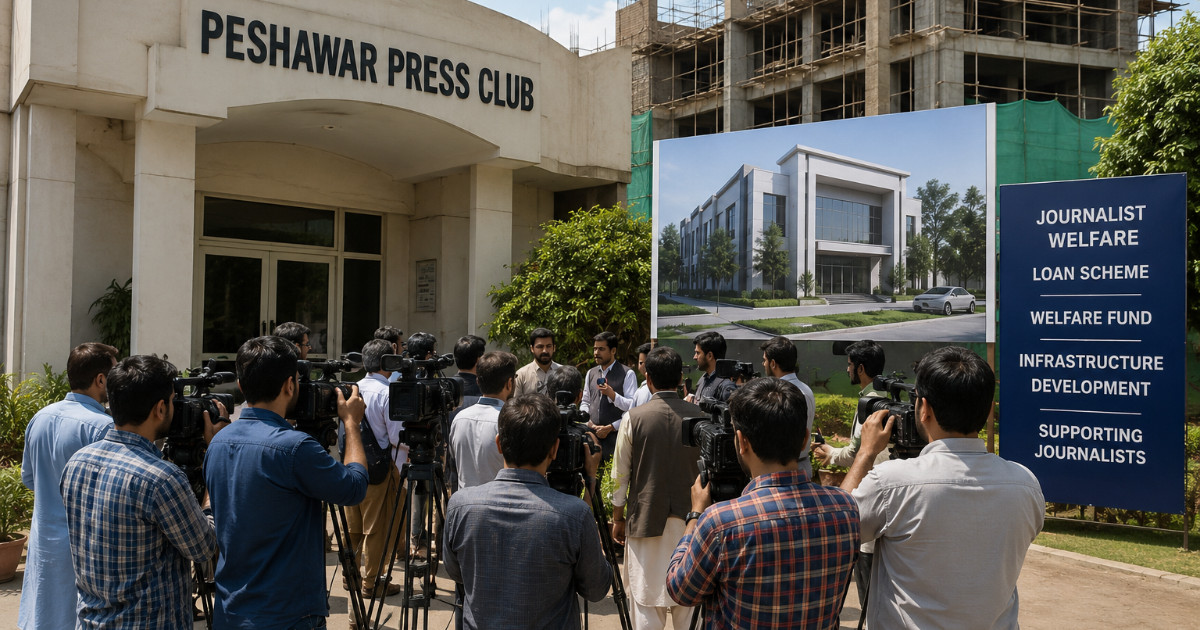
The Unification Committee said it acknowledges the Khyber Union of Journalists (KhUJ) for accepting its request to hold the Biennial Delegates Meeting in Peshawar on August 25-27 at a short notice, and for making excellent arrangements for the stay and comfort of the delegates. The hospitality extended to the delegates was in the true spirit of the hospitable nature of the people of Peshawar and Khyber Pakhtunkhwa, the statement said.
The BDM proceedings were lively and the discussions were informed and educative. More than 50 resolutions adopted by the BDM covered the problems and challenges facing journalists and the Pakistani media and forcefully advocated solutions.
The main reason for the Unification Committee’s failure to achieve its objectives was the lack of cooperation from different factions of the PFUJ. The UC members felt the faction leaders were interested more in holding on to their positions rather than unifying and saving PFUJ.
The faction led by Rana Azeem and G M Jamali was the first to stop cooperating with the Unification Committee by holding its FEC meeting and elections in Murree despite having agreed to wind up the faction and abide by the UC’s decisions. It violated the agreement signed by its representatives reposing trust in the Unification Committee and giving it the authority to take forward the unification process.
A small faction headed by Raja Riaz, Shafiq Awan and Shahryar was the next to show no-confidence in the Unification Committee when they led a walkout from the BDM of PFUJ in Peshawar on August 26 and boycotted its proceedings. They chanted provocative slogans against the Unification Committee members after having hailed them as their respectable seniors. That some of them tendered public apology for their actions later vindicated the Unification Committee stand but it was late as the damage had been done, the BDM proceedings disrupted and the opportunity to unify the PFUJ wasted.
The Afzal Butt Group cooperated with the Unification Committee the most but its cooperation was mainly cosmetic. As its members dominated the proceedings of the BDM in Peshawar, some of them behaved aggressively and joined the sloganeering against the Unification Committee when the latter refused to do their bidding.
Afzal Butt and Khursheed Abbasi, the candidates for President and Secretary General, didn’t heed the Unification Committee’s wish not to contest the PFUJ elections for one term. This was in keeping with the findings of the investigation committee and its recommendations on moral grounds that they should stay away from the polls to put the bitterness of the past behind them and facilitate smooth elections.
The Unification Committee wanted a consensus interim set-up, an ad hoc committee or an elected PFUJ in which those responsible for the controversial 2013 elections in Karachi and the subsequent split in the PFUJ shouldn’t be represented. None of its proposals was accepted. In the end though when the UC was dissolved, the BDM and the Afzal Butt faction agreed to the proposal to constitute an ad hoc committee for an interim period to hold elections for the unions of journalists in January 2017 and for PFUJ in March 2017.
The Unification Committee members felt they shouldn’t give legitimacy to one faction of PFUJ by holding the elections during the Peshawar BDM as it would have reinforced the existence of two distinct factions and making it even more difficult to unify them. It was obvious that the Afzal Butt Group would win the elections in Peshawar and be tempted to operate as a parallel body of PFUJ as it did following the 2013 polls in Karachi.
By not holding the elections, a clear message was sent to the rival factions that the doors are still open to unify PFUJ and then hold inclusive and credible polls of a united PFUJ.
The Unification Committee refused to identify with any one faction of PFUJ and instead opted to stay strictly neutral. It also sent a strong message that it wanted a united and pro-worker PFUJ and not one identified with any media group or the government.
Related posts:
Unifying PFUJ - Sincere, prolonged efforts come to nought
No polls as PFUJ unification efforts vanish into thin air, ad hoc committee formed
Key Points
- Unification Committee dissolved amid factional disputes
- Rival groups failed to cooperate, worsening divisions
- Polled factions disregarded Unification Committee decisions
- Meeting held in Peshawar highlighted challenges for journalists
- Committee aimed for a united PFUJ but faced resistance
Relevant Topics
Ask AI: Understand this story your way
AI EnabledDig deeper, ask anything — get instant context, background, and clarity.
Disclaimer: This feature is powered by AI and is intended to help readers explore and understand news stories more easily. While we strive for accuracy, AI-generated responses may occasionally be incomplete or reflect limitations in the underlying model. This feature does not represent the editorial views of JournalismPakistan. For our full, verified reporting, please refer to the original article.