
Kolkata journalists protest attacks Indian reporter assaulted amid 'lapdog media' backlash at protests Rohit Sharma's batting explained: The science behind his greatness Killings and courtrooms define another difficult week for journalism Babar Azam: The technique, the turmoil, and the fight to reclaim greatness Reuters editor warns AI threatens journalism's future Aaqib Javed and the anatomy of Pakistan cricket's decline The JournalismPakistan Global Media Brief | Edition 30 | July 24, 2026 Paramount-Warner merger faces longer court delay Judge rebukes DOJ as it drops subpoenas against NYT reporters Munizae Jahangir bids farewell to Aaj News after 11 years Mumbai Press Club condemns attack on journalists in Delhi Can journalists trust AI for fact-checking? Sehar Kamran walks out after clash with Tarar Italian sports journalist found dead; media groups seek full investigation Kolkata journalists protest attacks Indian reporter assaulted amid 'lapdog media' backlash at protests Rohit Sharma's batting explained: The science behind his greatness Killings and courtrooms define another difficult week for journalism Babar Azam: The technique, the turmoil, and the fight to reclaim greatness Reuters editor warns AI threatens journalism's future Aaqib Javed and the anatomy of Pakistan cricket's decline The JournalismPakistan Global Media Brief | Edition 30 | July 24, 2026 Paramount-Warner merger faces longer court delay Judge rebukes DOJ as it drops subpoenas against NYT reporters Munizae Jahangir bids farewell to Aaj News after 11 years Mumbai Press Club condemns attack on journalists in Delhi Can journalists trust AI for fact-checking? Sehar Kamran walks out after clash with Tarar Italian sports journalist found dead; media groups seek full investigation
Logo
Janu
Middle East

Kolkata journalists protest attacks

 JournalismPakistan.com |  Published: 27 July 2026 |  JP Asia Desk

Join our WhatsApp channel
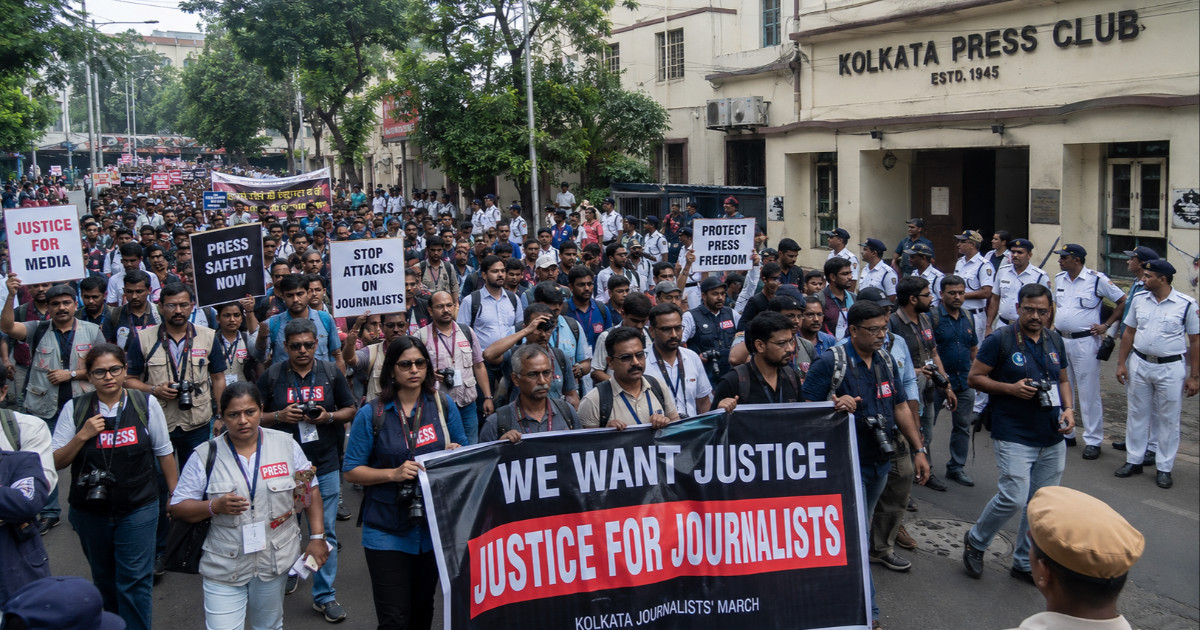
Kolkata journalists protest attacks
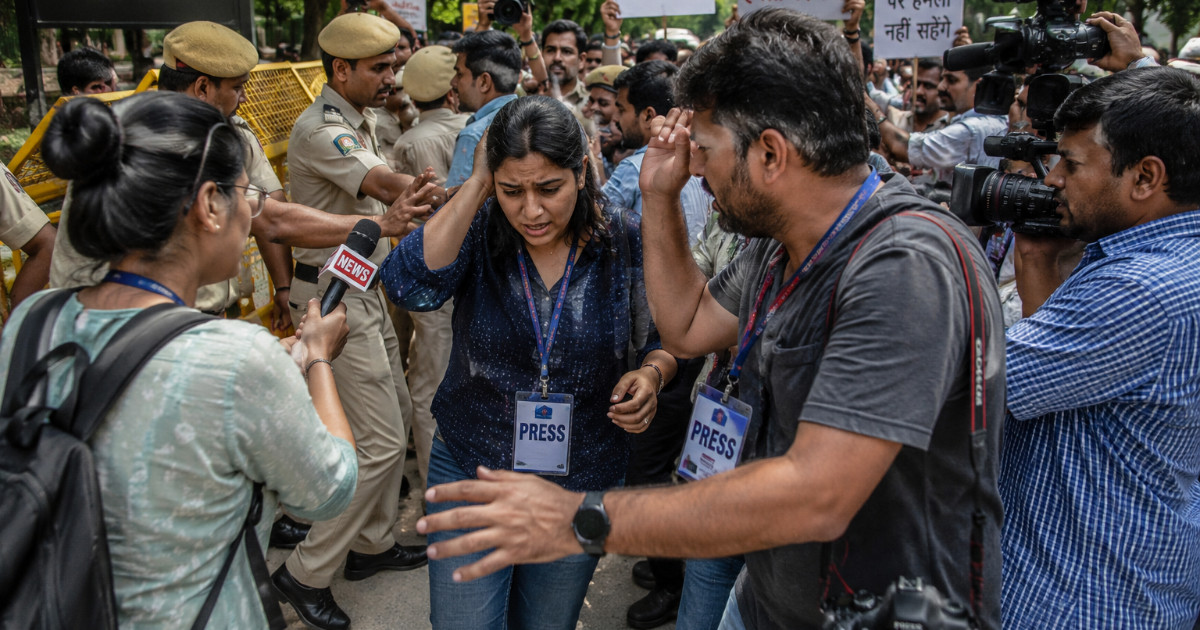
On July 27, hundreds of West Bengal journalists marched in Kolkata to condemn attacks on media during a July 24 rally over a NEET paper leak; six journalists were injured and treated at SSKM Hospital. Delegation sought justice; Goonda Act invoked.
کولکاتا میں صحافیوں نے 27 جولائی کو میڈیا پر حملوں کی مخالفت میں احتجاج کیا اور انصاف و حفاظت کا مطالبہ کیا۔ ریاست نے گوونڈا ایکٹ نافذ کیا اور وزیر تعلیم دھرمندر پردھان 25 جولائی کو مستعفی ہوگئے۔
اردو خلاصہ

KOLKATA — Hundreds of journalists from across West Bengal held a protest rally in Kolkata on July 27, condemning the assault on media personnel during a student demonstration on July 24. The march, organized by the Kolkata Journalists' Fraternity, began at the Kolkata Press Club and concluded at Dorina Crossing, the site of the original attack, where journalists demanded safety for media professionals and strict action against those responsible for the violence.

A delegation later submitted a memorandum to the Governor at Raj Bhavan, seeking justice for injured journalists and stronger protections for press personnel covering protests.

The attacks occurred during a protest march organized by Left student organizations and the Cockroach Janata Party (CJP) over the NEET exam paper leak. Six journalists were injured and treated at state-run SSKM Hospital after a section of the crowd hurled shoes, bottles, and bricks at police and media personnel. The protesters had been demanding the resignation of Union Education Minister Dharmendra Pradhan and the dissolution of the National Testing Agency. Pradhan resigned on July 25, a day after the violence.

Government invokes new Goonda Act in landmark case

West Bengal Chief Minister Suvendu Adhikari announced that the newly enacted West Bengal Public Safety and Control of Anti-Social Activities Act, 2026, commonly known as the Goonda Act, would be invoked against those accused of orchestrating the violence. This marks the first application of the legislation since its passage, allowing for preventive detention of up to 12 months without trial and granting authorities broad arrest and search powers. “We will take such action under the Goonda Act that these goons and even their next three generations will remember it,” Adhikari stated in the state Assembly.

Adhikari alleged that approximately 70 people had been identified through video footage and that none of the accused were students or connected to the NEET movement. Police confirmed 16 arrests as of July 27, with investigators recreating the sequence of events at Dorina Crossing using five detained suspects. Those arrested include individuals from Kolkata and surrounding districts, with police claiming many are "outsiders" with previous criminal records rather than student protesters.

Communal framing and political controversy

The chief minister's response drew criticism for its communal framing after he publicly named five alleged offenders, all bearing Muslim names, and referred to the perpetrators as “those Friday people”, a phrase widely interpreted as a reference to Muslims. Adhikari also alleged that Islamic fundamentalists, possibly backed by foreign forces, were behind the violence, claiming they had “infiltrated” the student movement. Press freedom advocates and opposition parties condemned the remarks, with the Association for Protection of Democratic Rights alleging the violence was engineered to create grounds for applying the new law.

Journalists present at the scene, however, offered conflicting accounts of the violence. An audio-visual journalist told The Wire that the mob did not appear to have an identifiable political character and that student protesters had formed protective rings around reporters. Several organizers and witnesses claimed that outsiders, allegedly linked to the ruling establishment, had entered the procession to engineer the violence. The Students Federation of India (SFI) and other Left student organizations condemned the attacks on media workers. Still, they alleged that people linked to the ruling party were responsible for triggering the unrest.

WHY THIS MATTERS: The attacks on journalists during a political protest underscore the growing risks media personnel face while covering public demonstrations in India, particularly in politically charged environments. The case has significant implications for press freedom and journalist safety, with media organizations demanding better safety protocols and legal accountability, a pattern seen across multiple states where covering protests has become increasingly hazardous. The government's invocation of stringent legislation and its communal framing of the perpetrators raises concerns about the potential use of anti-social laws against journalists and civil society, which could further chill press freedom and independent reporting.

ATTRIBUTION: Reporting by JournalismPakistan, based on publicly available statements and reports by United News of India (July 27, 2026), The Wire (July 26, 2026), and The Telegraph India (July 26, 2026).

PHOTO: AI-generated; for illustrative purposes only

Key Points

  • Hundreds of journalists from across West Bengal marched in Kolkata on July 27 to protest attacks on media.
  • The assaults took place during a July 24 student rally over a NEET paper leak; six journalists were injured and treated at SSKM Hospital.
  • The Kolkata Journalists' Fraternity led the march from the Press Club to Dorina Crossing and submitted a memorandum to the Governor.
  • Protesters had demanded the resignation of Union Education Minister Dharmendra Pradhan and dissolution of the National Testing Agency.
  • West Bengal invoked the new Goonda Act in the first major use of the law against those accused of orchestrating the violence.

Key Questions & Answers

What prompted the journalists' protest?

Journalists protested on July 27 to condemn assaults on media personnel that occurred during a July 24 student rally over a NEET paper leak.

How many journalists were hurt and where were they treated?

Six journalists were injured during the violence and received treatment at the state-run SSKM Hospital.

What demands did the journalists make?

They demanded safety and stronger protections for press personnel, justice for the injured, and strict action against those responsible.

What legal action did the state take after the violence?

West Bengal announced the invocation of the new Goonda Act against those accused of orchestrating the violence, marking the law's first major use.

Ask AI: Understand this story your way

AI Enabled

Dig deeper, ask anything — get instant context, background, and clarity.

Not sure what to choose? Try one of these.

The AI generates results based on your selected options
Your AI-generated results will appear here after you click the button.

Disclaimer: This feature is powered by AI and is intended to help readers explore and understand news stories more easily. While we strive for accuracy, AI-generated responses may occasionally be incomplete or reflect limitations in the underlying model. This feature does not represent the editorial views of JournalismPakistan. For our full, verified reporting, please refer to the original article.
Don't Miss These

Newsroom
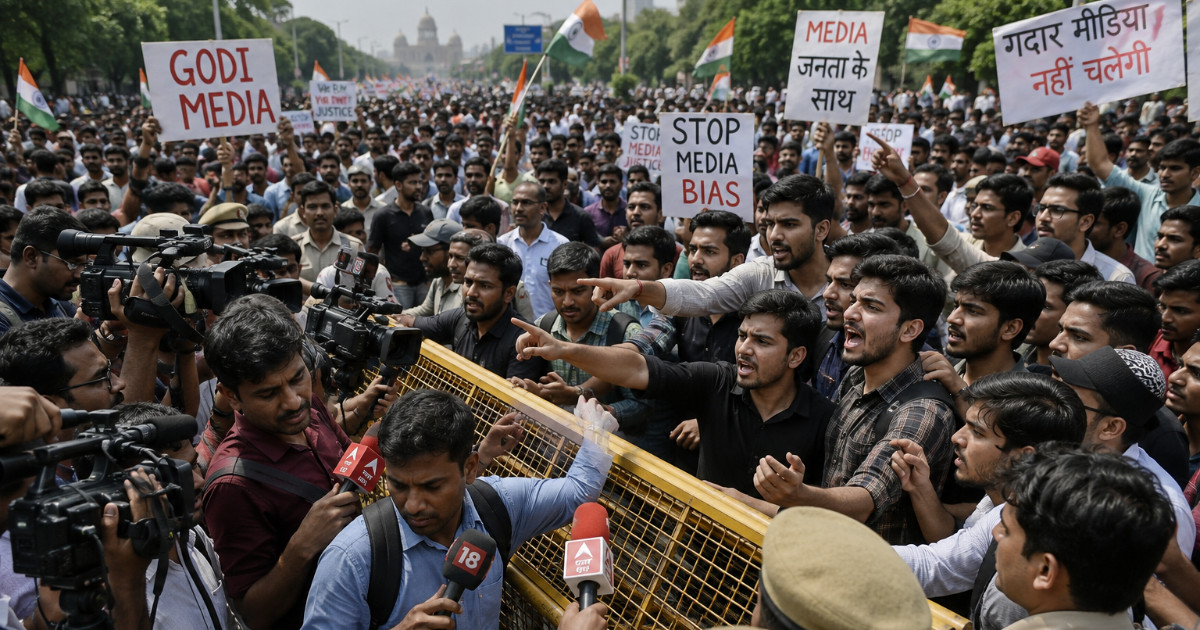
Indian reporter assaulted amid 'lapdog media' backlash at protests

Indian reporter assaulted amid 'lapdog media' backlash at protests

 July 26, 2026 A Times Now reporter was assaulted by demonstrators in New Delhi while covering student anti-government protests amid anger over perceived lapdog media bias.


Rohit Sharma's batting explained: The science behind his greatness

Rohit Sharma's batting explained: The science behind his greatness

 July 26, 2026 Rohit Sharma's batting uses stillness, a late minimal trigger and steady head alignment to produce exceptional timing and effortless boundaries.


Killings and courtrooms define another difficult week for journalism

Killings and courtrooms define another difficult week for journalism

 July 26, 2026 Press Freedom Tracker documents journalist killings, arrests, legal pressure, violence, and harassment worldwide, exposing the growing threats facing independent reporting.


Babar Azam: The technique, the turmoil, and the fight to reclaim greatness

Babar Azam: The technique, the turmoil, and the fight to reclaim greatness

 July 25, 2026 Babar Azam's textbook technique and still head position contrast with Pakistan cricket's turmoil and public pressure as he fights to reclaim his best form.


Reuters editor warns AI threatens journalism's future

Reuters editor warns AI threatens journalism's future

 July 25, 2026 Reuters editor Alessandra Galloni warns AI companies use journalistic content without adequate attribution or payment, threatening the future of newsrooms.


Popular Stories