
Babar Azam: The technique, the turmoil, and the fight to reclaim greatness
JournalismPakistan.com | Published: 25 July 2026 | Dr. Nauman Niaz (TI)
Join our WhatsApp channel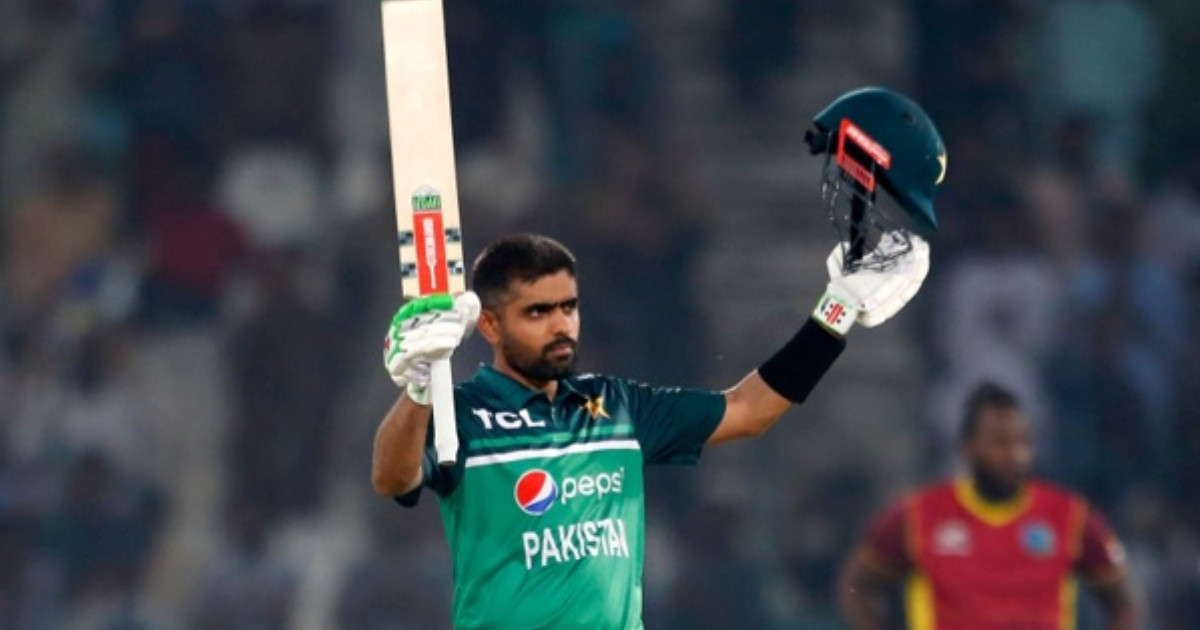
Babar Azam's batting, built on textbook technique and exceptional head stillness, has been undermined by the instability of Pakistan cricket - captaincy roulette, intense public scrutiny and institutional pressures. He is now fighting to rebuild form and reclaim his place among the game's best.Summary
There is a kind of batsman whose method looks, from the first ball he ever plays in international cricket, as though it has been lifted whole from an instructional textbook, every angle correct, every transfer of weight orthodox, every follow-through completed with the unhurried finality of a coaching manual illustration come to life. Babar Azam belongs to this rarest of categories, a batsman whose technique was, for the better part of a decade, so visually complete that commentators reached instinctively for the language of painting rather than sport to describe it: composition, balance, line. And yet the story of Babar Azam is not, in the end, simply the story of a beautiful technique. It is the far more complicated, far more human story of what happens when that technique collides with the crushing institutional weather of Pakistan cricket, its captaincy roulette, its unforgiving public temperament, its capacity to elevate a batsman to the very summit of the world's rankings and then, within the space of a single lean season, to make him feel as though none of it had ever happened at all.
The biomechanics behind Babar Azam's elegance
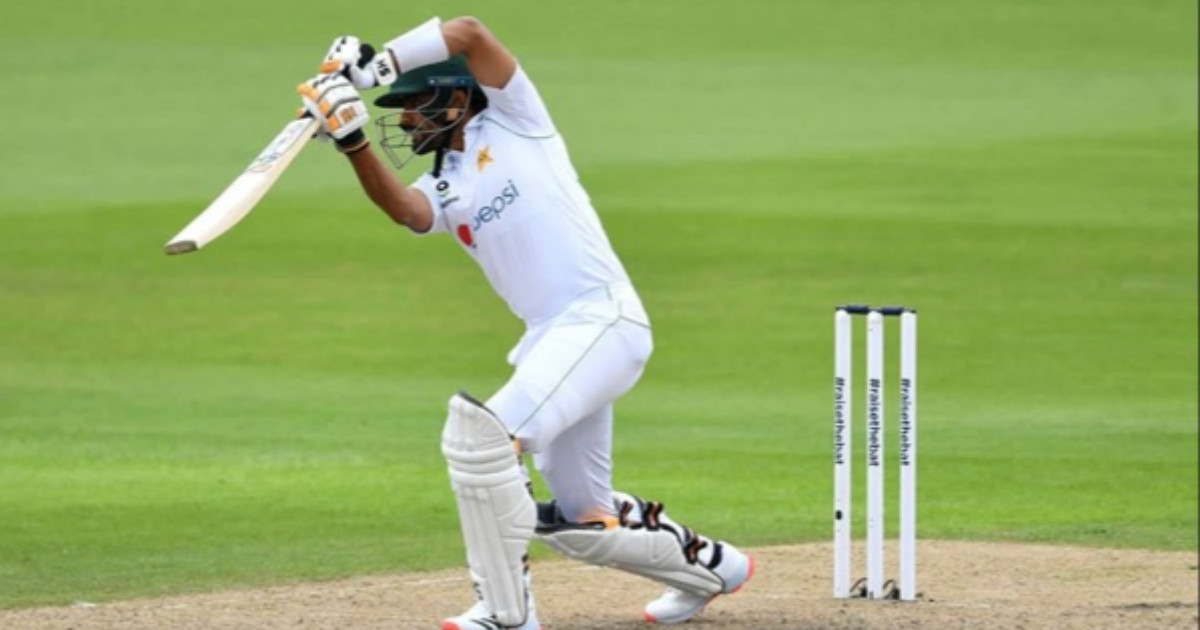
To understand what Babar Azam does with a cricket bat is to begin with the stillness of his head, a stillness so complete that biomechanists studying elite batting have repeatedly cited him, alongside the very best players of his generation, as a reference case for minimal cranial displacement through the stroke, the head remaining locked over the ball from trigger movement through to follow-through, eyes level, chin tucked, the entire apparatus of vision kept as stable as a tripod-mounted camera even as the rest of the body rotates and transfers weight beneath it. This stillness is the foundation upon which everything else in his batting is built, for it is the stability of the head that permits the exceptionally late point of contact that so distinguishes his driving, the ball met not out in front of the body in the manner of batsmen seeking to force the pace prematurely, but directly beneath the eyes, at the fullest possible extension of a front arm that leads the stroke with the high left elbow so beloved of classical coaching manuals from Yorkshire to Lahore.
His backlift, unlike the increasingly exaggerated, bat-raised-to-gully trigger movements of the T20 generation, remains close to orthodox: a straight lift back toward first or second slip rather than square of the wicket, ensuring the bat descends on a line that stays fractionally inside the line of the ball for the longest possible duration of the downswing, minimising the horizontal deviation that produces edges when timing is even marginally imperfect. It is this combination, stillness of head, correctness of backlift, and lateness of contact that produces the cover drive and the flick through midwicket that have, across a career now well into its second decade, been repeatedly filmed, frozen, and circulated as instructional footage in cricket academies from Karachi to Melbourne: a full, high follow-through on the drive, the bat face closing only after the ball has already left it; and, on the leg side, a wristy, late-turning flick that generates power not through force of arm but through the rotational whip of forearm and wrist released at the very last possible instant, a mechanism of considerable biomechanical elegance, converting a full, straight delivery into a stroke played almost square of the wicket without ever appearing hurried.
Where opponents found a way through
Where this technique finds its stiffest examination, and it is a fair and recurring examination, one that opposition analysts across three formats have returned to again and again—is in his footwork against the short ball and, more specifically, against high-quality pace bowling that targets a fourth- or fifth-stump channel just back of a length, a channel in which his generally front-foot-oriented base can, on his less certain days, leave his hands playing fractionally away from the body, producing the edges behind the wicket that have periodically punctuated even his most productive periods. It is a vulnerability shared, in truth, by a great many classically organised, front-foot batsmen, the same channel that troubled Test batsmen of considerable pedigree long before Babar Azam was born, but it has been studied, mapped, and bowled at with such relentless specificity by opposition bowling coaches in recent years that it has become, fairly or not, the single most discussed technical fault-line of his career.
The spin challenge that reshaped his game
Babar Azam's difficulties against slow left-arm orthodox spinners and left-arm wrist spinners (chinamen) are rooted less in a deficiency of talent than in a sequence of biomechanical compromises that have gradually become embedded in his method. At his peak between 2017 and 2022, Babar's success rested on an exceptionally stable head position, late bat swing, and precise alignment of the eyes over the line of the ball. Against spin, however, particularly when the ball drifts in and turns away or holds its line, his front-foot mechanics have become increasingly linear rather than rotational.
Instead of allowing the front hip to open while maintaining pelvic stability, he often plants the front foot across the line with a relatively closed pelvis. This narrows the base of support, restricting transverse rotation of the trunk and delaying bat acceleration. Consequently, the bat approaches the ball from outside the intended swing plane, forcing him to play with his hands separated from his torso rather than with the coordinated kinetic chain extending from the ground through the hips, trunk, shoulders, and wrists.
Slow left-arm orthodox bowlers exploit this by pitching on middle and leg, drifting towards off stump before turning away, while left-arm wrist spinners reverse the visual cue by drifting away before spinning sharply back or continuing across him. Because his centre of mass remains committed to the front foot before the ball reaches its final trajectory, he loses the capacity to make late adjustments, increasing both the outside edge and the leading-edge risk. Motion analyses of elite batting consistently demonstrate that successful players preserve head stability and delay weight transfer until immediately before bat-ball contact; Babar's recent dismissals suggest a premature transfer of body mass that reduces adaptability against high-spin deliveries.
The missing sweep and its tactical cost
The absence of a consistently reliable sweep shot has compounded these technical limitations. The sweep is not just an attacking stroke but an important biomechanical mechanism for altering the spinner's length and line. Executed correctly, it lowers the batter's centre of gravity, widens the base of support through controlled knee flexion, rotates the pelvis approximately perpendicular to the pitch, and allows the bat to travel on a horizontal arc generated by coordinated hip and trunk rotation.
Babar has rarely incorporated this movement into his scoring repertoire, relying predominantly on the forward defensive, conventional drive, or late glide. Without a dependable sweep or slog-sweep, opposing captains can maintain orthodox fields while allowing left-arm spinners to repeatedly attack the same corridor outside off stump or into the rough without fear of being forced finer or squarer. The result is a progressive narrowing of his scoring zones, increasing dot-ball pressure and encouraging strokes from suboptimal positions.
Modern elite players against spin, such as Joe Root, Kane Williamson, and several accomplished Asian batters, use the sweep family of strokes not only for boundary scoring but to manipulate field settings and disrupt a spinner's rhythm. Biomechanically, the sweep demands early recognition, controlled lowering of the body, stable head alignment, and independent wrist control, attributes that Babar has seldom integrated into his otherwise orthodox technique. The consequence is that he often remains upright, bat vertical, and committed to a narrow corridor of straight-bat strokes, allowing quality left-arm spin to dictate both his movement patterns and scoring tempo rather than the other way around.
The formula that made him the world's best white-ball batter
What elevated Babar Azam from just elegant to, for a period of roughly four years spanning 2019 to 2023, statistically the finest batsman in the world across white-ball cricket, was not technique alone but a method built on the unglamorous discipline of strike rotation, an almost metronomic insistence on working ones and twos into the gaps square and behind the wicket, denying bowlers the symphony of settled lines by refusing to let successive deliveries pass without some response, and reserving the more expansive, boundary-seeking version of his technique for the specific match situations, the last ten overs of an ODI innings, the powerplay overs of a T20 chase, in which the calculated risk of that expansiveness could be justified by the state of the game. His game awareness, at his best, has always shown itself less in any single spectacular stroke than in this quieter, more continuous reading of the situation: an ability to recognise, over after over, precisely how much risk a given passage of play could tolerate, and to calibrate his aggression to that reading with a discipline that, at his peak, made him extraordinarily difficult to bowl to for sustained periods, since he offered opposition captains no settled period of containment to build pressure around.
The numbers behind a remarkable peak
The statistical record of those prime years remains, whatever has followed since, genuinely extraordinary and deserves to be stated plainly rather than allowed to be swallowed by the narrative of subsequent decline. In One Day Internationals, Babar Azam reached the milestones of one thousand, two thousand, three thousand, and successive thousand-run tallies faster, in terms of innings required, than any batsman in the history of the format, a sequence of record-breaking that briefly made him the benchmark against which the very concept of ODI scoring speed-to-milestone was measured, surpassing legends of the format along the way.
His tally of One Day International centuries has climbed to a level matching the long-standing Pakistan national record held by Saeed Anwar, achieved in a substantially shorter career than Anwar's, at an average comfortably above fifty and a strike rate that, for the greater part of his career, comfortably balanced the format's competing demands of tempo and permanence. In T20 International cricket he became, at various points, the format's fastest man to one thousand and then two thousand runs, surpassing the pace set by Virat Kohli himself, and he remains, on the aggregate historical ledger of the format, among its very leading run-scorers, a testament to a method that, for all the sport's obsession with six-hitting, found a way to dominate through placement, rotation, and boundary-timing rather than raw power alone. In Test cricket his record is the least prolific of the three but far from negligible: nine centuries, an average that has fluctuated across his career between the low forties and, in his finest calendar year of 2022, considerably higher, and a signature innings, a 196 not out across the best part of ten hours against Australia in Karachi, the highest fourth-innings score by a Pakistan batsman and the highest ever played by a captain in the fourth innings of a Test match anywhere in the world that stands, on its own, as sufficient evidence of a technique capable of the very longest, most attritional examinations the game can offer.
When everything began to unravel
It would be a disservice to Babar Azam, and a disservice to the honesty this phase owes its subject, to describe what followed those prime years as a simple, single collapse. It was, rather, a convergence of several distinct pressures, each individually survivable, that arrived in sufficiently proximity to one another that their cumulative weight became genuinely difficult for any single batsman, however gifted, to carry.
Opposition tactics expose technical weaknesses
The first was tactical exposure. Once opposition analysts had accumulated sufficient video evidence of the fourth-and-fifth-stump vulnerability discussed above, bowling attacks across the world, England's seam bowlers with the Kookaburra and Dukes ball alike, Australia's pace battery, South Africa's height-and-bounce specialists began to construct entire bowling plans around exploiting it with a specificity that a batsman relying so heavily on rhythm and settled method found genuinely difficult to counter without some degree of technical adjustment, and technical adjustment, for a batsman whose game had been built on such long-cultivated correctness, does not come without real risk to the very correctness that made the game work in the first place.
Captaincy, instability, and administrative chaos
The second was institutional. Few batsmen anywhere in world cricket have carried the accumulated weight of captaincy, vice-captaincy, removal, reinstatement, further removal, and renewed reinstatement that Babar Azam has carried across the past half-decade of Pakistan cricket's remarkable administrative turbulence. He first assumed the all-format captaincy in 2019, led the Test side through a tenure between 2020 and 2023 that was, on its own results-based merits, genuinely successful, ten wins from twenty Tests, a resounding home victory over South Africa, clean sweeps away from home in conditions that had historically troubled Pakistan before resigning the captaincy across all formats in November 2023 amid the fallout of a bitterly disappointing home-soil-adjacent World Cup campaign, a resignation followed by a period in which he was, at various points, removed from the white-ball captaincy, dropped from ODI squads entirely during his leanest run of form, and watched a succession of separate captains, Shan Masood in Tests, Mohammad Rizwan and then Shaheen Shah Afridi in ODIs, Shaheen and then Salman Ali Agha in T20Is, cycle through leadership roles with a rapidity that has become, even by Pakistan cricket's famously unstable historical standards, a subject of open ridicule among former players and commentators.
That Babar found himself reinstated as Test captain in July 2026, following Shan Masood's own removal after a difficult run of just four wins from sixteen Tests, was described by the very selectors who made the appointment not as a vote of confidence in Babar's captaincy so much as an acknowledgment of the dearth of credible alternatives, a form of institutional faint praise that would test the composure of any professional sportsman, let alone one already navigating a personal battle to rediscover his best batting form.
Was returning as Test captain the right decision?
Whether accepting that renewed captaincy was, in fact, a wise decision is a question worth engaging honestly rather than deferring. The case against is not difficult to construct: he returns to lead a Test side that has, under his immediate predecessor, won barely a quarter of its matches, ahead of daunting assignments in the West Indies and in England where fast, seaming conditions will test precisely the technical channel that has caused him the most difficulty in recent seasons, and he does so having already once discovered, in the aftermath of his first captaincy tenure, how directly the accumulated weight of leadership can compound rather than relieve the burden on a batsman's own game.
The case in his favour is equally real, however, and deserves equal weight: his first tenure, whatever its ending, was Pakistan's most stable and results-competitive red-ball captaincy spell in years; he possesses, uniquely among the currently available candidates, the batting pedigree and the accumulated tactical experience to command a dressing room in genuine flux; and there is a coherent, if not risk-free, logic in the argument that a batsman rediscovering his own method, as the evidence of his most recent centuries suggests he is, may find renewed captaincy less a distraction from that rediscovery than a source of the very structure and purpose that so visibly deserted him during his captaincy-less, drifting middle seasons. It is, in the final analysis, less a wise decision than a necessary gamble, made by a board with few alternatives, on a batsman whose career has already demonstrated both how well he can lead and how heavily leadership can weigh.
The burden of fame and constant scrutiny
The third pressure, and perhaps the least discussed in purely cricketing terms, was simply the psychological toll of celebrity in a cricket culture that offers its brightest stars extraordinarily little shelter from public judgment. Having ascended, across 2021 and 2022, to the unprecedented status of the world's top-ranked batsman simultaneously across all three international formats, a genuine landmark achievement, matched by vanishingly few cricketers in the game's history, Babar Azam became, almost overnight, not just Pakistan's premier batsman but its central cultural export, a figure whose every innings, every captaincy decision, and eventually every dip in form was dissected across broadcast media and social platforms with an intensity that offered no genuine off-season, no private space in which to simply rebuild a game away from scrutiny.
It is a burden that has broken far tougher temperaments than a young batsman still refining his method under the weight of newly acquired global stardom, and the roughly two-year international century drought that followed, a period in which the fluent, flowing batsman of 2021 and 2022 gave way to a visibly tighter, more anxious version of the same technique, prone to the very tentative, hands-away-from-the-body dismissals that a settled, confident version of his game had largely avoided, reads, in retrospect, less as a mysterious collapse of skill than as the entirely explicable consequence of technical exposure, institutional chaos, and public pressure arriving in close, compounding succession.
A century that marked more than a return to form
It is against this backdrop that the century he finally produced in Rawalpindi in November 2025, an unbeaten, controlled 102 against Sri Lanka that brought up his twentieth ODI hundred, drew him level with Saeed Anwar's long-standing Pakistan record, and ended a drought of more than two years since his previous international century, deserves to be read not just as a return to form but as something closer to a genuine act of professional and psychological reconstruction, the visible evidence of a batsman who had spent two lean years rebuilding, delivery by delivery, the same rhythmic, still-headed method that had once made him the finest white-ball batsman alive. It was followed by a title-winning Pakistan Super League campaign as captain of Peshawar Zalmi, in which he scored heavily and led with evident renewed authority, and then, in the same eventful season, by his second appointment as Pakistan's Test captain, a genuine full-circle moment for a career that has, across barely a decade of international cricket, already lived through more institutional upheaval than most cricketers experience across two.
Babar Azam's place in Pakistan's future
Persistent, periodically recurring social media rumors of his retirement from T20 International cricket have been repeatedly and specifically debunked by verified reporting. The honest, current position, rather than the rumor, is that Babar Azam remains an active, integral member of Pakistan's squad across all three formats, though the current team management, including Mike Hesson and Aaqib Javed, appear reluctant to include him regularly in T20 Internationals and even experimented with batting him at No. 4 during the ICC T20 World Cup 2026, a position widely considered unsuited to his strengths. That debate, however, extends beyond his standing, as his numbers and position among the format's leading all-time run-scorers comfortably justify his place on cricketing merit alone.
His fitness, tested across the demanding three-format international calendar and the additional pressures of franchise cricket in the Pakistan Super League and the Big Bash League, remains, by the visible evidence of his fielding and running between the wickets, at a professional standard that shows no obvious signs of decline. More importantly, his greatest asset, the stillness of the head, the correctness of the backlift, and the late, high-elbowed extension through the covers, remains, judging by his most recent centuries, recognizably the same instrument it always was, tempered now by the harder-won, more watchful judgment of a batsman who has learned, the difficult way, precisely which deliveries and which phases of an innings can no longer be trusted to instinct alone.
An unfinished legacy
What makes Babar Azam's career, at this still-unfinished stage, such a compelling subject for serious cricketing study is precisely that it refuses the tidy narrative arc, rise, fall, redemption, that sports journalism so often imposes on careers of this length and visibility. He remains, simultaneously, a batsman of copiously demonstrated, technically orthodox greatness and a cautionary study in how swiftly institutional chaos, tactical exposure, and the crushing modern weight of celebrity can erode even the most complete technique; a captain twice removed and twice recalled, leading a Test side that offers him little margin for further misfortune; and, on the most recent evidence available, a batsman visibly and deliberately rebuilding the flow that once made him the finest white-ball player on earth.
What comes next?
Whether the coming seasons resolve this argument in his favor, whether the still head and the high elbow and the late, wristy flick through midwicket return fully and permanently to the register that made them, for a few unforgettable years, the most elegant sight in world batting, remains genuinely and honestly undecided. It is, perhaps, the most fitting possible state for a career built, from its very first innings, on the unresolved and permanently fascinating tension between elegance and endurance.
ABOUT THE WRITER:
Dr. Nauman Niaz, a Post Doctorate (Oxford), PhD (UWA), FRCP (London), FRCP (Edinburgh), FRCP (Ireland), FRCP (Glasgow), CST (Endo, UK), MSc Biomechanics & Kinesiology (UWA), MRCP (UK), MBBS (Pb) is a civil award winner (Tamagha-i-Imtiaz) in Sports Broadcasting & Journalism, a regular cricket correspondent having covered 54 tours and three ICC World Cups, having written over 3700 articles. He has authored 19 books and is the official historian of Pakistan Cricket (Fluctuating Fortunes IV Volumes - 2005). His signature show, Game On Hai, has been the highest in ratings and acclaim. He is also the sports editor at JournalismPakistan.
Key Points
- Babar's technique is visually textbook, praised for balance, line and composed footwork.
- Biomechanics highlight his minimal head movement and locked position through the stroke.
- Pakistan cricket's institutional instability and frequent captaincy changes have affected his confidence.
- Public scrutiny and media pressure intensified the sense of a sudden decline despite past success.
- He is attempting to rebuild form and reclaim his status among the world's leading batters.
Key Questions & Answers
What is said to make Babar Azam's technique special?
Commentators and biomechanists praise his textbook composition: balance, aligned movements and notably minimal head displacement through the stroke.
How has Pakistan cricket's environment affected his performance?
Instability within the board, frequent captaincy changes and strong public scrutiny have contributed to pressure that affected his form and confidence.
Is his decline purely technical?
No. While technique remains a strength, institutional turmoil, leadership changes and external pressure have combined with form issues to complicate his recovery.
What is he doing now?
He is working to rebuild form and consistency, aiming to recover his best performance levels and re-establish himself among the game's top batters.
Ask AI: Understand this story your way
AI EnabledDig deeper, ask anything — get instant context, background, and clarity.
Disclaimer: This feature is powered by AI and is intended to help readers explore and understand news stories more easily. While we strive for accuracy, AI-generated responses may occasionally be incomplete or reflect limitations in the underlying model. This feature does not represent the editorial views of JournalismPakistan. For our full, verified reporting, please refer to the original article.