.png)
Aaqib Javed and the anatomy of Pakistan cricket's decline
JournalismPakistan.com | Published: 24 July 2026 | Dr. Nauman Niaz (TI)
Join our WhatsApp channel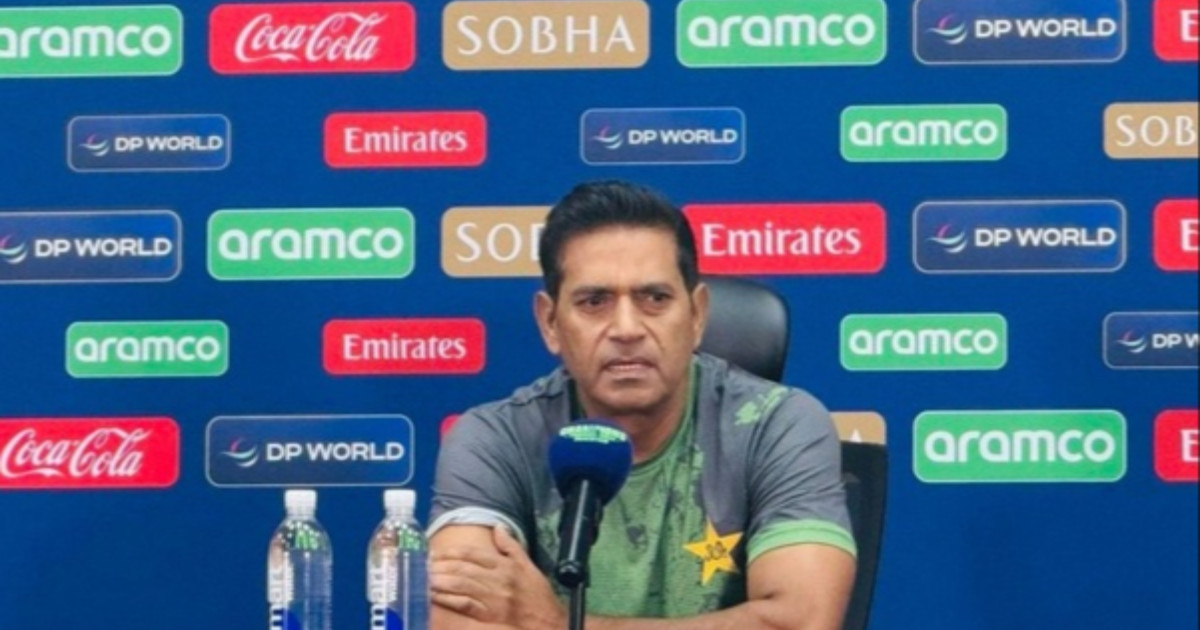
Aaqib Javed's public admission that a top-seven Pakistan side is unlikely to win a World Cup casts a stark light on systemic problems in selection, leadership and governance. His remarks suggest institutional resignation and renew calls for accountability.Summary
There is a particular tone of voice Pakistan cricket officials reserve for their moments of greatest candour, and it is not confession but resignation dressed up as wisdom, the tone of a man telling you, almost gently, that the roof was always going to leak, so why are you so surprised to be standing in the rain? It was in something like this tone that Aaqib Javed, selector of the men's team and director of the PCB's High Performance Centre, informed the nation that it would be "lying to ourselves" to imagine a team ranked seventh in the world might win a World Cup. Said by a fan in a Karachi tea stall, this is just fatalism, the oldest and cheapest currency in Pakistani cricket discourse. Said by the man who has, for the better part of two years, held the power that fills in the team sheet, it is something closer to an admission of surrender issued by the very general who commands the army, a confession that reads less like honesty and more like an alibi prepared well in advance of the crime.
It is worth sitting with the strangeness of this for a moment, because strangeness is precisely what gets lost in the churn of Pakistani cricket's news cycle, where outrage arrives, exhausts itself, and is replaced within the week by a fresh and unrelated outrage, so that no single scandal is ever permitted the dignity of consequence. Here is a selector — not a television pundit paid to be gloomy, not a retired batsman monetising his bitterness on a podcast, but a sitting, salaried, empowered policymaker — publicly pre-writing the epitaph for a team he himself assembles. One does not have to be a student of management theory to sense that something has gone wrong with the incentives when the man responsible for a team's fortunes finds it easier to lower the ceiling of expectation than to raise the floor of performance. It is the technique of a losing captain deployed by a man in the one job in Pakistani cricket where losing is not supposed to be an option one talks oneself into in advance.
From prodigy to power broker
Before he was ever the man dispensing verdicts on other men's careers, Aaqib Javed was himself a case study in promise imperfectly redeemed. He was preposterously young when Pakistan first summoned him, a Test cap at an age when most boys are still negotiating school examinations, a right-arm quick with a sprinter's run and a wrist educated early in the old craft of reverse swing, thrust into a dressing room already crowded with the two men, Wasim Akram and Waqar Younis, whose gifts would come to define an entire era of fast bowling and, in the same stroke, consign every contemporary to their shade. Making a first-class debut at 12 years must have been an age fraud or a typographical error or lack of school certification. Anyway, he was still a teenager representing Pakistan, a contradiction in itself? Born on August 5th, 1972, his first-class debut arrived on October 20th, 1984, which made him 12 years and 2 months old. Unless he was a Viabhav Sooriyavanshi, it didn’t seem probable a fast bowler having developed shoulders aged twelve. Contradiction, somewhere in time, it seemed?
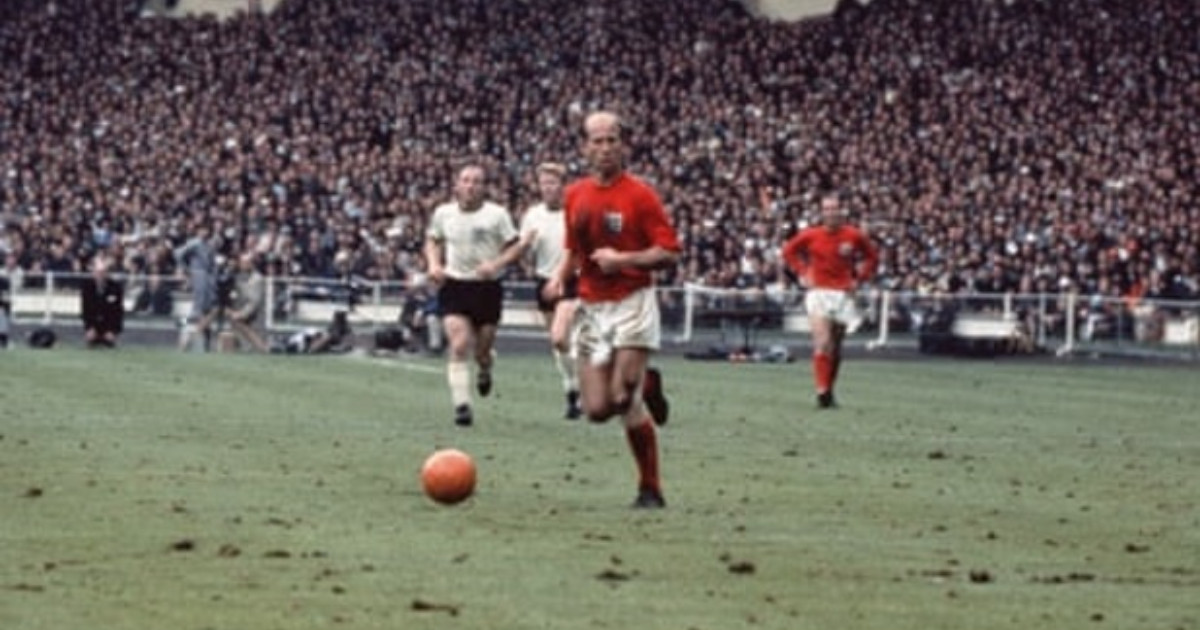
Aaqib had his moment of high sunlight in 1992, called upon in Waqar's enforced absence to share the new ball as Pakistan won the World Cup that remains the country's only global crown in the format, and he supplied, that England summer, a hat-trick against India taken at 19 years and 81 days that stood for years as the youngest such feat the one-day game had seen. There was even, in the sweltering theatre of an England tour, a flash of the pugnacity that would later define his punditry, a sweater-tugging confrontation with the umpire Roy Palmer after a volley of bouncers aimed, with more relish than mercy, at England's last man in.
And yet the fuller record of that playing career reads as a story of a talent never quite trusted with the run it deserved. Twenty-two Tests and 163 One-Day Internationals across in ten years is a modest return for a bowler who had debuted so precociously, and Aaqib himself would later attribute the truncation of his international life to a refusal to participate in the match-fixing culture that metastasised through Pakistani cricket in the 1990s, a claim of principled martyrdom that, whatever its truth, sits with a certain uncomfortable irony beside the career he has since built as an arbiter of other men's fitness for selection, in and out of the eleven himself so often that it is difficult now, watching him drop and recall Babar Azam with such unblinking indifference, not to wonder whether he learned that particular flow from the inside of his own frustrations. He was, by the honest reckoning of those who watched him closely, a fine bowler who never became the bowler his earliest promise had advertised, eclipsed by better men, undone by circumstance, and left, at twenty-six, to build a second career explaining the very selection headaches he had once been a symptom of.
It is here that the record complicates itself in a manner too interesting for a simple morality tale, for Aaqib Javed the coach, before he arrived at the summit of Pakistani cricket, had been rather good at his trade. Handed the United Arab Emirates in 2012, an Associate nation with neither pedigree nor infrastructure to speak of, he left it four years later with One-Day and T20 international status secured and a spot at the 2015 World Cup, no small inheritance for a team that had not troubled the game's top table since 1996. He had, earlier still, guided Pakistan's Under-19 side to the 2004 World Cup title, a tournament whose winning cohorts so often seed a nation's senior ranks for a decade to come. And at Lahore Qalandars, the franchise he shepherded for eight years as director of cricket and head coach, his stewardship yielded three PSL finals and two championships, transforming a team once treated as the league's perennial joke into one of its most consistently formidable outfits, its youth pipeline, the Player Development Programme he built and championed held up across Pakistani cricket as a model worth imitating elsewhere.
This is the paradox that any honest accounting must sit with rather than smooth away: the same man who could not be trusted, by his own admission, with a settled idea of where he wished to take Pakistani cricket had, at every level beneath the international stage, shown himself perfectly capable of building one. Something happens, evidently, in the passage from franchise dugout to national selection table, some alchemy of pressure, scrutiny, and the sheer unmanageable size of the job that has turned a proven builder of teams into a man who, at cricket's highest table, seems unable to decide what he is building at all. It is not that Aaqib Javed lacks a coaching gift; the UAE and the Qalandars both stand as evidence against so simple a verdict. It is that the gift has, for reasons his own explanations have never satisfactorily supplied, failed to travel upward with him, leaving Pakistan's senior team coached by a man whose CV promises far more competence than his tenure has delivered.
The rise to control inside the PCB
To understand the man who would go on to pronounce his own team unfit for glory, it helps to recall the manner of his ascent, for it was not an appointment so much as an accumulation, conducted in the shadows while the principal victims looked on from the selection table they had been quietly emptied of. Gary Kirsten and Jason Gillespie, appointed by this very same board to their respective white-ball and red-ball thrones, found the noose tightened around their authority long before either man had packed his bags, their say over something as basic as a starting eleven whittled away, meeting by meeting, until the title of head coach had been hollowed into something closer to a ceremonial post, a man in a blazer whose signature was required but whose judgment was not.
And then, with a hypocrisy too neat to be accidental, the moment Aaqib himself assumed the chair those two had been eased out of, the very powers so recently confiscated were quietly restored to their new occupant, as though authority itself were not a principle to be defended but a possession to be redistributed to whoever currently held the room's favour. It is difficult to conceive of a clearer demonstration of a system's true priorities than watching it strip a foreign coach of his say over his own eleven, only to hand that same say back the instant a local man of the board's own choosing walked through the door.
Selection without a clear philosophy
If the seventh-ranked remark revealed Aaqib's philosophy of management, the slower-burning war with Jason Gillespie revealed something closer to its practice. Gillespie, engaged as red-ball coach in 2024 on the sort of two-year contract that Pakistan cricket treats as an opening bid rather than a binding promise, resigned before that contract had run half its course, walking away rather than travelling with the Test side to South Africa. The board's account, filtered through Aaqib, was one of an obstinate foreigner who would not be guided by his selectors, who bristled at direction, who was, by unmistakable implication, simply not fit for the particular psychodrama of Pakistani cricket. It is a story Pakistan cricket has told so many times about so many departed coaches that it now arrives pre-worn, like a shirt bought secondhand, Richard Pybus, Geoff Lawson, Bob Woolmer stand almost alone across three decades as men who managed to stay the natural course of their tenure, and everyone since, Mike Hesson very much included, has discovered that the invitation to coach Pakistan comes with a clause, unwritten but perfectly understood, that the invitation may be withdrawn at any hour convenient to those who extended it.
Gillespie, unlike most of his exiled predecessors, did not simply vanish into the diplomatic silence expected of the departed. He surfaced instead on a podcast, in the company of Glenn McGrath and Damien Fleming, men who share with him not just a nationality but a bowling pedigree that renders their scorn considerably more expensive than the ordinary variety. There, in the loose and unguarded cadence of old teammates trading stories, he offered an account markedly different from the one Pakistan had been fed. He had not, he said, refused to listen to the selectors; he had asked a selector why four fast bowlers were required on a surface that plainly wanted spin, and been told, as though it settled the matter, that only players who passed a fitness test were eligible for selection, a formulation so administratively tidy and so cricketing-ly absurd that it excluded, by its own logic, half the specialist spin bowlers in the country. He objected, too, to the doctoring of an already four-day-worn pitch with industrial fans and sprinkled sand, a groundsman's trick more suited to salvaging a losing position than to building one, and found his objection simply overruled. And then, with the unhurried relish of a fast bowler setting a batsman up over several deliveries before the one that castles him, Gillespie delivered his verdict on the man now occupying his old authority: a muppet.
It is a word that lands harder in its very lightness. Had Gillespie called Aaqib incompetent, or vindictive, the PCB's press office would have known precisely which register of outrage to summon in reply. But a muppet is not a villain; a muppet is a figure of comedy mistaken, tragically, for a figure of consequence, and there is no dignified rebuttal available to a man so described, only the far worse fate of having the description quietly, universally agreed with.
Consider, alongside all this, the fielding coach Shane McDermott, brought into the set-up under Mike Hesson's stewardship, who resigned while on leave in Australia and was, by report, to be pursued into litigation by a board apparently determined to discover, through the courts, an explanation it has proven unable to produce through introspection. There is something almost admirable in the audacity of an institution that cannot retain a fielding coach for the length of a single season yet imagines the remedy lies in suing him rather than asking why an entire procession of foreign professionals, Kirsten, Gillespie, McDermott, and others whose names have already been permitted to fade from memory keep arriving with optimism and departing with relief. A board that changes sixteen coaches and twenty-six selectors within two and a half years, a statistic Aaqib himself has cited as though it were an act of God rather than an act of policy, is not the victim of an unstable cricketing environment. It is the environment. Litigation against the latest man to leave is not accountability; it is only the search for a defendant to stand in for a system that has quietly decided it would rather punish its symptoms than examine its disease.
There is a further, and in some ways more damning, admission buried in Aaqib's own television appearances: that he was ready, even eager, to shoulder the responsibility of selection, yet possessed, by his own account, no settled idea of the direction in which he wished to steer Pakistani cricket. This is not the confession of a man overwhelmed by circumstance; it is the confession of a man who sought the office before he had earned, through thought, the right to occupy it. Selection, at its best, is an act of conviction; a selector says, in effect, this is the cricket we intend to play, and these are the eleven best suited to play it. What Pakistan has been offered instead is selection as improvisation, an ongoing performance of decisiveness in the absence of any underlying idea, and nowhere has this been more visible than in the treatment of the two players who have, for the better part of a decade, carried the batting order on their backs.
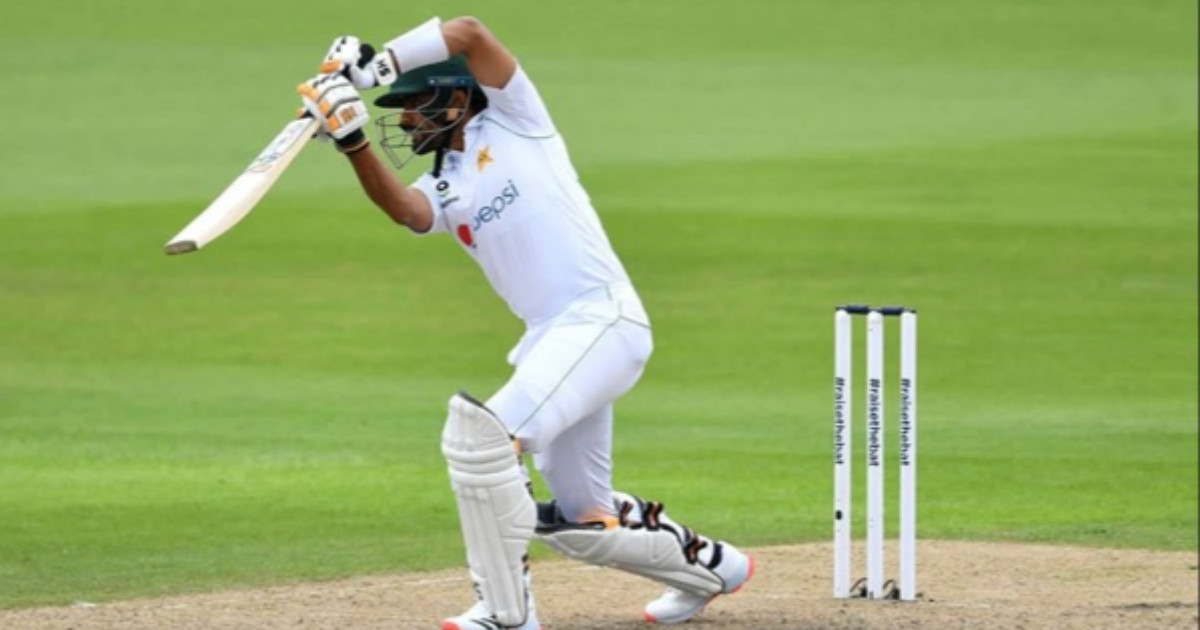
Babar Azam has been dropped and recalled with a frequency that would embarrass a soap opera's writers' room, discarded for a match and reinstated for the next without ever being permitted the dignity of a stated reason, and without, in the interim, being sent to accumulate the red-ball cricket that might have addressed whatever technical or temperamental deficiency his removal was ostensibly meant to correct. Mohammad Rizwan has weathered a comparable instability, the pair of them absorbing a scrutiny so relentlessly personal that what began as external pressure has, by every visible sign, curdled into something internalised, a hesitancy in strokeplay, a wariness in the eye, that speaks less of declining talent than of a talent perpetually braced for the next demotion. Selectors are supposed to absorb pressure on behalf of players, not manufacture it for them; here the arrangement has been inverted, and the two most important batsmen in the country have found themselves protecting their places rather than playing their game.
Tactical contradictions and costly decisions
The absurdity reaches its fullest flower in the matter of red-ball credentials, that supposed sacred criterion the selectors invoked, with straight faces, to justify dropping Shaheen Shah Afridi and Naseem Shah from the Test fold, only to grant both bowlers, within a season, no-objection certificates to ply their trade in white-ball leagues abroad, a permission that rather undercuts the notion that red-ball application was ever the true concern. And Babar Azam, the batsman most persistently examined on this very question of Test pedigree, was in the same period elevated to the national captaincy without having troubled to participate in a single first-class match, in any meaningful way himself. A selection philosophy that demands red-ball devotion from bowlers it wishes to discard, waives it for those same bowlers the moment a league beckons, and overlooks it entirely for the batsman it wishes to crown, is not a philosophy. It is a mood, applied selectively, and dressed afterward in the borrowed language of principle.
For a coach whose entire cricketing biography rests on an intimate knowledge of bowling craft, the selectorial errors that followed have possessed a quality less of misfortune than of self-sabotage. At the 2025 Champions Trophy, staged substantially on home and neighbouring Asian soil where the ball has turned since the days of Abdul Qadir, Aaqib's committee travelled with precisely one specialist spinner in the squad, a decision so contrary to the basic pedigree of subcontinental cricket that even a rival opener, watching from the commentary box, could not resist noting that seven of the tournament's eight teams had thought to carry a recognised slow bowler and Pakistan, hosting the event, had not. Barely a month later, bound for New Zealand, where the Kookaburra swings and seams and spin is a just courtesy rather than a weapon, the selectors performed the equal and opposite folly, packing the squad with slow bowlers as though correcting one imbalance required manufacturing its mirror image elsewhere. It takes a particular kind of conviction to be wrong in both directions within a single season, mistaking each fresh continent for an excuse to overcorrect rather than an invitation to think afresh.
Tactical contradictions and costly decisions
The home Test record tells its own uncomfortable story of a strategy pursued past the point of sense. Under Aaqib's stewardship the pitches at home were doctored with an eagerness that bordered on obsession, industrial fans summoned to starve the surface of moisture, square turners rolled out before the paint of the previous match had dried, in pursuit of victories that a fast-bowling nation had once earned by more honest means. The tactic bought Pakistan a Test here and there, most memorably a spin-throttled win over England, but the wider record tells a harsher truth: in this period Pakistan lost the clear majority of the sixteen Tests they contested, five of them at home on the very square turners engineered to save them, undone by the same weapon they had sharpened, as West Indies' unheralded spinners proved rather more capable of exploiting a dust bowl than Pakistan's own batters, reared as they nominally are on turning domestic pitches, were of surviving one.
Nowhere did the whimsy curdle into something more personal than in the treatment of Babar Azam. He was omitted from the T20 side even as Aaqib went on television and radio to explain, with the confident vagueness of a man reciting a brief rather than a conviction, that Pakistan wished to "change the template" in the format, a phrase elastic enough to justify almost any decision and specific enough to justify none. In the same stroke, an opening partnership between Babar and Mohammad Rizwan that had, not so very long before, been amongst the most productive in the format anywhere in the world was broken apart, not through the two men's decline but through selectorial fiat, as though partnerships were furniture to be rearranged rather than bills to be protected. Why precisely Babar, of all Pakistan's cricketers, should have drawn such sustained and unexplained hostility remains a question nobody in a position to answer has troubled to address; it can only be inferred, in the manner one infers weather from a darkening sky, from the pattern of decisions rather than from any word spoken in their defence.
The appointment of Salman Ali Agha to the T20 captaincy supplied the season's most mind-boggling passage. Here was a batsman who, before the armband was placed upon him, had barely stood inside the format at international level, a red-ball craftsman handed the reins of the game's most frenetic discipline as though captaincy were a garment that might be tailored to fit any wearer regardless of his prior tailoring. It made a mockery, gentle but unmistakable, of the very idea of specialisation that modern cricket has spent two decades constructing. And around this central absurdity swirled the smaller ones that always accompany a selection committee without a compass: players plucked from obscurity and discarded within a series or two, others nursed through failure after failure on the strength of favour rather than form, an inconsistency that asked of the dressing room not excellence but the impossible art of reading tea leaves. This was not the Aaqib Javed the game had known, the sharp, exacting bowling coach whose command of his craft had once been beyond dispute but a diminished understudy wearing his name, having mislaid, somewhere between the boardroom and the press conference, the very judgment that had built his reputation in the first place.
Changing narratives and public contradictions
What ties together the seventh-ranked confession, the war with Gillespie, and the treatment of Babar Azam is a habit of self-justification so persistent, and so often self-defeating, that it has become the defining rhetorical feature of Aaqib's tenure, a willingness to appear on any camera offered him and construct, in real time, an explanation that seldom survives contact with the explanation he gave the previous week.
In 2022, long before selection was his formal remit, he told a television audience with an insider's relish that opposing bowlers in the PSL scarcely troubled themselves to dismiss Babar Azam, so becalmed was his effect on his own team's required rate, a jibe cutting enough that Babar felt compelled to answer it publicly, informing reporters, with the flat finality of a captain who has decided a critic no longer merits engagement, that the players simply did not listen to him. Barely three years later, installed now as the very selector responsible for picking Pakistan's teams, Aaqib stood before the cameras after a chastening Champions Trophy exit and offered the opposite sentiment entirely, asking, with something close to plaintiveness, what options remained beyond Babar Azam, the same batsman so recently mocked as a burden had become, the moment the results turned poor enough to require a defence, the player without whom no defence was possible.
The account of his falling-out with Gillespie and Kirsten follows an identical pattern of convenient inversion. Asked to explain why two internationally respected coaches had departed within months of each other, Aaqib told reporters that neither man had been open to the selectors' opinions during team meetings, a tidy explanation that assigns the entire episode's stubbornness to the departed. Gillespie's own account, offered without the constraint of institutional politeness on a podcast beyond the PCB's reach, describes something closer to the reverse: a coach who asked a straightforward tactical question about surface selection and was handed, in place of an answer, an inflexible fitness diktat that excluded the very bowlers the situation required. Both versions cannot be true, and the manner in which Aaqib's account so consistently locates the deficiency in whichever party is no longer present to contest it is, by now, less a series of isolated defences than a pattern worth naming in its own right, a coach who has never yet been the author of a failure, only ever its narrator.
A crisis bigger than one man
What emerges from all of this, a playing career of promise never fully cashed, a coaching career that flourished everywhere but at the summit, the pre-emptive lowering of ambition, the undignified public brawl with a departed coach, the pursuit through the courts of a fielding coach rather than through conscience of the causes for his flight, the confessed absence of any guiding idea, the treatment of two senior batsmen as expendable pieces in a game whose rules changed with each move, and a public rhetoric so given to inversion that yesterday's villain becomes tomorrow's indispensable man the moment convenience requires it, is not simply a portrait of one man's failings, however considerable those failings may individually be.
It is a portrait of an institution that has confused activity for direction and survival for competence, an institution in which the surest route to permanence is not success but the successful management of blame, ensuring that when the roof does eventually collapse, as Aaqib had the foresight to warn it might, there will be no shortage of others standing beneath it. Pakistan cricket has never lacked talent, at the crease or, on the evidence of a UAE qualification campaign and three PSL finals, even in its coaching ranks; what it has lacked, across this particular and dispiriting stretch of its history, is the humility to admit that its true seventh-ranked failing has nothing to do with the players at all.
ABOUT THE WRITER: Dr. Nauman Niaz, a Post Doctorate (Oxford), PhD (UWA), FRCP (London), FRCP (Edinburgh), FRCP (Ireland), FRCP (Glasgow), CST (Endo, UK), MSc Biomechanics & Kinesiology (UWA), MRCP (UK), MBBS (Pb) is a civil award winner (Tamagha-i-Imtiaz) in Sports Broadcasting & Journalism, a regular cricket correspondent having covered 54 tours and three ICC World Cups, having written over 3700 articles. He has authored 19 books and is the official historian of Pakistan Cricket (Fluctuating Fortunes IV Volumes - 2005). His signature show Game On Hai has been the highest in ratings and acclaim. He is also the sports editor at JournalismPakistan.
Key Points
- Aaqib Javed, a sitting selector and director at the PCB High Performance Centre, publicly suggested Pakistan is unlikely to win a World Cup.
- His remarks framed as resignation raise questions about the selection process and decision-making authority.
- The episode highlights deeper problems in leadership, governance and institutional accountability within PCB.
- Frequent cycles of outrage and short-lived controversies have limited sustained consequences for failings.
- The statements have renewed calls for structural reform and clearer accountability mechanisms in Pakistan cricket.
Key Questions & Answers
Who is Aaqib Javed?
Aaqib Javed is a former national cricketer who serves as a selector for Pakistan's men's team and as director of the PCB's High Performance Centre.
What did he say about Pakistan's chances?
He said it would be "lying to ourselves" to imagine a team ranked seventh in the world might win a World Cup, a remark widely read as conceding Pakistan's limited prospects.
Why are his comments significant?
As a sitting selector with institutional power, his public resignation to the team's prospects underlines systemic failures in selection, leadership and governance and undermines public confidence.
What is being called for after these remarks?
Observers and stakeholders are renewing demands for accountability, a review of selection and governance practices, and concrete institutional reforms.
Relevant Topics
Ask AI: Understand this story your way
AI EnabledDig deeper, ask anything — get instant context, background, and clarity.
Disclaimer: This feature is powered by AI and is intended to help readers explore and understand news stories more easily. While we strive for accuracy, AI-generated responses may occasionally be incomplete or reflect limitations in the underlying model. This feature does not represent the editorial views of JournalismPakistan. For our full, verified reporting, please refer to the original article.