
Rohit Sharma's batting explained: The science behind his greatness
JournalismPakistan.com | Published: 26 July 2026 | Dr. Nauman Niaz (TI)
Join our WhatsApp channel
Rohit Sharma's effectiveness comes from biomechanics: a deliberately late trigger, centred weight and an unusually still head that produce superior timing. Small shuffle and precise angles let him turn length deliveries into boundaries with minimal effort.Summary
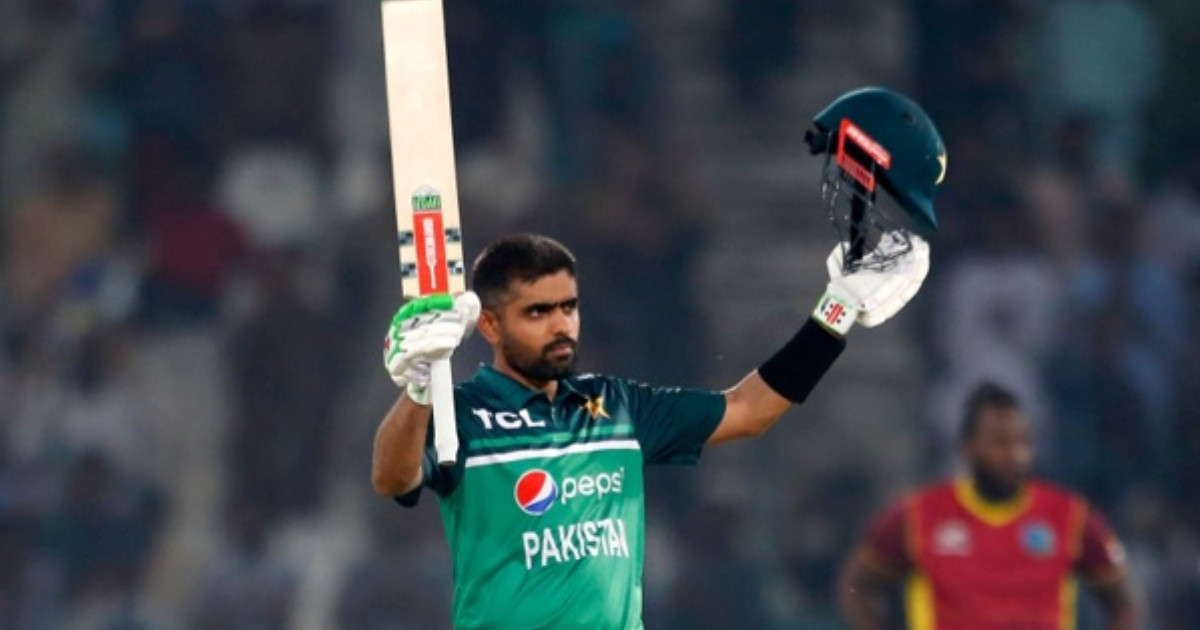
Some batsmen hit the ball, and there are batsmen the ball seems just to visit, arriving, as if by appointment, at the precise meeting-point their bat has already prepared for it. Rohit Sharma belongs, unmistakably, to the second and rarer category. To watch him bat, even now, deep into a career that has spanned nearly two decades of Indian cricket's most turbulent and thrilling transformation, is to watch a man practising a kind of applied stillness, a batsman who has made peace with time in a game engineered to steal it from everyone else. Where his contemporaries hurry, he waits. Where they muscle, he times. And where lesser batsmen manufacture violence through effort, Rohit manufactures it through angles, through the silence, almost indolent alignment of head, hip, and bat-face that turns a length ball into a caressed boundary before the bowler has finished his follow-through.
How science explains Rohit's extraordinary timing
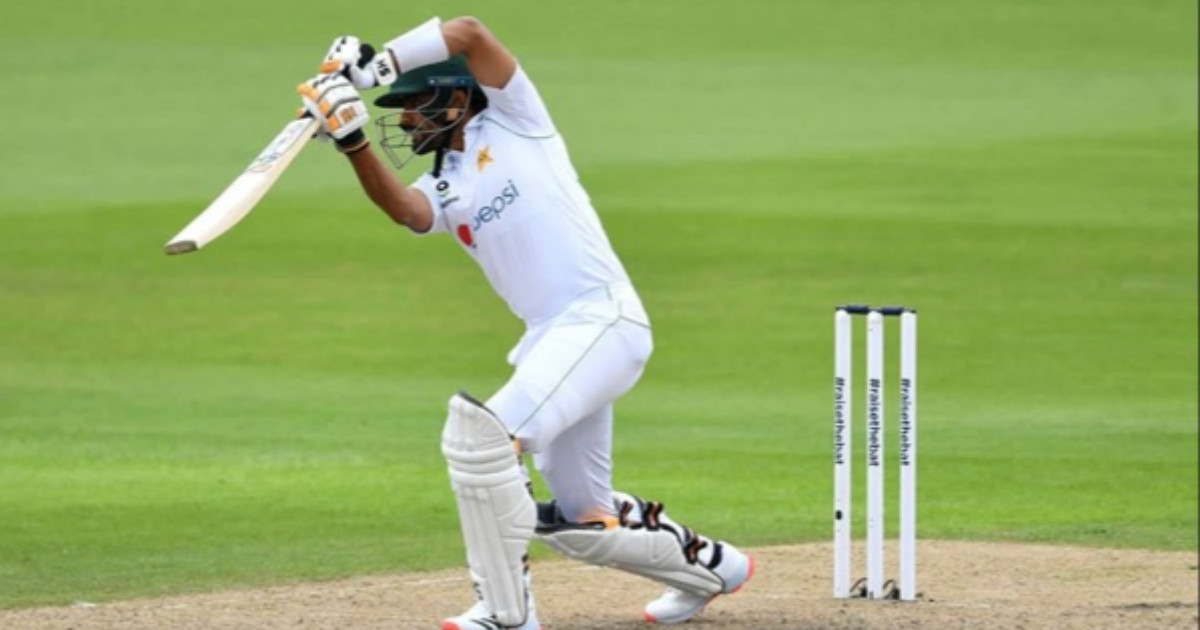
The foundation of Rohit's batting, and this is where science must supplement lyricism, lies in an unusually late trigger movement and a head position that remains extraordinarily still relative to the base of his stance. Biomechanically, most fast-bowling-era batsmen initiate a forward or back press early, committing the body's centre of gravity before the ball has revealed its length. Rohit's trigger, by contrast, is minimal: a small, almost imperceptible back-and-across shuffle that keeps his weight centred over the balls of both feet for a fraction of a second longer than convention permits. This delayed commitment is the single biomechanical fact from which almost everything else about his batting flows. It grants him what sports scientists studying elite bat-ball interception call an extended 'decision window', the interval between a bowler's release and the batsman's final commitment to shot selection. Where most batsmen decide within roughly 150 to 200 milliseconds of release, players with elite head-stability and minimal pre-committed movement can push that decision fractionally later, reading seam position, wrist angle, and length with more visual information gathered before muscular commitment locks the shot in.
This is why Rohit has always looked, even against the fastest bowling of his era, unhurried bordering on lazy, a criticism levelled at him by impatient commentators throughout his career, and one that fundamentally misreads what is, in fact, supreme economy of motion. The pull shot, his signature stroke and arguably the finest example of controlled short-arm violence in the modern game, is instructive here. Rohit does not manufacture power through a long backlift or exaggerated follow-through; he generates it through late wrist-roll and the transfer of weight from back foot to front at the exact moment of contact, allowing the kinetic chain, feet, hips, shoulders, forearms, and wrists to sequence in that classical, almost balletic order that biomechanists call proximal-to-distal segmental sequencing. Each joint accelerates and then, crucially, decelerates just before the next segment takes over, transferring momentum up the chain like a whip-crack, so that the bat-head arrives at the ball travelling at its maximum velocity precisely at the point of impact rather than before or after it. It is this sequencing, not muscle mass, not brute strength, that explains how a batsman of relatively lean build can hit sixes that carry as far as anyone's in the game's history.
Building an innings with patience instead of power
Where Rohit differs most profoundly from the power-hitters of the T20 age is in his method of innings construction, and it is here that his white-ball batting reveals its most singular, almost old-fashioned intelligence. His great ODI innings, and there have been more of them, and bigger, than any batsman who has ever played the format, follow a discernible three-act structure: a watchful, sometimes deceptively sedate first phase in which he cedes the strike-rate initiative entirely, using it to recalibrate his eye to pace and bounce; a middle phase in which he begins to target specific bowlers and specific areas with surgical rather than indiscriminate aggression; and a closing phase, once well-set, in which he simply refuses to get out, converting fifties into hundreds and hundreds into something approaching cricketing immortality. This is not caution masquerading as technique; it is risk management of the highest tactical order, an explicit acknowledgment that the value of his wicket compounds the longer he occupies the crease, and that boundaries struck from a position of total control are worth more, over 300 balls, than boundaries struck in urgency.
The unmatched record of three ODI double centuries
It is this method that produced the three innings that now sit apart from every other innings in the history of one-day cricket: 209 against Australia in Bengaluru in 2013, the innings that first announced the scale of what was possible; 264 against Sri Lanka in Kolkata in 2014, still, more than eleven years later, the highest individual score in the history of ODI cricket, an innings of 173 balls containing thirty-three fours and nine sixes, numbers so disproportionate to the format's usual arithmetic that they read, even now, like a misprint; and 208 not out against Sri Lanka in Mohali in 2017. No other batsman, male or female, has crossed the 200-run mark in an ODI innings more than once. Rohit has done it three times, and in the eleven years since his 264, the next closest any batsman has come is still more than a quarter-century short of it. That is not just a record; it is a plateau upon which he currently stands entirely alone, unchallenged by an era of cricket that has, in every other respect, become more explosive, more heavily bat-favoured, and more saturated with six-hitting than the game Rohit came into.
A career transformed by opening the innings
Beyond the double-centuries, the broader architecture of his numbers confirms the same pattern of a batsman built for scale rather than mere frequency: thirty-three ODI centuries, third only to Sachin Tendulkar and Virat Kohli on the format's all-time list, arrived at not through the middle-order cameo cricket that defined his early career but almost entirely after his move to open the innings in 2013, a positional shift, engineered by MS Dhoni's selectors, that stands as one of the more quietly consequential tactical decisions in modern Indian cricket, transforming a talented but underperforming number four into the format's most destructive new-ball batsman. Fifty international centuries in total, thirty-three in ODIs, twelve in Tests, and five in T20 Internationals, the last of these a men's world record, place him among a vanishingly small company of batsmen who have mastered the technical demands of all three formats simultaneously, each requiring an almost contradictory temperament, and each mastered by the same still head and the same late, minimal trigger.
The technical strengths that separate Rohit from his peers
Rohit's principal strength is, in a sense, a single unified skill wearing several different names: his supreme judgement of length. Because his back-foot game is so assured, anchored by that stable base and the ability to rock back and manufacture room even against full deliveries, he is uncommonly difficult to dismiss through good, back-of-a-length bowling, the very channel that troubles most top-order batsmen. His compact, minimal-movement technique against spin, built on soft hands and late footwork rather than aggressive stride-outs, has allowed him to dominate even world-class slow bowling on turning surfaces, using the depth of his crease and the width of the sweep and reverse-sweep to neutralise variation before it becomes a threat.
The few weaknesses bowlers still try to exploit
His fault-lines, such as they are, have narrowed considerably with age and experience but were never absent even at his peak: a susceptibility, particularly early in an innings, to full, well-directed deliveries angling across him that can catch the outside edge before his eye has fully calibrated, the price, perhaps, of a method built on patience rather than pre-emptive aggression. Left-arm pace bowlers targeting a fourth- or fifth-stump line in the first ten to fifteen deliveries of an innings have historically extracted more success against him than any other bowling type, a pattern sufficiently consistent across a near two-decade career to qualify as a genuine, rather than merely statistical, vulnerability. But it is a vulnerability that shrinks, almost visibly, the longer he survives that opening exposure, which is precisely why bowling attacks the world over have learned that the first ten balls of a Rohit Sharma innings represent their only realistic window, and why so many of his most destructive innings have begun with an unhurried, even watchful, first over or two.
Why Rohit remains central to India's ODI future
At an age when most opening batsmen of his generation have long since retreated into commentary boxes or franchise-only cricket, Rohit Sharma remains, remarkably, a first-choice selection for India in the format that suits him best. Having stepped back from Twenty20 internationals and handed on the Test captaincy, he has narrowed his focus with the same deliberate economy that characterises his batting, one format, fully committed to, rather than three formats managed. He reached his fiftieth international century in October 2025 against Australia, a landmark that confirmed, in the most unambiguous terms available to a cricketer, that the eye and the timing remain intact even as the body around them has aged. His continued presence in India's touring party for the home series against South Africa, a series he has spoken of with the enthusiasm of a senior professional still fully invested in the dressing room, still exchanging notes with the younger T20 group even as he prepares for his own fifty-over assignment, is not the sentimental retention of a fading great but a considered cricketing judgment.
In a batting order still settling around KL Rahul's captaincy and a middle order absorbing newer talents such as Tilak Varma and Ruturaj Gaikwad, Rohit's presence at the top offers exactly what it has always offered: an anchor capable, on his day, of batting an innings to its conclusion, absorbing the powerplay's swing and seam threat with a technique built for precisely that examination, and setting a platform from which the rest of the innings can be constructed. Against a South African attack that leans heavily on extracting bounce and lateral movement in the first fifteen overs, the very method Rohit has spent a career perfecting, watchfulness before violence, control before conversion becomes not a stylistic preference but a tactical necessity.
Fitness, longevity, and the economy of effort
His fitness, an area of periodic scrutiny throughout his career, particularly through injury-interrupted spells in his late twenties, has been managed since with the same shrewdness that governs his batting: a conscious, selector-endorsed prioritisation of white-ball cricket over the accumulated physical toll of three-format commitment, allowing a body now in its late thirties to arrive at each ODI assignment rested rather than depleted. It is a pragmatic economy of effort that mirrors, almost poetically, the economy of movement that has always defined him at the crease.
The hidden burden of being called a prodigy
There is a particular cruelty reserved for the naturally gifted, a cruelty so well disguised as admiration that its victims rarely recognise it until years, sometimes decades, into their bearing of it. We call it praise. We call it destiny. We stand at the boundary's edge and murmur, with the easy generosity of spectators who have risked nothing, that the boy was simply born to play this way, as though the wrists that time the ball so late, the head that stays so still against the fastest bowling in the world, arrived pre-assembled, requiring nothing further than the world's patience while genius condescended to ripen on its own unhurried schedule. It is a beautiful lie, and like most beautiful lies, it is also a quietly merciless one, for it strips the gifted child of the one thing every craftsman needs to endure: the right to be seen labouring.
Rohit Sharma has spent the better part of two decades absorbing this particular cruelty and, by increments so gradual they resembled geology more than biography, converting it into something he could live inside without being crushed by it.
Expectations can become the heaviest burden
To be named a prodigy in Indian cricket is to be handed a debt before you have earned a single rupee of credit. The nation's hunger for its next Sachin Tendulkar is not malicious; it is simply enormous, indiscriminate, and entirely uninterested in the difference between a talent that has been finished and a talent that is still, painfully, being forged. When the word 'gifted' was first fastened to Rohit, a middle-order batsman of such uncommon elegance that comparisons arrived before achievements did, it functioned less as a compliment than as a mortgage on a house he had not yet built.
Every failure thereafter was read not as the ordinary attrition of a young cricketer finding his method, but as a moral lapse: a squandering, a waste, an insult to the very gift he had been so generously, so publicly, assigned. It is worth pausing on how strange this logic is, and how rarely we apply it elsewhere in life. We do not accuse the young surgeon of dishonouring her aptitude when her tenth operation is less assured than her hundredth will be. We reserve that particular accusation for our sportsmen, and we reserve it most viciously for the ones whose gift is most visible because visibility, in the amphitheatre of Indian cricket, is so easily mistaken for completion.
The years of struggle that shaped a champion
The consequence, for Rohit, was a private and largely unphotographed war fought against a public narrative that insisted his batting owed the world nothing further than its own continuation. Dropped, recalled, dropped again, shunted through the batting order with the restlessness of selectors who could sense the ore beneath the surface but had not yet worked out where to dig, he absorbed, across those uneven years, an education no coaching manual offers: the education of being underestimated for the wrong reasons and overestimated for the same ones, sometimes within the same innings.
Why talent alone was never enough
What separates just the talented from the genuinely great is rarely a difference of raw material. It is, far more often, a difference in the willingness to burn down what the raw material has already built. Rohit's batting in his first international seasons was a thing of loose, instinctive beauty, hands following the ball rather than anticipating it, a head that drifted, a method assembled more by reflex than by architecture. It served him well enough to dazzle and not quite well enough to endure. And it is here that the deeper story of his career resides, not in the runs themselves but in the almost monastic discipline he brought to dismantling his own gift and rebuilding it from principles he was determined to understand rather than just inherit.
Rebuilding a batting technique from the ground up
This is the part of the prodigy's story that resists the shorthand of highlight reels: the years spent studying, with something close to scholarly rigour, the compact stillness of the batsmen he considered complete, the proximity of hand to body, the discipline of a bat brought down along a line rather than chased after a departing ball, the almost architectural economy of movement that separates a technique built to survive from a technique built only to entertain. He did not simply absorb these principles; he interrogated them, tested them against his own instincts, discarded what did not serve him, and retained what did, with the patience of a man rebuilding a house stone by stone rather than knocking through a single wall. It is a form of courage seldom celebrated because it produces no immediate spectacle, no six sailing into the stands, no century acknowledged with a raised bat, only the slow, invisible accumulation of a method that would, years later, look so effortless that a new generation of critics would accuse him of possessing more time than any mortal batsman ought reasonably to have. He came, in time, to regard that accusation with something like weary amusement, for he knew what the flattery concealed: that the illusion of abundant time is not a gift bestowed at birth but a discipline purchased, over years, at the cost of everything that once came easily.
The decision that transformed Rohit's career
Every career of genuine consequence contains a hinge moment disguised, at the time, as an administrative decision, a selector's whim, a captain's hunch, an experiment undertaken more from necessity than conviction. For Rohit, that hinge arrived not as vindication but as a kind of exile forward: promotion to the top of the order in the one-day game, a position he had not sought and had, by his own later admission, resisted the logic of, arriving as it did only after every other candidate had been exhausted.
And yet it was here, at the opening of the innings rather than in the shelter of the middle order, that the years of dismantled and rebuilt technique finally found their proper theatre. Facing the new ball meant facing the bowling attack at its most dangerous and least tired, which meant that every discipline he had painstakingly installed, the stillness, the patience, the refusal to commit before the length had fully declared itself, was no longer a private virtue but a public necessity, tested delivery by delivery, over after over, in conditions that offered no forgiveness for a method still held together by instinct alone.
When preparation became greatness
What followed belongs now to the permanent record of the one-day game: innings of a scale and a serenity that no batsman before him, and none since, has managed to replicate with such repeated authority. But it would be a grave misreading of the man to treat those innings as the culmination of a gift finally permitted to express itself. They were, far more accurately, the culmination of a rebuilding project a decade in the making, arriving in public only once the private architecture beneath it had been tested, stress-fractured, and reinforced beyond the point of failure.
From batting maestro to calm and calculated leader
If the first act of Rohit's career was the quiet, unglamorous labour of rebuilding a batting technique, the second act, less discussed, no less demanding, was the rebuilding of a temperament. The introverted, occasionally aloof young cricketer that his contemporaries remember from his early years in the domestic circuit was not obviously destined for leadership; command of a dressing room requires a fluency in other people's insecurities that a young man still negotiating his own sense of worth is rarely equipped to offer. That Rohit arrived, eventually, at a captaincy defined by calm rather than intensity, by empathy rather than fear, by a willingness to tell a struggling player the truth without letting the truth curdle into cruelty, is perhaps the least statistically visible of his achievements and the most quietly remarkable. It suggests a man who understood, from the inside, exactly what it felt like to be misread, to have one's failures narrated as character flaws and one's successes dismissed as mere entitlement—and who resolved, having survived that particular education, not to inflict it on those who arrived after him.
A leadership style built on trust and preparation
There is a lineage of Indian captaincy that runs from stoic silence through relentless, almost combustible self-belief, and Rohit's contribution to that lineage has been neither of these things but something gentler and, in its own way, harder to sustain: a captaincy built on preparation, on data absorbed and trusted rather than merely gestured at, on the conviction that a team plays its best cricket not when it is afraid of failure but when it has been given permission to fail without forfeiting its captain's faith.
Under his stewardship, India assembled the sort of white-ball dominance that had eluded the country for the better part of a decade, culminating in global silverware that had grown, by the time it finally arrived, almost mythic in its elusiveness, a triumph that read, to those who had followed the whole arc of his career, less like fortune finally smiling and more like a debt, long deferred, being settled in full.
A legacy built on work, not merely talent
It would be tidy, and therefore false, to conclude that Rohit Sharma simply overcame the burden of his own giftedness, as though talent were an obstacle course to be crossed once and then forgotten. The truth, I think, is quieter and more instructive than that: he did not overcome the gift so much as he renegotiated his relationship with it, insisting, across two decades of scrutiny that alternated between adoration and contempt, that the runs he scored be understood as the residue of work rather than the entitlement of birth. In doing so he offered Indian cricket something rarer than a great batting average; he offered a corrective to the very mythology that so nearly consumed him, the mythology that mistakes genius for something that arrives finished, requiring nothing of its bearer but the grace to let it happen. Watch him now, deep into a career that has outlasted every prediction made about its likely brevity, and you are not watching a gift being spent. You are watching a debt, patiently and deliberately paid.
The enduring brilliance of Rohit Sharma
What ultimately elevates Rohit Sharma above statistical greatness—and the statistics alone would suffice for most reputations—is the manner in which those numbers were accumulated: unhurried, controlled, biomechanically efficient, built on the rarest of cricketing gifts, which is time. Not more time than the ball actually allows any batsman, for physics is no respecter of reputation, but the fullest possible use of the time that does exist, wrung out through stillness, sequencing, and judgment rather than urgency. In an age of batting increasingly defined by pre-meditation and manufactured aggression, Rohit Sharma remains cricket's most persuasive argument for patience, proof that the biggest innings in the history of the one-day game were built not by hurrying the ball, but by waiting, with perfect stillness, for it to arrive.
ABOUT THE WRITER: Dr. Nauman Niaz, a Post Doctorate (Oxford), PhD (UWA), FRCP (London), FRCP (Edinburgh), FRCP (Ireland), FRCP (Glasgow), CST (Endo, UK), MSc Biomechanics & Kinesiology (UWA), MRCP (UK), MBBS (Pb) is a civil award winner (Tamagha-i-Imtiaz) in Sports Broadcasting & Journalism, a regular cricket correspondent having covered 54 tours and three ICC World Cups, having written over 3700 articles. He has authored 19 books and is the official historian of Pakistan Cricket (Fluctuating Fortunes IV Volumes - 2005). His signature show, Game On Hai, has been the highest in ratings and acclaim. He is also the sports editor at JournalismPakistan.
Key Points
- Late, minimal trigger movement preserves timing by delaying weight transfer.
- Exceptional head stillness keeps the eyes aligned with the ball.
- Centred weight over both feet prolongs decision time on length.
- Precise bat-face angles and body alignment convert length balls into boundaries.
- Technique prioritises timing and angles over raw muscular force.
Key Questions & Answers
What is Rohit Sharma's late trigger?
It is a small, delayed back-and-across shuffle that postpones forward or back commitment, keeping weight centred longer so he can judge length and time shots more precisely.
How does head stillness help his batting?
A still head maintains consistent eye alignment with the ball, improving depth perception and timing so he meets the ball at the optimal point.
Can other batsmen adopt this style?
Yes, elements like controlled trigger, head stability and angle awareness can be coached, though individual balance and feel play a big role.
Is this approach only effective against pace bowling?
No. While it is especially useful against pace and variable lengths, timing, balance and angles also aid play against spin through better judgment and placement.
Ask AI: Understand this story your way
AI EnabledDig deeper, ask anything — get instant context, background, and clarity.
Disclaimer: This feature is powered by AI and is intended to help readers explore and understand news stories more easily. While we strive for accuracy, AI-generated responses may occasionally be incomplete or reflect limitations in the underlying model. This feature does not represent the editorial views of JournalismPakistan. For our full, verified reporting, please refer to the original article.