
Iranian journalist sentenced to three years in jail
JournalismPakistan.com | Published: 11 August 2016
Join our WhatsApp channel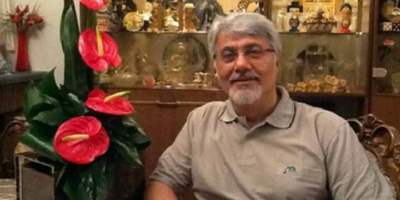
Issa Saharkhiz, an Iranian journalist, has been sentenced to three years in jail for insulting the Supreme Leader and propagating against the state. His case is seen as politically motivated, with potential for appeal.Summary
NEW YORK - A revolutionary court in Tehran sentenced prominent Iranian journalist Issa Saharkhiz to three years in jail on August 8 for "insulting the Supreme Leader" and "propagating against the state," according to his lawyer, Mahmoud Alizadeh Tabatabaei, and news reports. Saharkhiz has 20 days to appeal, Tabatabaei told The Associated Press. The journalist, who contributed to the opposition news website Rooz Online, was sentenced to two years in prison on the insult charge, and one year for the propaganda charge, reports said. Saharkhiz, who has been in custody since November, faces further charges of insulting the head of the judiciary and insulting the former Iranian president. Authorities have not publicly stated what activity led to the journalist's arrest. His son Mehdi Saharkhiz told CPJ earlier this year that he believes his father was arrested because of his pre-election reporting and analysis. In March, Mehdi Saharkhiz told CPJ that his father was on kidney and blood pressure medication, and in critical condition while in pretrial detention in Evin prison. He added that the Medical Examiner's Office had ruled that Saharkhiz should be released on medical grounds. The journalist has been treated in hospital during his incarceration, his lawyer said this week. Tabatabaei said he is still seeking Saharkhiz's release on medical grounds. "Iranian authorities should ensure that Issa Saharkhiz receives robust medical attention and should not contest his appeal," said CPJ Middle East and North Africa Program Coordinator Sherif Mansour. "The obscure handling of the legal charges and the poor treatment in prison reinforce our view that the case against Saharkhiz is politically motivated." In a change for Iran, a jury will hear the remaining charges that Saharkhiz faces, according to Iranian news reports. In June, the parliament defined a new category of offenses as political crimes which, unlike national security crimes, must be reviewed publicly and by a jury, according to news reports. According to Reuters, one of the law's articles defines political crimes as actions "committed to achieve reforms [that] are not intended to target the system." Iranian authorities arrested Saharkhiz in an apparent pre-election crackdown on November 2, 2015, the same day that three reformist journalists-Saman Sarfarzaee, Afarin Chitsaz, and Ehsan Mazandarani-were arrested. At the time Tasnim, a news agency closely associated with Iran's Revolutionary Guards, and the conservative Rah-e Dana news website reported that the journalists were members of an "infiltration network" with links to "hostile Western countries." Saharkhiz, who previously served as deputy minister of culture, was imprisoned from 2009 to 2013 on charges of "insulting the supreme leader" and "propagating against the state," according to CPJ research. Iran is consistently one of the world's worst jailers of journalists, with 19 jailed there at the time of CPJ's last prison census in December 2015. - By Committee to Protect Journalists
Related posts from JournalismPakistan.com Archives:
Anonymous SMS threatens hundreds of journalists in Iran
Iran: new attacks by authorities on journalism
Iran sentences four journalists to jail time
Image courtesy: iranhumanrights.org
Key Points
- Issa Saharkhiz sentenced to three years in Tehran.
- Charged with insulting the Supreme Leader and propaganda against the state.
- Has 20 days to appeal his sentence according to his lawyer.
- Saharkhiz's health has reportedly deteriorated during detention.
- Iranian authorities have not specified the reasons behind his arrest.
Relevant Topics
Ask AI: Understand this story your way
AI EnabledDig deeper, ask anything — get instant context, background, and clarity.
Disclaimer: This feature is powered by AI and is intended to help readers explore and understand news stories more easily. While we strive for accuracy, AI-generated responses may occasionally be incomplete or reflect limitations in the underlying model. This feature does not represent the editorial views of JournalismPakistan. For our full, verified reporting, please refer to the original article.